Decades of gains against AIDS could unravel as HIV funding dries up
Decades of gains against AIDS could unravel as HIV funding dries up
Decades of progress against AIDS, one of the greatest public health achievements in history, could go into reverse as international HIV funding is cut and campaigns against human rights and gender equality gain ground, the UN agency devoted to ending the pandemic warned Tuesday in a new report.
HIV, the virus that attacks the immune system and causes AIDS, was once a death sentence. Life-saving medicines have turned it into a manageable health condition, allowing millions of people to live with it.
Some 32.1 million of the 40 million people living with HIV are now on treatment, but there is currently a $4.3 billion funding gap in low and middle-income countries between available resources and what is needed to keep up these strong results.
Prevention hardest hit
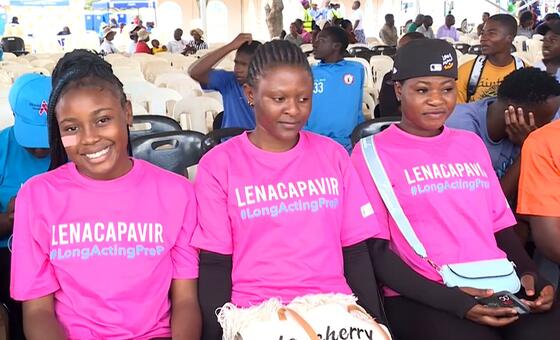
A twice-yearly injection, lenacapavir (PrEP), and other innovative medicines are now available to prevent HIV acquisition, but these programmes have been particularly hard hit by cuts.
In 2025, around 446,000 fewer people got access to PrEP compared to the previous year, the UNAIDS found across reporting countries.
Among key populations, PrEP use declined by 59 per cent among sex workers, 58 per cent among people who inject drugs, 23 per cent among transgender people and 17 per cent among gay men and other men who have sex with men.
Other prevention programmes also suffered: global condom distribution fell from three billion to 2.7 billion between 2024 and 2025, while voluntary medical male circumcision procedures dropped by 53 per cent across priority countries over the same period.
“We know what happens when HIV prevention collapses. People become infected, treatment needs rise, costs soar and lives are lost,” said Winnie Byanyima, Executive Director of UNAIDS.
Avenues closing
“Every clinic that closes, every outreach worker who loses their job and every young woman turned away from prevention services today risks becoming a new HIV infection tomorrow,” she stressed.
Although civil society organisations are increasingly recognised as vital to the fight against AIDS, significant amounts of their funding have been withdrawn in the past two years and many have had to halt or cut back their HIV work as a consequence.
"Community organizations are not an optional extra. They are often the only trusted bridge between health systems and the people most at risk of HIV," Ms. Byanyima explained.
One study found that more than three-quarters of civil society organizations surveyed reported service disruptions, and over 80 per cent of them were operating at less than half their capacity by the end of 2025.
Drowning in debt
In many affected countries, debt obligations now exceed government health spending by two- or even three-fold, making it very difficult for them to absorb international funding losses.
For instance, external resources account for up to 98 per cent of all HIV resources in Nigeria, 94 per cent in Mozambique and 80 per cent in Uganda.
International donors also finance all reported prevention spending in Eritrea and Zambia, according to UNAIDS.
The worst is ahead
The worst effects of the 2025 funding cuts may still be ahead, the agency warned.
While existing treatment programmes continue to offer protection in the short term, disruptions to HIV prevention, testing and treatment services are expected to drive up new infections, AIDS-related illness and deaths.
Still, the warning signs are already visible: fewer people are being tested for HIV or receiving initial treatment, laboratory services are weakening, and community support systems that help people remain in care are being dismantled.
Funding cuts are heavily impacting efforts to detect and treat advanced HIV disease (AHD), which killed about one in eight of the 3.4 million people affected worldwide within a year, in 2025.
Testing for advanced cases fell by 35 per cent across six countries between 2024 and 2025, and these disruptions make it increasingly difficult to detect treatment failure, diagnose advanced disease and provide timely, lifesaving care.
Ending AIDS by 2030
UNAIDS stressed that the world can still reach the goal of ending AIDS as a public health threat by 2030, set in 2015 as part of the Sustainable Development Goals.
This would prevent 3.2 million new HIV infections and avert 1.3 million AIDS-related deaths by the end of the decade.
This requires making HIV a national priority, integrating services into inclusive, rights-based health systems, and advancing reforms that end stigma, discrimination and exclusion, the UN agency stressed.
공식 발표 ↔ 매체 보도
보도 없음
보도 없음
보도 없음