GST hike pushes up hybrid vehicle prices
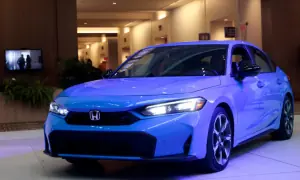
• Toyota, Honda raise rates by over Rs1.3m; others suspend invoicing, deliveries
• Auto Policy 2026-31 yet to be notified despite expiry of previous regime
KARACHI: With the government yet to announce the Auto Policy 2026-31 following the expiry of the 2021-26 policy on June 30 this year, local assemblers have started raising prices of electrified vehicles after the increase in general sales tax (GST) on hybrid vehicles to 25 per cent from 8.5pc in the budget for FY27.
Indus Motor Company has increased the prices of its two Toyota Corolla Cross hybrid electric vehicle (HEV) models by Rs1.364 million and Rs1.314m to Rs10.299m and Rs9.849m, respectively.
Similarly, Honda Atlas Cars Limited has raised the price of its HR-Ve model by Rs1.370m to Rs10.369m.
Other assemblers, who have yet to increase prices, have reportedly put on hold the invoicing and delivery of hybrid vehicles to customers eager to take delivery this month. The assemblers appear to be expecting some changes in the new auto policy or believe the government may reduce the GST from the current 25pc.
According to a dealer, the massive increase in HEV prices may slow demand for hybrid vehicles, while prices of plug-in hybrid electric vehicles (PHEVs) will also rise following the GST hike to 25pc. This would undermine the government’s objective of promoting fuel-efficient vehicles, as many consumers may be unable to pay an additional Rs1.3-1.9m for electrified vehicles.
Assemblers are unwilling to comment on the status of the new auto policy despite the government’s claim that its draft has been prepared and shared with stakeholders after taking them into confidence. They said they had no information about the new auto policy, which was due to take effect on July 1, 2026.
Asad Ali of Topline Securities said the revised auto policy, under which the government is expected to announce a new incentive structure for the sector, has yet to be notified.
Finance Minister Muhammad Aurangzeb, in his budget speech on June 12, had said the Auto Policy 2026-2031 was being vetted by a committee formed by the prime minister and that its details would be presented to parliament after approval by the PM and the cabinet.
However, the finance minister announced that the incentive on imports of completely knocked down (CKD) kits for electric vehicles, including bikes, three-wheelers, cars and buses, had been extended until June 30, 2027.
Asad Ali said the government had notified SRO 1064(I)/2026, superseding SRO 1152(I)/2025, with effect from July 1, 2026, implementing the second-year tariff rationalisation plan under the National Tariff Policy (NTP) 2025-30.
Under the notification, the government has reduced regulatory duty (RD) across almost all categories, with the maximum RD now capped at 20pc, down from 50pc.
The extent of the reduction varies across categories, with products previously subject to higher RDs receiving steeper cuts, he said.
The highest RD slab previously stood at 50pc and applied to various automobile categories (PCT 8703), including imported SUVs, 4x4s and other large-engine vehicles. Excluding automobiles, the highest RD was 48pc on fruit and nut juices (PCT 20.09).
Similarly, the government has reduced customs duty and additional customs duty (ACD) on several products to further rationalise the overall tariff structure.
Customs duty on imports of CKD kits, auto parts and completely built-up (CBU) vehicles has been reduced from 50-100pc to 30-50pc.
Asad Ali said local assemblers operating under SRO 656 (concessionary regime) were already importing products at preferential duty rates of up to 30pc. In his view, the latest tariff reductions may not provide them with any additional advantage.
The government has reduced customs duty under the First Schedule across a wide range of automotive products, including components, CKD kits and CBU vehicles. Together with the reduction in ACD and RD, the effective import duties on CBUs have declined.
Separately, RD on commercial imports of vehicles under PCT 8702, 8703 and 8704, permitted under the Import Policy Order 2022, has been reduced to 30pc from 40pc in line with the NTP 2025-30. Regulatory duties are scheduled to be phased out completely by 2030.
However, the reduction in customs duty is unlikely to benefit local assemblers because most import CKD kits and components under separate concessionary SROs. Under SRO 656, the applicable customs duty on components and manufacturer kits remains up to 30pc, Asad Ali said.
Published in Dawn, July 12th, 2026 ...
이 뉴스, 어떠셨어요?
탭 한 번으로 반응 · 로그인 불필요