ISS Results: Wayfinding
이 뉴스, 어떠셨어요?
한 번의 탭으로 반응을 남겨요 · 로그인 불필요
From Earth orbit to the Moon and Mars, explore the world of human spaceflight with NASA each week on the official podcast of the Johnson Space Center in Houston, Texas. Listen to in-depth conversations with the astronauts, scientists and engineers who make it possible.
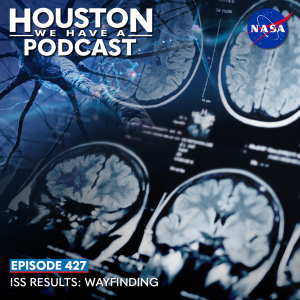
On episode 427, Dr. Giuseppe Iaria discusses scientific results the Wayfinding investigation on space station and what it reveals about how astronauts navigate, adapt, and form mental maps in space. This episode was recorded in May 15, 2026.
Transcript
Leah Cheshier
Houston We Have a Podcast. Welcome to the official podcast of the NASA Johnson Space Center. This is episode 427: ISS Results: Wayfinding. I’m Leah Cheshier, and I’ll be your host today. On this podcast, we bring in the experts: scientists, engineers, and astronauts, all to let you know what’s going on in the world of human space flight and more.
Wayfinding is an intriguing human research investigation aboard the International Space Station. It explores how astronauts form mental maps, how their brains process spatial information in microgravity, and how living off the Earth changes the very structure of critical brain regions tied to navigation, memory, and orientation. These findings don’t just help us prepare for long duration missions, they tell us something profound about how the human brain adapts in extreme environments. Behind the scenes, teams across NASA and our international partners have been working for years to make this research possible, from designing cognitive assessments and MRI protocols to coordinating astronaut schedules, to developing tools that help us understand how spaceflight reshapes the brain. It’s a massive effort spanning multiple centers, disciplines, and expertise, all working toward one goal: understanding how humans thrive beyond Earth.
On this episode, we have Dr. Giuseppe Iaria, Professor of Cognitive Neuroscience at the University of Calgary, and principal investigator of the Wayfinding Experiment, to be our guide as we explore what Wayfinding is teaching us, why it matters, and how it helps chart the course for future missions deeper into the solar system.
Let’s get started.
Well, Dr. Giuseppe Iaria, thank you so much for joining us today on Houston We Have a Podcast.
Giuseppe Iaria
Thank you for having me.
Leah Cheshier
I’m really excited to talk about the wayfinding experiment, but I want to dive in first to a little bit more about you. So, tell me about yourself, where you grew up, what your background is, and really how you first developed any interest in space.
Giuseppe Iaria
Well, that’s very nice to start this way. So, I grew up in a tiny little village in the south of Italy, Scala Coeli, Stairway to Heaven, beautiful village of about maybe at the time 800 people on a cliff looking to the Ionian Sea and mountains. Gorgeous place, but not that much to do. and I went to high school in a city close by, and terrible time. A nightmare time, like all teens in high school, I guess. And from there I went to Rome, the University of Rome, La Sapienza. I got into psychology, didn’t like it at first, until then I discovered biology, genetics, and then finally neuropsychology, and I developed an interest on the brain. And from then things happen. And so I had the opportunity to meet this incredible group of scientists at the University of Rome, I was doing some research with them. I did my honors thesis, and then eventually a training in neuropsychology, and I had since then next to me this incredible academic father figure of Gino Pizzamiglio, who has taught me everything I know about life and science.
Leah Cheshier
Oh, that’s fantastic. So, you touched on a lot of things that I wanted to talk about, but did you always know that you wanted to work in science? Was that something that you know, as you were younger, was a goal for you?
Giuseppe Iaria
No, I could say yes and make a big, you know, story about that, but no, not really. I went to Rome, did not know what to do. I went into psychology, because I, I, the only thing I knew about psychology was that it was diverse. There were a lot of things to study about psychology, so it was a good way for me to try to understand what I was really interested about. And so then I discovered the brain within psychology, and from the brain I discovered cognition and memory, and then my mentor at the time, and still my mentor, Gino Pizzamiglio, had this idea of giving me the opportunity to go to Montreal, so I went to the Montreal Neurological Institute, where I studied like memory, and I learned about neuroimaging, and I learned how to do neuroimaging. And so everything really started from there. The interest in cognitive neuroscience developed throughout the years. I didn’t really have a childhood dream about that.
Leah Cheshier
Fascinating. Okay, so this early research that you were doing, how did that really shape what you’re doing now with human space flight? Was it connected in any way?
Giuseppe Iaria
Yes, absolutely. So I developed an interest in processing space. Okay, so we will be talking about space in two different ways throughout this conversation, Leah. So I do space research, meaning the surroundings around you. Okay?
Leah Cheshier
Got it. Yes. Yes. Like “spatial.”
Giuseppe Iaria
We will also be talking about outer space, and so let’s keep it these two terms to refer to outer space and space. So I got interested in space and space for memory through an interesting group of patients who had what is called hemineglect syndrome, so they have a brain injury and they somehow are not paying attention anymore to the side of the space their body and or extra personal space that is contralateral to the lesions they had in their brain. And so I was fascinated by the fact that because of a you know sometimes small brain lesions patients were ignoring parts of their bodies or parts of their space and so I was start wondering about memory for those spaces and how they will navigate through spaces. So then I got into spatial memory. So, how do we remember places? How do we form memories? And from there I developed a very significant interest in topographical orientation, which is basically our ability to find a way around, or wayfinding, how you will call it.
And so within that topic, I was fascinated by something that usually scientists try to control. So, scientists, they usually try to control variability. Okay, they try to select people that are similar to each other to try to find an answer to their questions, and I was interested in the opposite. I was interested in that human variability. I was interested, interested in why people are different in terms of spatial orientation skills. What makes that difference?
Leah Cheshier
That’s that’s what I was going to ask, is do you find any similarities in the types of people that have better spatial understanding than others?
Giuseppe Iaria
Well, it’s a big spectrum. Okay, so there is a, there is a variety of factors that contribute to the variability in spatial orientation skills. There is a sex factor, so like being a female or males has an impact on spatial orientation skills. Aging as an impact, sleep as an impact. The spontaneous bias in using different information for orientation and navigation as an impact, and so it’s really complex. There are so many different factors that contribute to this variability in finding our way around. However, while studying this variability, I discovered clinical conditions, so what we called developmental topographical disorientation. So, there are certain people outside of that variability that are not able to find their way from childhood and in extremely familiar surroundings, like their home houses or the neighbors where they have lived their entire lives. And so this seems distanced from the space research and other space research that we’ll be talking about, but it’s not really so the research that I have done has taught me that there is one important source of information to find a way around, that is the ability to create a mental map, what we call the cognitive map. And one of the factors that contributes to creating a cognitive map of the environment is obviously the visual information that we process, but one critical factor is the vestibular information. And so the information that our vestibular system, some organs that are in our inner ears, they process while we move, while we accelerate, while we turn left, we turn right, and guess what? This information is provided to us thanks to gravity.
So that factor is very, very hard to study in humans. Very, very challenging to isolate that factor in humans, because we can’t really take away gravity unless we go deep into the ocean or we do some other artifacts, but they’re not really natural. Or we can study that factor by investigating spatial orientation skills in patients who actually have vestibular problems. But with vestibular problems they, they create a lot of, you know, like not just navigational problem, but a lot of clinical issues are very hard to makes very hard to investigate these people. And so the dream story was maybe one way to really understand what is the contribution of the vestibular system in spatial orientation navigation is to study astronauts while they are exposed to microgravity, and that’s where we are 10 years later.
Leah Cheshier
Well, before we dive into the outer space portion of that research, how is and why is understanding the brain, especially in this extreme environment, so important for humans as we prepare for exploration?
Giuseppe Iaria
Well, it’s, it’s extremely important because the brain is perhaps one of the most plastic organs we have in our body. So it changes and it adapts very quickly. But the problem is that how a condition and our habits, they do not follow that timeline, and so, while the brain is changing our habits, our memory of things are shaping our behaviors, and so we keep looking for skills that may not be neurologically supported anymore by the brain. And so if we travel, if we are staying for a very long time in microgravity the functional and structural property of the brain are changing according to the environment we are surrounded, but at the same time we still want to do things in a way we have learned how to do it in gravity. And so this mismatch, this conflict can create problems, as you realize when you’re, you know, using a Canadarm, you know, like something, by the way, in Canada, we’re really proud of.
Leah Cheshier
As you should be.
Giuseppe Iaria
To maneuver it in order to do, you know, like movement and displacement that could be, you know, like a catastrophic in the event of any misjudgment, right? So it’s very important to try to understand how the brain changes in certain environments, especially in extreme environments, so that we can learn how we can change our behavior in line with that, and not making mistakes that could be very detrimental.
Leah Cheshier
Wow. Okay, so I want to talk about the investigation itself that you’ve been working on, the Wayfinding investigation. Can you give me a summary of the main objectives of this research?
Giuseppe Iaria
Yeah, so the main objective is really trying to understand how is exposure to microgravity affecting the ability to orient in a small space, like, you know, the International Space Station. What are the changes that are affecting those, some cognitive skills. And what are the neurological changes that they come with that? And when I say neurological changes, I mean functional changes, but I also mean structural changes in the brain. So this is very, this is a very important question, because the vestibular information that I was mentioning about is processed throughout the brain in so many different regions, and so it’s pretty much natural to think that the change will be spread throughout the brain. So the objectives were very, very well defined.
Then we also had another very important objective, which was trying to understand, in light of the variability that I mentioned to you, trying to understand what is the difference between females and males into these changes, right? So, how females and males are affected by exposure to microgravity, and therefore their cognitive skills and neurological changes. And this is in light of the incredible number of evidence that we actually have on Earth of differences between females and males in special orientation skills and strategies.
Leah Cheshier
Okay, so when you talk about observing the changes structurally for the brain, how do you do that? Because I know you’re not taking everyone that comes back and you’re not able to physically potentially see those changes structurally, are you?
Giuseppe Iaria
Oh, yeah. So basically, what we do, we have developed throughout the years a set of tasks that are very representative of the, or they’re able to capture, I should say, the skills that you will be using in real life while you navigate, orient within the environment. We make use of virtual reality and virtual environments to do that. They’re very reliable in simulating real environments. So we do that to test your ability to find your way around to assess your skills, but also we are able to do that within the MRI machine, the Magnetic Resonance Imaging scanner. And so when we do that, we look at your brain while you are performing. Specific tasks, so what regions in the brain are involved in solving that task, and we also take some other very good pictures and use a variety of different, you know, like protocols to acquire different kind of data in the brain that will tell us about how the brain is changing in terms of structures. So in this case we did it like we did a pre-flight assessment, which basically means a variety of different tasks outside of the scanner of the MRI scanners, and then inside the scanners. Then astronauts left, they went to the ISS for about six months. Then they came back, and we did like some tests, like within a week after they came back, and post-flight comprehensive assessment again, similar to what we had done before their flight, at about two weeks after they came back. And then a follow-up six months later.
Now, the interesting story is that when I, when I proposed to do this study, Leah, everyone wants to test astronauts the minute they’re back. Okay?
Leah Cheshier
Yes, they do.
Giuseppe Iaria
And I was, ‘No, thank you, I don’t need that. It’s like, ‘Are you serious? Well, we need to do that, right? I said, ‘I don’t need to do that because I wanted to investigate the changes in the brain that are not confounded by the balance and gait issues that astronauts they have for a few weeks after they came back. And so we rely on a test that is called the platform test they you know we perform in the neurosciences laboratories at JSC that provides evidence that now astronauts are able to walk properly, to drive again, to go back home and have their daily life as they used to. And so after that test, we, that’s when we do our assessment. So that gives us the true impact of space flight on the brain that is not confounded by the mismatch of vestibule information between the experience of being microgravity and now back to gravity.
Leah Cheshier
So you’re gathering data before the flight, and then upon return, are you gathering data while they’re in space? Obviously, we don’t have an MRI machine on the International Space Station, but is there any other sort of, you know, are there questionnaires that you look to ask the astronauts of how they, how they orient in space and how they understand their spatial environment? Or is it really just the before and after times that you’re gathering data?
Giuseppe Iaria
So, the answer is not during the space flight. It was no doable. There are there are systems, there are opportunities to, for example, I believe there is an EEG system in the ISS, but EEG is very good for, you know, for knowing when things happen in the brain, but very poor for knowing where things happen in the brain. So, in terms of quality of images and the MRIs, what we actually needed in terms of question, as we didn’t have anything during the space flight, we just wanted to study the impact of that six month experience. Monitoring that impact throughout the six months is very, very challenging, but I have been so fortunate in my life to meet, like, Ford Burles. He had been a graduate student in my lab, and then a postdoc and research associate, and he had tested all our astronauts, and he had the opportunity to talk to all of them before and after the space flight. So, despite not having formal question, as we had just, you know, like a computerized test, he collected a lot of information that really, really truly helped us to make sense of our data later.
Leah Cheshier
Well, let’s talk a little bit more about the International Space Station. Why is this such an important laboratory for this work?
Giuseppe Iaria
So, it is an important place. Well, I have my, my own personal selfish as a cognitive neuroscientist reasons for that. I’ll tell you in a little bit. But it is a very, very important place, because it is the only place where we can isolate certain factors, okay. Not all of them. That’s why it’s not the ideal lab. Okay, it’s a good lab, but it’s not ideal, it’s not ideal, because we can isolate some factors, but microgravity is there, yes, but also radiation is there, isolation and confinement is there. You know, my fellow friends, astronauts, they will disagree, but you know, they, because I know they have great sleep there. Yeah, but their quality of sleep is not as good physiologically as they have here on Earth. Most likely they like it because they don’t feel the pressure of anything, right? And so they have, they have a good sleep.
So there are so many other factors that are at the same time, you know, like there in that environment to impact the systems, the brain, the organs, and everything else that we study, so it’s very hard for us to isolate which one is impacting, which is somehow a little bit of a limitation, but it remains an incredibly important, it has been an incredibly important place for us to move science forwards, a lot of science that it did help people on Earth.
Leah Cheshier
Yeah, that’s a great point, because we do think once you’ve removed gravity from the situation, that it makes it.. I mean, I’ll say we think I typically look at the International Space Station, it is a one of a kind lab that we cannot replicate on Earth because of that lack of gravity there, but there are still factors that impact outcomes of experiments that you know we can’t truly take away. So that’s a very good point. I’m glad you brought that up.
But this study has been ongoing since 2017 if I’m correct, so how did you get started? Can you walk us through the beginning of your collaboration with NASA?
Giuseppe Iaria
Yeah, 2016 actually, and I think we conceived the study in 2015. So I remember being in my office with Ford at the time, and we were trying to reasoning about this implication of vestibular processing on spatial orientation and navigation, so we were just fantasizing about, you know, like the idea of testing astronauts. And then we looked online and we found this announcement of opportunity from the Canadian Space Agency, and so we said, you know what, why not?
Leah Cheshier
Exactly!
Giuseppe Iaria
We can just apply! And if there is something I’ve learned in my short life, I would say it is like it can be summarized that you never know. And so we basically said, okay, let’s put in an application, we, we spent a significant time, amount of time to really conceive, you know, from a scientific perspective, the investigation we wanted to do, so we applied to the grant, we applied for this grant, and we were selected! And that was really, I tell them, I tell CSA that is like willing a lottery, they don’t like it, because they say, “no, we are not a lottery, we really fund research.” Yeah, it’s true, but you know, when you think that the most challenging grant, you know, agencies, they have a success rate of about 8-9% Those are the most, you know, successful ones. When you get to NASA and the agencies in general, it’s really one in a million times you will get, so anyway, we were extremely, extremely happy about the opportunity. So we started from there. So the Canadian Space Agency created a team, amazing people who helped us to navigate the, the NASA, you know, like policies and system put in, put in, like a research study that will have been then performed there.
This is a very collaborative project, you know. The Canadian Space Agency, and many people there, have helped throughout the past 10 years. We went through a pandemic, okay, Leah, and that was extremely challenging, so that’s why you know the collaborative effort is the winning one. You know, at the time we had the support from the Neuroscience Laboratory at JSC, Jacob Bloomberg, and Scott Wood, you know, they were directing the laboratory at different times, and without your supports, we have not been able to keep collecting data, so very collaborative, but it started everything started from funding from the Canadian Space Agency.
Leah Cheshier
Wow, that is so fascinating. I love hearing that story, and I love it too, because I’m always trying to explain to people that, you know, the astronauts are not always scientists, so a lot of the times when they’re conducting science or studies on the International Space Station, it’s not something that they’ve conceived, and you know that they’re executing their own experiment. It’s really something that’s been developed from teams here on the ground, and that everyone has an opportunity to propose science that can be conducted there. So I’m very, very happy to hear that story. But I want to talk about some of the challenges too that come with conducting such a long-term cognitive and neurological study in microgravity on the International Space Station.
Giuseppe Iaria
Yeah, so there are some limitations, right, in the research we. Do some of these, are you know, crossing all disciplines, and in the size, as we do with astronauts, you know, one of those is sample size, you know, we always have very small sample sizes. Sometimes single case studies, and they are extremely informative, but we can’t really use that data to generalize, you know, our findings to the general population. So, sample size is a big factor.
I was, so I was so happy when the Canadian Space Agency has decided to extend our project because I made a case for a larger sample size, because I wanted to investigate females and males, and as you know, there is a – there has been historically prevalence of males flying to the ISS. So, again, thankful to the agency, we were able to extend it and collect, you know, I think a simple sized about 20, 21 astronauts, which in the field of space, outer space health research is a good number, but in a neuroimaging field is not necessarily a huge number, so that’s a factor, a limitation. Um, another limitation is the incredible, you know, like qualities of participants. Astronauts, are you know, we call them super humans, they’re not the average, you know, they know how to fix a toilet, and they can work on quantum computing systems, you know, and so they’re very, very special, so against unique population. But when it comes to the cognitive and neurological changes, I think the multi-factor, multi-factor issues that I explained to you earlier is probably the biggest challenge, so I can talk to you about my findings, and I can relate most of them to the impact of microgravity, but I cannot exclude that radiation had an impact, that isolation and confinement had an impact, that you know quality of life that died has an impact, now Nutella had an impact so there are so many factors, so from from a cognitive and neurological perspective, I will say that that is probably the most challenging factor.
Leah Cheshier
Well, is there ever? I mean, I guess there’s truly never a scientific experiment where you have the perfect scenario, right? I mean, you were mentioning you can chalk most things up to being due to a lack of gravity, but you can’t exclude radiation or confinement or isolation or anything like that. Is there ever some sort of a perfect lab or a perfect experiment where everything is accounted for? I don’t think so.
Giuseppe Iaria
No, you’re right, it is not, and that’s why you know, like, it’s very important to collaborate and to be part of a transdisciplinary research project, where the same topic is investigated from different perspectives. So for example, I have a training in neuropsychology, and I can learn about specific brain regions and connectivity of, you know, like those brain regions from a functional perspective in patients who have a damage in those brain regions. Then I can also use neuroimaging techniques to study healthy controls and see the impact of those regions in healthy controls. I can also investigate similar topics with with rodents. I’m actually right now involved in in a project that I’m very excited about with my my colleague Savraj Grewal and my amazing graduate student Tejdeep Jaswal studying Drosophila fruit flies, so we put fruit flies in microgravity, and we basically study the impact of microgravity on their response to stress. So and we’re trying to do this from a cognitive perspective, from from a physiological perspective, and also genetics perspective. So it’s it’s all these perspectives together that really provides knowledge about something that is not an ideal place, there is not an ideal lab. You’re right.
Leah Cheshier
Well, what about you know, over the years, how has this Wayfinding research changed? Have you been able to introduce new tools or technology, or even your findings initially? Has that has that modified how you’re conducting your work?
Giuseppe Iaria
So technology not much. The development we had in the last 10 years, there has been some, but not a huge impact on our research studies. But findings, yes. So for example, we start seeing like some preliminary findings on sex differences between females and male astronauts, so that really had an impact on extending our project and changing a bit, adding another objective software for data analysis that had a major impact, as well. You know, throughout the years, new software, new systems have been developed for analyzing neuroimaging data, so that had an impact as well. We actually tried to contribute to some new software development and and data analysis protocols because of a major issue that we encountered when we looked at the brain of astronauts after they came back from from space, you probably know that there is a shift in the fluids and the fluids come down and the brain goes up and the brain squeezes within the skull and the meninges, and so that has a confounding factor. So we came out with a few suggestions, which we have published and described in our papers, that people can use when they look at the brain of astronauts and trying to analyze their neuroimaging data, otherwise you think there is an increase in volume here and there, but it’s actually a mislabel of the software. Because the software have been developed for the brain to be in a certain region within the skull, and now the brain is not there anymore, so the software is making a lot of mistakes, so, so that’s that’s the development that has helped us significantly, that that specific knowledge.
Leah Cheshier
Well, let’s talk about your findings. You’ve, you know, touched on it just a little bit, and I’m very interested. So, what are some of your notable findings, and how do they, how are they significant for human space flight?
Giuseppe Iaria
Well, I think they’re extremely significant. That’s a bit of a biased opinion. No, but the evidence, it’s very clear for us. So, first of all, we have some functional and structural changes of the brain that are critical. But before getting there, what we have documented is a change in the cognitive strategies that astronauts they use for orientation and navigation. Okay, so you know if you will move to, you mentioned Calgary earlier. If you will move to Calgary for the very first time, you will find an apartment downtown, you will start looking around for landmarks, and you will start creating a mental map of where things are around you. Okay? Well, when you are in a very confined space where landmarks are really not that relevant, but still there, there’s a computer, there’s a laptop, there is something, there are some stickers around, but at the same time you can see the same things upside down, and you don’t even know that you’re upside down, so that’s a very difficult place to try to make sense of where things are around you. And so we have discovered that astronauts, they change their strategy to find their way around. So they turn around in a specific way, they rely more on body turns, and so they entering. They, for example, learn how to enter a specific module in order to be in the right position when they are entering and facing the laptop, so they turn around, they twist their bodies, so they’re really changing strategies for orientation and navigation. So the very first thing that we have discovered is that that change has an impact on how the brain is engaged when they come back and try to resolve the same spatial orientation task that they resolved earlier before their mission. And so we found out that there is a specific region of the brain is called precuneus that is in the posterior part of the brain that is there to integrate a variety of different information for providing additional information that will tell you where you are in space. Okay? So in that region is not engaged anymore as much as it was before when you come back from when an astronauts come back from a space mission. Which basically means that activity is lower, it means that that part of the brain has not been involved that much anymore while performing the task while navigating or moving within the ISS.
So that is not surprising to any neuroscientist, you know, that’s basically plasticity, that’s not a big, a big thing. But quantifying that is very important for a variety of reasons, and I’m sure we will elaborate a little bit later. So, the other things we found is that, so this change in cognitive strategies and behavior, if you wanted to call it a. Um, it’s also reflected in some structural changes in the brain. Okay, so you are probably aware of our hippocampal study, and I’ll tell you a little bit more about this. But the structural changes that we have indicated, they are some of the very, very significant. So, again, so let’s think about, for example, the hippocampus, because this is the structural changes that we have specifically documented in one paper. So we found, for example, the hippocampus is important for memory, for special memory, for a variety of things, and is a region within the medial temporal lobe, so it’s a region in the middle of your brain, somehow on both left and right hemispheres, it’s very important for a variety of tasks that we do. But it’s also very well known to be important for spatial orientation and navigation. It’s one of the region, the key regions important for spatial orientation and navigation. And so the hippocampus is a very long structure that goes from the front to the back of the brain, more or less, and it’s divided in different sub regions. The anterior part is usually very important for acquiring information, for dealing with, you know, emotional information while you’re forming some memories, right? Because very close to all the regions that are processing emotions, the mid part is more of a transition kind into like a more established memory in the brain, which is the posterior part. And the posterior part is there to really recall some of this memory, and then the recall transfers this information through the precuneus and the posterior regions to the top of the top and front of the brain, and all this creates a circuit that’s very, very important, but it’s within the hippocampus.
So, what we found, what we found that, you know, exposure to microgravity for six months has a significant impact on the volume of the left hippocampus when compared to the right one. So the left hippocampus has a smaller volume as compared to the right hippocampus when astronauts come back after six months of experience in microgravity. When we looked at the different sub regions, we found that the left anterior part of the hippocampus is significantly smaller as compared to the left center body part and the posterior part, and we also find that the right body part of the hippocampus is also decreased in volume as compared to other parts. So it sounds a little bit complicated, but picture this way, the anterior and body parts of the hippocampus, so that two thirds of the hippocampus is decreasing in volume more on the left than on the right. So the interesting story is that why is that, so we looked at the not just the hippocampus, we looked at other regions in the brain, so we had what we called a location control region, so we took another region very, very close to the hippocampus, the amygdala, and we checked there for decrease or increase in volumes, and we didn’t find any. Then we looked at other regions in the brain, like the coded nucleus, and other structure that we know they’re important for using specific orientation strategies, and we also know, contrary to our expectations, we found that there are no changes in there. So, where is this change coming from? Okay, so we found some very interesting evidence in the literature. So, first of all, the left hippocampus is more vulnerable to stress as compared to the right hippocampus. The anterior region of the hippocampus, in general, is more vulnerable to stress. The central part is more vulnerable to aging.
Okay, so stress is basically means high cortisol, but stress also has an impact on accelerated aging, and so it seems to be like again an explanation of different factors contributing to structural changes in the brain that are very, very important. Somehow these are in line with many other systems that my colleagues have investigated throughout the, you know, the last 25, 26 years within the ISS. So all other systems are going through an accelerated aging process, bones, muscles, everything. So astronauts, they go there, they’re 45 years old. They come back six months later, their physiology is 65 years old. Then, within a year, they recover about half of it, but still, the exposure to radiation, isolation, and confinement, the stress they go through, and a variety of different factors has an aging impact, so maybe that impact has an evidence within the brain as well.
Leah Cheshier
Wow. Okay, I never, I never could have imagined that you would see physical changes of that significance in the brain, and potentially due to all of those factors, not just microgravity, but of course the environment as a whole, and everything that they’re asked to do during that time, so that’s very interesting.
Giuseppe Iaria
Leah, can I add something else? We found it very, very, very, very important. So, when we looked at the brain of astronauts coming back, we looked at a variety of different things, because we wanted to find out the correlates of that behavior or cognitive change related to spatial orientation and navigation. Okay? And so we had this protocol, we thought about that, where we basically scanned the brain in a very particular way to acquire information about what we call microbleeds. Micro bleeds are tiny little infarcts in the brain, they’re not clinically relevant. Okay? They’re not like strokes, they’re not mini strokes. These micro bleeds are within the range of a millimeter, but with aging we all develop those. Okay, so the older we can become, the more of these micro bleeds we have. And guess what we found? We found that when we look at the brain of astronauts as compared to people on Earth who are 20 years older than the astronauts we have in our sample sites, we found that the astronauts who have been to outer space in the ISS more than once, so repeated missions, they have more micro blades in their brains than the same individual 20 years older on Earth. So this is another impact, another evidence of maybe an accelerated aging process that, in our opinion, is really, really, really important to follow up with.
Leah Cheshier
Yeah, that sounds very important. I mean, I’m learning a lot about just the brain on Earth right now, so when you think about everything that’s required of you in space as well to know that those changes are happening, and everything that you know you’re asking an astronaut to do, and some of these changes I’m certain is that irreversible?
Giuseppe Iaria
No, some of these they are reversible. For example, like, yeah, some of these they are reversible. Keep in mind that the micro bleeds are reversible as well, but keep in mind that the structure I was talking about, the hippocampus, which is not the only place where we actually found changes. Okay? There are other places where we found changes, but very hard to explain, you know, like, and I think later I’ll tell you why, but those are very plastic structures. Okay? So, so the neuroplasticity works, you know, in a good and bad way, you know, it’s a change, right? So you can make a change, and within the medial temporal structure, the hippocampal complex, you know, physical exercise, good diet can reverse certain things.
Leah Cheshier
So, your paper, and you also mentioned here today some of the gender-specific findings that you see differences in males and females, and how their brain changes during this time. What are those differences, and does that help us with our future space flight planning?
Giuseppe Iaria
Yes. So, well, we first call them sex differences, because we actually, we are not collecting information in terms of gender, so we, okay, we talk about sex at birth. So we found, generally speaking, that, and this is consistent with the literature so male astronauts have a larger volume loss of the right hippocampus as compared to females. Okay, so we explain that on the resilience that females have to deal and to cope with stress, which is something very well known, you know. Females have resilience, men don’t have that much.
Leah Cheshier
Listen, you said it, not me.
Giuseppe Iaria
I’m happy that we are, we are more and more, you know, like being aware of that, and so even within the space health research, there are more and more women traveling to space, right? And so space is a very stressful place to be, outer space, and so we know that females are more resilient to stress. Incidentally, this is this is the same findings that we also have in the fruit flies that I was talking to you about a little bit earlier. Very, very interesting. But again, to a scientist, not extremely surprising. Okay, but to human scientists, maybe yes. So females are more resilient than men. So, guess what? Maybe the next NASA president should be a female. Maybe the next few astronauts should be more females than males. But aside from the physiological differences, there is, there is an impact of all this science, and the impact is, if you know what the differences are between females and males, you can work that out, so you can train, you can train astronauts, you can train individuals to develop certain skills, you can select individuals with certain skills over other and assign people to different tasks, right. So knowledge is extremely important for success.
Leah Cheshier
So, what are the next steps for the Wayfinding research? You mentioned that it’s been extended. What are you hoping to do next with this?
Giuseppe Iaria
Oh, no. So, it has been extended, like when we were about five years into the project, so that we’re done, we’re done.
Leah Cheshier
Okay.
Giuseppe Iaria
I think now is a very exciting time. So, we have. so what you have read so far are manuscripts that we work throughout, you know, our data collection, but we now have very, very interesting data on a six month follow up. Okay? So we wanted to know how the brain and cognition of these individuals has been affected by return to gravity. Okay? So that is a very important piece of the story. It’s extremely important because one of the things that we really care about is not just trying to understand, trying to answer our scientific question, but we wanted to make sure that our astronauts are safe when they come back to Earth. So that’s extremely, extremely important. So we are looking forward to do this analysis now. We have done, our last data collection was two months ago, so last data points, so we’re really, really excited about that. And then we’re hoping to follow up on specific, you know, research that we think that extremely valuable, we have as a future studies, for example, we have developed throughout the years like a virtual reality version of the ISS, where we measure like this healthy individuals, you know, usually undergraduate students performing tasks in our laboratories. But we have a setup where we simulate a little bit of microgravity or zero gravity chairs. They sound really fancy, but they are basically nicely nice chairs that you will find in your backyard. Lean down a little bit. But with that, with goggles, with the virtual reality tool, it really, really helps to simulate microgravity, so where we have investigated the impact of space orientation on microgravity, we found very, very similar findings. So those are very encouraging, because now we can use the same environment or a similar one to train people or to prepare people for that specific environment. Something has already been used in other, in other settings, like, for example, post-traumatic stress disorder, you know, exposure to specific contexts where you can control some stuff. So, that’s, that’s very exciting.
So, the only thing that I would be very excited about, and very, I think it’s very important, is the micro bleed story that I mentioned to you earlier. Unfortunately, you know, like we work so hard on our data, we publish our findings, we have some very good, as you can see, media exposure. People are interested in this, but rarely, rarely you receive a call from the agencies has funded, you say, “Hey, we found this scientific paper is very, very important. Can we follow up on this? Can we do something?” I don’t know if there is that mechanism. We haven’t received that call yet, and I’m not expecting it. I’m just saying that sometimes a loss of an opportunity. There is the more general opportunity, which, which we will follow, which is we’ll write a new grant, and we will write a new proposal, but then the story is that we are going to compete again, and now are we going to win for the second time a million dollars? I don’t know. So it’s a little bit of a challenge that way, but the micro bleeds story is extremely, extremely important for following up on the health of our astronauts, so our future project will probably try to investigate, you know, like former astronauts, retired astronauts, to see a little bit how they are doing? Keep being the super human individual, but how is their brain doing? You know, how is their aging process doing? I think these are extremely, extremely important research to follow up. Sometimes the scans are very easy to do for me, but extremely difficult to implement from a policy perspective, right? So the story is more complicated we would like to tell, but hey, we do our best.
Leah Cheshier
Absolutely. Well, what excites you about this? We’re about to have to wrap up. I just want to know, when you look at the future of cognitive neuroscience research in low Earth orbit or beyond, you know, we’re looking at going back to the moon and having a continuous presence there, or someday Mars. What excites you about what your studies could lead to there, and what we might learn?
Giuseppe Iaria
Yeah, well, I’m excited about different things. First of all, you know, using outer space as a, as a place to investigate the brain is just incredible for me. You know, like it’s one of these factors that I haven’t even contemplated in my entire life. Okay, so I mentioned to you about the neuropsychology, the brain damage patients, the animal research, and stuff. Now you can study in a place, you can study the brain in a place where the brain is changing, the environment is so unique, it’s, you know, like it’s… So from a cognitive neuroscience perspective, that is an incredible gift, right? So that I’m so looking forward to it. I’m looking forward to the commercialization of outer space labs. Okay, NASA, and you know, like all the countries who have contributed to the ISS, they have provided an opportunity to the human kind to really evolve, right, in terms of knowledge and in terms of technology development. But the commercialization of the next labs, you know, orbiting around this planet, it will be amazing. So I can totally see not anymore like the one incredible ISS, but I can see at least two or four different labs orbiting.
Now, the other exciting thing is that, and I have worked with some of them, Mark Pathy is, you know, is my favorite like private astronaut is Canadian. He has funded our research and our network, the Canadian Space Health Research Network, as well. So private astronauts are an incredible resource for us, because they, they are like me, you know, they eat cheese, they’re a little bit of tummy, they drink wine, you know, they’re not the human, super human kind of the people we have when they go to the ISS. So that’s an incredible opportunity from a scientific perspective.
And then the things that excite me the most, but I have to say sadly, maybe just the idea of it, because I really don’t know if it will happen throughout my lifetime, but the combination of this, the combination of those new tools to truly investigate the brain as an organ rather than looking at its parts, which is very rudimental, and you know we put together this puzzle, but it’s very, very challenging. So I’m looking forward and excited about the opportunity to keep all these elements together with maybe like a quantum physics, you know, like a major development in creating a tool that will be able to look at the brain in a very, very different way, extract information from the brain and try to understand something that is naturally so interconnected in a way that is really, really beyond our current understanding.
Leah Cheshier
Yes. Well, I hope it does happen in your lifetime, because I hope it happens in mine too. That would be absolutely, absolutely phenomenal. Well, as we wrap up today’s conversation, we encourage our listeners to dive deeper into the incredible science happening every day aboard the International Space Station. You can explore a wide range of groundbreaking research, including cognitive neuroscience, human health technology demonstrations, and much more by visiting nasa.gov/stationresults, where new findings and mission updates are published regularly. So, Dr. Iaria, thank you so much for taking the time to be here to break down Wayfinding for us, why it matters, and just for joining us on the podcast. We really appreciate it.
Giuseppe Iaria
Thank you, Leah. It was really my pleasure.
Leah Cheshier
Thanks for sticking around. I hope you learned something new today.
Our full collection of episodes and all the other wonderful NASA podcasts can be found at nasa.gov/podcasts. You can learn more about NASA research and experiments nasa.gov/stationresults.
On social media. We are on the NASA Johnson space. Center pages of Facebook, X, and Instagram. If you have any questions for us or suggestions for future episodes, email us at nasa-houstonpodcast@mail.nasa.gov.
This interview was recorded on May 15, 2026.
Our producer is Dane Turner. Audio engineers are Will Flato and Daniel Tohill. And our social media is managed by Leah Cheshier Mustachio and Kelcie Howren. Thanks to Joseph Zakrzewski and Nicole Rose for their preparation and coordination on this episode. Houston We Have a Podcast was created and is supervised by Gary Jordan. Special thanks to Dr. Giuseppe Iaria for joining us today, and to everyone involved in the International Space Station’s Wayfinding investigation.
Give us a rating and feedback on whatever platform you’re listening to us on, and tell us what you think of our podcast.
We’ll be back next week.
3… 2… 1… This is an official NASA podcast.