Gary Kellogg
이 뉴스, 어떠셨어요?
한 번의 탭으로 반응을 남겨요 · 로그인 불필요
Gary Kellogg
Intelligent Flight Systems, Associate Director, Research Directorate at NASA’s Langley Research Center
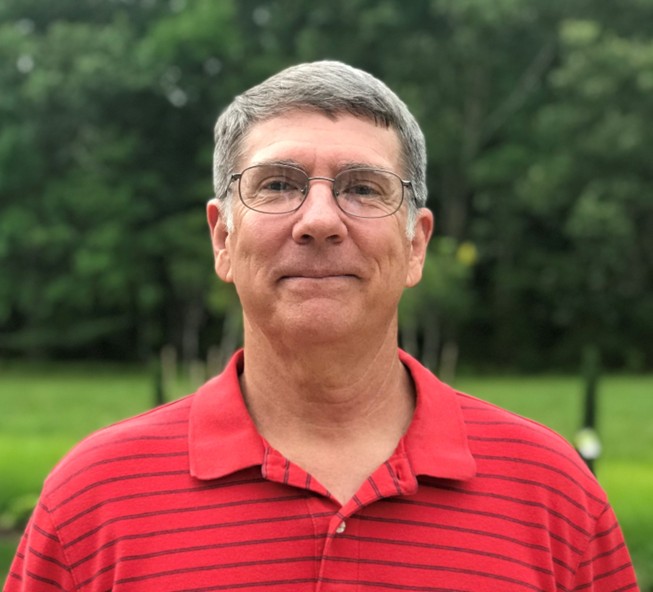
Gary Kellogg is the Associate Director for Intelligent Flight Systems for the Research Directorate at NASA’s Langley Research Center. He has also served as the Branch Head of the Autonomous Integrated Systems Research Branch as well as the Branch Head of the Electromagnetics and Sensors Branch at NASA Langley. In 2019, Mr. Kellogg served a 90-day detail assignment as Director of Mission Operations at NASA’s Armstrong Flight Research Center before coming to NASA Langley. This detail provided the opportunity to lead a diverse directorate with responsibility over Armstrong’s Dryden Aeronautical Test Range, Spectrum Management Office, Information Technology Infrastructure, and Simulation Capability.
Prior to that detail, he served as the Deputy Director of Mission Operations at NASA Armstrong since 2016. In 2015, he was selected as the Deputy Chief Information Officer and Branch Chief of Information Services at NASA Armstrong after serving as the Branch Chief of Simulation Engineering since 2010. He has worked on various projects at NASA that includes the X-29 Forward Swept Wing, X-31, X-33, F-16XL Super Laminar Flow Control, F-18 High Angle of Attack Research Vehicle, X-56, X-43, Autonomous Aerial Refueling Demonstration, Autonomous Formation Flight, and others.
He received his B.S. in Electrical Engineering from California State University in 1988, an M.S. in Electrical Engineering from California State University in 1993, and coursework for a M.S. in Mechanical Engineering from California State University in 1995. Additionally, he also graduated from the United States Air Force Squadron Officer’s School in 1994, Air Command and Staff College in 1996, Air War College in 2003, and completed the Advanced Joint Professional Military Education curriculum at the Joint Forces Staff College in 2013. He has been with NASA since 1985, first as a co-op student, then full-time upon graduation in 1988.