Remembering tenacious, ubiquitous Lindsey Graham
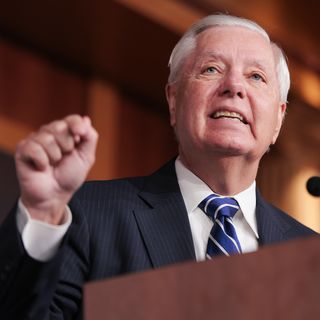
Sen. Lindsey Graham (R-S.C.), who died at 71 last evening from what his office called a "brief and sudden illness," found a way to remain relevant through nearly every phase of modern Washington.
The big picture: Graham first rose to national prominence in 1999 as one of the House managers during President Bill Clinton's Senate impeachment trial.
After winning election to the Senate in 2002, Graham became one of President George W. Bush's most reliable defenders.
Graham's closest political ally, and best friend in the Senate, was the late Sen. John McCain (R-Ariz.). The two shared a hawkish worldview, a deep skepticism of Vladimir Putin and a belief that American power, when used wisely, could be a force for good.
Zoom out: Long before Graham became a Sunday show regular, he was McCain's loyal wingman — riding the campaign bus, bantering with reporters and smoothing out conflicts among McCain senior aides.
Graham was friendly with the press, throwing back White Russians and telling political tales from South Carolina. To the end, reporters called him directly on his cellphone. Sometimes he called them.
State of play: Like much of Washington, Graham changed during the Trump era. He grew more guarded with reporters, and could be short with them in the Senate subway.
He forged a close working relationship, and a frequent golfing partnership, with the president who once dismissed McCain, a naval aviator and prisoner of war in Vietnam, as "not a war hero."
Graham and Trump were largely aligned on Iran. But they often diverged on Russia. Graham consistently pressed for tougher sanctions on Putin, while Trump sought to preserve room for engagement.
After private meetings at the White House, Graham invariably sang from Trump's song sheet.
Go deeper: Sen. Lindsey Graham dies suddenly at 71 ...
이 뉴스, 어떠셨어요?
탭 한 번으로 반응 · 로그인 불필요