Fafen calls for overhaul of KP Right to Information Act
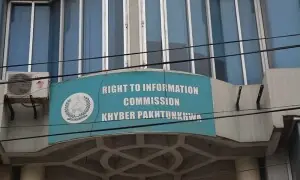
ISLAMABAD: Twelve years after Khyber Pakhtunkhwa became Pakistan’s first province to enact a Right to Information (RTI) law, the Free and Fair Election Network (Fafen) notes the pioneering framework remains “underutilised and vulnerable to disinformation due to weak enforcement and structural gaps”.
In a policy brief released Saturday titled “From Pioneer to Performer: Making Khyber Pakhtunkhwa’s Right to Information Act Work Against Disinformation”, Fafen urged the KP Assembly and provincial government to launch targeted legal and institutional reforms to transform KP’s pioneering right to information framework into an effective mechanism for proactive disclosure and public accountability.
KP enacted the law after Article 19A on the “right to information” was added to the Constitution through the 18th Amendment in 2010.
But Fafen’s assessment of 190 provincial public bodies’ websites found a stark implementation gap: on average, public bodies proactively disclosed only 57 per cent of the information the law requires them to publish.
“Such information gaps create space for speculation, misrepresentation, and disinformation about government actions,” the brief noted, stressing that proactive, enforced and accessible publication of official data is the most effective counter to false narratives.
In its policy brief, Fafen identified three main legal flaws and two institutional gaps holding back the Act. It noted that the definition of “public body” was excluded many private entities and NGOs that receive public funds, subsidies, tax concessions or government contracts.
“The law mandates proactive disclosure but lacks enforcement mechanisms, timelines, and penalties for non-compliance. Public bodies publish information in different formats, making data hard to compare, use, or verify,” it added.
The brief also pointed out that the KP Information Commission lacks financial and operational autonomy, affecting its ability to enforce the law. The commission cannot conduct periodic inspections of records or issue binding instructions on record management and disclosure timelines.
Fafen recommended widening the “public body” definition to cover all private/NGOs receiving public money directly or indirectly.
“The definition of ‘information’ should explicitly include digital and machine-readable records. Citizens should have the right to inspect works and documents, obtain certified copies, and receive information electronically,” it maintained.
It called for giving the commission powers to inspect public bodies’ records and issue binding instructions on record management, disclosure requirements, and timelines and creating a dedicated “Khyber Pakhtunkhwa Right to Information Fund” to secure financial independence.
It also suggested an audit of the annual accounts by the Auditor General of Pakistan and tabling the same before the KP Assembly and Public Accounts Committee.
Furthermore, it called for the introduction of digital tracking of RTI requests with email/SMS notifications at each stage of processing. It also stressed the need to develop an RTI mobile application and allow virtual hearings to reduce access barriers for citizens in remote districts, and mandatory, tailored disclosure formats for different categories of public bodies.
“The commission should develop these formats in consultation with departments, update them annually, and publish all data on a central portal to improve consistency, usability and comparability,” the brief noted.
The brief is part of Fafen’s “Countering Disinformation through Reliable Government Information” campaign.
The KP law was a landmark in 2013, but without proactive disclosure and tech upgrades, it risks falling behind citizens’ expectations in 2026. Fafen’s findings mirror broader concerns about transparency in Pakistan. If KP upgrades its law, it could set a standard for other provinces and the federal government. ...
이 뉴스, 독자들은 어떻게 느꼈나요?
첫 반응을 남겨보세요로그인하면 감정 반응에 참여할 수 있어요.