The secret Trump administration battle to fight Chinese AI
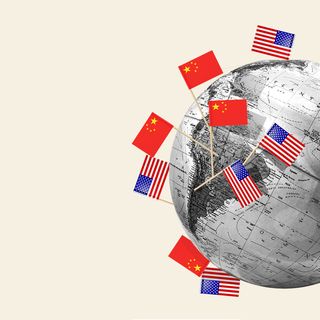
The Trump administration is showing signs it could ban cutting-edge Chinese AI models — a momentous move that could lock in dominance by OpenAI and Anthropic.
Why it matters: Parts of the administration have tried to implement de facto bans on foreign open-source models before, knowledgeable sources tell Axios. Last week's rise of Chinese model Kimi is reigniting those efforts.
Pro-competition voices fear the implications.
U.S. companies are increasingly using open-source models from China because they're cheaper and, as seen by the advent of Kimi, just about as good as the domestic technology.
Behind the scenes: The Commerce Department last year considered adding multiple Chinese AI labs to its "Entity List," which would effectively cut off U.S. access without a license, a source close to the administration told Axios.
The National Security Agency and White House Office of the National Cyber Director also considered putting out an advisory on Chinese AI lab threats last year, practically discouraging U.S. companies from using their tech, the source said.
The White House considered implementing an executive order saying U.S. companies could only host Chinese models if they could guarantee security and take liability if it were breached, the source added.
Commerce last summer also circulated draft rules within the administration leveraging its authorities to secure domestic supply chains to target Chinese open-source models, another source close to the administration said.
Administration officials keen on keeping regulation from stifling innovation killed all of those efforts.
Key voices, such as former White House adviser Sriram Krishnan, have since left the premises and national security hawks have grown louder.
With that shift in personnel — along with the rise of more powerful Chinese tech and fresh cybersecurity fears — ban momentum is picking up again.
For the record: Neither the White House nor the Commerce Department responded to requests for comment.
The big picture: The administration wouldn't need to impose an outright ban to get U.S. companies to drop those Chinese platforms.
"What's actually happening is slower and more durable," one source familiar with government discussions said, citing procurement rules, Entity List threats and public pressure campaigns aimed at U.S. companies using Chinese models.
Instead of a ban, another source familiar with government discussions described a push to highlight potential backdoors and lack of security with Chinese models, and the governance issue that brings.
It's an offensive approach where the administration encourages a more innovative U.S. open-source ecosystem, the source added.
Yes, but: Powerful U.S. alternatives are still limited at best compared to cheaper and more practical Chinese models.
What they're saying: David Sacks, an outside White House AI adviser, wrote Sunday on X: "We are at a critical inflection point in AI policy. The leading closed labs, already a duopoly in terms of AI model revenue, want the government to eliminate their open-source competition."
Sacks has long warned against regulatory capture that would benefit the largest U.S. labs and stifle competition.
While not outright bans, the approaches under consideration would have a chilling effect on Chinese open-source tech and U.S. companies that rely on it, the source close to the administration said.
The source described leading AI labs or their allies approaching the administration every 3-5 months with an idea to ban open-source models.
What to watch: Chinese leader Xi Jinping is feeling emboldened in the AI race. Pressure is mounting for the U.S. industry, open-source or not, to react.
The bottom line: Anthropic and OpenAI have long been loud proponents of safety regimes that in some cases include licensing. Those pushes have been more abstract — until now.
"They have laid their cards on the table," Sacks wrote. "It is time for the rest of Silicon Valley — the vast majority that still values open competition — to do the same." ...
이 뉴스, 어떠셨어요?
탭 한 번으로 반응 · 로그인 불필요