Did Trump Officials Rig High School Contest Against Sikh Finalist?
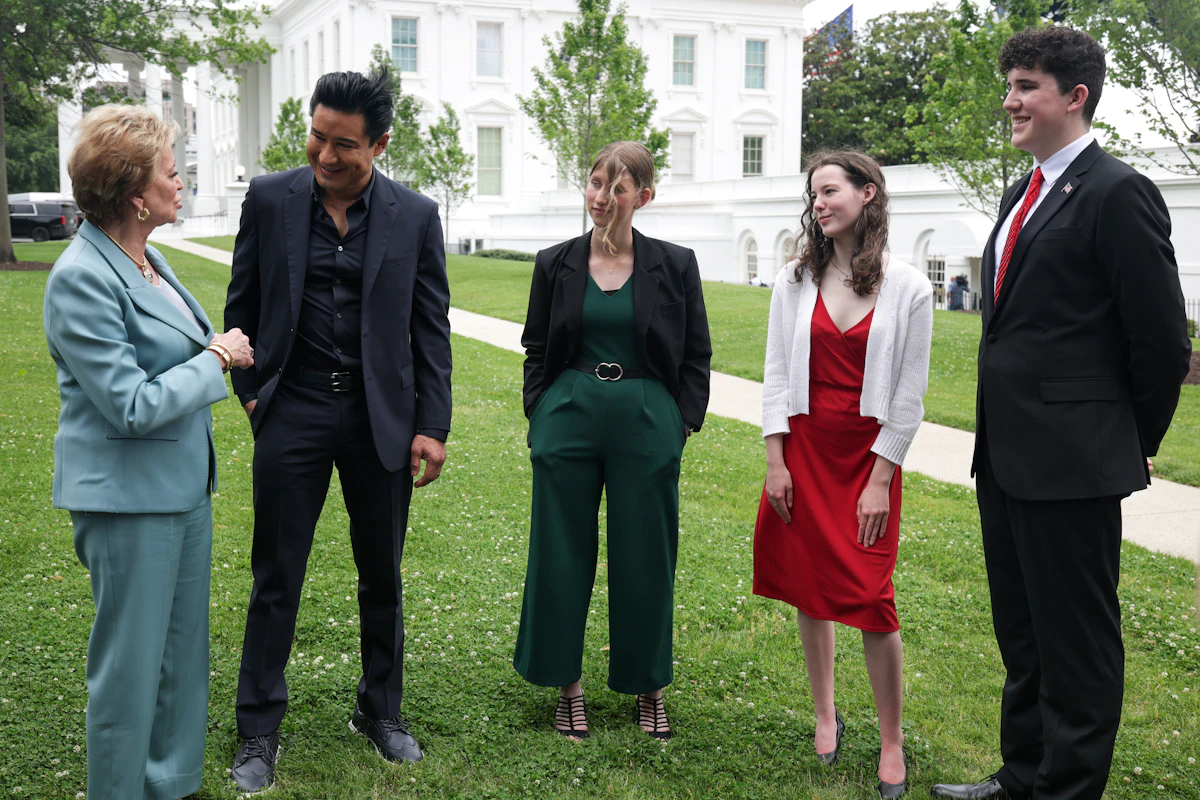
The Presidential 1776 Award competition was set up by the Trump administration to honor the U.S.’s 250th birthday with a civics contest for high school students.
But the family of Aangad Singh, 15, believes he may have been kept out of the competition’s final because of his Sikh background and visible turban, NOTUS reports.
Singh, a rising high school junior who lives in Connecticut, entered the competition in February just like other high school students around the country. He scored well enough to reach the finals in Washington, D.C., at the end of June and make the final eight. But his elimination after that left his family—and many of his competitors—puzzled.
The Singh family didn’t think Aangad had done poorly, but there wasn’t a live scoreboard. Other contestants told them after the competition that they were sure Aangad had won and were shocked that he wasn’t in the top three. When Aangad’s mother, Ramandeep, asked an official with the Department of Education, which helped run the contest, for the final scores, the official told her that was proprietary information.
So, the Singh family waited until the competition was televised on CBS three weeks later, and Aangad was shocked to learn some of his correct answers were labeled wrong.
In one instance, Aangad was asked to give four examples where federal courts have jurisdiction as outlined in Article 3 of the Constitution.
Two of his answers—“Parties of state and citizens of another state,” and “Case with state and foreign nation”—were marked wrong. He showed his father a copy of the Constitution showing that his answers were right.
In another instance, during a lightning round, Aangad was asked “Which amendment ended slavery?” and his answer was marked wrong. Initially, he thought his pronunciation of “Thirteenth” was bad and that his th- sounded like an f. But he was reassured when the TV subtitles proved that he said the correct answer.
After the round ended, each contestant was interviewed by host Mario Lopez before he announced the three finalists, and Aangad gave an answer about being proud to share his knowledge about the country’s founding principles. Then, he watched white contestants from Michigan, Washington, and Wyoming be announced as the winners.
Singh’s family thought that he was robbed, and weighed taking action. To his mother and uncle, it seemed like Aangad was being kept out of the spotlight—and a visit to the Oval Office to meet President Trump—because he was a brown kid with a turban. They didn’t care as much about getting a share of the $250,000 in scholarship money as much as Aangad being recognized for his hard work.
The Wyoming winner was a homeschooled girl who would later be touted by the Department of Education for culture war propaganda, and the Washington state winner told Trump at the White House she wanted to attend Hillsdale College, a politically conservative school, to which Trump said he could give a recommendation.
Aangad’s father, Bhalindar, reached out to the Department of Education twice by email, but has yet to get a response. The Education Department told NOTUS that the questions in the competition were “developed, judged, and scored independently by the James Madison Memorial Fellowship Foundation.” NOTUS sent the foundation a detailed list of questions, but also hasn’t heard back.
Minutes before NOTUS’s deadline, the Department of Education responded, saying that the competition’s rules stated that judges would “exercise independent good faith judgement” in selecting finalists and winners, and that, by participating, contestants “agree that the decision of the judges is final and binding.” ...
이 뉴스, 어떠셨어요?
탭 한 번으로 반응 · 로그인 불필요