EU Parliament’s resolution: a flawed ritual, not Pakistan's reality
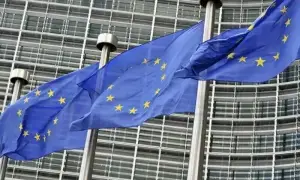
Last week, the European Parliament, after a five-year lull, adopted a resolution on Pakistan — this time condemning alleged abductions, forced conversions, and child marriages among Hindu and Christian minority communities. Citing the case of 13-year-old Maria Shahbaz, the text warns that human rights violations could endanger Pakistan’s preferential market access to the EU, known as GSP+ (General System of Preferences).
It may make for strong headlines, but a closer look at how this resolution came to be — and who actually holds the authority over trade sanctions — reveals a process far more performative than substantive.
Procedural perplexities
First, the legal reality. The European Parliament has no authority over GSP+. That power rests exclusively with the European Commission, the bloc’s executive power. The resolution is non-binding — a political statement, not a policy instrument. Its real purpose is to signal displeasure and influence Commission thinking, but it carries no immediate consequences.
Second, the selection process. The resolution was adopted in the framework of the “urgency debates” on the breaches of human rights and democracy in non-EU countries. This is a monthly procedure according to which three countries are chosen to be subjected to condemnatory resolutions.
The countries are not, however, chosen based on any objective criteria or comparative severity of violations. Rather, selection is a matter of political bargaining between the Parliament’s political groups. The centre-right consistently pushes to condemn leftist or anti-Western regimes — Cuba, Iran, Belarus — while the left targets right-wing governments. What the parliamentary agendas finally reflect is either a broad based compromise, or a choice by parties representing the majority of the assembly.
In Pakistan’s case, the focus on Christian minorities is typically driven by right-wing European groups, frequently under the influence of Western Evangelical organisations with their own transnational, missionary agendas. The issue becomes a vehicle for ideological posturing rather than a principled, even-handed defence of human rights.
Third, the drafting process. Once the countries are selected, the resolution is rushed through under a procedure that leaves just one full working day to submit the initial draft. This leaves no room for serious fact-finding or balanced assessment.
Into this vacuum step NGOs and special interest groups, who lobby aggressively for the inclusion of their preferred narratives. They send their proposed language directly to the offices of the Members of the European Parliament (MEPs) and staffers who then often just copy-paste it straight into the parliamentary motions. The country concerned is always at a disadvantage, struggling to present its perspective while narratives solidify in Brussels.
The result is a text prone to inaccuracies, emotionalism, bias, and moral posturing rather than sober analysis. Even MEPs themselves have criticised the procedure’s lack of rigour, yet repeated reform efforts have gone nowhere.
This is not to say the mechanism is always useless. When uncontested facts exist on individual cases of persecution, international scrutiny can save lives. But when facts are ambiguous and murky — as they often are in Pakistan’s complex religious and legal landscape — and the EU Parliament has no independent means to verify them, the exercise becomes more of a virtue signalling than a productive effort to tackle issues of concern.
For all the Parliament’s grandstanding, the European Commission is unlikely to act on withdrawing Pakistan’s trade preferences. The reasons are pragmatic.
Two-way street
First, economic interdependence cuts both ways. Since the inception of the scheme in 2014, Pakistan’s exports to the EU have surged 108 per cent to $9 billion, with the bloc now accounting for roughly 29pc of Pakistan’s total exports. The textile sector alone — over 70pc of these exports — supports millions of jobs. Withdrawal would disrupt European supply chains and raise prices for European consumers.
Second, the Commission prefers conditional engagement over punishment. At the 15th Pakistan-EU Joint Commission meeting in December 2025, Brussels discussed with Pakistan progress on the death penalty, torture safeguards, and broader issues pertaining to human rights, including the rights of the religious minorities. The consistent approach is dialogue over sanctions.
Third, geopolitical realities favour Pakistan. While Pakistan’s armed forces are widely recognised for their professionalism — as evidenced during the war with India in 2025 — Islamabad has recently emerged as a key diplomatic mediator. It facilitated dialogue between the US and Iran, thanks to efforts by Prime Minister Shehbaz Sharif and Field Marshal Asim Munir — and is now playing a mediating role in Libya, a file of direct European interest. Both sides also share interest in counter-terrorist cooperations, from the Balochistan Liberation Army to the Tehreek-i-Taliban Pakistan, as enshrined within the framework of the 2019 Strategic Engagement Plan.
The EU High Representative for foreign policy Kaja Kallas’ recent visit to Islamabad reinforced this positive trajectory. The joint statement following the visit “welcomed the positive momentum in EU — Pakistan relations” and outlined a broad range of cooperation — from defence of multilateralism to migration management to business and investment opportunities.
Withdrawing trade preferences, in this context, would undermine this strategic partnership at a moment when Europe needs reliable partners in South Asia.
The Parliament, of course, is free to adopt its resolutions and must be engaged to offer a more nuanced picture of the Pakistani reality. But it does not decide on trade and foreign policy — the Commission and Council do.
The Commission will continue to monitor and urge reforms, but it will not pull the trigger on trade preferences. The economic cost to Europe, the diplomatic relevance of Pakistan, and the institutional preference for engagement over punishment make their withdrawal a distant prospect, regardless of the Parliament’s resolutions. ...
이 뉴스, 어떠셨어요?
탭 한 번으로 반응 · 로그인 불필요