Trump hosts Lebanon's president as Israel begins first pullback
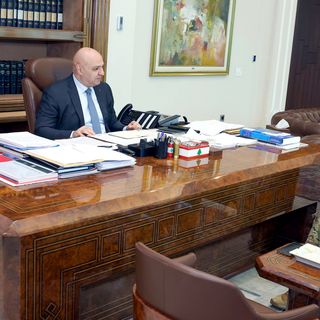
Lebanese President Joseph Aoun will meet President Trump in the Oval Office on Tuesday — a sitdown that comes as the Israeli military begins its first withdrawal from Lebanon under a U.S.-brokered agreement.
Why it matters: The Trump administration is politically invested in strengthening Aoun, isolating Hezbollah and pushing for an Israeli-Lebanese peace agreement.
Aoun, the first Lebanese president to visit the White House since 2009, wants political support from Trump, military assistance for the Lebanese Armed Forces (LAF) and U.S. pressure on the Netanyahu government to continue its gradual withdrawal from areas it occupies in southern Lebanon.
Driving the news: On Monday, the State Department announced that Israel is starting to pull out of several villages it has occupied in southern Lebanon.
The limited withdrawal is part of a "pilot zone" agreement — essentially a test case for broader withdrawals — that the U.S. brokered between Israel and Lebanon last week in Rome.
It's the first Israeli pullback from Lebanese territory since it launched its ground invasion in March in response to Hezbollah attacks.
A U.S. official said the LAF will be responsible for these zones. It will clear them of Hezbollah weapons and infrastructure, conduct verified clearance operations and secure the areas so Hezbollah cannot use them for military activity.
The U.S. is still negotiating with Israel and Lebanon over who will verify that the LAF cleared the areas so that the next phase of the withdrawal can take place, Israeli officials said.
A senior Israeli official said the Israeli Defense Forces [IDF] withdrawal started on Tuesday morning local time.
The IDF official called the initial withdrawal "a test for the Lebanese Armed Forces' sovereignty in the three pilot villages."
What they're saying: "The establishment of these initial pilot zones represents real progress on the ground," a U.S. official said.
The official stressed that the Trump administration hopes the pilot zones will "build confidence" between Israel and Lebanon and "create the momentum needed to expand the process."
"We expect all parties to respect this process. Any attempt by Hezbollah to derail, infiltrate, or re-arm in these zones would seriously harm the prospects for reconstruction and peace, and the interests of the Lebanese people," the U.S. official said.
The big picture: Secretary of State Marco Rubio, the lead U.S. official on Israeli-Lebanese matters, met Aoun on Sunday before leaving on a trip to Asia.
Rubio told reporters the best way to defeat Hezbollah is by strengthening the Lebanese government and the LAF so that they will be able to replace the Shia militia. He wants the Lebanese government to provide security and economic prosperity to the population in southern Lebanon and the rest of the country.
"This is not just about military stuff. This is about how can we attract more U.S. and international investment into Lebanon," Rubio said. "And I think President Aoun will be able to return to Lebanon and say to the people of Lebanon that he is the one that's getting positive results for the people ... not Hezbollah, not Iran."
What to watch: Trump and Aoun have never met in person, but they have held two phone calls in recent months that U.S. and Lebanese officials say were very positive.
Trump has become deeply invested in the Lebanese issue over the last few months. He is urging Israeli Prime Minister Benjamin Netanyahu to complete the withdrawal of the Israeli military from southern Lebanon.
But both Trump and Aoun recognize that a real acceleration of the pullout and a possible breakthrough toward a lasting peace deal can't happen until after the Israeli elections in October. ...
이 뉴스, 어떠셨어요?
탭 한 번으로 반응 · 로그인 불필요