Trump Just Gave Us a Horrible New Reason to Worry About the Iran War
ONP Summary
Multiple outlets confirm the ongoing 13th consecutive night of military strikes by the US against Iran, targeting Iranian military infrastructure including command centers, drones, and communication networks. All sources agree on the escalation of tensions over maritime routes in the Strait of Hormuz.
Progressive:Progressive outlets highlight the continuous military pressure and its implications for regional stability and civilian safety, emphasizing Iran's defensive capabilities and the broader geopolitical impact.
Moderate:Moderate outlets focus on the strategic objectives behind these strikes, linking them to securing maritime routes and countering Iran's influence in the region without overtly aligning with any particular ideological stance.
Conservative:Conservative outlets frame these actions as necessary responses to perceived threats from Iran, suggesting potential collusion with adversaries like Russia and China to undermine Iran's military capabilities and regional influence.
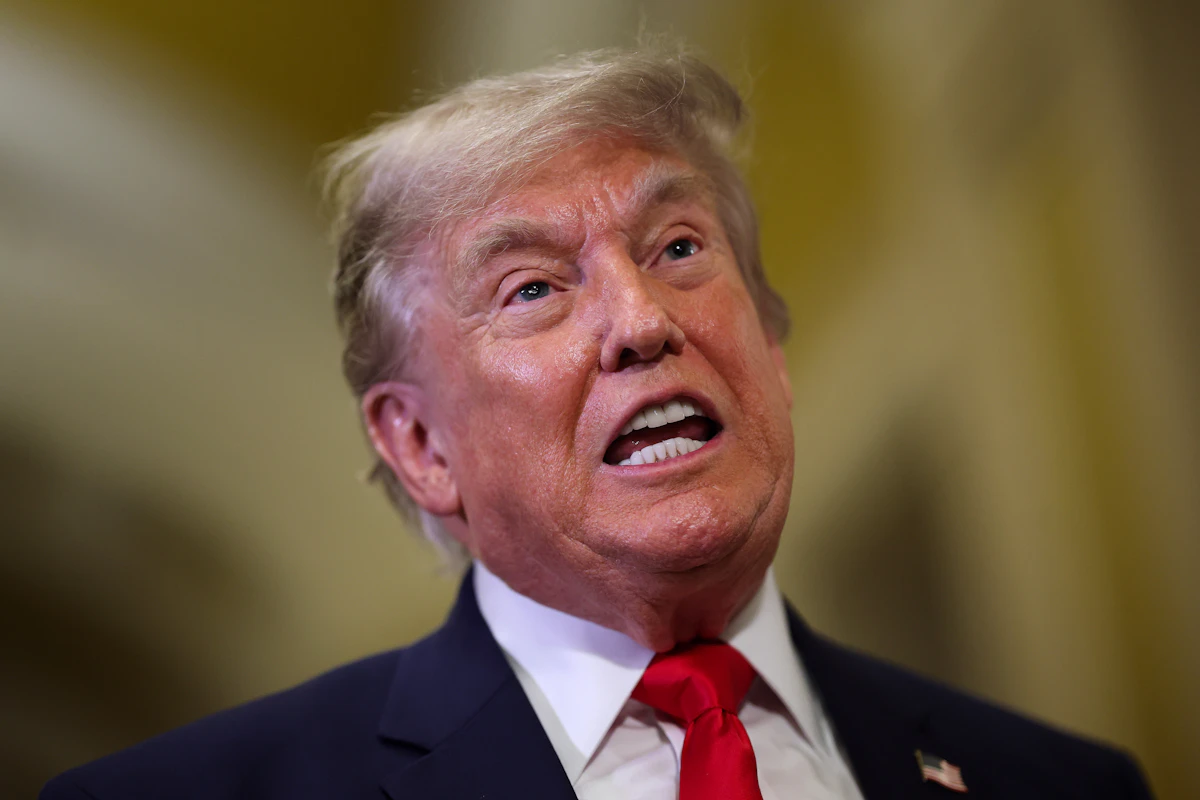
Donny is frustrated. The Wall Street Journal reports that at a recent White House meeting, President Trump “launched into a tirade against Iranian leaders, calling them scumbags and lunatics, and unleashing a series of expletives.” He is worried that the war is “consuming his presidency.” He doesn’t understand why those silly mullahs don’t understand that he’s Mr. Art of the Deal.
One administration official told the paper that Trump sees few good options besides continuing these daily strikes. But these strikes apparently aren’t having much impact, either militarily or psychologically. The Journal also reported this week that satellite images show that Iran is rebuilding the damage done by U.S. strikes and is doing so fast. And after all, if Iran were afraid of the U.S., it wouldn’t have broken the ceasefire earlier this month by striking commercial vessels passing through the Strait of Hormuz.
Some wars start big. World War I is the paradigmatic example. Europe was more or less at peace, the Balkans excepted, all those inbred cousins lolling in their palaces as various ethnic and proletarian resentments built among their people. Then, boom, one event—the assassination of a Hapsburg potentate—exploded the powder keg, and within weeks, millions were mobilized into a war that said cousins blithely thought would last a few weeks but ended up leaving an entire generation of young European men physically and psychologically strafed.
But most wars start small. They’re incremental. Even the most destructive war in human history started this way. Of course, Adolf Hitler was lying to the world about his ultimate aims, when he kept saying—after the Alsace, after Austria, after the Sudetenland—that he had no further territorial claims on Europe. But chronologically, the war proceeded in small, incremental steps, and even if Neville Chamberlain has gone down in historical shame, it’s also true that the broader public could have been forgiven for thinking, even after Munich, that world war was hardly inevitable.
In the current case, I’m sure Donald Trump no more anticipated that this war would prove problematic than Lyndon Johnson did with respect to Vietnam or George W. Bush did vis à vis Iraq. These things are always supposed to be easy for the mighty United States.
But somehow they rarely are. Only George H.W. Bush successfully prosecuted a short war. Why? Because the Persian Gulf War had one very specific and contained goal: force Saddam Hussein out of Kuwait. One can agree or disagree with his decision to launch the war, but at least it was aimed at doing one and only one small and specific thing. The neocons were imploring him to march on to Baghdad. He said no, you people are crazy. Then his dumb son got to the White House, and he put the crazies (led by Dick Cheney) in charge, and they launched a war based not on one specific goal but on a theory—that regime change in Iraq would help spread democracy throughout the Middle East.
Do we think Trump gave these matters two minutes’ worth of thought before he decided to start this war? We know the answer to that question. Of course he didn’t. Because to Trump, the laws of history don’t apply to him. He’s different. And Benjamin Netanyahu, who according to Maggie Haberman and Jonathan Swan did the lion’s share of the work of convincing Trump to do this, knew perfectly how to feed Trump’s vanity and take advantage of his total historical ignorance.
So now, Trump is frustrated, like a little boy whose Christmas toy won’t work. That frustration is key here, and much, sadly (I hope not tragically), hangs on it. Will he be content to keep launching strikes that aren’t accomplishing much? Eventually, it seems, the odds are that he’ll get tired of that, and he’ll need to teach those “scumbags and lunatics” a real lesson.
And that’s how little wars grow. There’s a chance that he has enough sense to know that if he doesn’t get out of this soon, it could crescendo into a disaster that will spin out of his control. That’s what happened to LBJ—he knew every step of the way as he asked Congress for more money and troops that he was marching the country to defeat and destroying his own legacy, but he did it anyway. And he was much smarter than Trump will ever be.
I remember well when Syria’s Bashar Al Assad was massacring his own people by the thousands, dropping those cluster bombs on his own people. Some were screaming at Barack Obama: Do something! We’re the United States, how can we allow this to happen?
I think it would have been good if we’d been able to do something. On the other hand, I’m sure Obama thought that the last thing in the world he wanted was to go into a country we don’t really know with a sanguinary tyrant and ancient enmities and think we can smooth it all out before Americans lose their patience; Syria was not going to be his legacy. All those deaths were horribly tragic. But at least, against the charge of typical American hubris, Obama can plead not guilty.
Whatever happens in Iran, Trump is already guilty on that count. The launching of this completely unnecessary and unjustified war was an act of supreme hubris. Now it’s starting to really hit home with him that he may have been wrong. But he’s never wrong; incapable of shouldering blame, he will transfer it onto someone else. If that doesn’t worry you, you aren’t paying attention.
THE NEW TNR BLUE BOOK!: I hope maybe you’ve noticed that we launched a new newsletter this week, The TNR Blue Book. It’s a morning inside-dope newsletter, sort of like some of those that already exist, except with this difference: We will focus exclusively on what Democrats are doing on Capitol Hill and around the country; we’ll leave the Mikey Johnson dramas to others. In addition, we’ll provide news about what the progressive advocacy groups and think tanks are up to. The idea, in other words, is to cover (and in some sense help build) a community of people working to fight authoritarianism and defend the republic. All that, plus a little humor and political trivia.
We send it out four days a week, Tuesday through Friday, around 8:30 in the morning. I really think you’ll like it. BUT: You DO need to sign up for it. That’s how we sell advertising for it (and no, not the Petroleum Institute; our first advertiser is the American Federation of Teachers). So please follow this link and opt in. It takes about seven seconds and is free. Thank you.
This article first appeared in Fighting Words, a weekly TNR newsletter authored by editor Michael Tomasky. Sign up here. ...
이 뉴스, 어떠셨어요?
탭 한 번으로 반응 · 로그인 불필요
같은 사건, 다른 제목
Trump Just Gave Us a Horrible New Reason to Worry About the Iran War
Trump went on expletive-laden rant against ‘scumbags’ in Iran as his frustration with war mounts: report
Trump warns China, Russia against involvement in Iran war
Experts warn the real pinch from the Iran war is about to strike
+4
Trump Warns China, Russia Against Involvement in Iran War
Konflikt zwischen USA und Iran: Ein Krieg, der leider logisch ist
Donald Trump afirmó que si Rusia y China le venden armas a Irán “sería muy perjudicial para ellos”
População do Irã tem a vida suspensa pela guerra e luta para sobreviver ao colapso econômico
+16
Stop calling it ‘Trump’s war.’ America just did the world’s dirty work
Trump afirma que todo daño a buques será pagado con “dinero iraní que Estados Unidos tiene en su poder”
Trump amenaza con usar fondos iraníes para pagar daños a buques y cargamentos
„Faire Vorgehensweise“ – Trump will Schäden an Schiffen ab sofort mit iranischem Geld begleichen
+2
Trump warns China, Russia against providing arms to Iran, says it ‘would be very bad for them'
Is Trump's reckless aggression against Iran pushing global economy toward a catastrophic collapse?
Trump amenaza con usar fondos iraníes para pagar daños a buques y cargamentos