Spoiler alert
AI Summary
The United States and Iran have reached a preliminary agreement to end a months-long military conflict, with a designated 60-day period for finalizing additional terms including nuclear arrangements. A reconstruction fund of approximately $300 billion, expected to be financed by regional partners, is part of the framework, though implementation challenges and disagreement over the deal's terms persist.
Progressive: Progressive-leaning outlets emphasize Iran's 'victory narrative' despite military setbacks and highlight internal factional divisions over the deal, while questioning whether the investment fund amounts to rewarding nuclear enrichment and noting that optics precede substantive details.
Moderate: Centrist outlets analyze the deal's concrete terms and winners/losers, note Iran's preference for prolonged diplomatic processes that increase complexity, and observe that for ordinary Iranians, practical concerns like prices and avoiding future conflict matter more than claims of victory.
Conservative: Conservative-leaning outlets express strong skepticism and distrust of Iran, framing the deal as appeasement that could reward a regime with a history of deception and aggression; they emphasize conditions like demanding Iran's internal transformation before accessing the reconstruction fund.
AFTER the temporary peace deal between the US and Iran is physically signed in Geneva on Friday, an arduous process of negotiations begins between both parties to flesh out the nitty-gritty of a long-term arrangement for peace.
At present, there are many unanswered questions that have been deferred for later, such as the status of the Strait of Hormuz, and the future of the Iranian nuclear programme. Suffice it to say, both parties must exercise a degree of flexibility if there is to be long-term peace between them. Yet both sides, as well as members of the international community, must keep a vigilant eye on one particular party that will do all possible to make sure the peace process collapses: the state of Israel.
The reaction from Tel Aviv to the cessation of hostilities between the US and Iran has been negative, for it was fervently hoped by the Zionist regime that America would once and for all destroy their biggest nemesis in the region. That did not happen, and the Islamic Republic has survived the joint US-Israeli assault.
There are already signs that Israel will attempt to throw a spanner in the works. For example, the Israeli prime minister has said that his country’s occupation of Lebanese, Syrian and Palestinian territory will continue. In fact, across the Israeli political spectrum — from the far right to more ‘liberal’ segments — there has been great consternation over the peace deal, with many leaders saying they will do what they like, particularly in Lebanon. If they carry out their threats, the peace process could rapidly unravel.
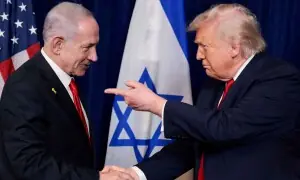
While members of the American political establishment — both Republicans and Democrats — often outdo each other in their attempts to please Israel, President Donald Trump has of late been expressing displeasure with his friends in Tel Aviv. Speaking at the G7 summit on Tuesday, Mr Trump said Israel needed to be “more responsible” in Lebanon, while he was reportedly furious with Tel Aviv for attacking Beirut just as the peace deal was about to be announced. Earlier, he had used expletives to express his frustration with the Israeli prime minister.
The signing of the accord in Geneva could lead to a historic normalisation between the US and Iran. Conversely, the collapse of talks could precipitate a confrontation more brutal than the recent one, causing economic havoc across the globe. Israel will be using all the poisoned arrows in its quiver to ensure the latter outcome.
Pakistan’s foreign minister had in April publicly said that Israel was trying to torpedo the peace process. There is a high likelihood it will resort to such tactics again. Mr Trump made the critical mistake of trusting the Israelis, and going to war with Iran. He must make sure that the error is not repeated.
Published in Dawn, June 17th, 2026 ...
이 뉴스, 독자들은 어떻게 느꼈나요?
첫 반응을 남겨보세요로그인하면 감정 반응에 참여할 수 있어요.