Setting the record straight on Balochistan's 'accession' and charting a path for its future
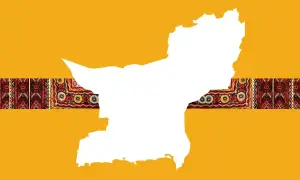
One claim that resurfaces periodically in public debate over Balochistan’s accession to Pakistan is that the Instrument of Accession of the Khanate of Kalat is evidence of Balochistan’s accession as a whole. This conflates a single princely state with the entire province, and it is worth examining why that conflation matters.
The central claim advanced is that Khan Ahmed Yar Khan’s signature on March 27, 1948 proves Balochistan existed as a fully sovereign, independent state from Partition in August 1947 until that date — a span of nearly seven months. This narrative forms a foundational pillar of separatist ideology and, for that reason alone, demands careful scholarly and constitutional scrutiny.
The mosaic structure
Few historical accounts have suffered greater distortion than the assertion that Balochistan constituted a single, indivisible political entity that acceded to Pakistan as a unified province in 1948.
Propagated by adversarial foreign elements and terrorist outfits such as the Balochistan Liberation Army (BLA) and its affiliates, this portrayal depicts the region as a cohesive national homeland acceding into the Federation under duress. However, such claims dissolve under basic historical and legal examination.
Prior to 1947, the territories now comprising Balochistan possessed no singular provincial identity. They formed a mosaic of distinct sovereign and semi-sovereign polities: the Khanate of Kalat, the princely states of Makran, Kharan, and Lasbela, and the directly administered British Balochistan districts under a Chief Commissioner. These entities acceded to Pakistan through separate Instruments of Accession.
The rulers of Makran, Kharan, and Lasbela formally acceded on or around March 17, 1948. The Khan of Kalat, Mir Ahmed Yar Khan, signed the Instrument of Accession on March 27, 1948; however, it was Muhammad Ali Jinnah, as Governor-General of Pakistan, who accepted it and made the accession effective on March 31, 1948. The port of Gwadar, covering approximately 15,210 square kilometres, was not part of any accession; it was acquired by the Government of Pakistan through outright purchase from the Sultanate of Oman on September 8, 1958, with formal handover on December 8, 1958.
The unified provincial structure, familiar today, is thus not an ancient reality but a modern constitutional construct, forged by the National Assembly through the Constitution of 1973.
The state’s responsibility
This evolutionary path sharply distinguishes Balochistan from other provinces. Punjab, Sindh, and Khyber Pakhtunkhwa entered the Federation with pre-existing provincial institutions largely intact. Balochistan, in contrast, underwent gradual consolidation — from the short-lived Balochistan States Union (1952) to the One Unit scheme (1955) and ultimately to its present form under the 1973 Constitution.
Article 1 of the Constitution provided legal unity to what had hitherto been separate pieces. Having created this provincial architecture through sovereign legislative authority, Parliament, through the provincial and federal legislatures, retains plenary constitutional competence to reform, restructure, or recalibrate it.
Such authority flows directly from Article 239, which governs constitutional amendments in such scenarios, and is reinforced by the Objective Resolution — the grundnorm of the Pakistani Constitution. The Resolution solemnly binds the state to safeguard “the integrity of the territories of the Federation, its independence and all its rights including its sovereign rights on land, sea and air.” This sacred duty empowers Parliament to realign internal boundaries in pursuit of national cohesion, administrative efficiency, and internal security.
The case for smaller units
The case for reorganising Balochistan is compelling. Spanning over 347,000 square kilometres of rugged, sparsely populated terrain inhabited by diverse Baloch, Pashtun, Brahui, and other communities, the province poses formidable challenges for centralised governance.
Its present configuration exacerbates problems of administration, service delivery, and counter-terrorism efforts against groups like the BLA. Dividing the province into smaller, historically rooted units would enhance local governance, ensure more equitable resource distribution, strengthen administrative responsiveness, and increase Balochistan’s representation in the Senate — thereby amplifying the province’s voice in national affairs while delivering responsive, “at-the-doorstep” governance.
Smaller provinces bring government closer to the people, reduce marginalisation, and weaken rebel recruitment by improving local representation and service delivery. Such a modus operandi has been successfully adopted by several countries to meet security challenges.
Furthermore, because Gwadar entered Pakistan through direct federal purchase rather than provincial accession, Parliament possesses the authority to restore it to full federal control where constitutionally appropriate. This would facilitate its development as a strategic national asset of international significance, with equitable revenue-sharing mechanisms that maximise benefits for both the Federation and the people.
In the ongoing struggle against terrorism and separatism, narrative matters as much as kinetic operations. Modern counter-insurgency is ultimately a contest for hearts and minds. Reorganisation offers a powerful, constructive counter-narrative: one that replaces historical myths with tangible improvements in governance, security, and development.
By returning to the Constitution and redrawing provincial boundaries through the very instrument that created the current province, Parliament can dismantle the central falsehood underpinning separatist propaganda — the notion that Balochistan acceded as a single, sovereign entity with an option for independence.
The historical record is clear: Balochistan’s present shape is the product of deliberate national constitutional engineering, not primordial unity. Pakistan created Balochistan in its present form. However, retaining a large and administratively unwieldy province serves neither its people nor the Federation’s security.
A well-considered constitutional amendment under Article 239, guided by the Objective Resolution and the imperatives of federalism, offers a path to more effective governance and the definitive rejection of dangerous falsehoods. The same would first be approved by the provincial legislature before being ratified by the national assembly.
Pakistan’s constitutional architects and lawmakers must rise to this moment with clarity and resolve. By exercising Parliament’s legitimate authority to adapt the federal map to contemporary realities, the nation can strengthen its unity, improve governance, and neutralise the myths that fuel militancy, thereby securing a more cohesive and prosperous future for Balochistan and Pakistan as a whole. ...
이 뉴스, 어떠셨어요?
탭 한 번으로 반응 · 로그인 불필요