A Remote Alaska Village, a Small Aircraft, and a Few Cases of Beer
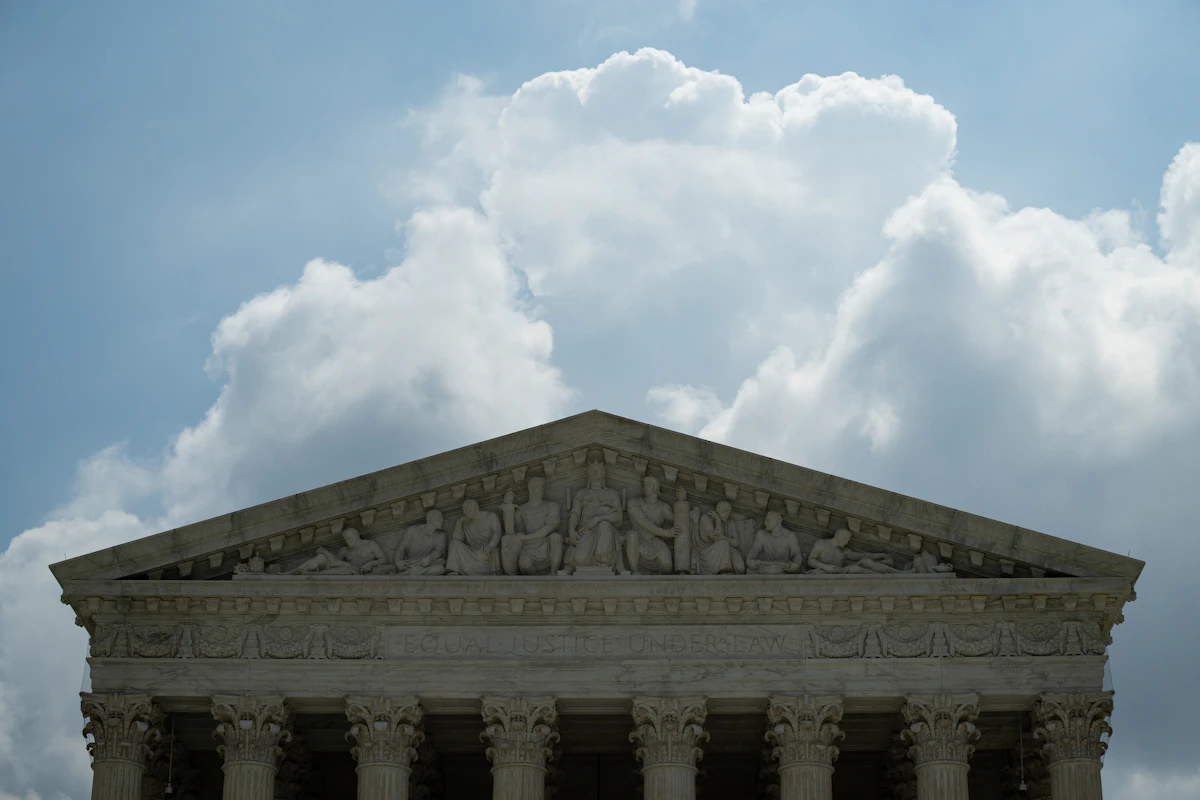
Fourteen years ago, the state of Alaska tried to seize a man’s $95,000 small airplane because one of his passengers tried to bring beer into a dry village. Now the Supreme Court will use his case to further clarify the scope of the excessive fines Clause.
The justices announced on Monday that they would hear Jouppi v. Alaska next term, giving them a rare opportunity to expand upon of one of the Eighth Amendment’s most overlooked provisions. The case’s basic facts illustrate how states can pursue harsh financial sanctions against defendants, even for some misdemeanor offenses.
“For certain Alaskan villages, it’s a crime to bring in alcohol,” the defendant noted in his petition for review. “And when the means of importation is an airplane, the plane is subject to forfeiture. No matter that the offense is a misdemeanor. As here. No matter that the pilot is a first-time offender. As here. No matter that the alcohol is a six-pack of Budweiser. As here. No matter that it belonged to a customer. As here. The result: an airplane forfeited for a six-pack.”
What may seem strange to Americans in the Lower 48 states is likely a familiar tale to those in the Last Frontier. Alaska’s vast interior is populated by small villages. Many of those villages have strict “dry” laws. The strictest ones forbid not only the sale of alcohol but also the importation and possession of it. Alaska’s state legislature gave rural communities the power to set these limits in the 1980s to address concerns about high alcoholism rates and their associated ills.
Much of Alaska’s interior can also only be reached by airplane, so residents and tourists frequently rely on small-scale private pilots to reach their destinations. One of those pilots is Ken Jouppi. He was in his late sixties when he flew passengers from the city of Fairbanks to the village of Beaver on his small private Cessna in 2012. A passenger on the flight was bringing groceries with her, including three cases of beer.
According to state officials, Jouppi’s company was under investigation at the time for suspected violations of state liquor laws. Alaska state troopers approached Jouppi while he was loading the plane to Beaver, found the cases of beer, and promptly arrested him and charged him with misdemeanor importation. Jouppi was sentenced to three days in jail with an additional 177 days suspended, a suspended $1,500 fine, and three years of probation.
Most importantly, state prosecutors also sought to seize Jouppi’s plane. Alaska liquor law requires forfeiture, but the trial court declined to grant it at first because the plane never actually reached Beaver. The Alaska Court of Appeals reversed that decision because state law required forfeiture either way. When the trial court reconsidered the matter, Jouppi argued that the forfeiture would violate the excessive fines clause because the law only allowed a maximum $10,000 fine and the plane’s estimated value was $95,000.
The Eighth Amendment is best known for its ban on “cruel and unusual punishments.” Until the last 30 years or so, its prohibition of “excessive fines” received scant attention. The Supreme Court did not rule that a particular fine had breached the excessive fines clause until 1998, in the case United States v. Bajakajian. The justices sided with a Syrian man who brought more than $350,000 in cash into the U.S. without formally reporting it. Though the maximum fine under the Bank Secrecy Act was $5,000, federal prosecutors seized the full $357,144.
Justice Clarence Thomas, writing for the court then, noted that the justices were breaking new ground at the time. “Until today, however, we have not articulated a standard for determining whether a punitive forfeiture is constitutionally excessive,” he wrote. “We now hold that a punitive forfeiture violates the Excessive Fines Clause if it is grossly disproportional to the gravity of a defendant’s offense.”
In the 2019 case Timbs v. Indiana, the Supreme Court held that the excessive fines clause also applied to the states. But the lower courts have divided on exactly how to interpret whether a fine is “proportional” to the “gravity” of a defendant’s offense. Most courts, including the Ninth Circuit Court of Appeals, which covers Alaska, have concluded that the fine must be proportionate to a defendant’s particular acts. That approach would likely favor Jouppi, who is now 82 years old, lacks any prior criminal record, and never actually brought the alcohol in question into Beaver.
But a handful of courts, including the Alaska Supreme Court, have instead concluded that the fine must only be proportionate to the offense in general terms. This would be bad news for Jouppi. Alaska prosecutors and courts noted that the state’s geography makes it uniquely difficult to address alcohol abuse. “Many remote communities in Alaska have limited law enforcement resources to respond to, for example, alcohol-fueled domestic violence,” the state told the Supreme Court in its reply brief. “They also lack the public health resources to address other problems associated with alcohol abuse.”
Ultimately, the Alaska Supreme Court held that forfeiture of Jouppi’s airplane did not violate the excessive fines clause. The court gave significant deference to the state legislature’s conclusion that the “forfeiture of an aircraft is proportional to the gravity of the harm that results from unlawful alcohol importation into a dry village.” It also addressed Jouppi’s culpability in a more abstract sense, rather than what actually happened.
“Alcohol abuse in rural Alaska leads to increased crime; disorders, such as alcoholism; conditions, such as fetal alcohol spectrum disorder; and death, imposing substantial costs on public health and the administration of justice,” the court held. “Within this context, it is clear that the illegal importation of even a six-pack of beer causes grave societal harm. This factor strongly suggests that the forfeiture is not grossly disproportional.”
Though the case hinges on circumstances that are specific to Alaska, its implications could stretch far beyond that state. Multiple justices have raised concerns in various cases about the degree to which states and the federal government rely on fees and fines to achieve policy goals. In Timbs, for example, Justice Ruth Bader Ginsburg noted that the Eighth Amendment’s provisions represented a much deeper aversion to high fees and fines in the Anglo-American legal tradition.
“For good reason, the protection against excessive fines has been a constant shield throughout Anglo-American history: Exorbitant tolls undermine other constitutional liberties,” she explained. “Excessive fines can be used, for example, to retaliate against or chill the speech of political enemies, as the Stuarts’ critics learned several centuries ago.” Ginsburg and other justices also pointed to the growing trend where states offset declining tax revenue with higher fee and fines.
In a 2024 case involving an Alabama woman whose car was seized after her son was arrested while driving it, five of the justices also expressed some concern about the modern prevalence of civil asset forfeiture. Justice Sonia Sotomayor, joined by the court’s other two liberal justices, expressed concern about civil forfeiture procedures on due-process grounds, especially when lower-income defendants relied upon their car for everyday life.
“Given these burdens, low-income communities are also the most vulnerable to pressure from unchecked prosecutors, who can use coercive civil forfeiture processes to extract settlement money from innocent owners desperate to get their property back,” she wrote. Justices Neil Gorsuch and Clarence Thomas concurred with the majority in that case but also signaled some alignment with the court’s liberals on the matter. “Why does a Nation so jealous of its liberties tolerate expansive new civil forfeiture practices that have ‘led to egregious and well-chronicled abuses’?” Gorsuch wrote, quoting from an earlier opinion by Thomas.
Civil asset forfeiture is a distinct legal matter from the criminal forfeiture at issue in Jouppi. At the same time, the justices’ concerns about excessive fines, fees, and forfeitures in one area may also apply in another. If the court adopts the Alaska Supreme Court’s approach, state legislatures might be more encouraged to adopt stricter forfeiture regimes across the board. A ruling in favor of Jouppi, on the other hand, might give state and local governments pause when adopting harsh measures. The court’s path—and the country’s—will become clearer after oral arguments later this fall. ...
이 뉴스, 어떠셨어요?
탭 한 번으로 반응 · 로그인 불필요