Fireflies and Fireballs: Summer Stargazing with Meteor Watch Day, Asteroid Day
이 뉴스, 어떠셨어요?
한 번의 탭으로 반응을 남겨요 · 로그인 불필요
Fireflies and Fireballs: Summer Stargazing with Meteor Watch Day, Asteroid Day
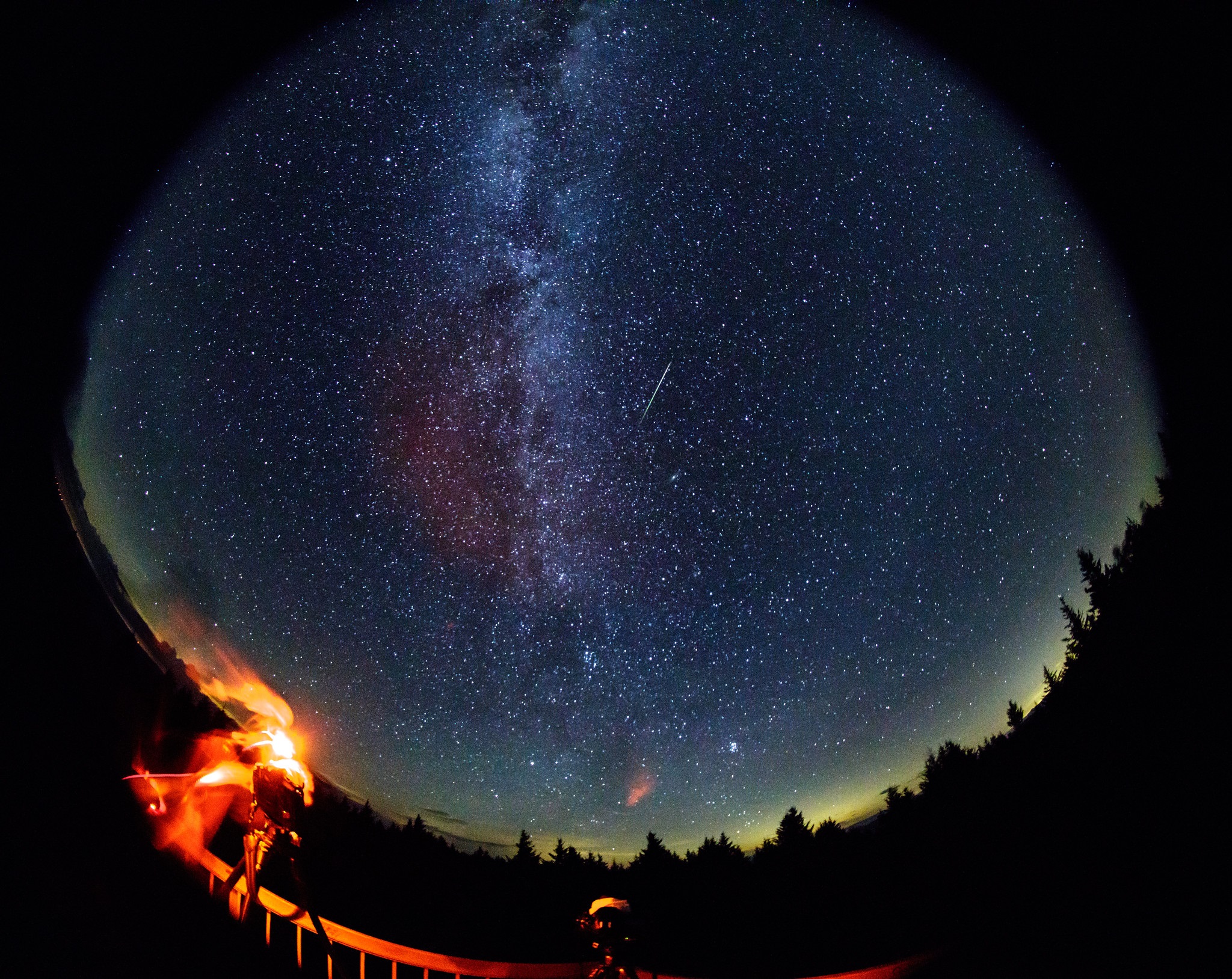
We’re at the onset of summer skywatching, with a double feature of the Southern Delta Aquariids and alpha Capricornids in July and the dazzling Perseids approaching in August. Before we step outside to enjoy the celestial fireworks, we’re kicking off the season by observing Meteor Watch Day and Asteroid Day, both today, June 30.
Meteors and asteroids share a common origin story dating back to the tumultuous formation of our solar system 4.6 billion years ago. But they’re not quite the same. An asteroid is a rocky object that orbits the Sun. They are found in a wide range of sizes —from a small house to a small country! When smaller pieces of asteroids or comets break off, we call those meteoroids. And when one of those gets close to our atmosphere and burns up, the bright streak it leaves behind is what we know as a meteor, or more colloquially, a “shooting star.” So, while asteroids are the larger, ancient voyagers holding the secrets of our solar system’s past, meteors are the fiery, fleeting messengers delivering cosmic dust right to our doorstep!
Meteor Watch Day: A Summer Tradition
National Meteor Watch Day is a salute to the warm-weather skywatching that brings about some of the best meteor sightings of the year, particularly in the Northern Hemisphere. This one is easy to celebrate: Simply head outside on a clear, summer evening and spend some time under the stars. Even better – invite your friends to join you and plan a stargazing gathering!
Spotting one doesn’t require special equipment — just your eyes and a good viewing spot away from as much ambient light as possible. For the best experience, head to an open area away from city lights, trees and buildings that may block the view. Give your eyes a few minutes to adjust to the darkness. There’s no need to look in any specific direction; meteors can appear anywhere as they streak across the sky.
While many are captivated by the beauty of meteors and meteoroids during the summer, NASA’s Meteoroid Environment Office has its eyes on the skies all the time, monitoring and studying these whizzing space rocks, their behavior, and their trajectories to keep spacecraft and humans safe. As the agency’s hub for meteoroid expertise, the office, managed at NASA’s Marshall Space Flight Center in Huntsville, Alabama, leads technical work across the agency to understand where and how often meteoroids strike and what risks they pose. Why? Because even small fragments can puncture or damage a vehicle or critical hardware, so monitoring them in and beyond Earth’s orbit is essential for mission planning and spacecraft design.
“Meteoroids pose one of the biggest hazards to our spacecraft and crews, especially those bound for the Moon and beyond,” said Bill Cooke, NASA’s Meteoroid Environment Office lead. “Because nothing is more important than the safety of our astronauts and mission success, NASA prioritizes mitigating these risks, whether through advanced modeling, observing meteors in Earth’s atmosphere with cameras and radars, monitoring the Moon for meteoroid impacts, and developing the next generation of meteoroid detectors to be flown aboard spacecraft.”
Asteroid Day: Global Awareness
June 30 is also International Asteroid Day, a global effort to bring awareness to the potential hazards of near-Earth asteroids and comets and the importance of planetary defense. The date was chosen to mark the Tunguska asteroid impact event on June 30, 1908, when an asteroid entered Earth’s atmosphere and exploded in the skies over Siberia. International Asteroid Day underscores the importance of studying these near-Earth objects, or NEOs, and readying planetary defense initiatives.
While NASA already monitors and tracks NEOs from ground-based observatories (learn more here), the first space telescope designed specifically for planetary defense is in development and preparing to launch no earlier than fall 2027. The NEO Surveyor mission will fill a critical gap in humanity’s ability to detect potentially hazardous NEOs.
Optimized to find the most elusive NEOs, this next-generation telescope’s infrared detectors will observe and characterize dark asteroids and comets that don’t reflect much visible light but glow in the infrared spectrum as they’re heated by sunlight. It will also find NEOs closer to the direction of the Sun than possible to observe from Earth.Managed by NASA’s Jet Propulsion Laboratory in Southern California, the telescope will be a cutting-edge addition to an already robust network of ground-based observatories scanning the skies and agency efforts to protect Earth. Learn more about it here.
Meteor Watch Day and International Asteroid Day are good reminders of just how dynamic our interstellar neighborhood truly is. Whether you’re stepping outside to catch a few meteors with friends or following NASA’s ongoing work to study and track space rocks of all sizes, there’s no better time to look up!