Instead of Tariffs, Maybe Help Canada Put Out Wildfires?
Editor’s Note: Welcome to The TNR Blue Book. It’s our new daily newsletter that covers Congress and much more, but with a distinctly TNR twist: Our focus will be strictly on Democrats, liberal and progressive groups, and the fight to take back power and save democracy. Every morning, you’ll get a rundown of late-breaking news, what Democrats on Capitol Hill are thinking, quick hits on what you need to know nationally, the latest on what’s coming out of the think tanks and activist groups, short interviews with progressive newsmakers and authors, and more (including some humor and political trivia!). There’s nothing else out there like it.
Inside Washington
Instead of tariffs, maybe help Canada put out wildfires?
Democratic lawmakers don’t merely think Trump’s newly announced 50 percent tariffs on Canada are a bad idea from an economic standpoint. They also want to see the U.S. actively helping Canadians fight the Ontario wildfires currently sending smoke into the U.S., and fear for the future of the two countries’ relationship.
Trump has told reporters that the tariffs he announced Monday aren’t in response to the wildfires, but the timing is highly suspicious. The announcement came just days after Trump said, “Maybe they should pay us some damages or something, or we should do some tariffs.”
To some, the arbitrary nature of Trump’s decision is the biggest affront. “There’s no question that Trump thinks he’s a king and he can use these tariffs to execute whatever he wants,” said Senator Ron Wyden, who on Wednesday unveiled a bill to reassert congressional authority over tariffs.
Others are worried about the economic impact in their own states. “Canada is a friend, one of our closest allies,” said Michigan Senator Gary Peters. “In Michigan, where we have close trading relations with Canadians, they’re a vital part of our economy, and it’s an important friendship.”
Senator Tina Smith of Minnesota is similarly concerned about her home state. “Minnesota has a good relationship with Canada. Clearly, the hostile and reckless approach of the Trump administration towards Canada makes those relationships hard to maintain.”
But beyond the typical condemnation of tariffs, several politicians are also suggesting that with wildfires in particular, the U.S. might be better served by collaborating more closely with its northern neighbor. Some would even like to see direct aid. “I was on a call this morning with Secretary [of Agriculture Brooke] Rollins and leaders from the Forest Service talking about the fires in northern Minnesota, and I know that the Forest Service and Canadian officials are working closely and well together. So I think at the operating level, the relationships continue to be effective,” Smith told me.
On Saturday, Ontario Premier Doug Ford criticized the “short memory” of American politicians who have blamed Canada for Ontario’s wildfire smoke drifting southward. “We had the water bombers and everyone going over to California [last year],” he said. “That’s what neighbors do.”
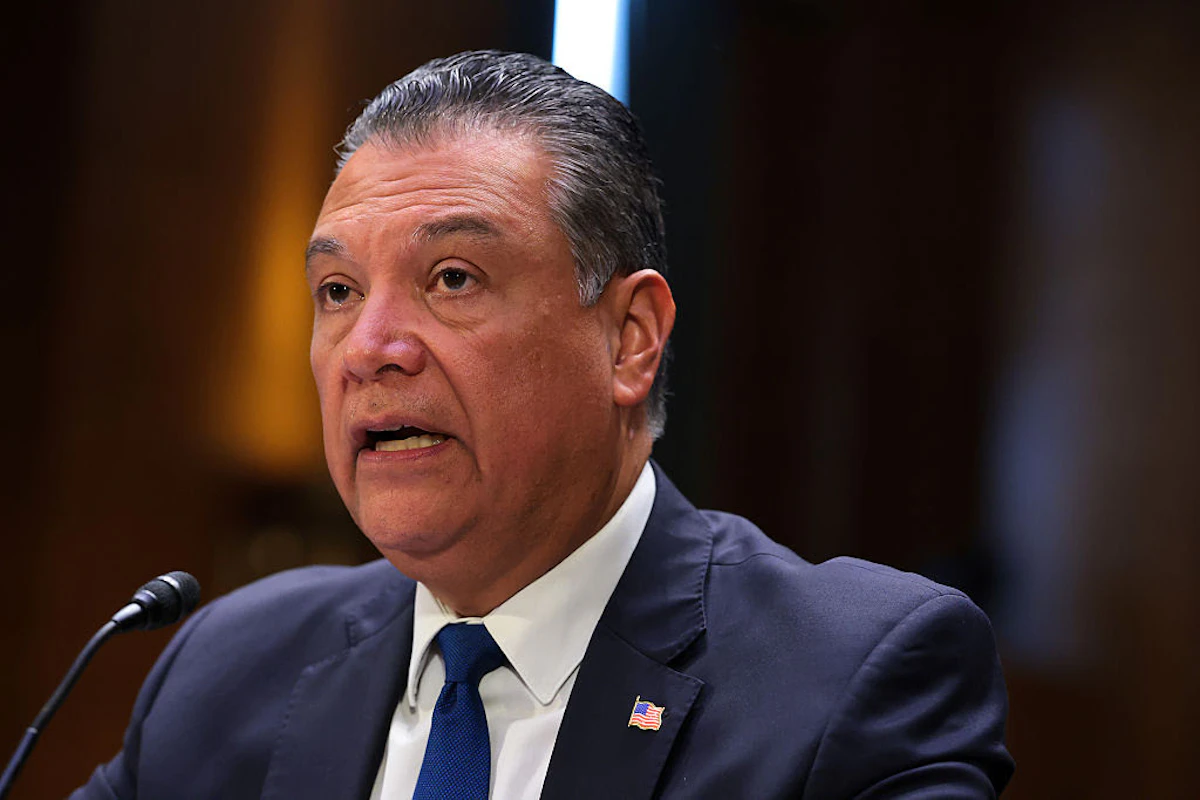
Californian Senator Alex Padilla hasn’t forgotten that. “They’re there for us in our time of need,” he said, “and we should be there for them.”
—Emma Janssen
Full-time workers increasingly need SNAP and Medicaid to make ends meet
The number of Americans who rely on SNAP and Medicaid despite working full-time for major companies has shot up, according to a report the Government Accountability Office, or GAO, released Wednesday. The number of Amazon workers who receive anti-poverty benefits nearly tripled between February 2020 and September 2025, the report found. Gig-based companies like Uber, Lyft, Grubhub, Instacart, and DoorDash also employ high numbers of Medicaid and SNAP recipients, the report found, a major change from 2020. Meanwhile, Walmart was the top employer of Medicaid recipients in both 2020 and 2025.
The report confirms what anti-poverty advocates have been saying for years: It’s becoming harder to be a working American, and working full-time does not guarantee financial security. It also shows that some of the country’s most successful companies don’t pay their workers a living wage, according to Senator Bernie Sanders, who requested the GAO produce the report.
“American taxpayers should not be forced to subsidize the starvation wages of large corporations like Walmart and Amazon,” said Sanders in a statement.
Between 2020 and 2025, Walmart increased its profits from nearly $15 billion to nearly $22 billion. Meanwhile, the number of Walmart employees relying on Medicaid in the 11 states sampled in the GAO report increased by 55 percent.
Life has probably gotten harder for these employees in the months since the data was collected. This report comes just over a year after President Trump signed the One Big Beautiful Bill Act into law, implementing massive cuts to SNAP and Medicaid. SNAP participation is already down more than 4.5 million people, according to USDA data. The Center on Budget and Policy Priorities, a progressive think tank, estimates that up to 15 million people could lose their Medicaid coverage by 2034.
Californian Senator Alex Padilla hasn’t forgotten that. “They’re there for us in our time of need,” he said, “and we should be there for them.”
—Emma Janssen
Outside Washington
Canada “politely” withdraws party invites in response to Trump tariffs
Americans have been “politely, but effectively, disinvited” from the opening ceremony on Friday for the new and long-awaited Gordie Howe International Bridge between Detroit and Windsor, Ontario, three sources tell the Detroit Free Press. The reason, Todd Spangler reports, is Trump’s threat to slap 50 percent tariffs on Canada. Michigan Democratic Governor Gretchen Whitmer has publicly worried about the threat’s effect on the state’s economy, and the Trump administration already delayed the bridge’s opening last month by demanding that Canada give the United States half the bridge’s profits for the first 15 years—in addition to a debt-repayment arrangement that remains a little unclear. (The text of the deal was only released on Tuesday.)
Tariffs are also a wild card in Maine’s Senate race, where Democrats have been frantically shoring up support for Troy Jackson to replace the scandal-a-day Graham Platner as Democratic nominee against Republican incumbent Susan Collins. Republican candidates in the state quickly distanced themselves from Trump on tariffs, with Collins disavowing her own party head to Politico on behalf of Maine’s lobsters and blueberries. (They’re “harvested in Maine, processed in Canada, and then come back,” said Collins.) Meanwhile, U.S. businesses obviously aren’t thrilled with the new chaos, and the American dairy and distilled spirits lobbies, representing industries Trump is allegedly protecting with these tariffs, have already voiced their displeasure.
Elsewhere:
The Massachusetts state Senate is considering a proposal to increase affordable housing by upzoning vast swaths of the state, ending single-family zoning in favor of allowing “duplexes by right.”
At CalMatters, Jeanne Kuang examines Gavin Newsom’s intricate balancing act as he attempts to position himself as a populist candidate for 2028—an act that has included opposing a state billionaire tax while voicing support for a federal one. Progressives are skeptical, Kuang notes.
—Heather Souvaine Horn
The Ideas Factory
The Century Foundation’s Angela Hanks, Aissa Canchola Bañez, and Eduard Nilaj find that “rising energy debt is climbing into the middle class,” in part because “energy bills have increased three times faster than the rate of inflation while Trump has been president.”
The Natural Resources Defense Council slams the Trump administration for “making climate science denial its official policy” and then threatening Canada with tariffs over Ontario wildfire smoke. “Some 180 million Americans were threatened last week by dangerous heat” in addition to the perilously poor air quality, senior attorney David Doniger writes in a memo, and widespread drought has contributed to “Colorado wheat farmers … reporting their worst year in six decades; in Nebraska, it’s the worst in more than a century.”
Resources for the Future’s Brandon Holmes, Molly Robertson, Kevin Rennert, Keith J. Benes, Natalie Baillargeon, Juniper Katz, Robi Nilson, and Ben Hoen publish a new working paper analyzing solar and wind development, finding that “Texas’s renewable energy development often proceeds quickly when compared with projects on federal land and many state-level permitting processes.”
Earlier this week, the Urban Institute’s William J. Congdon, Elisabeth Jacobs, Amanda Briggs, Ryan Kelsey, Shayne Spaulding, Oluwasekemi Odumosu, and Julia Payne released an article outlining “Policy Priorities for an Inclusive AI Economy.” A few of their proposals: “use AI to match workers with jobs and employers with talent,” “update” labor regulations to address the risks of AI, “incorporate worker voice in AI design and implementation,” “improve policies and programs for displaced workers,” and “ensure gains in productivity and prosperity are widely shared.” So, basically a complete redesign of how the AI transition is currently going.
—Heather Souvaine Horn
In Closing
$37.5 billion for Trump’s war on Iran? Something doesn’t add up ...
Defense Secretary Pete Hegseth appeared before the Senate Appropriations Committee this week, saying the Pentagon has spent $37.5 billion bombing Iran so far, and needs another $67 billion, stat. Those numbers are a bit suspicious. Watch TNR’s Edie Olmsted get into the math.
Political Trivia Question of the Day
Who was the first Socialist Party member elected to the House of Representatives, and when, and where was he from? (Sign up for The Blue Book to find the answer in tomorrow’s newsletter.) ...
이 뉴스, 어떠셨어요?
탭 한 번으로 반응 · 로그인 불필요