SMOKERS’ CORNER: RATIONAL IRRATIONALITY
To a majority of people who do not support Imran Khan’s Pakistan Tehreek-i-Insaf (PTI), its supporters and leaders appear largely irrational. This perception is driven by a narrative that posits that the words and actions of PTI supporters and party members frequently work against the long-term interests of their own leader and party.
Whereas this assessment is rational, one can also contend that what the supporters of PTI say and do is not entirely devoid of rationality. Instead, they are actually demonstrating a flippant version of rationality. This is referred to as “rational irrationality.” Let me explain.
According to the American economist Bryan Caplan, adhering to an inflexible and seemingly counterproductive stance yields high psychological rewards and solidifies a collective identity. By prioritising the disruption of the political status quo, PTI supporters and voters make a calculated trade-off. Their behaviour may seem irrational, but it remains entirely rational to the individuals themselves, because they gain social cohesion, a feeling of moral superiority and a sense of purpose, regardless of how irrational they may appear through the lens of conventional wisdom.
The concept of “rational irrationality” was shaped by Caplan in 2007. In his book Myth of the Rational Voter, Caplan wrote that it makes sense to believe something silly or factually wrong if it costs a person nothing and makes them feel good. Normally, people try to be logical because being wrong can be costly. For example, if one irrationally believes that they can drive with their eyes closed, they will crash. The cost of being wrong is too high, so they are compelled to be rational. To Caplan, it’s the size of the cost that determines a person’s decision to be rational or not.
From protest rallies to polling booths, supporters continuously calculate the risks and rewards of political participation. When the cost of irrationality rises, behaviours may change, but beliefs often remain intact
In politics, a single opinion or vote does not change the world. If a person chooses to believe a comforting lie or a wild conspiracy theory, their daily life does not change. There is no personal cost. Instead, they are rewarded. The reward is a feeling of pride and moral superiority, and a way to fit in with a peer group. Therefore, when being wrong is free and makes one happy, the brain calculates that it is completely logical to choose a comforting lie over a painful truth. This is rational irrationality.
But things change when the cost of adopting irrational rationality increases. The reason why PTI has struggled to attract more than a handful of people to their protest rallies after the violent events of May 2023 is that the price of being reckless has dramatically changed for the average supporter.
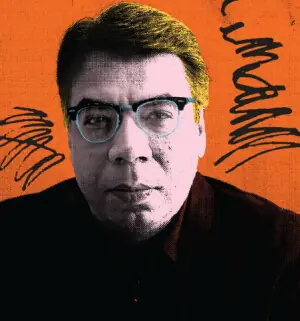
Illustration by Abro
Before the state’s crackdown against the PTI, attending an anti-government rally carried a low personal cost. A supporter could freely indulge in the irrationality of turning up to a rally to apparently create a rift within state institutions, feeling the thrill of rebellion, and gaining psychological rewards and social validation without fearing severe consequences.
Under those conditions, it seemed that the personal cost of adopting irrational beliefs was largely low. However, the subsequent state crackdown completely flipped this calculus. Suddenly, the price of rational irrationality skyrocketed. Attending a rally no longer offered psychological fulfilment. Instead, it now carried the tangible threat of arrest, physical harm and long-term legal harassment.
When the real-world cost of holding a belief becomes dangerously high, Caplan’s theory dictates that humans will actively suppress their emotional biases and force themselves to act with conventional rationality, to protect their own safety.
After the May 2023 event, the state successfully raised the price of expressing high-sounding praise for Khan to a level that the average citizen can no longer afford to pay. However, supporters still felt safe enough to indulge in rational irrationality at the polls during the 2024 general election. While attending street protests had become dangerous, voting provided an anonymous space, where the personal cost of insolence dropped dramatically.
Therefore, despite the fact that Khan’s government had committed multiple blunders in economic and foreign policy matters between 2018 and 2022, PTI supporters came out in large numbers to vote for the party. If seen through Caplan’s perspective, since a single ballot carries no immediate penalty of arrest or harm, voters could ignore the past governance failures of the party to reclaim the psychological value and sense of ‘moral victory’ that came with backing Khan.
When the cost of a flawed decision is low, adopting rational irrationality becomes a logical choice for individuals seeking emotional satisfaction and peer approval. The moment the cost rises, people are compelled to apply actual rationalism. Rational irrationality is a psychological state. It may seem like a personal choice that consciously ignores or suppresses logic to gratify an emotional need, but what happens when it transforms into a widespread norm?
Whereas an individual pays almost no personal cost for holding an irrational belief, the aggregate impact on society can be tricky. According to the American author Dan Ariely, rational irrationality is not random but systematic. He warns about the dangers of people making decisions that feel emotionally validating in the short-term but that often lead to disastrous long-term economic and personal consequences.
The economist Ryan Murphy, in his book Markets Against Modernity, explores how political institutions routinely exploit these irrational biases, leading to “ecological irrationality”, where voters consistently cheer for destructive economic policies because it signals group alignment to their peers.
Poor white voters in America’s ‘Bible Belt’ voting for Church and God as opposed to for economic welfare policies is an example.
When millions of individuals simultaneously make the same choice based on rational irrationality, it creates a paradox. Public policies, democratic elections and societal institutions become shaped by emotional gratification rather than objective truth. Once rational irrationality turns into a social norm, questioning it forces logical individuals to conform or face ostracisation. Widespread rational irrationality degrades the collective well-being of society as a whole.
The phenomenon driving PTI’s voter base is not an anomaly, but a reflection of how political dynamics operate when logic is traded for emotional gratification. So long as the personal cost of holding or expressing an irrational belief remains low, citizens will naturally choose comforting narratives over uncomfortable truths.
So, when a large segment of a political ecosystem operates on rational irrationality, the burden of governance inevitably shifts from the elected individuals to the state, which begins to expand its powers for the task. While rational irrationality serves the immediate psychological needs of the voter and supporter, it leaves broader society paying a cumulative price for democracy-driven politics built on illusion rather than reality.
Published in Dawn, EOS, July 26th, 2026 ...
이 뉴스, 어떠셨어요?
탭 한 번으로 반응 · 로그인 불필요