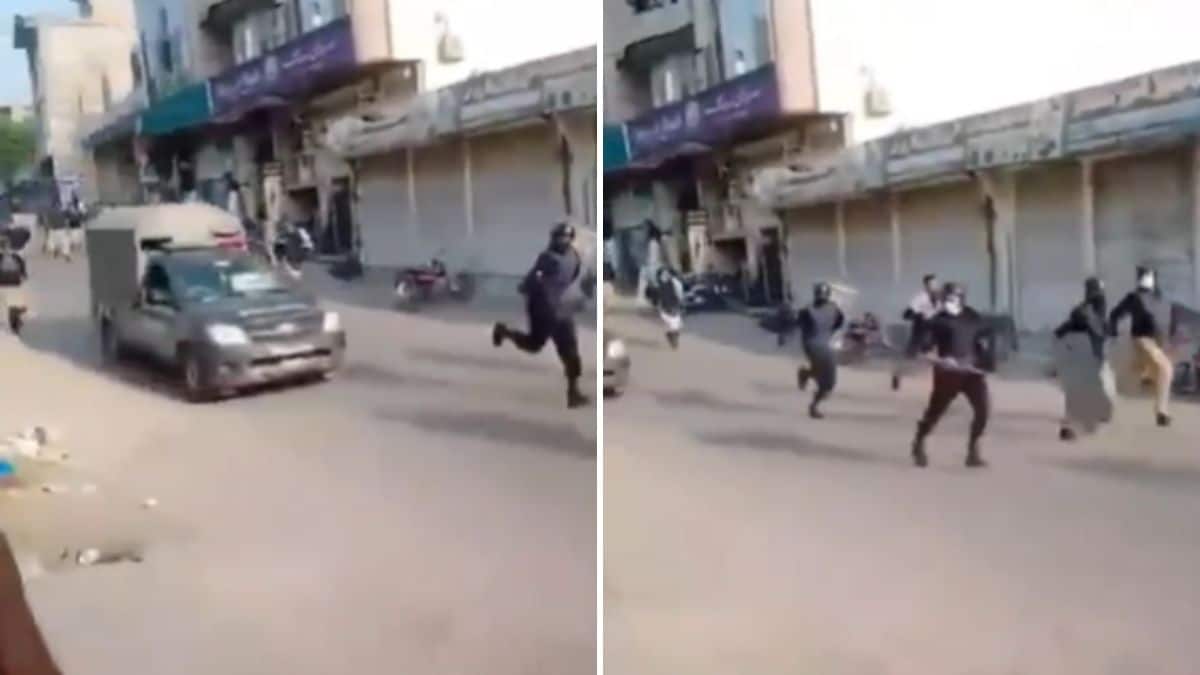
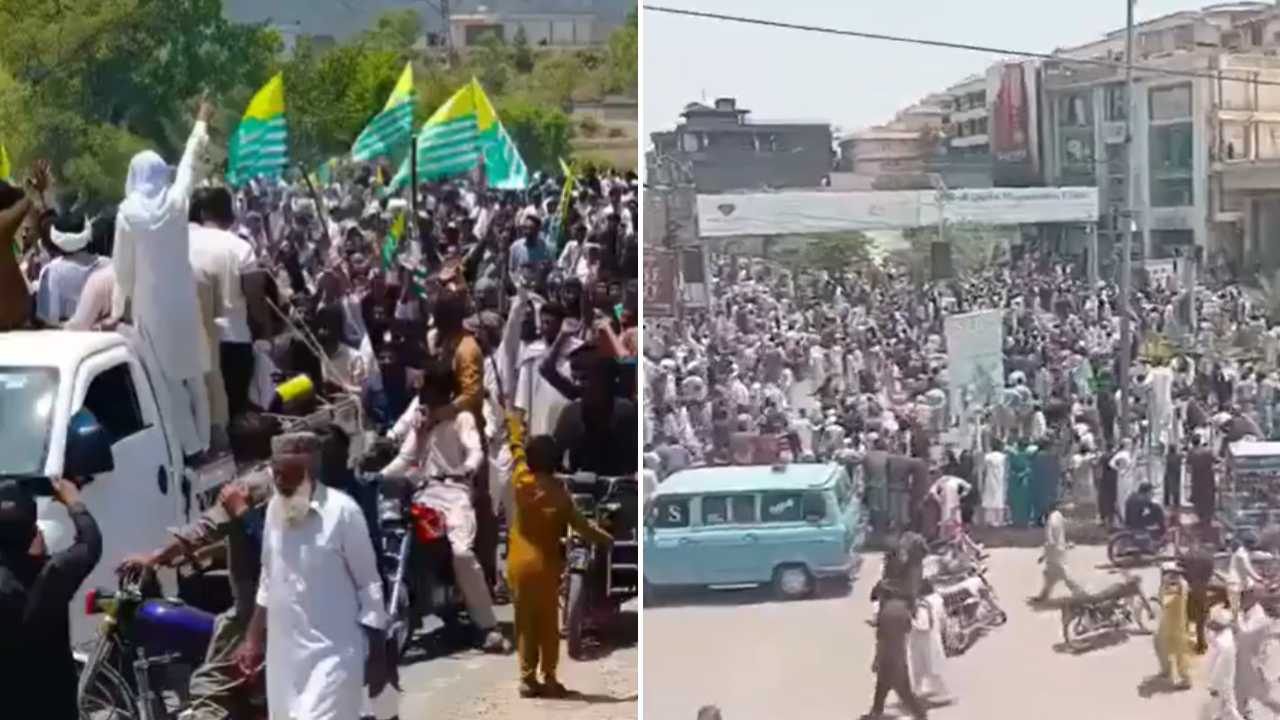
PoK erupts over a ban, Pak forces fire at protesters, several killed as Asim Munir's Kashmir claims exposed again
The immediate trigger was the banning of the Joint Awami Action Committee (JAAC) on June 6 under anti-terrorism legislation.

"PROTESTERS" · 총 322건
필터 보기현재 지수
49.5
0 = 부정 우세
50 = 중립
100 = 긍정 우세
최근 7일 기준 84,513건을 분석한 결과, 뉴스 심리지수는 49.5(균형)입니다. 긍정 10,411건(12.3%)·중립 61,149건(72.4%)·부정 12,953건(15.3%)이며, 중립 비중이 뚜렷하게 높습니다. 성향 지수는 종합 19.9(중도 균형)입니다.
The immediate trigger was the banning of the Joint Awami Action Committee (JAAC) on June 6 under anti-terrorism legislation.

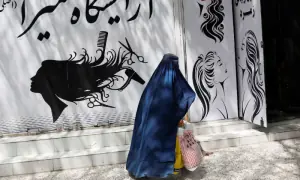
Afghan security officials dispersed a women’s rights protest in the western province of Herat on Tuesday after residents said Taliban morality police detained women accused of violating mandatory dress rules. Witnesses said one person was killed, several others were wounded and dozens of people, including women and girls, were arrested. Taliban authorities have not confirmed casualties or arrests. Sayed Masoud Hosseini, spokesperson for Herat police, told the state-run Bakhtar News Agency that the gathering in the Jebrail area had “created tensions” and disturbed public order under the pretext of opposing the hijab, which he described as a religious obligation. Witnesses said the protests erupted when officials from the Ministry for the Promotion of Virtue and Prevention of Vice attempted to arrest women opposing the mandatory dress requirements. Some residents said officials targeted women who were already observing the required dress code, which includes fully covering the face and body. Video from Herat showed armed officials breaking up the demonstration, including fully veiled women among the protesters. In one clip, people ran for cover as gunshots were heard in the background. Since seizing power in Kabul in 2021, the Taliban has imposed sweeping restrictions on women and girls in the war-shattered country, including limits on access to education, employment and sport, drawing widespread international criticism. Herat, long regarded as one of Afghanistan’s most socially and culturally vibrant cities, has undergone significant changes. On Monday, the UN Assistance Mission in Afghanistan said it was concerned by reports of women detained in western Afghanistan for allegedly failing to meet dress requirements. The mission urged Taliban authorities to respect freedom of movement and equality before the law. Taliban say they respect women’s rights in accordance with their interpretation of Sharia.
The shutdown of 13 oil flow stations in Delta State over the Warri ward delineation dispute threatens to cut Nigeria’s crude output by up to 400,000 barrels per day, raising fears of major revenue losses and a political crisis ahead of the 2027 elections. The post Protesters shut 13 oil facilities, threaten Nigeria’s 400,000-barrel daily output appeared first on Premium Times Nigeria.

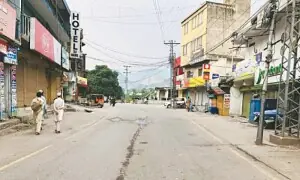
MUZAFFARABAD: Shops and markets were largely shut and vehicular traffic remained minimal in Muzaffarabad, the capital of Azad Jammu and Kashmir (AJK), on Tuesday as the newly proscribed Joint Awami Action Committee (JAAC) observed a strike. Meanwhile, AJK Prime Minister Faisal Mumtaz Rathore urged a return to the negotiating table in a bid to end the tensions that have gripped the region over the past few days. During the day, Muzaffarabad’s streets were deserted, with hardly any vehicles on the roads. Riot police and paramilitary personnel remained deployed in the city. However, no demonstrations were witnessed in the capital. Meanwhile, reports from Mirpur said that hundreds of people had gathered in the town’s Quaid-i-Azam stadium. “Shops are closed here and traffic is off the roads,” local journalist Sajjad Jarral told Dawn by telephone. Witnesses in Kotli said that while the area observed a complete shutter-down and wheel-jam strike, hundreds of people led by JAAC core member Imtiaz Aslam were heading towards Poonch district via Tatta Pani. Another big rally led by JAAC core member Khawaja Mehran from Dadyal also entered Kotli for onward march towards Poonch. The legal fraternity of AJK boycotted judicial proceedings on AJK Bar Council’s call to protest the alleged arrest of senior lawyer Amjad Ali Khan, a core member of the JAAC. JAAC’s protest call for today centred on a highly contentious demand to abolish the 12 seats in the region’s Legislative Assembly that are reserved for refugees from Indian-occupied Jammu and Kashmir who settled in mainland Pakistan after 1947. JAAC alleges that these seats were often used by mainstream Pakistani political parties to influence the formation of governments in Muzaffarabad. The government, on the other hand, maintains that it is a constitutional matter and cannot be decided by one group. ‘Find a way out through talks’ In a post on X, the AJK premier reiterated his call for the issue to be resolved through talks. “Please come back to the negotiating table. I’m requesting everyone on daily basis to resolve matters through discussions instead of fire and blood,” Rathore wrote on X. He added that the protesters’ “abusive comments, constant threats and senseless agitation” were not helpful to anyone in AJK. “A political activist without the ability to debate and negotiate is like a pilot without the ability to fly an airplane. They both end up causing hurt and damage to people behind them,” the PPP leader remarked. “Everyone recognises your rights and liberties,” the AJK PM assured, stressing that both sides needed to “remain calm and find a way out through talks”. “The only weapon a political activist carries is his reasoning and negotiation skills,” Rathore said. In an interview he shared on X, Rathore noted that the PPP, PML-N and the JAAC had their own stances on the issue of reserved seats for refugees, but he emphasised there was “space for a path forward”. He remarked that protests by the JAAC could not secure a two-thirds majority in the assembly that was needed for a constitutional amendment, under which changes to refugee seats could be made. HRCP expresses concern over ‘escalating confrontation’ Separately, the Human Rights Commission of Pakistan (HRCP) said it was “deeply concerned by the escalating confrontation” in AJK and the loss of life among both protesters and law enforcement personnel. It urged an “immediate de-escalation of tensions and an impartial investigation into all deaths and injuries”. “The state must remember that proscribing popular movements invariably risks narrowing democratic space. Demands for constitutional change should be pursued through peaceful, representative and democratic processes rather than confrontation and violence,” the HRCP stressed. The HRCP had previously also expressed concern over the proscribing of JAAC. On Friday, the AJK government declared JAAC a proscribed organisation, stating that it was “engaged in terrorism” and had acted in a manner “prejudicial to peace and security” of the state. A day later, AJK authorities launched a crackdown on the JAAC, arresting scores of its leaders and activists from different areas. But tensions in the region particularly flared up after a violent protest in Rawalakot, during which at least four law enforcement personnel and seven civilians lost their lives. Islamabad has also dispatched federal paramilitary forces to reinforce the region’s thinly stretched police force, and intending visitors have been advised to postpone their trips until June 20. More to follow
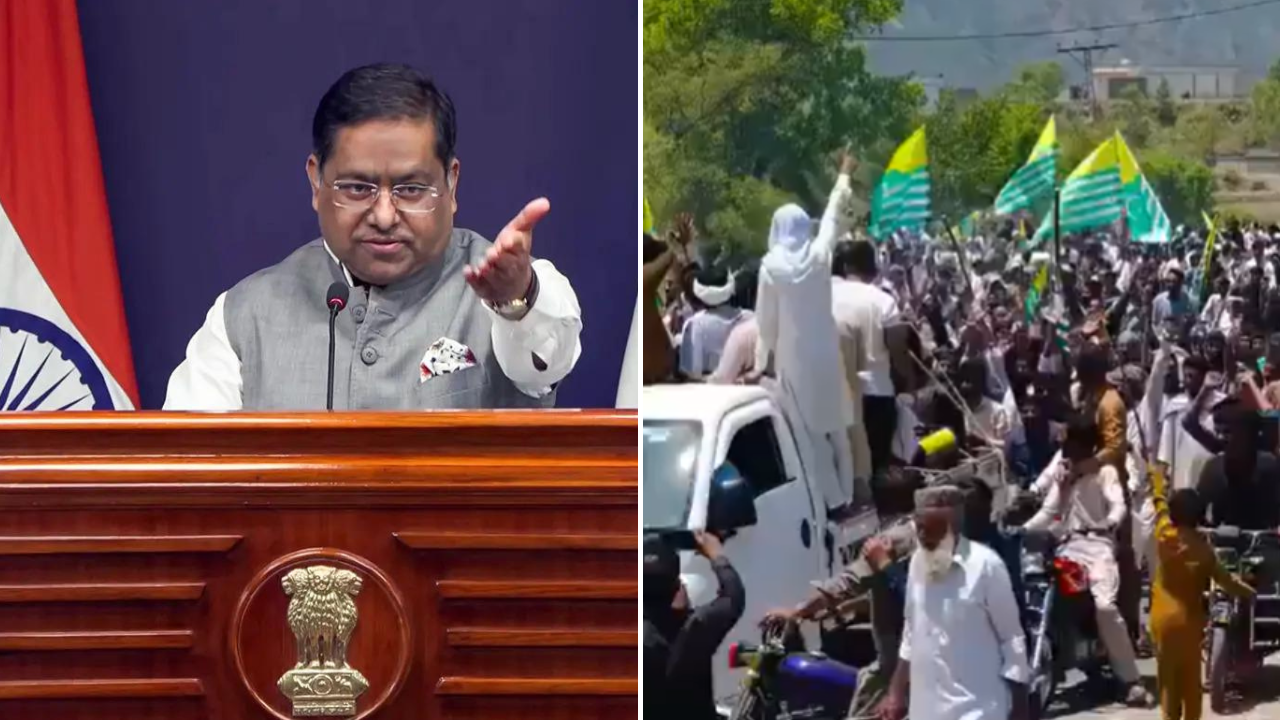
The remarks came after more than 20 people were killed and several others injured in clashes between protesters and security forces in different parts of PoK.

In addition, Jerusalem District Police raided the homes of suspects connected to the June 1 haredi riots in Beit Shemesh.
Turning to Bolivia now, where conservative President Rodrigo Paz has moved closer to enacting a state of emergency that would allow the military to intervene in demonstrations. For weeks, protesters have constructed roadblocks and taken to the streets demanding the government to tackle Bolivia's worst economic crisis in decades. Some are urging Paz to step down. The unrest has driven up food and fuel prices, and resulted in a lack of basic goods.

Protesters targeted Apple's WWDC 2026, demanding the tech giant clean up its App Store. Advocacy groups highlighted 47 'nudify' apps, which use AI to create nonconsensual sexualized images, and Apple's alleged earnings from them, including xAI's Grok. Concerns were also raised about child sexual abuse material in iCloud, with calls for renewed action.
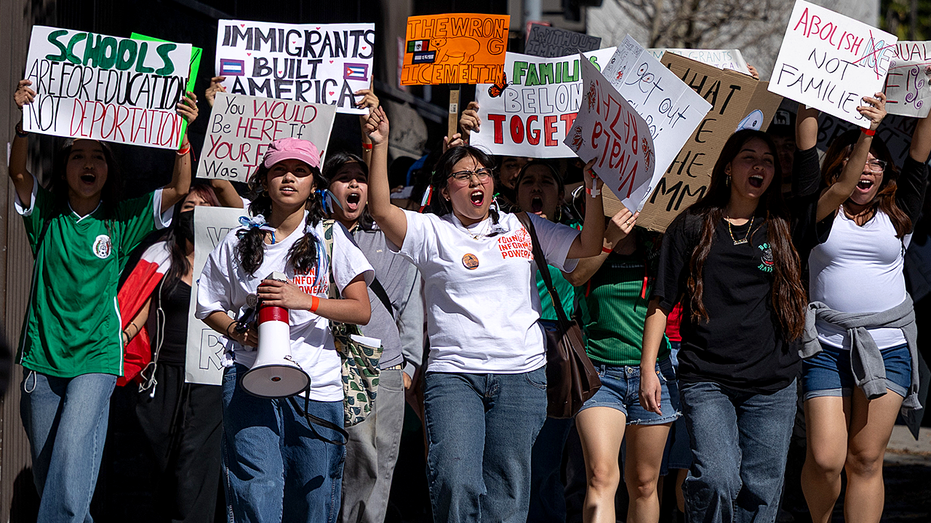
Las Vegas family sues Clark County School District after teen expelled for pro-ICE stickers but anti-ICE protesters allegedly went unpunished.

The demonstrations disrupted normal business activities in parts of the town as protesters expressed fears over public health risks.
Protesters are concerned about cross-border infection risks and the lack of transparency from the government about the treatment centre.

Over 30 Dead, 200 Injured As Security Forces Open Fire On Protesters In PoK

The Taliban purportedly opened fire on protesters on Tuesday, after dozens took to the streets to denounce the detention of women and girls arrested for violating the country's dress code.

Large crowds gathered in Brussels on 8 June to condemn what protesters described as excessive police force during recent demonstrations. The dispute is rooted in planned spending cuts affecting French-speaking education in Belgium
NANYUKI, Kenya, June 9 - Kenyan police fired tear gas on Tuesday to scatter protesters in the central town of Nanyuki opposing a quarantine centre for Americans exposed to Ebola that the U.S. government has raced to build despite Kenyan court orders barring further work.
[The Conversation Africa] Anti-migrant campaigns in South Africa are increasingly being framed as acts of community protection. Protesters present their efforts as a response to community concerns about crime, unemployment and failing public services.

MATTERS have worsened in the stand-off between the Azad Kashmir government and the Joint Awami Action Committee, which has recently been proscribed by the regional administration. The situation started deteriorating after a trader affiliated with the JAAC was reportedly shot in an altercation with law-enforcers on Saturday. The following day protesters and LEAs clashed outside a Rawalakot hospital where the victim’s body was brought, resulting in the deaths of at least four policemen and seven protesters. This unfortunate series of events echoes similar confrontations between the AJK government and JAAC over the past few years, where dialogue over protesters’ demands has alternated with deadly violence. The region is particularly on edge as the JAAC has called for a major strike today. With the proscription of the group and the deaths in clashes with the administration, emotions are high all round and better sense is required across the board to prevent the situation from deteriorating further. At the core of the dilemma is the JAAC’s call for abolition of refugee seats for those who left India-occupied Kashmir and settled in AJK. Indeed, the AJK government’s banning of the JAAC has not helped matters, and has only raised the temperature. To prevent further confrontation, the AJK government should reconsider the ban, though investigations are required into the killing of the policemen and the deaths of the protesters. This paper has argued that bans targeting popular movements are undemocratic, and have, throughout history, failed to suppress dissenting voices. At the other end, the JAAC, too, should take a less hard-line position. While the group had earlier called for civic and governance reforms, it is now demanding constitutional changes, such as the abolition of refugee seats. These delicate constitutional matters must be decided in the House, after thorough debate by all sides. In fact, as the AJK Supreme Court has said in its opinion on a reference sent to it by the region’s president regarding the refugee seats, constitutional changes can only be achieved “by an assembly possessed of the full democratic mandate of the people, after deliberation” and cannot be “wrested from a government under duress”. Therefore, both sides need to de-escalate. The authorities should reconsider the JAAC ban, while JAAC supporters must keep all protest peaceful, and take their demand for constitutional change to the AJK legislature. Published in Dawn, June 9th, 2026
• ‘Proscribed’ JAAC to go ahead with rally from Bhimber to Muzaffarabad, sit-in outside assembly • Officials say govt ‘will not allow’ march to go ahead; large crowds unlikely since group’s leadership is ‘on the run’ MUZAFFARABAD: In the aftermath of Sunday night’s fierce clashes that claimed the lives of seven civilians and four law enforcement personnel in Rawalakot, Azad Jammu and Kashmir (AJK) braced for a shutter-down and wheel-jam strike on Tuesday (today) , announced by the proscribed Joint Awami Action Committee (JAAC). According to initial plans, the JAAC had decided that protesters would start a long march from the southernmost district of Bhimber, passing through Mirpur, Kotli and Poonch before reaching Muzaffarabad on June 10 for a sit-in outside the Legislative Assembly. Government officials, meanwhile, appeared hopeful about the prospects of a tepid response to the protest call for several reasons, including the recent crackdown. In action against JAAC, the authorities had rounded up more than 200 people across the region and forced others into hiding, official sources and witnesses said. “Situation is fluid. The JAAC leadership and crowd-pullers are on the run. So far, they haven’t been able to pull numbers on the streets, but there is a possibility of small protests at several places,” said one official. “But it has been firmly decided that protesters will not be allowed to assemble anywhere, let alone stage a long march from one part of the state to the other,” another official said. Some analysts were of the view that while shutters might remain closed and transport stay off the roads, the call for Tuesday’s strike was less likely to receive an overwhelming response due to the alleged stubbornness of the JAAC leadership. “It was a good movement for rights in the beginning, but some of the committee’s obdurate and myopic leaders pushed it into a blind alley, for reasons best known to them,” remarked a retired government servant, requesting he should not be named. “Abolition of 12 seats might be close to the majority’s hearts in AJK, but it should not have been made a matter of life and death,” he added. The officials who spoke to Dawn made it clear that the administration would neither force anyone to keep their shops open nor allow anyone to force others to shut down their businesses. “As long as people remain peaceful, the law will tolerate them. But the moment they try to create any problem, they will be dealt with firmly,” one of them said. Rawalakot violence On Monday, life remained normal in almost all parts of AJK, except Rawalakot, where shutters remained down for the second consecutive day and public transport stayed off the roads. Elsewhere, a partial strike was reported just from Dadyal, a lakeside town in Mirpur district. In Rawalakot, the epicentre of the violence, the administration and law enforcement agencies (LEAs) succeeded in dispersing protesters shortly after midnight on Sunday. According to divisional commissioner Sardar Waheed Khan, the protesters had not only blocked access to the Combined Military Hospital (CMH) but had also virtually taken over the facility, forcing doctors and paramedics to flee for their safety. He regretted that those present inside the hospital not only obstructed treatment for LEA personnel but also caused further injuries to some of them, apart from allegedly disrespecting the body of a martyred police constable. Sharing details of the clashes, he alleged that the protesters possessed long-range firearms, petrol bombs and other ammunition. “They attacked law enforcers from side alleys with full planning, on the pattern of a guerrilla war,” he said. He said of the 30 or so hospitalised activists, three critically injured were airlifted to Islamabad along with four LEA personnel by helicopter. Six activists remained under treatment in the hospital as detainees while others were shifted to the police station, he added. Funeral prayers Meanwhile, funeral prayers for the three AJK policemen — identified as SHO Hajira Muhammad Inayat and constables Muhammad Faisal and Faheem Anwar — were offered at 5pm at Rawalakot Police Lines with full honours. Among those in attendance were Chief Secretary Khushal Khan, IGP Liaqat Ali Malik and General Officer Commanding Murree Maj Gen Zarrar Mahmood. The seven deceased civilians were identified as Usman Sabir of Koiyan village, Fahad Barkat of Rehara village, ex-serviceman Wasaid Siddique of Parrat village, Naqash Zardad of Matyalmera Danna village, Jamshed Ashraf of Hussainkot village, Muhammad Rasheed of Choti Nakkar Pakhar village, and Tariq Resham of Dothan village. The ex-serviceman was caught in crossfire, the commissioner claimed. Sources disclosed that the funeral and burial rites of three activists, including Shazeb Habib, whose body had been lying in the CMH mortuary since Saturday, were performed by the administration and police, while those of the others were carried out by their families without any agitation. In a statement posted on Facebook, a spokesperson for IGP Malik said that legal action against members of the proscribed committee allegedly involved in armed violence was continuing. He warned that strict legal action would be taken against those involved in attacks on LEA personnel and government property. Published in Dawn, June 9th, 2026