«The Christophers» de Steven Soderbergh : encombres au tableau
Le film du cinéaste américain sur deux peintres que tout semble opposer, interprétés par Michael Coel et Ian McKellen, est une étude de sales caractères chaotique et prévisible.
"VISIBLE" · 총 175건
필터 보기현재 지수
49.5
0 = 부정 우세
50 = 중립
100 = 긍정 우세
최근 7일 기준 86,003건을 분석한 결과, 뉴스 심리지수는 49.5(균형)입니다. 긍정 10,530건(12.2%)·중립 62,299건(72.4%)·부정 13,174건(15.3%)이며, 중립 비중이 뚜렷하게 높습니다. 성향 지수는 종합 19.8(중도 균형)입니다.
Le film du cinéaste américain sur deux peintres que tout semble opposer, interprétés par Michael Coel et Ian McKellen, est une étude de sales caractères chaotique et prévisible.
Wigmore Hall, London The quartet communicated intimately and naturally in a programme of music by Shostakovich, Ravel and Stravinsky A hushed chord sustained by the second violin, viola and cello. Fragments of a melody played as a distant memory by the first violin, which reached slowly upwards to a final crystalline harmonic. Pizzicato, diminuendo, silence. In this captivating performance by the Danish String Quartet, stillness settled over the closing portion of Shostakovich’s String Quartet No 3 in F Op 73 like heavy snow. Bow changes became impossibly seamless. The quartet’s silken tone appeared to exude eerily, disconnected from the basic friction of hair on string. Such quiet control was all the more striking in the wake of jagged, impassioned solo interjections, deeply incised octave unisons and phrases pursued as if the musicians’ survival depended on it. There was articulation so spiky it was percussive – all contact, no resonance – and passages that sounded symphonic in their velveteen richness. Yet there were also moments of polite levity and luminous classicism. The atmospheric gearshifts were sometimes imperceptibly gradual, sometimes violent, but rarely visible: beyond describing itself as “relatively bearded”, the Danish String Quartet is not an ensemble given to choreographed spectacle. Continue reading...
This article is brought to you by AGILINK. Throughout the exhibition hall at the 2026 IEEE International Conference on Robotics (ICRA), in Vienna, one demonstration seemed to attract a disproportionate amount of attention. Two robotic hands were making a balloon dog. Slowly and deliberately, the robot twisted a long balloon into loops, bends, and joints without popping it. Visitors stopped, watched, and often returned with colleagues to watch again. AGILINK’s balloon dog demonstration draws a crowd at ICRA 2026.AGILINK At first glance, the demonstration appeared almost playful. Among roboticists, however, balloon twisting is widely recognized as an unusually difficult manipulation task. A balloon is lightweight, highly deformable, slippery, and extremely sensitive to force. Every twist changes its geometry and internal pressure, turning a seemingly simple activity into a continuously changing physical interaction problem. Humans navigate those changes almost intuitively. While making a balloon animal, people rarely think consciously about force regulation, slip prevention, or contact stability. They simply adjust. For robots, those adjustments remain remarkably difficult. The challenge is not merely moving fingers to the right positions. The harder part is maintaining stable interaction while the object itself is changing. Highlights from AGILINK’s ICRA 2026 demonstrations, including visuotactile sensing, in-hand manipulation, balloon-animal shaping, and other contact-rich tasks enabled by the company’s latest OmniHand platform.AGILINK That distinction helps explain why the balloon dog drew so much attention in Vienna. What appeared to be a dexterity demonstration was, in many ways, a demonstration about contact itself. As robotic manipulation continues to advance, a growing number of researchers are arriving at a similar conclusion: many of the hardest problems in robotics begin only after contact occurs. Motion and Contact Intelligence for Robot Manipulation Balloon twisting combines two challenges that robotics has traditionally struggled to solve simultaneously: long-horizon task execution and contact-rich manipulation. The first concerns motion. A balloon dog is not created through a single grasp or twist. It emerges through a carefully ordered sequence of manipulations, each setting the conditions for what follows. A small rotational error introduced early may appear insignificant at first, yet several steps later it can prevent the final structure from forming altogether. In that sense, balloon twisting is a long-horizon task. Success depends not only on performing individual actions correctly, but also on preserving the future feasibility of the entire manipulation process. To address this challenge, AGILINK began by collecting demonstrations from professional balloon artists. Human actions were mapped onto robotic hands to establish an initial manipulation policy. But successful demonstrations alone were insufficient. In practice, some of the most valuable learning occurred when execution began to drift toward failure. Whenever instability emerged, human operators intervened and corrected the manipulation in real time. Those interventions were recorded and incorporated into reinforcement-learning cycles, allowing the system to learn not only how successful demonstrations unfold, but also how experienced operators recover when things start to go wrong. Through this process, the robot gradually acquired the capabilities required for long-horizon task execution—a collection of abilities that AGILINK groups under the term motion intelligence: the ability to generate actions, coordinate bimanual behaviors, and execute extended manipulation sequences under real-world uncertainty. OmniHand 3 Ultra-M on display at ICRA 2026.AGILINK Yet motion alone does not explain why balloon twisting remains difficult. The second challenge is contact. The robot must continuously regulate force, adjust contact locations, and respond to subtle changes in the object’s state. These decisions are difficult to encode through explicit rules. Even skilled human operators often rely on tactile intuition developed through experience rather than consciously articulated strategies. Analysis of those interventions revealed that many failures did not originate from incorrect action sequences, but from the breakdown of contact itself. To better capture those interaction dynamics, AGILINK collected contact-centric intervention data and incorporated those interactions into reinforcement-learning training. Rather than learning only which motions to perform, the system also learned how humans maintain stability when contact conditions begin to deteriorate. AGILINK describes this capability as contact intelligence: the ability to establish, maintain, and adapt physical interaction as force distribution, friction, deformation, and contact geometry continuously evolve. The distinction between the two capabilities is subtle but important. Motion intelligence determines what the robot intends to do. Contact intelligence determines whether it can continue doing it. For balloon twisting, both are necessary. One provides the sequence of actions. The other keeps those actions physically viable. YouTuber KhanFlicks follows OmniHand’s motions while learning to fold a balloon dog at the AGILINK booth.AGILINK Between a balloon slipping away and a balloon bursting lies a narrow region of stability. Successful manipulation depends on finding that region—and remaining within it throughout the task. Introducing the OmniHand 3 Ultra-M Dexterous Hand The balloon dog demonstration showcased a manipulation capability. It also revealed a broader question. How much contact intelligence can be achieved through learning alone? A robot can only regulate what it can perceive. It can only respond as quickly as its hardware allows. As manipulation tasks become increasingly complex, researchers are finding that progress depends not only on better policies, but also on richer sensing and faster physical response. That realization formed the backdrop for AGILINK’s second major announcement at ICRA 2026. Alongside the balloon dog demonstration, the company introduced the OmniHand 3 Ultra-M. OmniHand 3 Ultra-M closely matches the size of an adult human hand.AGILINK The two exhibits represented different stages of the same technological trajectory. If the balloon dog demonstrated what contact intelligence can already accomplish today, Ultra-M was designed to explore what contact intelligence may require next. Building Hardware for Contact Intelligence Roughly the size of an adult human hand, the OmniHand 3 Ultra-M integrates 20 active degrees of freedom within a human-scale form factor. Its most distinctive feature is a fully direct-drive architecture. By adopting direct-drive actuation throughout the system, the hand is designed to enable faster and more transparent force regulation and higher force-control bandwidth, enabling faster response as contact conditions change. For contact-rich manipulation, responsiveness can be as important as sensing itself. By adopting direct-drive actuation throughout the system, the OmniHand 3 Ultra-M is designed to enable faster and more transparent force regulation and higher force-control bandwidth, enabling faster response as contact conditions change. The platform also incorporates tactile sensing across nearly the entire hand. Each fingertip contains a miniature vision-based tactile sensor, while more than 300 three-dimensional tactile sensing points are distributed throughout the palm. Together, they provide information not only about where contact occurs, but how contact is evolving. The system is designed to estimate pressure distribution, shear forces, local deformation, slip tendencies, and other interaction dynamics that often remain invisible to conventional position-based control systems. According to AGILINK’s tests, individual sensors achieve force resolution of approximately 0.005 N—roughly equivalent to detecting the weight of a sheet of paper resting on a fingertip. Spatial resolution reaches approximately 0.04 mm, while sensing density approaches 50,000 sensing points per square centimeter. OmniHand 3 Ultra-M recognizes feather texture through vision-based tactile sensing.AGILINK For dexterous robots, contact has traditionally been a largely hidden process. Ultra-M is designed to make that process more observable. Rather than simply detecting that contact has occurred, the system attempts to resolve where interaction is happening, how forces are distributed, whether instability is beginning to emerge, and how manipulation strategies should adapt in response. The balloon dog offered a glimpse of what contact intelligence can already accomplish. Ultra-M explores a different question: what capabilities may be required to push contact intelligence further? The Physical World Remains the Hardest Benchmark The significance of contact intelligence extends far beyond balloon animals. Many tasks that continue to resist automation involve unstable or deformable interaction: cable insertion, garment handling, flexible packaging, delicate assembly, connector mating, tool use, and household manipulation. These tasks are difficult not because robots cannot reach the correct location, but because maintaining stable interaction after contact begins remains extraordinarily hard. For decades, robotics achieved many of its successes by reducing uncertainty. Factories were engineered to make robotic motion predictable, repeatable, and highly structured. The physical world behaves differently. A growing share of robotics research is shifting toward interaction itself—understanding how robots can establish, maintain, and adapt physical contact within environments that remain fundamentally unpredictable. Objects shift. Materials deform. Friction changes. Contact evolves. Real environments rarely follow scripts. Seen through that lens, the balloon dog was never really about the balloon dog. What attracted attention at ICRA was not simply a visually impressive demonstration, but what it revealed: intelligence in the physical world is ultimately measured through interaction. As motion generation continues to mature, a growing share of robotics research is shifting toward interaction itself—understanding how robots can establish, maintain, and adapt physical contact within environments that remain fundamentally unpredictable. For robots moving beyond structured environments and into less predictable real-world settings, managing contact may become as important as motion itself.

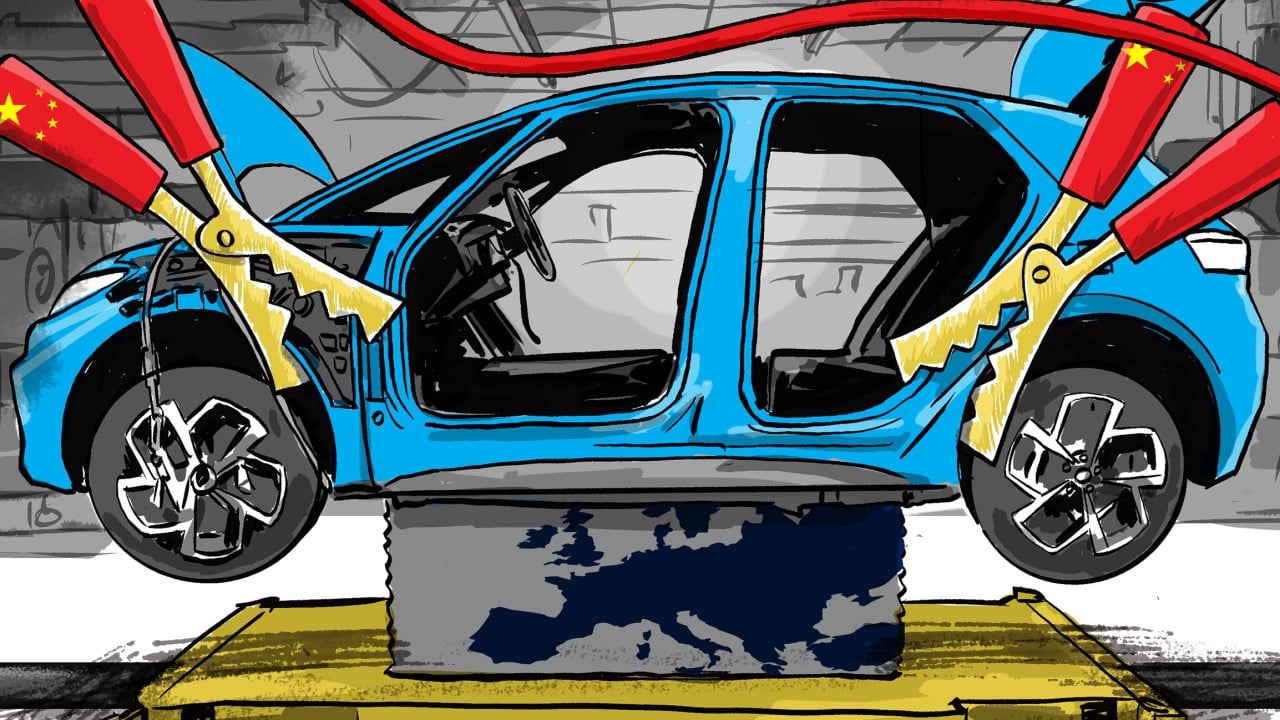
From Sunderland to Spain, Chinese manufacturers are revitalising idle factories and investing where traditional European carmakers are pulling back. Chinese carmakers are rapidly transforming from export-oriented manufacturers into embedded participants in Europe’s automotive industrial base, a shift increasingly visible across both continental Europe and Britain. What began as a strategy focused on exporting low-cost electric vehicles (EVs) has evolved into a broader industrial expansion...

“I am not promising a magic wand. I am not promising twenty-four hours, seven days a week power. We will get there ultimately,” the minister said. The post New power minister promises visible improvement in electricity supply, says progress won’t be dramatic appeared first on Premium Times Nigeria.

The FIFA World Cup is no longer an event enjoyed solely by soccer fans. Held once every four years, the tournament attracts billions of viewers worldwide and has long inspired musicians to release official FIFA anthems, national team songs and unofficial tributes. K-pop has become increasingly visible in that tradition. After BTS member Jungkook made history by performing the first FIFA World Cup anthem by a Korean artist with "Dreamers" at the 2022 Qatar World Cup, Blackpink's Lisa joined this

Fitch Ratings has lowered India's FY27 GDP forecast to 6.4% due to rising costs from Middle East conflict impacting consumer spending. While domestic demand remains a driver, higher prices are expected to reduce purchasing power, with the most visible impact in Q2 and Q3 of FY27.
Parliamentary Affairs Minister Tariq Fazal Chaudhry said on Tuesday that the budget for the next fiscal year (FY2026-27) would likely be announced on June 12. He posted this on X, further stating that summaries to convene budget sessions in the National Assembly and Senate on June 10 had been sent. The date for the budget’s presentation remains unconfirmed as the federal government, its coalition partners and provincial governments struggle to reach a consensus over the Centre’s demand for more than Rs1 trillion for strategic needs. Therefore, an official revised plan for the release of the Economic Survey of Pakistan and the budget schedule is yet to be issued. The meeting of the National Economic Council (NEC), officially called for Monday, was postponed for the third time at the last moment amid continuing negotiations over the freezing of provincial shares in the federal divisible pool under the National Finance Commission (NFC) Award. Muzzammil Aslam, adviser on finance to the Khyber Pakhtunkhwa chief minister, confirmed that the Centre had told provinces that their financial shares under the NFC for the current year would not be increased next year and that any amount above the current year’s share would have to be returned to the Centre. According to Aslam, the provinces had protested the demand as it would push provincial budgets into deficit and make it difficult for them to run their governments. He said the federal government team suggested that provinces could freeze salaries and limit development schemes. Aslam said a date for the NEC meeting was uncertain, as many issues that had developed over time were too significant to be settled ahead of the council’s meeting. As a result, the federal budget scheduled for June 10 could slip further, as there was “no way forward in sight” and consensus between the Centre and provinces appeared distant, he said. On the other hand, the PML-N-led government and its major ally, the PPP, on Monday reached a consensus on the broad framework of the federal budget. The two sides met for a third round of talks at Aiwan-i-Sadr, with President Asif Ali Zardari in the chair and Prime Minister Shehbaz Sharif leading the PML-N team. The talks, attended by political bigwigs from both sides, were held in two phases — first at the delegation level and then in a final round involving top leadership. Federal Minister Ahsan Iqbal said the government had reached a “complete understanding” with the PPP on the Public Sector Development Programme (PSDP) and the development budget. He added that top-level political consultations and delegation-level talks would continue to address the remaining budgetary demands.
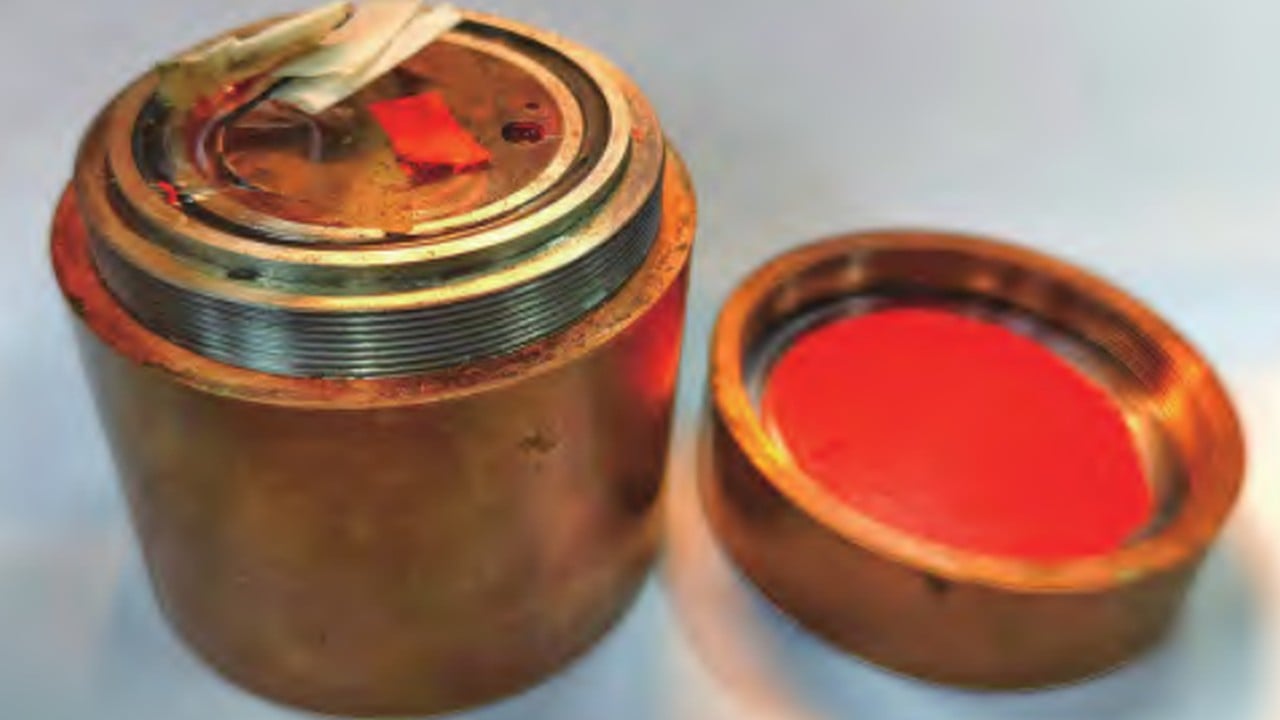
Inside a metal shell being hurled from a standstill to a speed many times faster than sound, the pressure could be as high as an elephant standing on every square inch of a human body. To make matters worse, an invisible, violent magnetic storm is raging through its path. This is the world inside an electromagnetic rail gun. For decades, this has been the nightmare that kept weapons engineers awake. Their dream was to place a guidance chip inside a rail gun shell so it could steer itself to a...

Rarely a week passes without a new story about Russia’s shadow fleet. Tankers catch fire in the Mediterranean, are added to sanctions lists, or are boarded while passing through European waters. But the bigger story is not the vessels that are caught, but those that aren’t — ships moving between registries, ports, shell companies, and service providers that obscure their ties to Russia while keeping a sanctioned state afloat. The vessels that do get sanctioned are the visible tip of a larger scheme that North Korea spent years running, and Russia has refined at scale.Shadow fleets are typically studied in The post From Pyongyang to Primorsk: When Sanctions Evasion Becomes System Design appeared first on War on the Rocks.
India's fuel consumption rose to 19.93 million metric tons in May, while liquefied petroleum gas consumption continued to decline, data from the Petroleum Planning and Analysis Cell (PPAC) of the oil ministry showed. Fuel consumption inched up from 19.47 million metric tons in April, but fell 6.5% from May last year. Data also showed that LPG consumption fell about 20% from a year earlier to 2.13 million tons. The country was facing its worst LPG supply crisis in decades due to shipping disruptions in the Strait of Hormuz amid the U.S.-Israeli war with Iran. India buys about 90% of its LPG imports - mainly used for cooking - from the Middle East. The U.S. Treasury Department said that it had imposed sanctions on a network of individuals, entities, and tankers smuggling Iranian-origin liquid petroleum gas disguised as Omani LPG to South and East Asia. Data showed gasoline sales were down 6.1% from April and down 3.4% from a year earlier. Meanwhile, diesel consumption was up 1.6% from a year earlier and gained 4.8% month-on-month. India's state-owned fuel retailers increased diesel prices by 2.71 rupees ($0.0283) per litre and petrol by 2.61 rupees, dealers said, the fourth hike in May to recoup some losses driven by higher crude costs. Naphtha sales fell 29% year-on-year, while bitumen consumption, used primarily in road construction, fell 32% from April and was down about 39% on an annual basis. Fuel oil usage jumped about 24% from a year earlier. India is expected to see slower growth in gasoline and diesel demand this year after a series of price hikes last month, reflecting higher oil costs triggered by the war in Iran, with early signs of stress already visible in the trucking sector.Domestic salesProductMay 2026Apr 2026Mar 2026May 2025Apr 2025Mar 2025Diesel8.738.338.738.598.268.08Petrol3.913.683.783.783.453.51LPG2.132.212.382.682.552.73Naphtha0.670.760.940.950.941.03Jet fuel0.780.770.810.780.770.80Kerosene0.030.030.040.040.030.03Fuel Oil0.630.490.650.500.490.50Bitumen0.520.581.020.860.861.09TOTAL19.9319.4721.3721.3120.2320.70
South Korea and the International Atomic Energy Agency have begun expert-level discussions on a special safeguards arrangement for Seoul’s nuclear-powered submarine project, IAEA chief Rafael Grossi said Monday. Seoul’s consultations with the agency became publicly visible in March, as South Korea moved to develop nuclear-powered submarines following last year’s summit between President Lee Jae Myung and US President Donald Trump. “We are in the kickoff phase of that process, which is a highly t

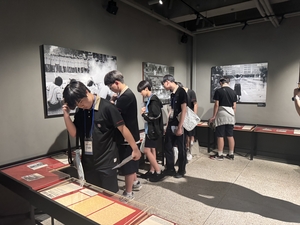
“If I had been a college student in 1987, I don’t think I would have been able to join the protests or take a leading role in the pro-democracy struggle because I would have been afraid of torture, guns and tear gas,” said 15-year-old middle schooler Kang Hyun-joon. “But I think I would have tried to work for democracy in less visible ways.” Kang had just finished touring the Democratization Movement Memorial Hall in Yongsan-gu, central Seoul. The site had once served as an anti-communist invest

THE budget is upon us. A day after this piece appears in the paper, it will be presented in Parliament, we were told in a tweet by a government official. This, however, does not mean the two parties — the PPP and PML-N — have agreed on all matters financial. The meetings continue as they try and reach an agreement on what the provinces will contribute to the federation, other than the committed surpluses, which have become the norm for some years. Wagging tongues in Islamabad speak about many ideas and ‘solutions’ from changing the formula of the divisible pool and shifting the BISP to the provinces to getting the provincial governments to pay for interior ministry expenses. But most talking heads agree there is now little time to change the NFC via a constitutional amendment and the decisions have to be made through other means. So a ‘consensus’, hybrid style, is to be brought about. As a result, meetings continue between the PPP and the N. That Ishaq Dar, the firefighter who is always sent out to soothe friends, has been part of the team, reflects that this is an issue the N is taking seriously. It is unclear if the matter has already been resolved or still requires thrashing out but thrashed out it will be; and we can also be equally certain the PPP will ask for and get a pound of flesh in return. Everyone, it seems, has suddenly realised the poor state of the economy. But this is just one chapter of the consensus building. Vlogs, tweets, gossip and ‘zaraye’ (sources) insist that a 28th amendment is still needed for big-ticket reform, which might include local governments, changes to the provincial status of areas such as Karachi and Gwadar, and so on. Whether this is to simply scare the governing parties into compromising on the financial issues or there is indeed some seriousness behind some of these initiatives is unclear. Perhaps this will become clear once the budget dust settles. There is little doubt, though, that the powerful ones are now less focused on diplomacy and world peace, and are paying attention to mundane issues such as the economy and politics. The interior minister has been given the job of taking messages back and forth to neighbours and friends while the foreign minister is now sitting put and running meetings with allies. But as I said, there are rumours galore. And one of them, once again, is about a possible reshuffle in the cabinet. This is lent credence by the discussion and debate on the state of the economy and the performance of the government. All the gleeful talk about foreign policy successes has been put aside and replaced by questions on taxes, the government’s economic track record, and so on. This criticism is not just coming from those who whine all the time (such as myself) but also those who happen to have a better sense of the thinking in the power corridors. Everyone, it seems, has suddenly realised the poor state of the economy. And for many, this means it’s open season on the finance minister, whose departure is being predicted once again (along with others). To be honest, the finance minister gets more than his fair share of criticism because he seems to have been left with no constituency. The PML-N had decided a long time ago that he was not one of their own, despite having supported his initial induction into the cabinet and Senate — and he came from a family known to be close to the party. But the honeymoon period was short. Slowly and steadily, many of the key committees were handed over to Ishaq Dar. Neither were the Noonies all that supportive of him in private. By now, it is less clear if ‘other’, key stakeholders are satisfied with him. But it is worth pointing out that some of the public criticism against him is linked not to Islamabad’s twin but a former finance minister who hasn’t lost his ambitions of running Q block again. What this means is that the real challenge (if the two cities agree) may not be the removal of Muhammad Aurangzeb but about who will replace him. The IFIs may not want Ishaq Dar to return and one can’t be too sure if the prime minister wants him in the hot seat either. And unconnected souls such as myself don’t know what Pindi thinks of him in terms of Q block. And if he is not acceptable then what are the other options? The ruling party doesn’t have many choices in its senior ranks — which in itself is an indictment of the party once known as being the ‘best’ at governance. There are possible contenders among the young Turks but they will not find it easy to manage the official challenges of this position or the conspiracies that will be hatched around them. Perhaps the absence of a replacement might win the current finance minister a reprieve but this also means the criticism and the uncertainty will continue. But along with this come the chances of other changes in the cabinet. However, once again, there is little clarity on the ‘competent’ replacements. Because beyond a certain point focusing on individuals is to evade the reality that the problems are systemic and structural. And while more efficient and competent people can make a difference, they cannot address the absence of political will. For instance, the absence of taxation on real estate or agriculture cannot be pinned on individuals. Or for example, the provision of poor quality internet and phone services. However, between this budget and the possible cabinet reshuffle, the sense of urgency to deliver for this government (and its backers) will increase. The excuse of ‘stabilising’ an economy on the brink of default will no longer be enough — even among themselves. The people stopped buying into it a long time ago. Can one assume then that the countdown has begun? I wish I knew. The writer is a journalist. Published in Dawn, June 9th, 2026
Por primera vez en la historia, tres de los cuatro cabezas de serie después de la fase regular perdieron en los cuartos de final
• Centre, provinces struggle to reach consensus over fiscal space • Federal govt seeks over Rs1tr for strategic needs; provinces resist freeze on NFC shares • KP says demand could push provinces into deficit • CM’s adviser says issue now political, not technical • Seeks consultation with Imran before budget decisions ISLAMABAD: The announcement of the federal budget 2026-27 remains uncertain as the federal government, its coalition partners and provincial governments struggle to reach consensus over the Centre’s demand for more than Rs1 trillion for strategic needs. The meeting of the National Economic Council (NEC), officially called on Monday for June 8, was postponed for the third time at the last moment amid continuing negotiations over the freezing of provincial shares in the federal divisible pool under the National Finance Commission (NFC) award. As a consequence, the federal budget 2026-27 may not be presented in parliament on June 10 as announced last week by the Ministry of Finance. The finance ministry’s official spokesperson did not respond to a request for comment on the revised plan for the release of the Economic Survey of Pakistan and the budget schedule. Muzzammil Aslam, adviser on finance to the Khyber Pakhtunkhwa chief minister, confirmed that the Centre had told provinces that their financial shares under the NFC for the current year would not be increased next year and that any amount above the current year’s share would have to be returned to the Centre. Aslam said the provinces had protested the demand, as it would push provincial budgets into deficit and make it difficult for them to run their governments. He said the federal government team suggested that provinces could freeze salaries and limit development schemes. The Centre’s additional fiscal demand is over and above the Rs1.95tr cash surplus that provinces have already committed and signed under the national fiscal pact pushed by the IMF. Speaking to journalists after a meeting with a federal team led by Planning Minister Ahsan Iqbal and comprising Finance Secretary Imdadullah Bosal, Aslam said he had not seen such a precarious situation in the past 21 to 22 years that he had been following budgets, and certainly not during the last six to seven years in which he had been directly involved in the budget process at the federal and provincial levels. The KP team was led by Chief Minister Sohail Afridi. Aslam said even the rescheduled NEC meeting on June 9 was uncertain, as many issues that had developed over time were too significant to be settled ahead of the NEC meeting. As a result, the federal budget scheduled for June 10 could slip further, as there was “no way forward in sight” and consensus between the Centre and provinces appeared distant, he said. He said even if provinces practically agreed to give up funds beyond their current year’s share, it would be technically challenging to implement the decision because it could violate surplus targets agreed with the International Monetary Fund. Responding to a question about the constitutional bar on reducing provincial NFC shares during a fiscal year, Aslam said there was no clear answer on the table, but the Centre perhaps wanted to transfer funds to the provinces and then seek their return. “Everybody is standing on their toes” to find a solution, he said, while acknowledging that the strategic purpose for the additional funding was in the national interest. “The demand for the strategic purpose is not unjustified and is in the national interest, but Sindh and Punjab will have to show generosity,” he said. Aslam said KP’s fiscal loss could be Rs170 billion to Rs180bn compared to much larger demands from other provinces — around Rs700bn from Punjab and Rs500bn from Sindh. He said the issue had now become political rather than technical. Therefore, he said, the matter was beyond the KP government’s powers and had to be taken up in consultation with PTI founder Imran Khan. For this purpose, he said, CM Afridi and he himself should be granted urgent access to Imran in Adiala Jail. He said Imran was large-hearted and could provide a better solution, unlike the leadership of the current coalition partners. Aslam said the delegation led by Iqbal was convinced about KP’s position and promised to return with answers regarding an urgent meeting with Imran. Meanwhile, the Chief Minister’s Office said the delegation led by Iqbal had come to KP House “to discuss a range of intergovernmental matters, including meeting with former prime minister Imran Khan, the forthcoming meeting of the NEC, provincial fiscal and constitutional rights, development financing for the merged districts, energy-related issues, wheat supply, hydropower projects, and other matters of mutual concern”. CM Afridi conveyed his government’s concerns over the continued unequal treatment of KP in fiscal allocations and development financing. He said sustained denial of the province’s constitutional and financial entitlements could adversely affect the environment necessary for constructive intergovernmental engagement, including participation in national forums such as the NEC. He said consultations with Imran were essential in the context of major policy and budgetary decisions, noting that political parties routinely seek guidance from their leadership on matters of national importance. Such consultations were “necessary before taking key decisions relating to the budget and broader economic policy”, he said. The chief minister pointed to reductions in development allocations earmarked for Khyber Pakhtunkhwa and the merged districts. He said funding under the Accelerated Implementation Programme had been reduced from Rs37bn to Rs27bn, while development allocations for the merged districts had been cut from Rs66bn to Rs56bn within a week by the federal government. He said the NFC share of the merged districts had been withheld unconstitutionally for the past eight years, causing serious harm to development and public welfare efforts in these areas. Afridi said KP produced more than 500 mmcfd of natural gas daily, yet the people of the province continued to face severe gas shortages and loadshedding despite KP’s total consumption of 150 mmcfd. This was “contrary to constitutional requirements and the principles of equitable resource distribution”, he said, adding that depriving a gas-producing province of its rightful share was unacceptable. He also pointed to delays in operationalising a completed dam project in Swat due to the non-issuance of required clearances for Chinese engineers by the federal government, preventing the timely use of completed infrastructure and limiting associated economic benefits. Similarly, the Peshawar Bus Terminal had been completed but remained non-operational due to the pending issuance of a no-objection certificate by the National Highway Authority, he said. The CM’s Office said Iqbal assured the KP government that the no-objection certificate required for operationalising the Peshawar Bus Terminal would be facilitated within 24 hours. He promised that the concerns and proposals discussed during the meeting would be “presented before the prime minister and other relevant federal forums, and that efforts would be made to pursue their resolution”. Published in Dawn, June 9th, 2026
Minister of Power Joseph Tegbe on Monday assured that the country will witness tremendous visible improvement in the electricity supply and infrastructural development. The post Power sector will witness visible improvement – Minister appeared first on Vanguard News.
"AI can make everything that was on my plate visible to colleagues while I'm gone," one expert said.
The northern lights have a chance to be visible again from states along the U.S.-Canadian border on Monday night.
A controversial proposal to expand military technology cooperation between the United States and Israel is headed for a vote in the House of Representatives after surviving its first major congressional challenge, setting the stage for a broader debate over the future of one of Washington’s closest strategic relationships. The measure, known as the United States-Israel Defence Technology Cooperation Initiative, advanced out of the House Armed Services Committee on Friday after lawmakers rejected an amendment seeking to remove it from the annual defence policy bill. Opponents are expected to renew their challenge when the legislation reaches the House floor, likely in July. The initiative is part of the National Defense Authorization Act (NDAA), the annual legislation through which Congress sets policy and priorities for the US military. If enacted, it would establish a formal framework for expanding cooperation between American and Israeli defence industries and research institutions. The proposal would require the Pentagon to designate a senior official to coordinate joint projects and identify areas for cooperation ranging from artificial intelligence and cyber security to autonomous systems, advanced manufacturing and counter-drone technologies. Supporters describe the measure as a logical extension of a decades-old partnership that already includes intelligence sharing, missile defence programmes and joint weapons development. They argue that closer cooperation in emerging technologies would help both countries maintain military advantages in a rapidly changing security environment. Critics contend that the proposal goes much further than existing arrangements and could create an unprecedented level of integration between the American and Israeli defence sectors. The strongest challenge so far has come from Representative Ro Khanna, a California Democrat, who sought to remove the provision during the committee’s consideration of the defence bill. “We need to tell Netanyahu that America calls the shots, not the prime minister of any other country,” Khanna told the committee. He also argued that Americans wanted “less cooperation and blank checks to Israel, not more.” Khanna’s effort received support from Representative Thomas Massie, a Kentucky Republican who has also questioned deeper military commitments abroad. But the amendment was defeated after lawmakers from both parties rallied to defend the proposal. House Armed Services Committee Chairman Mike Rogers dismissed concerns that the measure would undermine US sovereignty. “Claims that this provision somehow cedes authority to a foreign government are ridiculous,” Rogers said. Representative Adam Smith, the committee’s senior Democrat, argued that the initiative largely formalises cooperation that already exists between the two countries. The debate reflects broader political changes in Washington. While support for Israel remains strong in Congress, divisions have become more visible in recent years, particularly following the Gaza war and growing criticism of Israeli Prime Minister Benjamin Netanyahu’s government. Progressive Democrats have increasingly questioned military aid and diplomatic support for Israel, while most Republicans and many mainstream Democrats continue to back close strategic ties. Even after clearing the committee, the proposal faces several hurdles before becoming law. The House must approve the defence bill, the Senate must pass its own version, and the two chambers must reconcile any differences before sending final legislation to the president. For now, however, supporters have won the first round of what is likely to be a longer battle over the future scope of US-Israel military cooperation.