The Independent (World)
진보 성향
기타
Ski resorts in Rocky Mountains saw worst season in four decades due to lack of snow
This year’s snowpack in Colorado, New Mexico, Utah and Wyoming was 32- 53 percent lower than the previous record low

"UTAH" · 총 65건
필터 보기현재 지수
49.5
0 = 부정 우세
50 = 중립
100 = 긍정 우세
최근 7일 기준 88,557건을 분석한 결과, 뉴스 심리지수는 49.5(균형)입니다. 긍정 10,761건(12.2%)·중립 64,154건(72.4%)·부정 13,642건(15.4%)이며, 중립 비중이 뚜렷하게 높습니다. 성향 지수는 종합 19.6(중도 균형)입니다.
This year’s snowpack in Colorado, New Mexico, Utah and Wyoming was 32- 53 percent lower than the previous record low
The Great Salt Lake is in decline. Shorelines that once defined northern Utah’s landscape have receded dramatically over the past two decades, exposing thousands of acres of dry lakebed and intensifying concerns over dust pollution, ecosystem collapse, and long-term water scarcity across the Wasatch Front. Scientists have warned repeatedly that if current trends continue, the […]

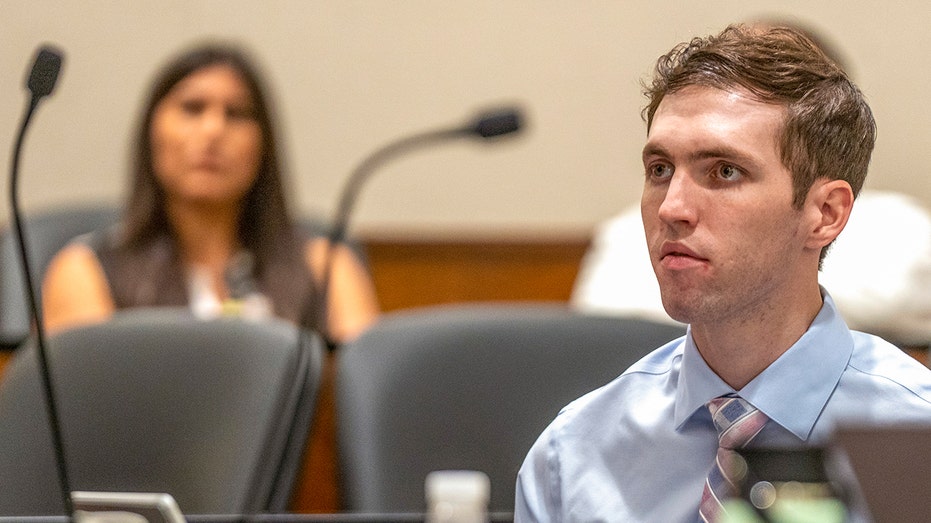
Utah prosecutors urge judge to reject defense delay in Charlie Kirk assassination case, arguing the suspect's lawyers failed to meet stay criteria.
The state’s outbreak means adapting to America’s new reality, in which vaccine-preventable diseases become common again.

Tourists are flocking to Midway, Utah. The Ballerina Farm Store, from the influencer whose brand revolves around motherhood and farm life, is a reason.

The World Cup lasts only a few weeks. The journeys that bring players there often take years. For a select few on South Korea's roster, the path to football's biggest stage was far from straightforward, marked instead by unexpected twists of fate, long waits for an opportunity and precious family moments put on hold. Jeonbuk Hyundai Motors defender Cho Wi-je left for Salt Lake City, Utah, in mid-May to help the Taegeuk Warriors prepare for the 2026 World Cup in North America. Now, he is one of t

Mormon lawmakers, including both senators from Utah, took issue with an update to the military’s religious denomination classification system.
The Pentagon updated its religious classifications on Monday, after its initial reduction last week garnered criticism from Utah senators upset that the Church of Jesus Christ of Latter-Day Saints was not listed as “Christian.” Top Pentagon spokesman Sean Parnell announced last Friday that the department reduced the list from more than 200 religious affiliations to […]
Comedian and political commentator Bill Maher revealed that he will be in an upcoming documentary about the late conservative activist Charlie Kirk. Kirk, a right-wing political activist and cofounder of Turning Point USA, was shot and killed Sept. 10, 2025, while speaking at Utah Valley University in Orem, Utah. Maher argued that Kirk was often […]
Every federal budget is a stark reminder of how much Pakistan’s federal government is unable to spend within its means. Therefore, the burden to keep fiscal balance somewhat manageable falls on the same few sacrificial lambs, typically the formal sector in terms of collection and development needs for expenditure. Troublesome as it may be, the country’s gross public debt ratio of 70 per cent is not outrageously high by developing economy standards. However, one big problem is its concentration: over the past decade, commercial banks have held the bulk of the federal government’s debt. Of Pakistan’s Rs54.5 trillion in domestic debt, the bulk sits in marketable instruments, worth Rs46.6tr; of that, scheduled banks hold Rs36.8tr, or 79pc. Insurers account for under 5pc, mutual and pension funds for about 6pc, and a catch-all bucket of “corporates and others” for the rest. This makes the bank-sovereign nexus extreme by global standards. A World Bank analysis from the end of 2024 put Pakistani banks’ public-debt holdings at roughly 60pc of total assets, four times the global median and the highest in a sample of over 80 countries. As a result, the effect on credit activity has been highly detrimental, with the industry’s advances-to-deposits ratio hovering below 40pc and the share of small and medium enterprises barely 10pc of private-sector loans. Shift even a tenth of the Rs54tr domestic stock out of banks and into retail hands at a yield just 150 basis points cheaper, and the annual saving runs into the region of Rs80bn Since the two balance sheets of banking and sovereign are wound so tightly together, the relationship has curdled into something toxic. The government borrows from banks, taxes the profits from that borrowing, and banks push money away rather than put it to work. Somewhere in this loop, both the depositor and the real economy have been forgotten. When 79pc of the outstanding paper sits with a small club of institutional buyers, those buyers carry real pricing power into every auction; a market with retail savers, pension funds, insurers and foreign buyers each holding a meaningful slice generates competitive tension that bears down on yields, and a bank-dominated one simply does not. The institutional money that would normally provide that tension, chiefly the insurers, is too small to matter: at roughly 0.9pc of GDP against about 4pc in India, the entire sector’s asset base is smaller than a single year of government borrowing. That leaves retail, and on paper, the case for it is compelling. There are already millions of Pakistanis lending to the state through the old National Savings Schemes, currently holding Rs3.6tr. This segment has historically accepted lower yields than banks for the same sovereign credit, so widening the base could also trim the debt-servicing bill. A new policy InsightLab at the Karachi School of Business & Leadership, Karachi, argues that despite new instruments and platforms, the set of creditors holding Pakistan’s debt has barely changed over the past seven years. Banks still hold the vast majority. The new channels changed how the debt is sold, but not who buys it. Shift even a tenth of the Rs54tr domestic stock, some Rs5.5tr, out of banks and into retail hands at a yield just 50 to 150 basis points cheaper, and the annual saving runs into the region of Rs25bn to 80bn. This would make a noticeable difference to the debt-servicing bill, which has become the single largest line in the budget and only compounds each year. There is a structural prize too. Banks gravitate toward short-term and floating-rate paper, largely because their liability mix forces them to do so. Pakistani banks hold hardly any fixed deposits, just Rs6.1tr out of Rs37.3tr, so they cannot comfortably warehouse long, fixed exposure. A genuine retail base anchored by long-dated household savings would take on the very tenor the banks shy away from, easing the rollover risk that the current profile does nothing to address. For a government desperate to rein in its largest expenditure line, retail is the rare lever that lowers both cost and risk at once. But the question is: how does the sovereign reach this segment? Historically, that answer was National Savings, though it is not without shortcomings. Its rates are set by administrative fiat in discrete steps, so they lag the market. This is attractive to savers when rates fall, but it is a structure that works against the state’s own objectives, is untradable, capped at Rs5 million, and is pitched more as quasi-social security for widows and retirees than as a serious financing tool. The second route runs through the capital markets by issuing Sukuk directly at the Pakistan Stock Exchange. But this has fared no better at changing who holds the paper. Since December 2023, the government has auctioned Ijarah Sukuk through the exchange to dazzling headline demand, yet the paper is fully Statutory Liquidity Requirement-eligible, individuals cannot bid directly when fewer than 1pc of citizens hold a brokerage account, and banks still end up holding close to 90pc of the stock. Third is the diaspora channel, the Roshan Digital Account, and truly the one relative win: over 927,000 accounts opened and more than $12.7bn received since 2020, though Naya Pakistan Certificates, the debt instrument inside it, have never crossed 2pc of government external debt. The newest effort tries to fix the access problem at its root. Investor Portfolio Securities (IPS) accounts have long let individuals hold government paper in principle, but in practice, the channel meant branch visits, manual forms, and bank staff with little incentive to promote it, so few ever used it. The State Bank of Pakistan’s InvestPak portal, launched in November 2025, builds on that plumbing and strips out the friction. It does so by allowing individuals to open an IPS account, bid at auction, and trade securities entirely online. In theory, it is the most promising of the lot, with one catch: the access still routes through bank-maintained IPS accounts, the very institutions with no commercial reason to usher retail investors toward an asset class they would rather keep for themselves. India faced the same problem and took a different route. Its RBI Retail Direct scheme, launched in 2021, lets individuals hold government bonds in an account directly with the central bank, cutting out banks. If there is a single fix worth making, it is to stop flying blind. Pakistan now runs several parallel retail channels and publishes consolidated data on none of them, so nobody can actually say whether the needle is moving. The holder-wise statistics do not even carry a separate line for individual investors. The rest follows from there: a genuinely retail-sized product rather than the Rs100,000 minimum tickets that pass for one today, and an honest decision on whether to keep routing retail through the banks or, as India did, around them. None of this pays off in a single budget. But the concentration did not build itself overnight either, and years of inaction cannot be undone in days. After seven years of new instruments, the holder of last resort is still the bank. It will stay that way until the state builds something savers can actually use and a route that doesn’t run through the institutions it is trying to move beyond. Mutaher Khan is co-founder of Data Darbar and Head of InsightLab at KSBL. Shahzaib Abbasi is an analysts at InsightLab. Published in Dawn, The Business and Finance Weekly, June 8th, 2026
Defense Department cut roughly 180 religion codes from previous list, with mostly Christian denominations remaining
South Korea held its first training session in Mexico on Saturday as it continued preparations for its opening match of the 2026 FIFA World Cup. Coached by Hong Myung-bo, the men's national football team trained at Chivas Verde Valle in Zapopan, near Guadalajara, where it will play two of their three Group A matches. The session marked the team's first training in Mexico after completing a three-week altitude training camp in Salt Lake City, Utah. With Guadalajara sitting more than 1,500 meters
6월6일은 한국에선 현충일이다. 미국인들은 그날을 ‘디데이’(D-Day)로 기억한다. 제2차 세계대전 도중인 1944년 6월6일 미군을 주축으로 한 연합군이 프랑스 노르망디 해변에 상륙했기 때문이다. 세계 전사상 가장 유명한 노르망디 상륙작전은 바닷가에 5곳의 상륙 지점을 설정한 뒤 실시됐다. 유타(Utah)·오마하(Omaha)·골드(Gold)·주노(J
Utah Sens. John Curtis (R-UT) and Mike Lee (R-UT) criticized the Pentagon after learning that the Department of War’s revised list of religious affiliation codes does not categorize members of the Church of Jesus Christ of Latter-day Saints under the broader Christian designation. “Latter-day Saints are among the most patriotic, service-oriented individuals in our country,” […]
Plan backed by Shark Tank’s Kevin O’Leary had footprint reduced but concerns remain over its health impacts Utah residents have teamed up with a progressive non-profit organization to sue over an under-development AI datacenter backed by celebrity investor Kevin O’Leary, claiming the planned Stratos project facility “irrevocably” cuts off citizens’ rights by not allowing sufficient public input. Filed by the Alliance for a Better Utah and five unnamed residents of the Box Elder county area where the center is being developed, the lawsuit comes as Shark Tank co-host O’Leary agreed to scale back the physical footprint for the project. Continue reading...
A nonprofit and five Utah residents have filed a lawsuit against officials and a special entity overseeing Kevin O’Leary’s planned Stratos data center.
KayLee Dutton died on a lonely stretch of road near Cedar City, Utah in January last year when a group of strangers fired 12 bullets into her red pickup truck.
Six Republican senators sided with Democrats early Friday to vote against advancing the extension of warrantless spy powers set to expire next week, complicating efforts to keep it alive. The procedural vote failed by a vote of 47 to 52 after Sens. Josh Hawley (R-Mo.), Mike Lee (R-Utah), Rand Paul (R-Ky.), Eric Schmitt (R-Mo.), Rick...
This piece is part of MI x DW, a collaboration that brings Daily Wire readers exclusive commentary and research from the Manhattan Institute’s world-class team of scholars. *** States are cracking down on illegal demonstrations, and radicals are panicking. Earlier this year, Utah enacted HB 331, which took several steps to enhance criminal penalties for crimes ...
Kevin O'Leary agreed to scale back his proposed Utah data center after pressure from a top state lawmaker.