The Straits Times World
보수 성향
정치
부정적Residents of Lebanon’s Tyre flee after Israel evacuation warning
Several Palestinian refugee camps are located near Tyre.
"REFUGEE" · 부정 · 총 100건
필터 보기현재 지수
49.5
0 = 부정 우세
50 = 중립
100 = 긍정 우세
최근 7일 기준 81,417건을 분석한 결과, 뉴스 심리지수는 49.5(균형)입니다. 긍정 10,152건(12.5%)·중립 58,780건(72.2%)·부정 12,485건(15.3%)이며, 중립 비중이 뚜렷하게 높습니다. 성향 지수는 종합 20.0(중도 균형)입니다.
Several Palestinian refugee camps are located near Tyre.
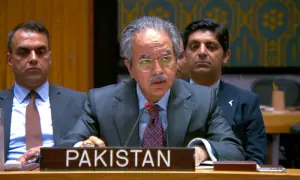
WASHINGTON: Pakistan’s envoy to the United Nations said on Monday that India’s key objectives in Afghanistan were “solely driven by the singular goal of destabilising Pakistan”. He made these remarks during a UN Security Council meeting on Afghanistan while responding to remarks by Afghanistan’s Permanent Representative to UN Nasir Ahmad Faiq. Earlier in the session, Pakistan’s Permanent Representative to UN Ambassador Asim Iftikhar Ahmad detailed the use of Afghan soil by terrorists and its impact on Pakistan, calling for the Afghan Taliban to take action against militants. He also spoke about Pakistan’s counter-terrorism measures. Faiq also commented on Pakistan’s counter-terrorism operations, in response to which Ambassador Ahmad said: “Pakistan’s actions, including those conducted in March, were directed solely against the terrorist and military support infrastructure that is operating from Afghanistan. And it is in no way directed against the brotherly people of Afghanistan.” ‘Verifiable, non-reversible action’ Ambassador Ahmad earlier told the UNSC that Islamabad’s demand from the Afghan Taliban was simple and clear: “verifiable and non-reversible action“ against terrorist groups operating from Afghan territory. “Regrettably, this demand remains unmet,” he said. And while the window for course correction was narrowing, it remained open, he added. “We hope the Taliban realise this in earnest and cooperate with the international community for the long-term peace and development of Afghanistan and, above all, in the best interest of all Afghans,” he said. There has been a resurgence in terrorism in Pakistan since the Afghan Taliban returned to power in Kabul in 2021. For its part, Islamabad has repeatedly urged the Taliban administration to dismantle terrorist sanctuaries on Afghan soil, particularly those linked to the banned Tehreek-i-Taliban Pakistan (TTP). But, officials say those appeals have gone unheedeed, while the Afghan Taliban reject these allegations. During the UNSC meeting, Ambassador Asim noted that it had been nearly half a decade since the Taliban takeover of Afghanistan in 2021. “It was hoped that this would end the bloodshed and Afghanistan would be at peace with itself and its neighbours,” he said. The envoy added that with the end of the civil war, it was “anticipated that the Taliban would take positive steps to transform into a responsible governing authority by adhering to their international obligations and commitments, and that they would lead Afghanistan into an era of stability and progress, provide the long-awaited relief to all Afghans and live in harmony with immediate neighbours”. “For decades, terrorism has been a major problem in Afghanistan, with implications not just for Afghanistan, but the immediate neighbourhood and beyond. Afghanistan has a history of being a safe haven for terrorist groups, including those used as proxies by our adversaries to target Pakistan and other countries,” he highlighted. It was “our expectation that the Taliban would take concrete and verifiable actions against terrorist groups such as the TTP, Balochistan Liberation Army (BLA) and its Majeed Brigade, Islamic State-Khorasan, East Turkestan Islamic Movement and their affiliates that are operating with impunity on Afghan soil”. “Regrettably, they have failed to undertake action, showing complete disregard for the legitimate security concerns of Pakistan and other countries,” the ambassador said. He added that, besides “independent analysis and reports of the Analytical Support and Sanctions Monitoring Team, which clearly outline the terrorism situation in Afghanistan and the ground realities, along with the recent exponential rise in terrorist attacks in Pakistan, these developments serve as glaring reminders of the precarious situation and the continuing threats posed to international peace and security”. “As a direct result of the freedom with which these terrorist groups operate in Afghanistan, Pakistan has borne the brunt of their attacks, as well as the Taliban’s growing nexus with these terrorist groups. “And once again, a significant number of Afghans are found to be involved in terrorism inside Pakistan,” he added. He said these terrorist groups had access to advanced weapons and sophisticated equipment, including drones. “Much of this can be traced back to the multi-billion dollar worth of arms and ammunition left behind by foreign forces — which was meant for use by the previous Afghan national government,” he said. Moreover, during counter-terrorism operations by Pakistan, there have been more than 290 cases of seizures of such weapons, which are used for terrorism and suicide bombings in the western parts of Pakistan, and which have exacted a heavy toll of human life and material losses, he told the UNSC. In 2025 alone, Pakistan reported more than 5,300 terrorist incidents and lost more than 1,200 lives to terrorism emanating from Afghanistan, he said. In this connection, he recalled that a vehicle-borne IED attack by the TTP on a police post in Khyber Pakhtunkhwa on May 9 resulted in the martyrdom of 15 police officers. “Our investigations revealed that the attack was planned by terrorists in Afghanistan.” Ambassador Ahmad said: “It is deplorable that the Taliban have reverted back to their old tactics of providing safe havens to terrorist groups and chosen the perilous path of complicity, backed by an outside actor, the historic spoiler and instigator of chaos — that has moved fast as an opportunist to wage a proxy war against Pakistan. “Let me make it clear: Pakistan will defend itself against whosoever attempts to harm our sovereignty, territorial integrity and national security.” He continued that Pakistan had always expressed openness for dialogue. “Numerous diplomatic efforts were made to counsel the Taliban. We thank friendly countries for their genuine mediation efforts, particularly Qatar, Turkiye, Saudi Arabia and most recently, China, to find amicable solutions. Yet the Taliban’s continued intransigence and even refusal to publicly denounce and condemn terrorist groups such as the TTP and BLA is deeply disturbing — it is evidence enough of their complicity and active support for these groups. Pakistan will not sit idle while suffering from terrorist acts. We will respond in self-defence, as and when needed and always in conformity with international law and International Humanitarian Law,” he said. Referring to a recent report by the UN secretary general, he said it “seems to largely externalise the responsibility for Afghanistan’s multifaceted challenges”. “The fatalities of terrorists and their supporters as a result of counter-terrorism operations are mentioned within the ambit of ‘civilian casualties’, posing serious questions on the credibility of UNAMA’s reporting from Afghanistan and the nature of their engagement with the Taliban. UNAMA is swift in reporting incidents of cross-border actions and casualties but fails to provide the overall context — which is the grave terrorist threat emanating from Afghanistan and its cross-border impact directed at Pakistan that is harming Pakistan and killing innocent Pakistanis,” he elaborated. He further said that the report also did not provide information on the destabilising accumulation of small arms and light weapons inside Afghanistan. “Nor does it adequately shed light on Afghanistan’s illicit economy, with its complex web of money laundering and terror financing networks, including hundi and hawala networks. Instead, the report resorts to shifting the blame on external dynamics, with little regard for the Taliban’s own policies that have brought Afghanistan to the brink of disaster,” he said. The envoy stressed that “we must not lose sight of the fact that it is the Taliban’s reckless style of governance and flawed ideologies of extremism, suppression and radicalisation that have brought upon Afghanistan the calamities it faces today”. “The Humanitarian Needs and Response Plan for 2026, we are told, is underfunded at 14 per cent — again a direct result of Taliban’s unwillingness to prioritise the welfare of Afghans over their own interest and authoritarian control,” he pointed out. Noting that several references had been made to the Pak-Aghan border closure in the report, he said: “Let me clarify that the closure of border between Pakistan and Afghanistan does not, from Pakistan’s perspective, affect the movement of humanitarian supplies. “Pakistan has been processing and facilitating the passage of humanitarian goods and material. However, the Afghan Taliban regime refuses to let them pass and keeps the border closed on its side, even to receive such life-saving cargoes, which obviously is to the detriment of the Afghan people.” He went on to say that the worsening human rights situation in Afghanistan “aligned with Taliban’s failings and deceitful narrative to meet the demands of the international community”. “Women and girls are denied their fundamental human rights and dignity, with discriminatory and abusive practices — a clear violation of their international obligations as well as of Islamic laws, traditions and tenets of the Muslim faith. The Afghan people are being held hostage to these inhumane restrictions, oppression and selfish behaviour,” he said. He said that Pakistan took numerous steps to support Afghanistan, including humanitarian relief efforts, political engagement, providing incentives to boost bilateral trade, offering transit concessions, issuing student and medical visas, conducting high-level visits to Kabul and participating in various regional cooperation initiatives to help Afghanistan succeed in its quest to find its rightful place in the international community. For over four decades, he continued, Pakistan welcomed millions of Afghan refugees “despite limitations and insufficient international support, dealing with huge caseloads of illegal Afghans, including those without documentation, posing a serious threat to our security”. But these were never meant to stay indefinitely, he added. The ambassador called on the UN secretary general to “clearly outline the status of third country resettlement cases of Afghans in a transparent manner — cases that are pending for years, despite being a tiny fraction of what Pakistan had to deal with, in the face of national security threats that no country would tolerate”. “While we provide all possible facilitation, the international community must step up and shoulder its responsibility. Shifting the blame of Afghanistan’s woes to the inflow of Afghan returnees will not solve the problem,” he said. Ambassador Ahmad further said, “We look forward to the next steps of the UN-led Doha Process and action plan for its Mosaic approach, to address Afghanistan’s multifaceted challenges comprehensively, with well-defined objectives and a realistic roadmap as the only viable pathway for normalisation”. Pakistan and Afghanistan, he said, were bound by geography, deep-rooted ties, civilisational links dating back centuries, and fraternal bonds of faith, culture and ethnicity. “No country has suffered more from the consequences of conflict and instability in Afghanistan than Pakistan. So we understand, and we also know, that no country stands to benefit more from peace, prosperity and stability in Afghanistan than Pakistan. “Pakistan’s demand from the Taliban is simple and clear: verifiable and non-reversible action against terrorists. Regrettably, this demand remains unmet. The window for course correction is narrowing but is still open. We hope the Taliban realise this in earnest and cooperate with the international community for the long-term peace and development of Afghanistan and, above all, in the best interest of all Afghans,” he said, concluding his address.
MATTERS have worsened in the stand-off between the Azad Kashmir government and the Joint Awami Action Committee, which has recently been proscribed by the regional administration. The situation started deteriorating after a trader affiliated with the JAAC was reportedly shot in an altercation with law-enforcers on Saturday. The following day protesters and LEAs clashed outside a Rawalakot hospital where the victim’s body was brought, resulting in the deaths of at least four policemen and seven protesters. This unfortunate series of events echoes similar confrontations between the AJK government and JAAC over the past few years, where dialogue over protesters’ demands has alternated with deadly violence. The region is particularly on edge as the JAAC has called for a major strike today. With the proscription of the group and the deaths in clashes with the administration, emotions are high all round and better sense is required across the board to prevent the situation from deteriorating further. At the core of the dilemma is the JAAC’s call for abolition of refugee seats for those who left India-occupied Kashmir and settled in AJK. Indeed, the AJK government’s banning of the JAAC has not helped matters, and has only raised the temperature. To prevent further confrontation, the AJK government should reconsider the ban, though investigations are required into the killing of the policemen and the deaths of the protesters. This paper has argued that bans targeting popular movements are undemocratic, and have, throughout history, failed to suppress dissenting voices. At the other end, the JAAC, too, should take a less hard-line position. While the group had earlier called for civic and governance reforms, it is now demanding constitutional changes, such as the abolition of refugee seats. These delicate constitutional matters must be decided in the House, after thorough debate by all sides. In fact, as the AJK Supreme Court has said in its opinion on a reference sent to it by the region’s president regarding the refugee seats, constitutional changes can only be achieved “by an assembly possessed of the full democratic mandate of the people, after deliberation” and cannot be “wrested from a government under duress”. Therefore, both sides need to de-escalate. The authorities should reconsider the JAAC ban, while JAAC supporters must keep all protest peaceful, and take their demand for constitutional change to the AJK legislature. Published in Dawn, June 9th, 2026
Two years on, witnesses recount the June 2024 Israeli raid on Nuseirat refugee camp to free four captives.
When South African refugees were told they would be shown videos on how to assimilate to American culture, they expected a crash course in local customs and habits they may not have known. Instead, they sat wide-eyed as they watched videos teaching them how to shower, use a toilet, and brush their teeth. Several Afrikaners, members ...
MUZAFFARABAD: At least seven civilians were killed during Sunday’s clash between police and the newly proscribed Joint Awami Action Committee (JAAC) protesters in Azad Jammu and Kashmir’s (AJK) Rawalakot, an official told Dawn on Monday. Poonch Commissioner Sardar Waheed Khan confirmed the civilian death toll to Dawn a day after the clash in which four law enforcement personnel were martyred. The commissioner and AJK Inspector General (IG) Liaqat Ali Malik also told Dawn 30 people had been taken into custody late on Sunday. The officials also said that 23 policemen were injured during the clash. The clash broke out after tensions flared over the death of a trader, who was allegedly shot during a confrontation with law enforcers on Friday night. Officials have accused the demonstrators of attacking the Combined Military Hospital (CMH) in Rawalakot on Sunday. Initially, his family had announced his funeral would be held on Saturday, but they later changed their mind and brought the body back to CMH, apparently for post-mortem examination, and deferred the funeral until Sunday. The body was shifted to the hospital’s mortuary, but a post-mortem examination was not conducted. In the meantime, scores of people continued a sit-in outside CMH. According to witnesses, when a police party arrived to disperse the protesters, a charged group of demonstrators confronted them. Riot police then resorted to baton charge and lobbed tear gas shells to disperse the group. In response, the demonstrators pelted the police with stones, but no one was hurt. The family of the deceased man, meanwhile, declared they would not bury him until the home department notification, proscribing the JAAC, was withdrawn. Tensions have gripped AJK in recent days, with the region’s government declaring the JAAC a proscribed organisation and the latter insisting on its demand to abolish 12 refugee seats in the AJK Legislative Assembly. These are reserved for refugees from Indian-occupied Jammu and Kashmir who settled in mainland Pakistan after 1947. JAAC alleges that these seats were often used by mainstream Pakistani political parties to influence the formation of governments in Muzaffarabad. On Friday, the AJK government declared JAAC a proscribed organisation, days ahead of a planned protest by the group scheduled for June 9, stating that it was “engaged in terrorism” and had acted in a manner “prejudicial to peace and security” of the state. On Saturday, AJK authorities launched a crackdown on the JAAC, arresting scores of its leaders and activists from different areas. AJK police also sealed the head office of the JAAC, state broadcaster Radio Pakistan reported on Sunday. Meanwhile, the flow of information from AJK remains curtailed due to the closure of mobile data services. AJK authorities have also advised intending visitors to postpone their trips until June 20, citing security concerns ahead of the planned protests. Islamabad has also dispatched federal paramilitary forces to reinforce the region’s thinly stretched police force.
PUTRAJAYA, June 8 — The government will manage the refugee issue in the country in a balanced manner, taking into...
• Two killed, dozens hurt as riot police use tear gas, batons to disperse protesters • IGP terms attack on CMH ‘outright terrorism’ • AJK SC says changes to Constitution ‘not a concession to be wrested from govt’ MUZAFFARABAD: At least four policemen were martyred and 20 were injured after fierce clashes broke out with supporters of the newly-proscribed Joint Awami Action Committee (JAAC) in Rawlakot, police said on Sunday. A statement issued on Sunday night by the office of AJK police chief Liaqat Ali Malik said four police personnel were martyred when demonstrators “attacked” CMH Rawalakot on Sunday. The statement maintained the men had been shot by firearms and shotguns, terming it outright “terrorism” and vowing not to compromise on the safety of citizens and public peace. Additionally, officials said that at least two people from among the protesters had lost their lives, while dozens were said to be injured. Locals fear that the toll could be much higher. The flow of information from AJK has been curtailed by the closure of mobile data services across the region. Tensions flared in Rawalakot over the death of a trader, who was allegedly shot during a confrontation with law-enforcers on Friday night. Initially, his family had announced his funeral would be held on Saturday, but they later changed their mind and brought the body back to the Combined Military Hospital (CMH), apparently for post-mortem examination, and deferred the funeral until Sunday. The body was shifted to the hospital’s mortuary but a post-mortem examination was not conducted. In the meantime, scores of people continued a sit-in outside CMH. According to witnesses, when a police party arrived to disperse the protesters, a charged group of demonstrators confronted them. Riot police then resorted to baton charge and lobbed tear gas shells to disperse the group. In response, the demonstrators pelted police with stones, but no one was hurt. The family of the deceased man, meanwhile, declared they would not bury him until the home department notification, proscribing the JAAC, was withdrawn. “Our son faces the allegation of being a terrorist. We will not bury [him] until the notification branding [JAAC] as a terrorist group is withdrawn,” a source quoted a member of his family as saying. A senior administration official, who spoke to Dawn on condition of anonymity, said the sit-in outside the health facility was causing a great deal of inconvenience to patients, their families and other commuters. He said that the protesters had been asked to disperse peacefully, but to no avail. The area had not been cleared of protesters until the filing of this report. AJK SC’s opinion Meanwhile, in its advisory opinion on a reference sent by AJK President Chaudhry Latif Akbar, the AJK Supreme Court has observed that any amendment in the region’s constitution was “not a concession to be wrested” from the government. The reference dealt with the JAAC’s demand for the abolition of 12 refugee seats in the legislative assembly ahead of the July 27 elections. The 12 seats are reserved for refugees from Indian-occupied Jammu and Kashmir, who settled in mainland Pakistan after 1947. JAAC alleges that these seats were often used by mainstream Pakistani political parties to influence the formation of governments in Muzaffarabad. The presidential reference had sought answers to five key questions over the constitutional status of the refugee seats, the legislature’s competence to introduce a fundamental constitutional amendment at the present stage, the constitutional limits of the rights of assembly and association, and the state’s obligation to protect the electoral process and reject extra-constitutional demands. In the advisory opinion, dated June 6 and available with Dawn, AJK SC Chief Justice Raja Saeed Akram Khan held that the constitution of the AJK was the “supreme law” of the state and its provisions the “property of the people of Azad Jammu and Kashmir and of the whole Kashmiri people”. “The amendment of the constitution is a solemn constitutional act, not a concession to be wrested from a government under duress,” the opinion declared. “It can only be accomplished through the process the constitution itself prescribes, by an assembly possessed of the full democratic mandate of the people, after deliberation, consultation, and consensus-building,” the advisory opinion read. The court’s opinion came a day after the region’s government proscribed the JAAC, days before the group is scheduled to stage a protest on June 9. The JAAC’s latest protest call centred around the highly contentious demand to abolish the 12 refugee seats in the region’s Legislative Assembly. It has also been calling for economic reforms to lower energy prices and provide free healthcare. Minister for Parliamentary Affairs Tariq Fazal Chaudhry said on Sunday that most of those demands had been met. “It’s negative and false propaganda that the government hasn’t addressed the demands. Out of 38 demands, 35 have been addressed,” he told a press conference. Published in Dawn, June 8th, 2026
Kirsty Rosse-Emile, who goes by her Islamic name Asma, returned home to Melbourne with her two children last Tuesday after being trapped in a Syrian refugee camp since the fall of IS.
PPP Chairman Bilawal Bhutto-Zardari, whose party holds the majority in the Azad Jammu and Kashmir (AJK) Legislative Assembly, said on Sunday he would meet Prime Minister Shehbaz Sharif over the current situation in AJK, asserting that issues would be resolved through talks. He said this while presiding over a meeting of the PPP AJK parliamentary party in Islamabad, a statement issued by the PPP said. The meeting was held as tensions gripped AJK, with the region’s government declaring the Joint Awami Action Committee (JAAC) a proscribed organisation and the latter insisting on its demand to abolish 12 refugee seats in the AJK Legislative Assembly. The group also plans to hold a protest on June 9, days ahead of June 27 elections in the region. The PPP statement said the party’s political affairs in-charge Faryal Talpur was also present at the meeting on Sunday where the political situation in AJK was reviewed. “Consultations were held between Bilawal and parliamentary party members regarding the AJK situation,” it said, adding that parliamentary party members gave recommendations to Talpur on the matter. According to the statement, Bilawal expressed concern over the situation in AJK. “We have always prioritised the issues of Kashmiris,” he was quoted as saying. He added that political issues should be resolved through negotiations. “I will meet PM Shehbaz and a solution to the issues would be found through talks and the assembly,” he said. The meeting was held as AJK police sealed the head office of the JAAC, state broadcaster Radio Pakistan reported. A day earlier, AJK authorities launched a crackdown on the JAAC, arresting scores of its leaders and activists from different areas. On Friday, the AJK government declared JAAC a proscribed organisation, days ahead of a planned protest by the group scheduled for June 9, stating that it was “engaged in terrorism” and had acted in a manner “prejudicial to peace and security” of the state. The group’s latest protest call centres on a highly contentious demand to abolish the 12 seats in the region’s Legislative Assembly that are reserved for refugees from Indian-occupied Jammu and Kashmir who settled in mainland Pakistan after 1947. JAAC alleges that these seats were often used by mainstream Pakistani political parties to influence the formation of governments in Muzaffarabad. On Thursday, the AJK Legislative Assembly strongly defended the status quo, backing the refugee seats and calling for elections to proceed on schedule. Meanwhile, Islamabad dispatched federal paramilitary forces to reinforce the region’s thinly stretched police force. AJK authorities have also advised intending visitors to postpone their trips until June 20, citing security concerns ahead of the planned protests. ‘Most demands fulfilled’ Earlier on Sunday, Parliamentary Affairs Minister Tariq Fazal Chaudhry maintained that most of the Joint Awami Action Committee’s (JAAC) demands, agreed between the JAAC and the government last October, had been fulfilled. “Thirty-five out of 38 demands have been implemented,” he said while addressing a press conference in Islamabad. About the remaining demands, he said the courts had issued an order regarding some and others were not feasible. He claimed “negative propaganda is being spread that the government has fulfilled only three out of 38 demands,” emphasising that the solution to the issues could not be “violent demonstrations” and dialogue should be the way forward. The minister asked if the unrest was an attempt at “portraying Pakistan and AJK as separate entities; is it an attempt to weaken Pakistan’s relation with AJK; is it an attempt to create hatred between refugees from India-occupied Kashmir and the people of AJK; and lastly, is this an attempt to weaken the Kashmir cause?” He claimed that the government had not disregarded the JAAC’s demands; however, he pointed out that, “when we talk to them about resolving issues through dialogue, they respond with violent demonstrations; these are two contradictory approaches”. “The clauses that are yet to be implemented, we can still sit down and talk about them,” he said, reiterating that the solution was not violence and taking law and order into one’s hands. At the outset of the press conference, Chaudhry said that certain actors were attempting to create unrest ahead of the July 27 elections in AJK. “Attempts are being made that the violent protests that have happened in the region in the past can be revived,” Chaudhry said, recalling the unrest in the region in September-October 2025. He recalled that the JAAC was formed in September 2023 and at the time, they had three demands: subsidy on flour, decrease in electricity prices and reduction in elite privileges. “As a result of that, we saw a shutter-down strike in 2024 in AJK, accompanied by violent demonstrations,” the minister recalled, stating that the government had fulfilled all the demands at the time. He further stated that the demonstrations broke out again in September 2025, and a charter of demands was presented, listing 38 clauses, following which the government signed an agreement with the JAAC on October 4. He added that he, along with the Minister for Kashmir Affairs and Gilgit-Baltistan Amir Muqam, had been holding monthly meetings with JAAC to review progress on the agreement. However, JAAC still put out a fresh call for protests on June 9, he noted. Chaudhry recalled that on May 30, a committee comprising federal ministers met the JAAC in Muzaffarabad, where the demand for abolishing 12 refugee seats was put forward. He said that the government’s representatives had also suggested that an all parties meeting be called to debate the matter. “Around 2-2.2 million Kashmiri refugees are living in Pakistan, and 12 people sitting in a closed room cannot abolish those seats,” the minister asserted, adding that the JAAC’s other demands related to public welfare had been fulfilled. Chaudhry also said the government’s representatives suggested that the issue should be discussed in the AJK Legislative Assembly or taken to the AJK Supreme Court. “We requested [during the May 30 meeting] that the June 9 protest be postponed by 8-10 days so that we may hold consultations with our senior leadership and work towards a solution,” the minister said, affirming that the government had never refused to discuss the status of the seats. Asserting that 35 out of JAAC’s 38 demands had been fulfilled by the government, including withdrawal of first information reports (FIR) against JAAC demonstrators, reinstating government employees who took part in the demonstrations, a feasibility study on the Kahuta Azad Pattan road in the Sandhoti district, procurement of electricity meters via e-tenders, internet connectivity issues, and establishment of a garbage collection system. As per the minister, some of the other demands fulfilled by the government included amendments in the local government laws, establishment of two new federal boards, and restoration of the health card facility for AJK, among others. He added that while many of the demands in the agreement could be implemented through executive orders — around 18-19 — the rest included ongoing development projects which “cannot be completed within 3-4 months”. “It is not justified to hold long marches every six months under such circumstances,” the minister said.
PPP Chairman Bilawal Bhutto-Zardari, whose party holds the majority in the Azad Jammu and Kashmir (AJK) Legislative Assembly, said on Sunday he would meet Prime Minister Shehbaz Sharif over the current situation in AJK, asserting that issues would be resolved through talks. He said this while presiding over a meeting of the PPP AJK parliamentary party in Islamabad, a statement issued by the PPP said. The meeting was held as tensions gripped AJK, with the region’s government declaring the Joint Awami Action Committee (JAAC) a proscribed organisation and the latter insisting on its demand to abolish 12 refugee seats in the AJK Legislative Assembly. The group also plans to hold a protest on June 9, days ahead of June 27 elections in the region. The PPP statement said the party’s political affairs in-charge Faryal Talpur was also present at the meeting on Sunday where the political situation in AJK was reviewed. “Consultations were held between Bilawal and parliamentary party members regarding the AJK situation,” it said, adding that parliamentary party members gave recommendations to Talpur on the matter. According to the statement, Bilawal expressed concern over the situation in AJK. “We have always prioritised the issues of Kashmiris,” he was quoted as saying. He added that political issues should be resolved through negotiations. “I will meet PM Shehbaz and a solution to the issues would be found through talks and the assembly,” he said. The meeting was held a day after AJK authorities launched a crackdown on the proscribed Joint Awami Action Committee (JAAC), arresting scores of its leaders and activists from different areas. On Friday, the AJK government declared JAAC a proscribed organisation, days ahead of a planned protest by the group scheduled for June 9, stating that it was “engaged in terrorism” and had acted in a manner “prejudicial to peace and security” of the state. The group’s latest protest call centres on a highly contentious demand to abolish the 12 seats in the region’s Legislative Assembly that are reserved for refugees from Indian-occupied Jammu and Kashmir who settled in mainland Pakistan after 1947. JAAC alleges that these seats were often used by mainstream Pakistani political parties to influence the formation of governments in Muzaffarabad. On Thursday, the AJK Legislative Assembly strongly defended the status quo, backing the refugee seats and calling for elections to proceed on schedule. Meanwhile, Islamabad dispatched federal paramilitary forces to reinforce the region’s thinly stretched police force. AJK authorities have also advised intending visitors to postpone their trips until June 20, citing security concerns ahead of the planned protests. ‘Most demands fulfilled’ Earlier on Sunday, Parliamentary Affairs Minister Tariq Fazal Chaudhry maintained that most of the Joint Awami Action Committee’s (JAAC) demands, agreed between the JAAC and the government last October, had been fulfilled. “Thirty-five out of 38 demands have been implemented,” he said while addressing a press conference in Islamabad. About the remaining demands, he said the courts had issued an order regarding some and others were not feasible. He claimed “negative propaganda is being spread that the government has fulfilled only three out of 38 demands,” emphasising that the solution to the issues could not be “violent demonstrations” and dialogue should be the way forward. The minister asked if the unrest was an attempt at “portraying Pakistan and AJK as separate entities; is it an attempt to weaken Pakistan’s relation with AJK; is it an attempt to create hatred between the people of refugees from India-occupied Kashmir and the people of AJK; and lastly, is this an attempt to weaken the Kashmir cause?” He claimed that the government had not disregarded the JAAC’s demands; however, he pointed out that, “when we talk to them about resolving issues through dialogue, they respond with violent demonstrations; these are two contradictory approaches”. “The clauses that are yet to be implemented, we can still sit down and talk about them,” he said, reiterating that the solution was not violence and taking law and order into one’s hands. At the outset of the press conference, Chaudhry said that certain actors were attempting to create unrest ahead of the July 27 elections in AJK. “Attempts are being made that the violent protests that have happened in the region in the past can be revived,” Chaudhry said, recalling the unrest in the region in September-October 2025. He recalled that the JAAC was formed in September 2023 and at the time, they had three demands: subsidy on flour, decrease in electricity prices and reduction in elite privileges. “As a result of that, we saw a shutter-down strike in 2024 in AJK, accompanied by violent demonstrations,” the minister recalled, stating that the government had fulfilled all the demands at the time. He further stated that the demonstrations broke out again in September 2025, and a charter of demands was presented, listing 38 clauses, following which the government signed an agreement with the JAAC on October 4. He added that he, along with the Minister for Kashmir Affairs and Gilgit-Baltistan Amir Muqam, had been holding monthly meetings with JAAC to review progress on the agreement. However, JAAC still put out a fresh call for protests on June 9, he noted. Chaudhry recalled that on May 30, a committee comprising federal ministers met the JAAC in Muzaffarabad, where the demand for abolishing 12 refugee seats was put forward. He said that the government’s representatives had also suggested that an all parties meeting be called to debate the matter. “Around 2-2.2 million Kashmiri refugees are living in Pakistan, and 12 people sitting in a closed room cannot abolish those seats,” the minister asserted, adding that the JAAC’s other demands related to public welfare had been fulfilled. Chaudhry also said the government’s representatives suggested that the issue should be discussed in the AJK Legislative Assembly or taken to the AJK Supreme Court. “We requested that June 9 call be postponed by 8-10 days so we can hold consultations with our senior leadership and work towards a solution,” the minister said, affirming that the government had never refused to discuss the status of the seats. Asserting that 35 out of JAAC’s 38 demands had been fulfilled by the government, including withdrawal of first information reports (FIR) against JAAC demonstrators, reinstating government employees who took part in the demonstrations, a feasibility study on the Kahuta Azad Pattan road in the Sandhoti district, procurement of electricity meters via e-tenders, internet connectivity issues, and establishment of a garbage collection system. As per the minister, some of the other demands fulfilled by the government included amendments in the local government laws, establishment of two new federal boards, and restoration of the health card facility for AJK, among others. He added that while many of the demands in the agreement could be implemented through executive orders — around 18-19 — the rest included ongoing development projects which “cannot be completed within 3-4 months”. “It is not justified to hold long marches every six months under such circumstances,” the minister said.
PPP Chairman Bilawal Bhutto-Zardari, whose party holds the majority in the Azad Jammu and Kashmir (AJK) Legislative Assembly, said on Sunday he would meet Prime Minister Shehbaz Sharif over the current situation in AJK, asserting that issues would be resolved through talks. Earlier, Parliamentary Affairs Minister Tariq Fazal Chaudhry maintained that most of the Joint Awami Action Committee’s (JAAC) demands, agreed between the JAAC and the government last October, had been fulfilled. “Thirty-five out of 38 demands have been implemented,” he said while addressing a press conference in Islamabad. Of the three remaining demands out of the total 38, the minister said that “on some of them, courts had issued an order, and others were not feasible”. He claimed “negative propaganda was being spread that the government has fulfilled only three out of 38 demands,” emphasising that the solution to the issue cannot be “violent demonstrations” and dialogue should be the way forward. The minister asked if the unrest was an attempt at “portraying Pakistan and AJK as separate entities; is it an attempt to weaken Pakistan’s relation with AJK; is it an attempt to draw parallels between the people of India-occupied Kashmir and AJK, and lastly, is this an attempt to weaken the Kashmir cause?” He claimed that the government had not disregarded the JAAC’s demands; however, he pointed out that, “when we talk to them about resolving issues through dialogue, they respond with violent demonstrations; these are two contradictory approaches”. “The clauses that are yet to be implemented, we can still sit down and talk about them,” he said, reiterating that the solution was not violence and taking law and order into one’s hands. At the outset of the press conference, Chaudhry said that certain actors were attempting to create a situation of unrest ahead of the July 27 elections in AJK. “Attempts are being made that the violent protests that have happened in the region in the past can be revived,” Chaudhry said, recalling the unrest in the region in September-October 2025. He recalled that the JAAC was formed in September 2023 and at the time, they had three demands: subsidy on flour, decrease in electricity prices and reduction in elite privileges. “As a result of that, we saw a shutter-down strike in 2024 in AJK, accompanied by violent demonstrations,” the minister recalled, stating that the government had fulfilled all the demands at the time. He further stated that the demonstrations broke out again in September 2025 and a charter of demands was presented, listing 38 clauses, following which the government signed an agreement with the JAAC on October 4. He added that he, along with the Minister for Kashmir Affairs, Gilgit-Baltistan, Amir Muqam, have been holding monthly meetings with JAAC to review progress on the agreement. However, JAAC still put out a fresh call for protests on June 9, he noted. Chaudhry recalled that on May 30, a committee comprising federal ministers met the JAAC in Muzaffarabad, where the demand for abolishing 12 refugee seats was put forward. He said that government’s representatives suggested that an all-parties conference for every registered political party in AJK be called and the issue be debated, given the constitutional nature of the demand. “Around 2-2.2 million Kashmiri refugees are living in Pakistan, and 12 people sitting in a closed room cannot abolish those seats,” the minister asserted, adding that the JAAC’s earlier demands had been related to public welfare and were fulfilled. Chaudhry also said the government’s representatives suggested that the issue should be discussed in the AJK legislative assembly. It was also suggested that the status of the seats can be contested in the AJK Supreme Court, the minister added. “We requested that June 9 call be postponed by 8-10 days so we can hold consultations with our senior leadership and work towards a solution,” the minister said, affirming that the government had never refused to discuss the status of the seats. Chaudhry took note of what he called a “false narrative” circulating on social media that the government had failed to meet all the demands outlined in the October 2025 agreement with the JAAC. The minister said that 35 out of the 38 demands had been fulfilled by the government, including withdrawal of first information reports (FIR) against demonstrators, reinstating government employees who took part in the demonstrations, a feasibility study on the Kahuta Azad Pattan road in Sandhoti district, procurement of electricity meters via e-tenders, measures for floor quality, internet connectivity issues, establishment of a garbage collection system. As per the minister, some of the other demands fulfilled by the government included amendments in the local government laws, establishment of two new federal boards, and restoration of the health card facility of AJK, and Mirpur airport among others. He added that while many of the causes in the agreement could be implemented through executive orders — around 18-19 — the rest included ongoing development projects which “cannot be completed within 3-4 months”. “It is not justified to hold long marches every six months under such circumstances,” the minister said.
Analysis: Odesa-based Canadian journalist Michael Bociurkiw says Ukraine is drained after four years of war, and refugees here face grim choice
MUZAFFARABAD: The Azad Jammu and Kashmir Supreme Court has observed that any amendment in the region’s constitution was “not a concession to be wrested” from the government, as the court issued its advice on a presidential reference, which emerged on Sunday. The advisory opinion came in response to a reference filed by acting AJK President Chaudhry Latif Akbar under Article 46-A of the Interim Constitution Act, 1974 after the recently proscribed Joint Awami Action Committee (JAAC) demanded the abolition of 12 refugee seats in the legislative assembly ahead of the July 27 elections. The 12 seats are reserved for refugees from Indian-occupied Jammu and Kashmir, who settled in mainland Pakistan after 1947. JAAC alleged that these seats were often used by mainstream Pakistani political parties to influence the formation of governments in Muzaffarabad. The presidential reference had sought answers to five key questions over the constitutional status of the refugee seats, the legislature’s competence to introduce a fundamental constitutional amendment at the present stage, the constitutional limits of the rights of assembly and association, and the state’s obligation to protect the electoral process and reject extra-constitutional demands. In the advisory opinion, dated June 6 and available with Dawn, AJK SC Chief Justice Raja Saeed Akram Khan held that the constitution of the AJK was the “supreme law” of the state and its provisions the “property of the people of Azad Jammu and Kashmir and of the whole Kashmiri people”. “The amendment of the constitution is a solemn constitutional act, not a concession to be wrested from a government under duress,” the opinion declared. “It can only be accomplished through the process the constitution itself prescribes, by an assembly possessed of the full democratic mandate of the people, after deliberation, consultation, and consensus-building,” the advisory opinion read. The court stated that the advisory opinion was being tendered after “full consideration of the constitutional provisions, the legislative and historical background of the refugee seats, the factual matrix placed before this court, and the submissions of the advocate general and the learned amicus curiae”. The court observed that the AJK government remained legally obligated to hold elections within the time stipulated by the constitution. It maintained that the constitution was not a “document to be honoured when convenient and discarded when inconvenient”. “The constitution endures because its guardians, ie, the government, the legislature, the judiciary, and ultimately the people, stand firm in its defence.” Chief Election Commissioner retired Justice Ghulam Mustafa Mughal, announcing the election schedule on June 5, had said that the elections on refugee seats had previously been conducted under judicial supervision, but after the judiciary withdrew from the process, the responsibility would now be carried out by officials of the Election Commission of Pakistan. Responding to a question about the planned JAAC protests, he said a prolonged agitation could affect the electoral process. The same day, the region’s government proscribed the JAAC, days before the group was scheduled to stage a protest. The JAAC’s latest protest call centred around the highly contentious demand to abolish the 12 refugee seats in the region’s Legislative Assembly. AJK authorities have also advised intending visitors to postpone their trips until June 20, citing security concerns ahead of the planned protests.
TENSION has once again gripped Azad Jammu and Kashmir, with the region’s administration proscribing the Jammu Kashmir Joint Awami Action Committee on Friday, ahead of a protest planned on June 9. The AJK government has also ordered visitors to leave the region at the peak of the tourist season, while communications have experienced disruptions. Such confrontations between the AJK authorities and the JAAC have become all too frequent over the past few years; the last major flare-up occurred in October, resulting in deaths as protesters and authorities clashed. The JAAC has evolved from advocating for civic rights for the local people to demanding constitutional changes. In particular, the organisation wants the abolition of 12 seats reserved for refugees from India-held Kashmir who have settled in the region. General elections are scheduled for AJK on July 27. Though the JAAC’s demands are open to scrutiny, banning any political party or organisation — as long as it remains committed to peaceful activism — is undemocratic. Peaceful protest is a fundamental right and should not be curtailed. In fact, the JAAC’s demands are not without substance. There is some truth in the claim that mainstream parties in Pakistan use refugees’ seats to make and break governments in Muzaffarabad. It is also true that governments in AJK usually ally themselves with the party in power in Islamabad. Moreover, many of those elected on refugees’ seats live in different parts of Pakistan, and often do not pay enough attention to affairs in AJK. But a blanket abolition of refugee seats is also not advisable. Instead of taking maximalist positions, both sides — the Azad Kashmir administration and the JAAC — need to handle this issue and all other allied matters in a democratic manner. The government should reverse the ban on JAAC as it is an organisation with popular support, and suppressing dissenting voices will not make them go away. For their part, the JAAC’s leaders need to realise that delicate constitutional issues cannot be decided on the streets. The right forum to discuss changes to the law is the AJK legislature. Reforms regarding the number of refugee seats and other related questions can be debated in the House. Right now all stakeholders need to step back and pursue a political solution to this deadlock, instead of digging in for a confrontation. It should also be remembered that AJK is a sensitive region, and the state can ill-afford disturbances here. Let both sides meet halfway and discuss their differences in a rational manner. The state must listen to the genuine grievances of the JAAC, while the latter should ensure that all protest activity is peaceful, and adopt the legal and constitutional route for reform and better governance. Published in Dawn, June 7th, 2026
As the world marks World Refugee Day this month, millions of people remain displaced by conflict, persecution and instability.
A federal judge on Friday struck down a Trump administration policy that froze immigration proceedings for applicants from 39 countries after an Afghan refugee was accused of killing a National Guardsman and wounding another in Washington, D.C., according to the Associated Press. U.S. District Chief Judge John McConnell Jr. ruled that U.S. Citizenship and Immigration ...
MUZAFFARABAD: The Azad Jammu and Kashmir (AJK) government on Friday urged outsiders to avoid travelling to the region and asked current visitors to leave immediately, ahead of a major protest that has prompted the deployment of federal paramilitary troops. The strict travel advisory, effective from June 5 to June 20, comes in response to a strike call for June 9 by the Joint Awami Action Committee (JAAC), a civil society alliance spearheading a volatile rights movement in the territory. “The measure is advised to save intending visitors from any unexpected situation or inconvenience,” an unnamed official spokesperson said in a press release issued by the region’s Press Information Department (PID). “The government also requests those already in the territory for sightseeing or any other purpose to leave by Friday evening so that they do not confront any unpleasant situation,” the spokesperson added. Zahid Aslam, who owns a guest house in Neelum Valley, told Dawn that the administration had urged him to ask his guests to leave. His guest house was booked till June 16, but guests are now requesting refunds. The JAAC has previously led mass demonstrations over local economic grievances and political rights that turned deadly during clashes with law enforcement in May 2024 and September 2025. The alliance’s latest protest wave centres on a highly contentious demand to abolish the 12 seats in the region’s Legislative Assembly that are reserved for refugees from Indian-occupied Jammu and Kashmir who settled in mainland Pakistan after 1947. JAAC alleges that these seats are frequently used by mainstream Pakistani political parties to influence the formation of governments in Muzaffarabad. On Thursday, the AJK Legislative Assembly strongly defended the status quo, backing the refugee seats and calling for elections to proceed on schedule. Anxious to prevent a repeat of past bloodshed, Islamabad has dispatched federal paramilitary forces to reinforce the region’s thinly stretched police force. On Thursday, AJK Inspector General of Police Captain (retired) Liaqat Ali Malik formally requested 14,000 additional personnel from the federal government to secure the territory from June 7 to June 21. Video footage circulating on Friday showed convoys of security personnel entering Muzaffarabad, suggesting that reinforcements were already being moved into the region ahead of the planned strike. “Our foremost responsibility is to protect public and private life and property, and the police will act in accordance with their mandate,” Malik told Dawn. “I urge people not to join any mob seeking to create unrest or attack security forces. Anyone with grievances or demands should pursue them through democratic and peaceful means,” he added. A senior police officer, speaking on condition of anonymity, told Dawn that the requisitioned force was “well over 14,000”, as two additional requests had been sent to the federal government for supplementary deployments. Meanwhile, speculation mounted on social media that authorities might suspend internet and mobile data services from Friday midnight, as they had during the weeklong JAAC strike in September-October last year. The previous shutdown had severely disrupted academic activities, online businesses and freelance work, while also hampering communication by rendering internet-based calling and messaging services inaccessible across the region. There was, however, no immediate official confirmation of the reports. Separately, the University of AJK on Friday postponed its Spring 2026 term examinations, scheduled to commence on June 8, until further orders in view of the JAAC strike call.
Demonstrators call for the closure of the UN refugee agency headquarters in Tripoli.
TRIPOLI, June 4 - Hundreds of Libyan demonstrators blocked off the office of the U.N. refugee agency in the capital Tripoli on Thursday during a protest against migrants who have travelled to the country in search of work or passage to Europe.