TheJournal.ie
중도 성향
기타
Do you think Ireland should remove the Triple Lock?
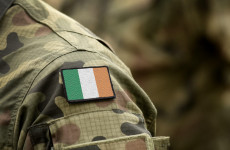
Plans to remove the requirement for UN approval for overseas peacekeeping missions involving more than 12 Irish troops are to go before cabinet today.
"PEACEKEEPING" · 총 25건
필터 보기현재 지수
49.5
0 = 부정 우세
50 = 중립
100 = 긍정 우세
최근 7일 기준 81,589건을 분석한 결과, 뉴스 심리지수는 49.5(균형)입니다. 긍정 10,163건(12.5%)·중립 58,910건(72.2%)·부정 12,516건(15.3%)이며, 중립 비중이 뚜렷하게 높습니다. 성향 지수는 종합 19.9(중도 균형)입니다.
Plans to remove the requirement for UN approval for overseas peacekeeping missions involving more than 12 Irish troops are to go before cabinet today.
The Lebanese army commander held a meeting with Chief of Defence Forces and Chief of Army Staff Field Marshal Asim Munir on Tuesday, during which the two exchanged views on the evolving regional security environment. The military’s media affairs wing said in a statement that Lebanese armed forces’ Commander-in-Chief General Rodolphe Haykal called on CDF Munir at the General Headquarters (GHQ) in Rawalpindi. He was presented a guard of honour by a smartly turned-out tri-services contingent upon his arrival at the GHQ, the statement by the Inter-Services Public Relations said. “During the meeting, both dignitaries exchanged views on matters of mutual interest, evolving regional security environment, defence cooperation and prospects for enhancing bilateral military relations,” it added. The discussions focused on strengthening professional interactions, training cooperation and institutional linkages between the armed forces of the two countries, the statement said. It said Field Marshal Munir reaffirmed during the meeting the “importance Pakistan attaches to its longstanding and cordial relations with Lebanon and underscored the Pakistan Army’s commitment to expanding defence collaboration with the Lebanese Armed Forces”. For his part, General Haykal “appreciated the professionalism and operational excellence of Pakistan’s armed forces and acknowledged their contributions to regional peace, stability and international peacekeeping efforts”, it said. “The visit reflects the shared commitment of both armed forces to fostering closer military-to-military cooperation,” the ISPR statement concluded. More to follow
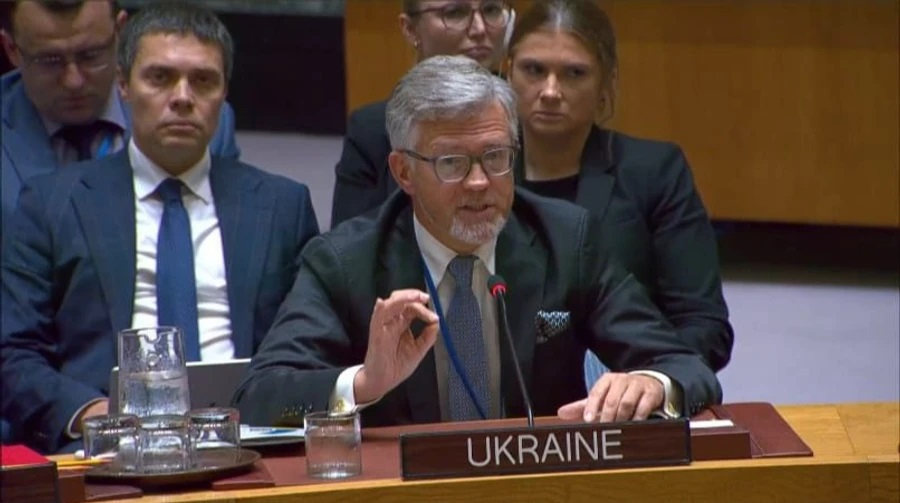
Andrii Melnyk, Ukraine's Permanent Representative to the United Nations, has called for Russian personnel to be barred from participating in UN peacekeeping and police missions and said that Russia should leave the United Nations.
US embassy in Sarajevo made threat after European states refused to back its preferred High Representative candidate A deepening US-European rift over the future of Bosnia and Herzegovina has broken open with a dispute over a top administrative post, leading to a US threat to “reconsider” its role in international peacekeeping. The American embassy in Sarajevo issued the threat after European states refused to back the US preferred candidate to become the new High Representative for the international community. At a meeting this week in Sarajevo of the Peace Implementation Council (PIC) – a multinational group tasked with overseeing the implementation of the 1995 Dayton peace agreement – Washington supported an Italian diplomat, Antonio Zanardi Landi, while the UK, France, Germany and most European states backed France’s envoy to the Western Balkans, René Troccaz. Continue reading...
[ISS] African governments must avoid replacing one dependency with another while building more accountable, fit-for-purpose security systems.
South Korea on Friday condemned "all acts" threatening the safety of the U.N. peacekeeping mission in Lebanon, following the death of a Serbian peacekeeper serving with the mission. "We express deep concern over the recent casualties, including the death of a Serbian peacekeeper serving with the U.N. Interim Force in Lebanon (UNIFIL), and condemn all acts that threaten the safety and security of UNIFIL personnel," foreign ministry spokesperson Park Il said in a commentary. Park recalled that att
The UN peacekeeping mission called attacks on peacekeepers 'grave violations of international humanitarian law' and has opened an investigation into the incident. It is unclear where the shelling originated from.
The U.N. peacekeeping mission for Lebanon, known as UNIFIL, said Thursday one peacekeeper was killed and others were wounded when they came under mortar fire in southeastern Lebanon.
Taalatbek Masadykov stressed that the alliance's peacekeeping potential is developed at training centers in Belarus, Russia and Kazakhstan
Israel has pushed past the Litani River, with the UNFIL peacekeeping force helpless to prevent an invasion.
Russian Deputy Foreign Minister Georgy Borisenko called the situation in the Palestinian enclave "precarious"
BEIRUT, May 30 — Lebanon is seeking an international force to replace a decades-long United Nations peacekeeping m...
The International Day of United Nations Peacekeepers is marked annually on May 29, and India is among the largest troop-contributing countries which has deployed nearly three lakh troops in more than 50 UN Peacekeeping Missions since 1948
Commemorating the International Day of United Nations Peacekeepers 2026, Pakistan on Friday reaffirmed its support for UN peacekeeping missions and vowed its renewed “investment in peace”. President Asif Ali Zardari in a statement highlighted that Pakistan was host to one of the oldest UN peacekeeping missions, the United Nations Military Observer Group in India and Pakistan. “The continued presence and relevance of this Mission reaffirm the responsibility of the international community to support a just and lasting resolution of the Jammu and Kashmir dispute,” he added. President Zardari said that the work of UN peacekeepers “brings stability and hope to communities affected by conflict and displacement”. This year’s theme, “Invest in Peace”, highlights the importance of “sustained political commitment and financial support” for peace worldwide, Prime Minister Shehbaz Sharif said in his statement. On this day in 1948, the first UN peacekeeping mission commenced operations in Palestine, the premier added. Since 1960, over 235,000 Pakistanis have served on UN peacekeeping missions, which included more than 500 women peacekeepers, the prime minister said. “It is a matter of immense national pride that Pakistan today stands as the fifth-largest contributor to United Nations peacekeeping operations,” PM Shehbaz affirmed. He also paid tribute to the over 180 Pakistani peacekeepers who have lost their lives while serving on mission. Reaffirming support for the peacekeeping missions, Sharif wrote, “Our continued contribution reflects Pakistan’s enduring commitment to international peace and security, as well as to the principles of multilateralism.” ‘Contemporary war zones have transformed’: ISPR The Inter-Services Public Relations (ISPR) also paid tribute to the “invaluable contributions and ultimate sacrifices” of the UN Blue Helmets for global peace. “The Government of Pakistan and its Armed Forces reaffirm their unwavering commitment to the ideas and objectives of the United Nations Peacekeeping operations by investing in peace through a multifaceted commitment encompassing human capital, state-of-the-art training facilities, and systemic capacity building,” ISPR said. The ISPR noted that since 1960, over 237,000 Pakistani peacekeepers have served on UN missions, putting the number of those who have lost their lives during service at 183. Currently, Pakistani peacekeepers are deployed in Congo, South Sudan and the Central African Republic, according to ISPR. ISPR also highlighted the hybrid threats in today’s “unstable, complex and asymmetric” war zones, including cybersecurity risks, digital misinformation campaigns, political fracturing and climate-induced humanitarian emergencies. ISPR added that the theme “Invest in Peace” highlighted “a critical paradigm shift from reactive conflict management to proactive peace preservation”.
Vadim Krasnoselsky said that he is firmly convinced that the existing practice of peacemaking has undoubtedly proven effective
India's unwavering commitment to UN peacekeeping is highlighted as two brave soldiers, Lance Havildar Harbhajan Singh and Naib Subedar Sujit Kumar Pradhan, will be posthumously honored with the Dag Hammarskjold Medal. Major Abhilasha Barak, a pioneering combat helicopter pilot, also receives the Military Gender Advocate of the Year award for her exceptional work.
[New Times] Twenty-five years ago, Rwanda took a major step in rebuilding its security sector by establishing the Rwanda National Police (RNP), a unified force that has since grown into one of the country's key institutions in maintaining safety, stability, and regional peacekeeping.
Countries: Democratic Republic of the Congo, Uganda Source: International Peace Institute On May 15, 2026, the Democratic Republic of the Congo (DRC) confirmed its seventeenth recorded outbreak of Ebola, in Ituri province. Since then, the number of cases has risen to over 900 and the virus has crossed into Uganda and reached the provinces of North and South Kivu, now controlled by the Rwanda-backed M23. Initial reports suggesting that the outbreak may have been circulating for weeks and local health authorities were underprepared to swiftly mount a containment strategy. As Ebola Returns to Eastern DRC, International Responders Must Not Repeat the Mistakes of 2018 May 26, 2026by Dirk Druet Ebola task force of MONUSCO and UNICEF Focal point Felicien Malyra (with information pamphlet), inform prisoners at the jail “Kakwangura" in Butembo in North Kivu about how they may protect themselves against the Ebola Virus on August 9, 2019. UN Photo/Martine Perret. On May 15, 2026, the Democratic Republic of the Congo (DRC) confirmed its seventeenth recorded outbreak of Ebola, in Ituri province. Since then, the number of cases has risen to over 900 and the virus has crossed into Uganda and reached the provinces of North and South Kivu, now controlled by the Rwanda-backed M23. Initial reports suggesting that the outbreak may have been circulating for weeks and local health authorities were underprepared to swiftly mount a containment strategy. As international concern grows that the deadly virus might be out of control, the mounting public health response is facing an even more challenging environment than during the last major outbreak in 2018. No vaccine exists for this strain of the virus and Goma, the logistical hub of eastern DRC, is occupied by an armed group. The UN peacekeeping operation in the DRC (MONUSCO) has been drawing down its operations and is now confined to Ituri and North Kivu. On top of this, the global health architecture is under strain following the US withdrawal from the World Health Organization (WHO) earlier this year and a growing deficit in funding to address health emergencies. In this challenging and high-risk context, it is critical that the lessons of the last outbreak inform the management of this one. The temptation in a fast-moving outbreak is to treat the response as an urgent technical problem requiring an urgent technical solution: identify cases, trace contacts, isolate the infected, vaccinate where possible, and bury the deceased safely. But as many learned during the COVID-19 pandemic, emergency health responses in complex political situations are not neutral interventions in passive contexts; they are political acts. This is particularly true in conflict environments, where large-scale public health responses distribute resources at scale, legitimize or delegitimize particular actors, reshape local security arrangements, and engage with populations that read them through the lens of the conflict. When the Health Response Became Part of the Conflict in the DRC In eastern DRC, the 2018–2020 Ebola outbreak was described by WHO as a “perfect storm” in which a highly infectious disease was spreading in an area of active conflict. The Congolese public, particularly in the country’s east, widely viewed their government as predatory, and much of the affected population resided in crowded conditions with poor health infrastructure and was located near porous international borders. Given the seriousness of the risks to local and international public health, WHO and partners in the international community launched a massive health and humanitarian response. This operation was grounded in the principle of “no regrets,” which holds that it is better to overreact to a public health emergency and adjust later rather than act too late. This approach was broadly seen as empowering WHO to take direct action in the affected area with only limited consultation with other parts of the UN system. Many of the decisions made during this period had devastating side effects: they empowered officials and security forces notorious for reprisals against local communities and produced what became known as the “Ebola Business”—a war economy with actors invested in prolonging the crisis. This conflation of the Ebola response with the conflict led to community resistance and violence against health workers that inhibited containment and accelerated transmission. By the time the outbreak was declared over in 2020, more than 3,400 people had been infected, of which some 2,200 had died. Moreover, the conflict in eastern DRC had become even more entrenched, with the ADF armed group carrying out sustained atrocities in Beni territory in North Kivu. MONUSCO’s authority was openly contested by host populations, culminating in the torching of its office in Boikene, near the town of Beni, in 2019. The risks to Congolese lives and international public health posed by the latest outbreak merit a large, swift health and humanitarian response. Such a response is all the more urgent following recent cuts to international support to the Congolese national health system, particularly as a result of the dismantling of USAID, which have reduced the country’s epidemic preparedness and likely undermined its capacity for early detection. However, a response that is not grounded in an understanding of conflict dynamics is likely to hamper efforts to stem transmission. In a 2022 study for the American Academy of Arts and Sciences, I analyzed the national and international response to the 2018–2020 outbreak and proposed a variety of ways international responders could have done things differently. Three recommendations from that study remain relevant for the current outbreak: Treat conflict and political economy analysis as central to the design of the health response: In 2018, WHO did not request MONUSCO’s analysis of the security and political landscape into which it was deploying, and MONUSCO was not informed in advance of several key WHO decisions. These included WHO’s decision to engage personnel from the Agence Nationale de Renseignements, a state security service notorious in eastern DRC for human rights abuses, as “community liaisons” who in practice helped direct where the response deployed. That arrangement, documented by the Congo Research Group, created perverse incentives, securitized the response, and lowered public trust in the health response. Position peace and security actors at arm’s length from health activities: There is a critical distinction between using security actors to provide a generally permissive security environment for a health response and using them to provide direct, proximate security. Using uniformed personnel to escort vehicles, guard clinic perimeters, or cordon off health facilities changes the character of the intervention in the eyes of affected communities. The 2018–2020 experience in Beni and Butembo demonstrated how rapidly the proximity of security actors to the health response led that response to be associated with them, sparking hostility against it. While MONUSCO and national security services may have a role in promoting security during the health response, they should clearly distinguish themselves from humanitarian and health operations. Balance the urgency of epidemic response with community engagement and operational flexibility: The “no regrets” posture that prevailed in 2018 produced the conditions that ultimately undermined its effectiveness. Public health measures only function if affected populations trust them enough to participate; securitized responses that treat communities as obstacles rather than partners are counterproductive. In practice, this means accepting slower initial reach in exchange for community-acceptable delivery—local responders rather than teams parachuted in from Kinshasa, motorcycles rather than Land Cruisers, and burial practices negotiated with families rather than imposed on them. WHO’s Global Health and Peace Initiative, and Its Limits To its credit, WHO has not ignored the 2018–2020 experience. In the years following the outbreak, the organization developed the Global Health and Peace Initiative (GHPI), built around two pillars: (1) making health programming “conflict-sensitive” by extending the “do no harm” principle into operational practice and (2) where conditions allow, making it “peace-responsive” by designing health interventions to actively contribute to peace outcomes such as social cohesion, dialogue, and community resilience. The initiative is likely to influence WHO’s thinking as it rapidly designs and rolls out its response to the current crisis. In a 2023 paper for the International Peace Institute, I argued that while the GHPI’s conceptual direction is broadly correct, its operationalization in violent conflict settings carries risks that have not yet been adequately addressed. Two in particular could present challenges for the response in eastern DRC. First, it is unclear how WHO and its partners in the field, including organizations such as Médecins Sans Frontières, will reconcile the principles of conflict sensitivity and humanitarian impartiality when the two pull in opposing directions. For example, even if a conflict-sensitive analysis identifies that delivering a particular intervention will exacerbate conflict dynamics (e.g., if negotiating access through a non-state armed group will entrench that group’s position), that intervention may still be compelled to proceed under the principle of humanitarian impartiality. The GHPI offers no framework for managing that tradeoff. Second, the initiative holds that programming “must be led at national level—from national authorities down to the community level.” This instinct to promote national ownership was borne of the lessons of the 2014-2016 Ebola crisis in West Africa, where the UN was criticized for bypassing national institutions. However, this principle becomes highly problematic when the state is itself a party to the conflict. In eastern DRC, much of the population views Congolese state institutions with hostility born of long experience. Deferring to national ownership without qualification risks reproducing the legitimacy problem that fueled community resistance in 2018 and could empower the predatory actors the response should be insulated from. The outbreak in the DRC demands a more localized, nuanced process for deciding on the role of national actors, grounded in thorough conflict analysis. The Way Forward The international response in eastern DRC will succeed or fail—and it is critical that it succeed—on its ability to implement emergency public health measures within the region’s long-standing social, political, and security quagmire. This will require three deliberate moves from the outset: (1) joint conflict and political-economy analysis to shape deployment decisions rather than follow them; (2) a security posture of less proximate protection combined with negotiated community-level access; and (3) a response built on localized approaches to engaging existing community structures and calibrating the role of national actors. Many further challenges will emerge that will demand difficult choices—not least the reconciliation of the dilemmas innate to the GHPI—but the decisions international responders make in the next weeks could have profound implications for regional and international public health. Originally Published in the Global Observatory
Deputy Prime Minister and Foreign Minister Ishaq Dar, who is on a two-day visit to New York, met United Nations Secretary-General António Guterres, with both sides discussing the situation in the Middle East, the Foreign Office (FO) said on Wednesday. DPM Dar arrived in New York a day earlier. In its statement, the FO said that during the meeting, DPM Dar lauded the UN chief’s “steadfast commitment to the UN and multilateralism” and also expressed appreciation for his “continued support and strong cooperation” with Pakistan. As per the statement, the two leaders discussed regional developments, including the situation in the Middle East and West Asia, during which Dar thanked Guterres for his “principled position and support” for Pakistan’s mediation efforts in the US-Iran war. DPM Dar also “highlighted Pakistan’s successful hosting of the Islamabad Talks in April, which represented an important diplomatic breakthrough,” and said the April 8 Pakistan-brokered ceasefire continued to remain in place. Dar assured the UN chief of Pakistan’s “continued engagement and dialogue” to restore peace in the region. As per FO, Dar “reaffirmed Pakistan’s strong commitment to upholding the principles and purposes of the UN Charter and advancing international peace and security through constructive engagement at the UN”. FO further stated that Dar also appreciated the UN chief’s leadership in the UN80 initiative, stressing that the interests of the developing countries should remain “central” to the initiative. The U80 initiative aims to “streamline operations, sharpen impact, and reaffirm the UN’s relevance for a rapidly changing world,” as per the UN’s website. In his meeting with Guterres, Dar also stressed the need for “strengthening conflict prevention, the peaceful settlement of disputes, and peacekeeping and peacebuilding efforts in line with evolving global realities”. He maintained that a comprehensive reform process should be based on “principles of sovereign equality, transparency, inclusivity, and broad-based consensus among member states”. “These principles could only be upheld through the addition of elected members,” FO quoted him as saying. The two leaders also exchanged views on South Asia, where Dar raised alarm over “provocative and inflammatory statements by India, which he said, “undermines regional stability”. Dar further held that India’s unilateral move of holding the Indus Water Treaty in abeyance was a “clear violation of international law, the treaty’s provisions, and established norms governing inter-state relations”. On India-occupied Kashmir, Dar said the dispute remained the “core issue” between Pakistan and India. He maintained that Kashmir’s “just resolution” remained “essential” for peace in the region. On Afghanistan, Dar maintained that a “peaceful and stable” Afghanistan was “vital” for regional stability, but also expressed concern over the terrorist elements emanating from Afghan soil. He went to reaffirm “Pakistan’s resolve to safeguard its national security and protect its citizens in accordance with international law and the UN Charter,” FO said. The two also spoke about Palestine, and the foreign minister lauded the UN chief’s “continued advocacy” for a two-state solution as well as the implementation of the Gaza Peace Plan. As per FO, Guterres, on his part, expressed appreciation for “Pakistan’s active engagement at the UN and its continued contributions to international peace and security, including through diplomacy and peacekeeping efforts”. A day earlier, Dar addressed a UNSC debate chaired by Chinese Foreign Minister Wang Yi at the UN headquarters in New York, where he pushed for sustained diplomacy in the ongoing US-Iran crisis and highlighted Islamabad’s role in efforts aimed at reducing tensions between Tehran and Washington. While a deal for a complete end to the war — which broke out on February 28 — is yet to happen, hostilities have largely ceased since the two sides agreed on a Pakistan-brokered ceasefire on April 8. Following the ceasefire, a first round of historic direct US-Iran talks was held in Islamabad on April 11 and 12, with Pakistan playing the role of a mediator. The talks had ended without an agreement, but also without a breakdown. Dar meets Bahrain FM Separately, Dar also met Bahrain’s Foreign Minister Dr Abdullatif bin Rashid Al Zayani, as per FO. “The two leaders reaffirmed the strong fraternal ties between Pakistan and Bahrain and discussed expanding cooperation in trade, investment, and economic sectors,” FO said in a post on X. The top diplomats also discussed “regional developments and cooperation at multilateral forums, including the UN,” the statement said. “Both sides agreed to further strengthen the Pakistan–Bahrain partnership across diverse fields, including as fellow elected members of the UNSC,” the FO further stated.
Country: Sudan Source: Data Friendly Space Please refer to the attached file. Sudan is facing one of the world’s largest humanitarian and displacement crises as the conflict between the Sudanese Armed Forces (SAF) and the Rapid Support Forces (RSF), which began in April 2023, enters its fourth year in 2026. The conflict has triggered widespread civilian suffering, economic collapse, mass displacement, and severe regional instability, with humanitarian conditions continuing to deteriorate across much of the country. An estimated 19.5 million people are currently experiencing acute food insecurity, making Sudan the world’s largest hunger crisis. Famine conditions have been confirmed in el-Fasher (North Darfur) and Kadugli (South Kordofan), while numerous areas across Darfur and Kordofan remain at high risk of famine amid ongoing conflict, siege tactics, disrupted markets, and severe restrictions on humanitarian access. Children continue to bear a disproportionate burden of the crisis, with millions exposed to acute malnutrition, disease outbreaks, and heightened mortality risks. Fatality estimates remain highly contested due to limited humanitarian access, communication blackouts, and verification constraints. The Armed Conflict Location & Event Data Project (ACLED) recorded nearly 30,000 reported deaths by late 2024, while several independent investigations and international media estimates suggest the true death toll may exceed 150,000 people. Civilians continue to face widespread violence, including indiscriminate shelling, aerial bombardments, drone attacks, and ethnically targeted killings, particularly in Darfur and parts of Kordofan. Sudan’s health system remains severely degraded, especially in active conflict zones where many facilities are non-operational or functioning only partially. Between 2024 and early 2026, Sudan experienced a nationwide cholera outbreak that spread across all 18 states, infecting more than 124,000 people and causing over 3,500 deaths before authorities declared the outbreak contained in March 2026. However, overcrowded displacement sites, poor sanitation conditions, and limited healthcare access continue to create significant risks of renewed outbreaks of cholera and other communicable diseases. Displacement continues to rise at an unprecedented scale. More than 14 million people have been displaced since the start of the conflict, including approximately 9 million internally displaced persons (IDPs) and more than 4 million refugees who have fled to neighboring countries, making Sudan the world’s largest displacement crisis. At the same time, limited returns to parts of Khartoum and Al Jazirah have increased since early 2026 as frontlines shifted, although returnees continue to face devastated infrastructure, insecurity, limited public services, and severe livelihood shortages. Militarily, the conflict has continued to expand and fragment since late 2025. The RSF has expanded its territorial influence across much of Darfur and intensified offensives in Kordofan, while the SAF has maintained control over key eastern and northern urban centers. Fighting around Kadugli, Dilling, and other strategic locations in Kordofan has trapped large civilian populations under increasingly dire humanitarian conditions. The conflict has also seen a growing use of drones, aerial strikes, and long-range attacks targeting civilian infrastructure, including hospitals, schools, markets, and displacement sites. In December 2025, a drone strike on a kindergarten and hospital in Kalogi reportedly killed at least 114 people, including dozens of children, while separate attacks on peacekeeping personnel highlighted the increasing risks faced by humanitarian actors and civilians alike. Ethnic violence and sexual and gender-based violence (SGBV) continue to escalate, particularly in Darfur. Human rights organizations and women-led monitoring networks have documented widespread abuses, including conflict-related sexual violence, forced displacement, arbitrary detention, and attacks targeting ethnic communities. Despite sustained diplomatic pressure, including sanctions imposed by the United States and United Kingdom on RSF leaders and affiliated financial networks, regional and international mediation initiatives have thus far failed to secure a durable ceasefire or political settlement. The conflict is increasingly destabilizing neighboring countries through refugee flows, cross-border insecurity, arms trafficking, and growing pressure on already fragile humanitarian systems across the region. Meanwhile, humanitarian operations remain critically underfunded. The World Food Programme (WFP) warned in 2026 that severe funding shortfalls threaten additional ration cuts and disruptions to emergency food assistance pipelines, placing millions at further risk of hunger and malnutrition. As of mid-2026, Sudan remains trapped in a protracted and increasingly fragmented conflict characterized by territorial fragmentation, widespread civilian targeting, deepening food insecurity, and severe humanitarian access constraints. Without urgent, coordinated, and sustained international engagement—including increased humanitarian financing, civilian protection measures, and renewed diplomatic efforts toward a negotiated settlement—the crisis is likely to continue worsening, with profound implications for Sudan and the wider region.