Die Zeit
진보 성향
기타
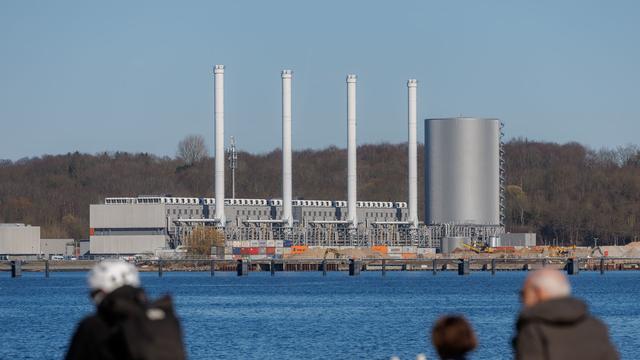
Fernwärmeversorgung: Stadtwerke Kiel prüfen Förde auf Munitionsaltlasten
"MUNITIONS" · 총 58건
필터 보기현재 지수
49.5
0 = 부정 우세
50 = 중립
100 = 긍정 우세
최근 7일 기준 86,017건을 분석한 결과, 뉴스 심리지수는 49.5(균형)입니다. 긍정 10,533건(12.2%)·중립 62,307건(72.4%)·부정 13,177건(15.3%)이며, 중립 비중이 뚜렷하게 높습니다. 성향 지수는 종합 19.8(중도 균형)입니다.
The munitions developed by Rostec specialists can simultaneously impact an object by a high-explosive stream, an explosion and fragments
Ukrainian forces have shot down over 3,500 Russian Shahed loitering munitions using P1-SUN interceptor drones over the past six months.
Iran on Monday said it was ending its latest military operation against Israel after the first exchanges of fire between the foes since a shaky ceasefire began, but warned it could inflict a more “crushing” response. United States President Donald Trump earlier on Monday told both Iran and key ally Israel to stop fighting, against the background of reports of an increasingly testy relationship between the US leader and Israeli Prime Minister Benjamin Netanyahu. Iran fired dozens of missiles at Israel overnight and Israel responded by targeting military sites in the Islamic republic, sparking fears the escalation could usher in a new full-scale conflict after the April 8 truce. “Israel and Iran must immediately stop ‘shooting.’ President DONALD J. TRUMP,” the US leader wrote on his Truth Social network. Minutes later, he added in a new post that “final negotiations” towards peace were proceeding “subject to ignorance or stupidity getting in its way.” Iran’s military command then said it was halting the operation against Israel after delivering a “painful response”. But it warned “that should acts of aggression and hostility continue, including in southern Lebanon, much more severe and crushing measures than before will follow”. Shortly after, Israel’s army intercepted three projectiles fired from Lebanon, according to an AFP journalist near their shared border, with the military confirming the munitions had targeted its forces operating in Lebanon’s south. “Some of the projectiles were intercepted prior to crossing into Israeli territory, and an additional projectile fell near IDF soldiers. No injuries were reported,” the military said. Tehran’s earlier strikes followed attacks by Israel against targets of the Lebanese group Hezbollah in the southern suburbs of Beirut. Iran had repeatedly warned it would strike Israel if the Lebanese capital was targeted. ‘People frustrated’ On Monday in Tehran, there was little sign of any return to war, with cafe terraces packed. Traffic seemed lighter than usual for a weekday, suggesting that some people had stayed home and there were also many more people queuing at gas stations. Maryam, 41, an accountant in Tehran, described “a sense of uncertainty and confusion”. “You don’t know if there’s going to be a war, nor do you know if the peace agreement will last. Nothing is clear. People are frustrated,” she said. Residents of Tel Aviv meanwhile went to shelters as sirens went off. “I hope it will be short, but you can never know. Last time we thought it will be short and then it was a month, so I don’t know,” said Jonathan Ariel, 30. Oil prices surged more than five per cent on worries that war could break out again, with hopes now punctured of a rapid end to the standoff that has seen shipping limited through the key Strait of Hormuz trade bottleneck. The strikes also came at a critical moment with diplomatic efforts to end the conflict involving mediator Pakistan on a knife-edge. Iranian foreign ministry spokesman Esmaeil Baqaei warned at a press conference in Tehran attended by AFP that diplomacy was continuing but risked being “affected” by the escalation. As he was speaking at the foreign ministry, a huge explosion shook the building, followed by repeated explosions believed to be from air defence systems, the AFP reporter said. Pakistan Interior Minister Mohsin Naqvi visited Tehran to deliver what he said was a “special letter” to Iran’s supreme leader Mojtaba Khamenei, according to Iranian state television. He has since travelled back to Pakistan, an official Pakistani source said on Monday. Iranian President Masoud Pezehskian wrote on X that Tehran was still “at the negotiating table”. ‘Prepared for long-term war’ No casualties have been reported in either Israel or Iran after the exchange of fire. The Israeli military said it struck and dismantled Iranian defence systems deployed across several areas in the country. Iran fired nearly 30 missiles towards Israel since Sunday night, an Israeli military official said. An AFP correspondent also saw a missile fall in agricultural land in the area of Najha, in the countryside of the Syrian capital Damascus, causing a fire around the impact site but no reported human casualties. “Material damage is minor, but the psychological impact is significant. The area is home to children, farm caretakers, livestock and solar power installations,” said Fadil Ataya, a local farmer. A military source told the Tasnim news agency that “Iran is prepared for a long-term war with the Zionist regime and for strikes against US interests” in the region. It also remains unclear who is leading decision-making in Tehran with Mojtaba Khamenei, said to have been wounded in a US-Israeli strike, yet to appear in public after taking over from his father Ali Khamenei who was assassinated on the first day of the war on February 28. The European Union’s top diplomat Kaja Kallas called on both sides to “sit down to a negotiation table and agree”, adding that “the region does not need an escalation.” Israeli strikes on Iran ‘fully coordinated’ with US, says Tehran Iran said on Monday that the recent wave of Israeli strikes against the country was “fully coordinated” with US forces. Tehran’s statement comes after Israel and Iran exchanged attacks for the first time since the shaky ceasefire in the Middle East war took effect on April 8, despite Trump calling for restraint. The flare-up, which also drew in other countries in the region, saw Israel striking Iran after the latter targeted it in vengeance for an airstrike on Beirut’s southern suburbs. No casualties have been reported so far in either Israel or Iran. “The direct responsibility of the United States for the actions of the Zionist regime is clear, and the consequences of escalating tensions will also fall on the United States,” Baqaei told a new briefing, according to state news agency IRNA. “No one believes that the Zionist regime would carry out any action without prior coordination and cooperation with the United States,” Baqaei said. “It is perfectly natural that the diplomatic process initiated to put an end to this imposed war would be affected,” the official observed. Nonetheless, Baqaei said that Pakistan’s mediation efforts to end the war with the US were continuing even after fighting resumed with Israel. “Diplomatic consultations are naturally continuing in all circumstances,” the spokesman said. Baqaei further stressed that it had “been frequently repeated by us together with the Pakistani mediator that Lebanon is part and parcel of the [ceasefire] agreement”, according to Al Jazeera. “We cannot allow the Zionist entity or the United States to undermine this part of the part of the deal,” he was quoted as saying. “These events [of the past day] will definitely intensify suspicions. We were already exchanging messages with the American side in an atmosphere of extreme suspicion,” the Iranian official noted. “The US’s contradictions to date — whether intentional or unintentional — have caused enough chaos in the diplomatic process. The incidents that have occurred in the past 24 hours will only fuel this chaotic situation in the diplomatic process,” he added. Baqaei also reiterated Tehran’s stance that the head of the United Nations’ nuclear watchdog was disregarding the realities of the conflict and held biased views. He contended that International Atomic Energy Agency (IAEA) Director General Rafael Grossi was “acting with deliberate bias against Iran and the Iranian nuclear issue”, according to Al Jazeera. Tit-for-tat strikes after Iran’s warning Earlier on Monday, an Israeli airstrike targeted a petrochemical firm in southwestern Iran, causing partial damage to the industrial complex, Iranian officials said. Iran’s Islamic Revolutionary Guard Corps (IRGC) said Tehran had retaliated against the attack by striking similar industrial targets in Israel’s Haifa. Israel’s attacks had followed missile launches by Iran, whose military said it targeted Israel’s Ramat David Airbase with ballistic missiles in response to Israeli attacks in southern Lebanon and Beirut. The statement warned that any further attacks would be met with “a broader and more severe” Iranian response. Last night, the IRGC demanded that the Israeli army stop its attacks on Lebanon. “We had previously warned that if the crimes in the Dahieh area of Beirut expand, we will attack targets in the occupied territories,” the IRGC’s top joint military command said. On late Saturday night, Iran’s Foreign Minister Abbas Araghchi also shared an image on X depicting Iran and Lebanon’s national flags. Earlier on Saturday, Israel launched strikes in the Beirut area for the first time since the US announced a truce plan for Lebanon last week. The region has been on edge since the US and Israel launched airstrikes on Iran on February 28, triggering Iranian retaliation on Israel and other regional countries hosting US military sites. A temporary ceasefire was reached on April 8, but negotiations later stalled amid disputes over its implementation and subsequent regional developments.
Ukrainian interceptor drones can autonomously shoot down Shahed-type loitering munitions, and Ukraine's Ministry of Defence is scaling up such solutions.
The Navy has issued a requirement for indigenous 80-mm air-to-ground rockets for its MiG-29K fighter fleet, a step aimed at reducing dependence on imported munitions
Pour sécuriser son approvisionnement en électricité, le ministère des Armées va convertir une ancienne base militaire du Loir-et-Cher en centrale solaire.
North Korea has released photos of Kim Jong Un inspecting huge munitions at a weapons factory
North Korea’s nuclear weapons programme is “absolutely non-negotiable”, the powerful sister of leader Kim Jong Un said in a statement carried by state media on Sunday, ahead of a visit by Chinese President Xi Jinping. Pyongyang has long insisted on its right to a nuclear weapon and ballistic missile programmes although they are forbidden under the terms of UN Security Council sanctions. It enshrined its nuclear status in its constitution in 2023. “Our status as a nuclear power is absolutely non-negotiable,” Kim’s sister Kim Yo Jong said in a statement published by North Korea’s official Rodong Sinmun, adding that the North “will not tolerate any threats”. A key player in the country’s communications and foreign policy, Kim Yo Jong’s statement came on the eve of Xi’s visit to North Korea, scheduled to take place from Monday to Tuesday, according to state media. Beijing is a vital source of political and economic support to North Korea, which is one of the most diplomatically isolated countries in the world and under heavy international sanctions. Xi’s upcoming visit to Pyongyang would be his first in seven years, and comes after he hosted back-to-back summits with US President Donald Trump and Russia’s Vladimir Putin last month. Pyongyang has repeatedly declared itself an “irreversible” nuclear state since Kim Jong Un’s 2019 summit with Trump collapsed over the scope of denuclearisation and sanctions relief. North Korea’s leader has since been emboldened by the war in Ukraine, securing critical support from Moscow after sending thousands of troops to fight alongside Russian forces. He inspected a major munitions factory at the weekend and called for it to boost production capacity, according to a separate report by the official Korean Central News Agency (KCNA) on Sunday. This was “in order to supply enough quantity of missiles”, KCNA quoted him as saying. False information Kim Yo Jong, in her statement, went on to slam Washington over its comments that the goal of North Korea’s denuclearisation had been reaffirmed during last month’s summit between Donald Trump and Xi Jinping in Beijing. The White House posted a fact sheet following the summit stating that “President Trump and President Xi confirmed their shared goal to denuclearise North Korea”, which Kim Yo Jong said was false. “Some officials in the United States still have yet to awaken from their escapist and anachronistic dream,” she said. “This is nothing more than Washington’s habitual dissemination of false information.” She rejected Washington’s attempts to deny or challenge the North’s status as a nuclear power, saying it “carries no legal force”. “The policy of continuously strengthening the country’s self-defensive nuclear deterrent, as set out by the nation’s leader, is an irreversible course that must be implemented without fail,” she added. The statement underscores Pyongyang’s “sensitivity” to any suggestion of a US-China agreement on North Korean denuclearisation, Hong Min, an analyst at the Korea Institute for National Unification, told AFP. “Kim’s core message was a categorical rejection of reports of US-China discussions on North Korean denuclearisation as ‘false information’”, he said. It is possible that Pyongyang had “confirmed with Beijing” during the coordination process for the summit that such discussion had not taken place, Hong added.
Ukraine's defence forces have carried out a precision airstrike on central Pokrovsk in Donetsk Oblast, hitting a Russian base used to launch Molniya loitering munitions and conduct aerial reconnaissance.
Residents of Gaza, south Lebanon, northern Israel and Kuwait were all under fire this week despite United States-arranged ceasefires supposedly in force in their regions. Israeli airstrikes hit Gaza and Lebanon, with Israeli forces still actively deployed in both places. Hezbollah rockets struck northern Israel, and Iranian attacks hit Kuwait’s international airport. The continued violence prompted US President Donald Trump to comment on Wednesday that ceasefires in the Middle East involved “shooting in a more moderate manner” rather than a total halt in fighting. Three truces his administration has negotiated were meant to have stopped the warfare. But while major fighting has greatly reduced, munitions are still falling and people still dying. This is how the ceasefires — and ongoing fighting — are playing out: What’s happening with the ceasefire in Gaza? The US brokered a ceasefire between Israel and Hamas on October 10, 2025, ending major warfare. The ceasefire deal involved a halt to all fighting, Hamas releasing all its remaining hostages in Gaza, Israel freeing Palestinian prisoners, a phased Israeli withdrawal, ramped-up aid and the opening of a crossing into Egypt. A Trump plan to build out the ceasefire was meant to involve agreements on disarming Hamas, a new Gaza government without the group’s involvement, reconstruction of Gaza and a complete Israeli withdrawal. Palestinians clear debris at the site of an Israeli strike on a house whose residents were warned to evacuate before the attack, in Zawaida, central Gaza Strip on June 5, 2026. — AFP However, while all hostages were released, the amount of aid reaching Gaza has not substantially increased. Hamas has not agreed to disarm. Reconstruction has not begun, and Israel has expanded its control of the territory. Israeli airstrikes on Gaza have continued, killing more than 900 Palestinians since the truce, including nine on Thursday. Sporadic Palestinian attacks have killed four Israeli soldiers in Gaza. Why is there still warfare in Lebanon? After fighting in 2024, a ceasefire between Israel and Lebanon’s Hezbollah was only partially implemented, with both sides accusing the other of violations. Open warfare began again in March after war against Iran erupted, with Hezbollah firing into Israel and Israeli forces seizing swathes of southern Lebanon and pounding other areas with airstrikes. Trump announced a 10-day ceasefire in Lebanon on April 16 after rare contacts between representatives of the Israeli and Lebanese governments. Intense fighting continued in the south, but Israel mainly refrained from striking Beirut. Black smoke billows at a strike scene following an Israeli strike on a car as seen from Nabatieh, Lebanon on June 5, 2026. — Reuters Since April 16, Israeli strikes have killed hundreds of people, bringing the total toll to more than 3,500 since March 2, according to Lebanese authorities, whose data does not distinguish between civilians and combatants. Israel says 26 of its soldiers and four civilians have been killed in Hezbollah attacks since March. Iran wants a ceasefire in Lebanon to be part of any deal to end its war with the United States and Israel and to reopen the Strait of Hormuz. On Wednesday, Trump announced that Lebanon and Israel had agreed to implement a new ceasefire contingent on Hezbollah leaving southern areas. Israel says it can still carry out military operations despite the ceasefire and Hezbollah has rejected the truce. Fighting continues. Will the US and Iran cement their ceasefire? The US and Israel attacked Iran on February 28, seeking to destroy its nuclear and ballistic missile programmes. Both countries voiced hope the ruling theocratic system would be overthrown. That followed a 12-day war last year in which Israel, later joined by the United States, struck many of Iran’s nuclear facilities and military leaders. Despite many of Iran’s senior figures being killed, it has managed to close off the Strait of Hormuz, throttling Gulf energy exports and hitting the global economy. The US announced a ceasefire with Iran in early April, with talks to follow on a lasting end to hostilities, the reopening of Hormuz, the end of a US blockade on Iranian ports and a pathway to negotiations on Iran’s nuclear programme. Iranians stand next to a symbol of a Kheibar missile as they take part during a rally in support of the country’s supreme leader Mojtaba Khamenei and commemorate Eid al-Ghadir in Tehran on June 4, 2026. — AFP However, despite repeated rounds of indirect talks mediated by Pakistan and Qatar, there has been no fuller agreement yet. A deal would likely put off negotiation on the nuclear issue to a later stage. Meanwhile, the sides have repeatedly exchanged fire, with Iran also attacking Gulf states including Kuwait this week. Why haven’t the ceasefires been effective? All three deals have come unstuck in their first phase, with interim arrangements failing to move towards more lasting ceasefires. In each case, the combatants have been unwilling to accept painful concessions required to move beyond the first phase of transitional ceasefires. At times, they have turned to military action to try to advance goals they had to set aside when the truces were agreed or to test the boundaries of the agreements. “When there’s no movement and there’s no political horizon, it’s very difficult for a ceasefire to hold, because there’s no real incentive for the parties to that ceasefire to continue abiding by it if it doesn’t actually lead to any changes,” said Urban Coningham, research fellow at the Royal United Services Institute in London. The diminishing influence of international bodies like the United Nations and the growing assertiveness of regional powers have also made it harder for long-term agreements to stick, he said.
Der ukrainische Angriff auf den Flughafen von Donezk war laut Militärexperte Gustav Gressel erfolgreich und traf wichtige russische Drohnen-Infrastruktur. „Es ist auch die Rede von einem Treffer in einem Munitionsdepot“, sagt Gressel.
Selon plusieurs médias et des collectifs sur place, l'armée malienne et ses partenaires russes de l'Africa Corps ont utilisé, en mai dernier, ces armes pourtant interdites depuis 2008 par le Traité d'Oslo.
Three truces the Trump administration negotiated were meant to have stopped the warfare. But while major fighting has greatly reduced, munitions are still falling and people still dying.
Ukraine is stepping up its game by launching strikes deep into Russian territory, aiming at vital oil and military assets to neutralize Moscow's combat advantages. The recent operations against air bases and munitions depots are meticulously planned to disrupt the flow of resources to Russian troops.
North Korean leader Kim Jong-un inspected a newly opened nuclear material production facility and called for a faster expansion of the country’s nuclear arsenal, state media said Thursday. The move appeared to be the latest indication of Pyongyang's intention to press ahead with its weapons program despite international pressure. The Korean Central News Agency said Kim visited the facility on Wednesday, accompanied by senior officials from the ruling Workers’ Party’s munitions industry departmen
Russia's high tempo of glide bomb attacks has been plagued by a string of friendly-fire incidents, the UK's MOD said on Wednesday.
The fact that Russian forces drop glide bombs on Russian territory and temporarily occupied areas of Ukraine indicates continued errors in Russia’s ability to successfully deploy their munitions on intended targets.
Simultaneous wars in Ukraine and Iran have depleted sources of tungsten, a largely obscure metal that is critical to munitions and industrial production.