Sushi’s Epic Journey: From Slow-Fermented Fish to Global Fast Food
Food researcher Morieda Takashi chronicles the evolution of sushi from an ancient Asian technique of slow-preserving fish to a globally popular and dazzlingly diverse fast food.
"GLOBALLY" · 총 169건
필터 보기현재 지수
49.5
0 = 부정 우세
50 = 중립
100 = 긍정 우세
최근 7일 기준 85,582건을 분석한 결과, 뉴스 심리지수는 49.5(균형)입니다. 긍정 10,498건(12.3%)·중립 61,967건(72.4%)·부정 13,117건(15.3%)이며, 중립 비중이 뚜렷하게 높습니다. 성향 지수는 종합 19.8(중도 균형)입니다.
Food researcher Morieda Takashi chronicles the evolution of sushi from an ancient Asian technique of slow-preserving fish to a globally popular and dazzlingly diverse fast food.
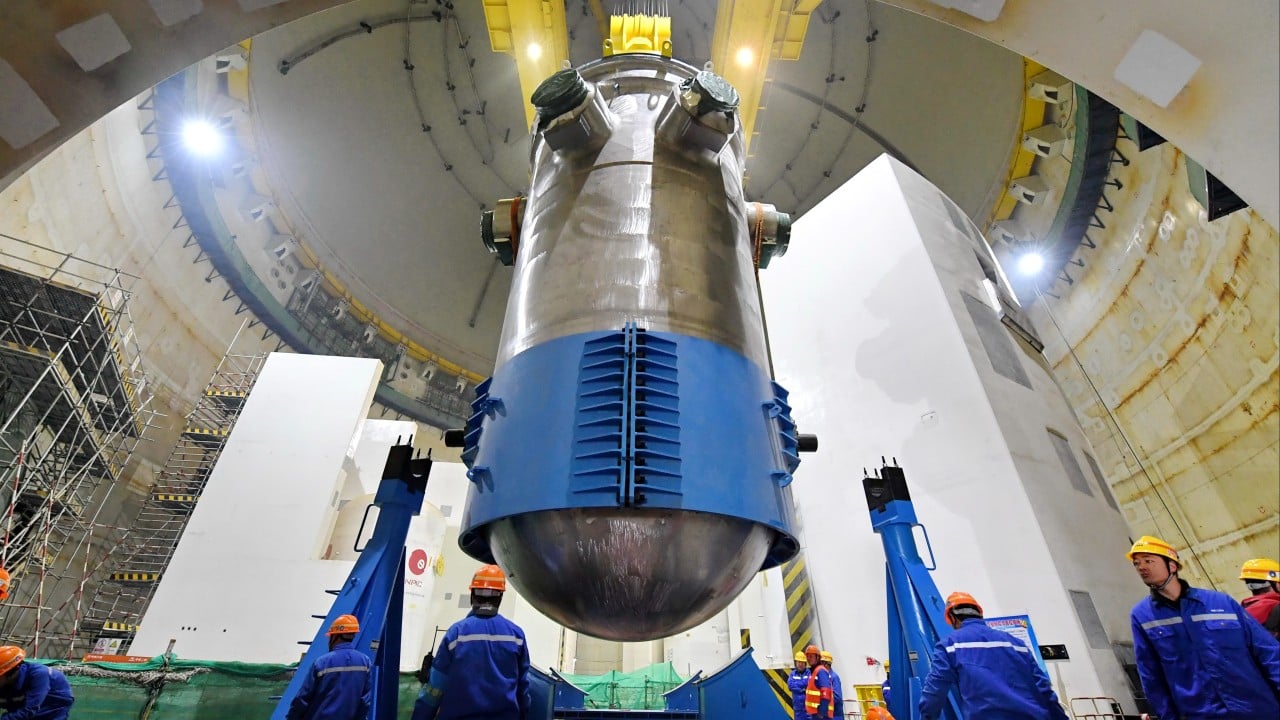
China is expected to overtake the United States as the world’s nuclear power leader, as the AI boom and war in the Middle East renew a global push for reliable energy sources, according to a new report. While the US maintained the world’s largest operational fleet of nuclear reactors, China now accounted for nearly half of all those under construction globally and was expected to match American capacity within five years, Gavekal Technologies said on Monday. “By a wide margin, China will have...

As the rupee came under pressure from rising crude oil prices, geopolitical tensions in the Middle East and sustained foreign portfolio investor (FPI) outflows, the government and the Reserve Bank of India rolled out a set of measures over Friday and Monday aimed at attracting foreign capital and strengthening India's external position.The RBI, while keeping the repo rate unchanged at 5.25% in its June monetary policy review, unveiled a package to boost dollar inflows. Simultaneously, the government followed up with a tax ordinance exempting foreign investors from taxes on investments in government securities. Together, the measures are designed to improve India's balance of payments, ease pressure on the rupee and make Indian debt markets more attractive to overseas investors.Also Read: India scrapping tax for foreign investors in govt bonds aimed at inclusion in Bloomberg index, govt official saysSo, why were policymakers worried?The West Asia conflict and its impact globally is no secret. The ripple effects are real. The rupee had come under pressure in recent weeks trading in the range of ₹95.20 to ₹95.80 against the US Dollar as crude oil prices surged following the escalation of the Iran-Israel conflict, raising concerns over India's import bill and current account deficit. However, a surprise sprang on Monday when India reported a current account surplus of $7.1 billion in the fourth quarter of FY26. The RBI's package1. Concessional forex swap facility for overseas borrowingsThe RBI introduced a special dollar-rupee swap facility at a concessional rate for public sector entities and banks raising funds overseas. The facility will remain available until September 30.Companies often borrow abroad but must hedge currency risk. Hedging can be expensive. By lowering that cost, the RBI is encouraging more overseas borrowing and, consequently, more dollar inflows into India.2. RBI to bear hedging costs on FCNR(B) depositsOn Monday, the RBI issued detailed guidelines for the FCNR(B) deposit scheme announced during the monetary policy.Also Read: Deposits under RBI's latest foreign currency non-resident bank scheme will carry one-year lock-inUnder the framework, banks can mobilise fresh FCNR(B) deposits with maturities of three to five years between June 8 and September 30 and swap the dollar inflows with the RBI. The swap window will remain available until October 16. The central bank will bear the entire hedging cost, effectively allowing banks to hedge these deposits at par. Banks can also offer leverage against such deposits.The RBI also exempted these deposits from Cash Reserve Ratio (CRR) and Statutory Liquidity Ratio (SLR) requirements, improving the economics of mobilising foreign currency deposits.To ensure stability of inflows, deposits raised under the scheme will carry a mandatory one-year lock-in period. Banks will not be allowed to cancel swaps undertaken with the RBI before maturity. The RBI further exempted swap positions arising from FCNR(B) deposits from net unhedged foreign exchange exposure calculations.This is the closest India has come since the 2013 FCNR(B) mobilisation scheme launched during the rupee crisis. By eliminating hedging costs, providing CRR and SLR relief, relaxing regulatory treatment and offering a dedicated swap window, the RBI is giving banks a strong incentive to attract dollar deposits from overseas Indians. Why analysts think this scheme could be bigger than 2013Brokerage Jefferies believes the latest package could attract $50-70 billion of foreign currency inflows, substantially higher than the inflows generated under the 2013 FCNR(B) scheme.The brokerage argues that the current framework is more attractive than the one introduced during the rupee crisis more than a decade ago. While banks had to bear hedging costs of around 3.5% under the 2013 scheme, the RBI is now absorbing the entire cost. The deposits are also exempt from CRR and SLR requirements, similar to the earlier programme.A key difference this time is the ability to use leverage. Jefferies noted that the RBI has permitted banks to provide standby letters of credit (SBLCs), potentially allowing depositors to amplify returns through leverage. According to the brokerage, this could significantly improve the attractiveness of FCNR(B) deposits for overseas investors.3. Expansion of the Fully Accessible Route (FAR)The RBI expanded the FAR framework to include all new 15-year, 30-year and 40-year government securities and removed concentration limits for foreign investors.Large global investors, including pension and sovereign funds, prefer long-dated bonds. The move widens the universe of Indian government securities available for unrestricted foreign investment.4. Easier access for non-resident investorsThe RBI broadened investment access for individuals residing outside India and eased certain norms governing non-resident participation in Indian markets.The measure aims to tap a larger pool of overseas capital, particularly from the Indian diaspora.The Government's follow-up Tax reliefAfter the RBI's measures, the government issued the Income-tax (Amendment) Ordinance, 2026.5. Capital gains tax exemption on government bondsThe ordinance exempted foreign institutional investors and the Bank for International Settlements from capital gains tax on investments in specified government securities. Earlier, long-term gains attracted a 12.5% tax.1316102436. Interest income tax exemptionThe government also removed taxes on interest income earned by eligible foreign investors from these government securities. Previously, interest income faced a 20% withholding tax.131610254
New Delhi, Corporate India is expected to scale back hiring plans in the July-September quarter of this year, signaling a slowdown in hiring momentum, as employers are likely to opt for a more measured approach to hiring amid rising geopolitical challenges, a survey said on Tuesday.According to ManpowerGroup's latest Employment Outlook Survey, the Net Employment Outlook (NEO) for Q3 2026 stood at 48 per cent, down 20 points from the previous quarter but stronger by 6 points since Q3 2025.The Net Employment Outlook (NEO) is derived by taking the percentage of employers anticipating an increase in hiring activity and subtracting from this the percentage of employers expecting a decrease in hiring activity.In the survey of more than 3,100 employers across India conducted from April 1 to 30, 2026, employers cited economic uncertainty, above AI, as the key driver of hiring uncertainty."India's Q3 2026 hiring outlook remains the strongest globally, with a Net Employment Outlook of 48 per cent, reflecting continued employer confidence in the country's growth trajectory despite an increasingly complex business environment," said Sandeep Gulati, Managing Director, ManpowerGroup India and Middle East.As per the report, 15 per cent of those considering workforce expansion remain optimistic about identifying growth opportunities despite ongoing geopolitical challenges.Among organisations planning to reduce staff, 31 per cent cited economic challenges, while 27 per cent pointed to geopolitical challenges as the primary factor impacting staff decisions. Around 26 per cent of those uncertain about changing staffing cite Geopolitical challenges, and 20 per cent want to keep things stable as a result."While the outlook has moderated from 68 per cent in the previous quarter, the shift reflects a more measured approach to hiring rather than a slowdown in business confidence," Gulati said.According to Gulati, strong activity across manufacturing and services, along with the continued expansion of Global Capability Centres, continues to support hiring demand. At the same time, employers are navigating a broader mix of challenges, including AI-led workforce optimization, softer entry-level hiring demand, global trade uncertainty, and geopolitical developments that are impacting supply chains and business costs.A sector-wise analysis showed that employers across the Utilities & Natural Resources sector reported the highest NEO for Q3 at 61 per cent, followed by finance and insurance at 56 per cent, construction and real estate (55 per cent) and professional, scientific and technical services at 52 per cent."The survey also points to a clear evolution in workforce priorities. Employers are increasingly seeking talent with strong communication, collaboration, and teamwork skills, reflecting the growing need for adaptable and resilient workforces," Gulati said.As businesses continue to navigate changing market conditions, workforce strategies are becoming more focused on capability building, continuous learning, and long-term talent development. Organisations are looking beyond immediate hiring needs and investing in skills that can support productivity, innovation, and sustainable growth, said Gulati.The survey further noted that AI continues to reshape how organizations think about productivity and the workforce, and the Q3 data shows employers aren't ready to hand over the keys to AI entirely.As employers navigate AI integration, people skills command the highest premiums, revealing where human value is increasingly concentrating: communication and collaboration (87 per cent), problem solving (84 per cent), time management (82 per cent)/strong work ethic (82 per cent), the survey said.
Global conflicts surged to the highest number tallied by Sweden's Uppsala security research group.

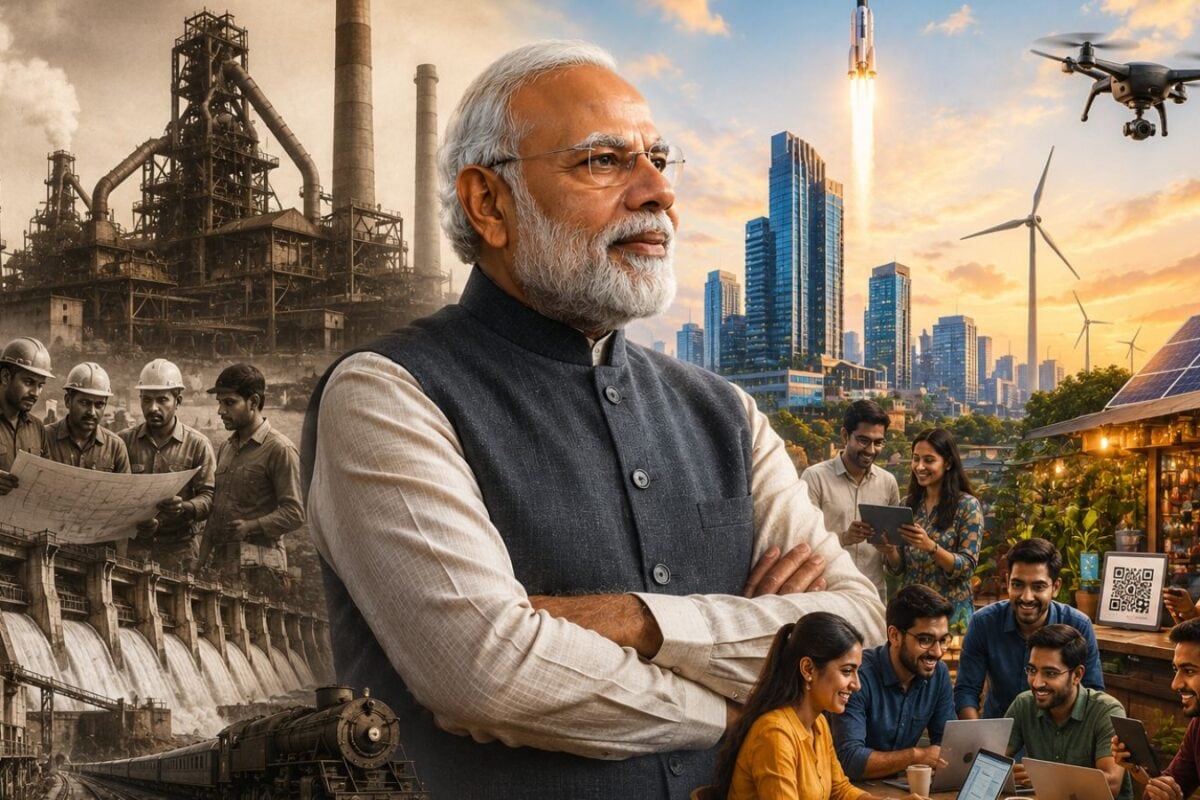
PM Modi’s challenge was no longer creating an industrial base from scratch but accelerating growth, creating jobs, and making India globally competitive

THREE parallel events now underway or recently held carry the potential in varying measure to reset India’s destiny, in all likelihood for the better. From a bird’s eye view, the field looks set for a change. The fact that Germany lost the election for the first time in 40 years for a non-permanent member’s seat at the UN Security Council offers stark lessons for the Modi government to ponder. Germany turned Palestine averse and cosied up to Israel, much like Narendra Modi’s India, with Chancellor Friedrich Merz in the saddle. The UN defeat is being linked to Merz’s embrace of Benjamin Netanyahu. British Prime Minister Keir Starmer’s future is also under a cloud, his ties with the Zionist lobby being a key factor. Ergo: Israel’s chums are being globally isolated. India’s proximity to Israel was nudged by right-wing ideologues to counter Russian prime minister Yevgeny Primakov’s 1998 doctrine to form the Russia-India-China group as a stabilising force in a post-USSR Global South. The Western countermeasures included America’s ‘pivot to the east’, dragging India into the Quad. But when the RIC went on to become BRICS, a ‘West Asian Quad’ was conceived including India, Israel, the UAE and the US. The faint outlines of the outcome of the Iran war are threatening to end India’s entanglement with both Quads. And the German debacle at the UN is the writing on the wall. Potentially, also crucial for the country’s future is the internet-spawned Cockroach Janta Party, which launched its first street protests in New Delhi over the weekend. The party minted into an untested force after a senior judge insulted unemployed youth as cockroaches. The ‘cockroaches’ have given a tart reply to the judiciary, but they’re also demanding the resignation of Modi’s education minister, hitherto an unthinkable prospect. The third albeit widely underplayed event is the fractious INDIA opposition group seeking to get its act together. Twenty-three parties, including Mamata Banerjee’s Trinamool Congress were holding a make-or-break meeting on Monday (June 8) under the Congress party’s stewardship. All three events have the heft to cause tremors in the Modi establishment. Some say the jolt could be more rattling to him than he experienced in 12 years of unbridled power. Questions have surfaced over the Cockroach lot with insinuations that the cluster of motivated urban youth is supported by the Hindutva order to vent the steam gathering from months of a crippling economic crisis, not all of which is linked to the Iran war. There is also the issue of an overtly corrupt administration keeling over with criminal incompetence amid lacerating acts of omission and commission. Hundreds of thousands of school-leaving students and admission-seeking medical college aspirants have been grievously harmed by leaked papers and erring tabulation mechanisms. The Cockroach party has sought probity in judiciary, education and the nexus between business and the media, but its critics have sought to portray the group as left oriented with some of them belonging to this or that communist party. Another suggestion is that they are an extension of the Aam Aadmi Party, a ploy to shift the focus from the improving chances of opposition unity. It’s a fact that AAP came out of the India Against Corruption campaign of 2011 in which the RSS played a backroom role to successfully undermine the Manmohan Singh government. There’s no need to spread fear of those such as the Cockroach party before they do something wrong. While the AAP’s birth pangs indeed created the grounds for the coronation of Narendra Modi as prime minister in May 2014, it is equally a fact that AAP was applauded the following year as the sheet anchor that stalled the BJP juggernaut in Delhi. Before this, the Modi wave had easily evicted Congress governments in Maharashtra and Haryana polls. And there was no AAP in Maharashtra to blame the defeat on, although in Haryana it did cut some votes. The AAP subsequently propagated a soft temple-hopping Hindutva, in which Arvind Kejriwal scrupulously avoided standing with Muslims when they were under attack from the BJP and the police in 2020. But if he or the Cockroach group can yet consciously or unwittingly help stall the rightward, obscurantist drift the Modi government has set India on, it would make Deng Xiaoping’s spirit burst into a smile. “It doesn’t matter whether a cat is white or black, as long as it catches mice.” Deng’s dictum applies to anybody who would rescue India from its current trauma. And there’s no need to spread fear of those such as the Cockroach party before they do something wrong. But let’s not get too swayed also by the shouts of youth power or the roar of something called Gen Z. As far as one could see, it was the youth that demolished the Babri Masjid with their raw sinews. It’s the youth that goes about lynching and harassing innocent citizens in the name of religion. Of course, on the other side, it’s the youth that’s languishing in Modi’s prisons, if they are not out on strictly monitored bail terms, for fighting for a just and equal society in a democratic system that doesn’t discriminate between citizens. Think Umar Khalid. There’s a youth component in almost every political party. The mighty US is split between youthful Zionists and their youthful adversaries. When I looked up Gen Z on a search engine, an option pointed to Gen Ziaul Haq! I think the idea of Gen Z or Gen Alpha etc is conjured to obscure the reality of universal class struggle, and in India’s of its defining caste identity. A few donning cockroach masks at the Delhi rally were seen carrying portraits of Bhimrao Ambedkar thereby putting Dalit politics at the centre. But again, hasn’t everyone used Ambedkar’s portraits to lure support? Finally, while Deng’s point is priceless, a useful caution in T.S. Elliott’s line says: “Youth is cruel and has no remorse. It smiles at situations which it cannot see.” A fair point to ponder. The writer is Dawn’s correspondent in Delhi. jawednaqvi@gmail.com Published in Dawn, June 9th, 2026
The feature, which has grossed $225.5 million globally, landed at Focus after a bidding war out of the Toronto Film Festival.
Mumbai: Grasim Industries has approved a plan to spend ₹3,094 crore on the second phase of its Lyocell plant at Harihar in Karnataka.The first phase of this plant will have a capacity of 55,000 tonnes each year, while the second will add another 110,000 tonnes capacity.The under-construction first phase is set to be commissioned by mid-2027. The second phase will have two lines, with the first line set to be commissioned in 2028 and the second in 2030. "This investment...marks another significant step in Grasim's strategic expansion of advanced fibre capabilities, catering to the growing global demand for sustainable and high-performance textile materials," Kumar Mangalam Birla, the chairman of the Aditya Birla Group, said."This fresh expansion will catapult Grasim's overall Cellulosic Fibres capacity beyond 1 million tonnes per annum, reinforcing its position as a global leader in sustainable man-made Cellulosic Fibres."Lyocell, a semi-synthetic fibre, is used across apparel, home textiles and technical textile applications. Grasim already produces Lyocell at one of its plants in Gujarat. The completion of both the phases at its plant in Harihar in Karnataka will make it one of the largest producers of Lyocell globally, with a capacity of 210,000 tonnes per annum.
Pope Leo XIV on Monday condemned sexual abusers holding positions of authority in the Catholic Church, expressing support for reparation for victims. The Catholic Church has for decades faced investigations concluding it systematically turned a blind eye to thousands of child sex predators operating globally as priests and in other capacities within the Vatican’s network. […]
New Delhi, The government has reduced the number of subsidised cooking gas cylinders available annually to beneficiaries of its flagship Ujjwala scheme to four, aligning support with average household consumption levels, a senior government official said on Monday.Under the Pradhan Mantri Ujjwala Yojana (PMUY), launched in May 2016 to provide deposit-free LPG connections to adult women from poor households, beneficiaries were initially entitled to 12 subsidised 14.2-kg cylinders a year. The subsidised quota was reduced to nine cylinders last year and has now been cut further to four.At a news briefing, Praveen Mal Khanooja, Additional Secretary in the Ministry of Petroleum & Natural Gas, said the revised entitlement broadly matches the average annual consumption of Ujjwala beneficiaries.To encourage the use of cleaner cooking fuel and improve affordability, the government introduced a targeted subsidy of Rs 200 per 14.2-kg LPG cylinder in May 2022, credited directly to beneficiaries' bank accounts after every refill is purchased for up to 12 cylinders annually. In October 2023, the subsidy was increased to Rs 300 per 14.2-kg cylinder, with a proportionate benefit extended to 5-kg cylinders.The latest reduction in the subsidised quota follows increases in LPG prices. The price of a 14.2-kg cylinder in Delhi has risen by a cumulative Rs 89 over two hikes in the past three months, the latest on June 7, taking the retail price to Rs 942. After accounting for the Rs 300 subsidy, PMUY beneficiaries pay Rs 642 for a 14.2-kg cylinder.He said the revised entitlement broadly reflects the average annual consumption among PMUY households. Beneficiaries effectively receive support of about Rs 1,000 per cylinder when compared to the government's estimated supply cost of around Rs 1,600 per cylinder.Cooking gas LPG prices were raised on June 7 by Rs 29 per cylinder."The increase comes to Re 1 per day," he said, adding that for a family of five, the increase comes to 20 paisa per day.Indian households continue to pay among the lowest prices for cooking gas globally despite a sharp rise in international LPG prices triggered by disruptions in West Asia, he added.Khanooja said the cost of supplying a domestic LPG cylinder has risen to more than Rs 1,600, following a surge in international prices that followed the outbreak of war in West Asia at the end of February.India's LPG import costs are linked to the Saudi Contract Price (CP), the global benchmark for the fuel. The benchmark has risen about 46 per cent since February after disruptions linked to the Strait of Hormuz tightened supplies from the Gulf region.The government, he said, has provided Rs 52,000 crore in subsidy since 2022.Despite the price hike, oil companies continue to lose about Rs 700 per 14.2-kg cylinder, he noted.Besides LPG, the oil companies are also losing on selling petrol and diesel at rates below cost. On petrol, the under-recovery was Rs 6 a litre, and that of diesel was about Rs 30 per litre."Cumulatively, the oil companies are losing Rs 600-700 crore," he said, giving reasons for the price hikes.Apart from LPG, the oil companies have also raised petrol and diesel prices by about Rs 7.50 a litre each in four instalments last month. CNG rates too have been hiked by Rs 6 per kg.
“Backrooms” is officially A24’s highest-grossing worldwide release, as well as the studio’s first movie to surpass $200 million in ticket sales. The breakout horror hit, directed by YouTuber Kane Parsons, has generated $212 million globally including $135 million in North America. Those returns have surpassed the lifetime haul of Timothee Chalamet’s “Marty Supreme” ($191 million), which previously […]
[SAnews.gov.za] South African vaccinologist and public health leader Professor Shabir A. Madhi has been recognised with one of the world's leading infectious disease honours, underscoring his decades-long contribution to vaccine research that has helped save countless lives globally.
Everything you need to know before you reach the office this morning.
Anthropic got the ball rolling on thinking about a pause on AI-builds-AI. I clarify the ins and outs. An AI Insider analysis and scoop.
Housing affordability has plunged globally, hitting young people and vulnerable groups hardest. Soaring property prices and rising rents outpace incomes, with India's major cities facing a severe crunch. Experts cite urbanization and supply shortages. Governments must integrate housing with other strategies and boost construction to address this growing crisis.
Sungrow, the globally leading PV inverter and energy storage system provider, unveiled its next-generation ...
For the BJP, the gap between Nehru's two foreign honours and PM Modi's 30 serves as a visible marker of what it describes as a more assertive and globally respected India
Shares of Tata Steel fell 2% to Rs 202 on the BSE on Monday amid reports that it may have to push back the commissioning timeline of its 1.25-billion-pound low-carbon steel project in the UK by six to eight months due to delays in obtaining access to the required electricity infrastructure.The company is building a 3.2 million-tonne electric arc furnace (EAF) at Port Talbot as part of its decarbonisation strategy. The project, which involves an investment of 1.25 billion pounds, is intended to replace the site's blast furnace operations of similar capacity that have now been shut down.Before the latest setback, Tata Steel had been targeting the start of operations by late 2027 or early 2028. However, delays linked to the power connection process have created uncertainty around that timeline, a news report by PTI stated. Koushik Chatterjee, Executive Director and Chief Financial Officer of Tata Steel, said the company has been working with the Electricity System Operator (ESO) and National Grid on the new electrical infrastructure. However, National Grid has formally informed Tata Steel that its connectivity project is running behind schedule.According to Chatterjee, National Grid has flagged potential delays compared with the originally planned date for the high-voltage power connection. He said Tata Steel is engaging with all stakeholders, including the UK government, to minimise the impact and establish revised timelines, the report added. The company said major demolition work at the Port Talbot site has already been completed, while fabrication and delivery of equipment continue to progress. Access to higher-capacity electricity remains a critical requirement for the transition to electric arc furnace-based steelmaking.The project has secured 500 million pounds of support from the UK government and is expected to cut site-level carbon dioxide emissions by 90%, equivalent to around 5 million tonnes annually. Separately, the Port Talbot project site witnessed a fire incident on June 3. Tata Steel UK said on Thursday that all personnel were safely evacuated and accounted for, with no injuries reported. Chatterjee said Tata Steel is continuing discussions with National Grid and the UK government to address the issue and explore ways to reduce the delay."We are working with the UK government, the National Grid and ESO, which is the electricity supplier, to see if we can mitigate it, but somewhere between six months to eight months will certainly be there, maybe higher, after we have built the plant," he said while responding to a question on potential delays in commissioning the facility.He added that the company is evaluating options to shorten the delay but acknowledged that some slippage in timelines now appears unavoidable. "We are actively working to see if we can reduce it further, but there will be some imminent delays," Chatterjee said, without providing additional details.In May 2024, Tata Steel signed a connection offer agreement with the Electricity System Operator. Under the arrangement, National Grid is responsible for building the electrical infrastructure required to power the 3.2 million-tonne electric arc furnace by the end of 2027.According to information shared by Tata Steel, the National Energy System Operator (NESO) is a public body that oversees the connection process, including the connection contract with Tata Steel UK, and manages electricity grid operations across the UK.National Grid Electricity Transmission (NGET), meanwhile, is the private company responsible for constructing, owning and maintaining the connection infrastructure.Tata Steel Group is among the world's leading steelmakers, with an annual crude steel production capacity of 35 million tonnes. The company also ranks among the most geographically diversified steel producers globally.(Disclaimer: Recommendations, suggestions, views and opinions given by the experts are their own. These do not represent the views of The Economic Times)
Pakistan’s external trade balance continues to widen beyond normal cyclical swings, pointing instead to deeper structural constraints that have accumulated over decades. Despite periodic policy interventions and short-term stabilisation efforts, the underlying pattern remains unchanged: import growth consistently outpaces export earnings, leaving the economy dependent on external inflows to bridge a persistent gap. During the first 11 months of the current fiscal year, the trade deficit widened by 17.48 per cent year-on-year to $34.76 billion from $29.58bn in the corresponding period of the previous fiscal year. Export earnings declined by 5.61pc to $27.91bn, while imports rose 5.94pc to $62.66bn. Earlier, in the entire last fiscal year, the trade deficit widened by 9pc to $26.3bn from $24.1bn a year ago. Although exports rose 4.7pc to $32.1bn, imports increased even faster by 6.6pc to $58.4bn, demonstrating a persistent pattern in which import growth outpaces export earnings. Energy remains perhaps the single largest reason Pakistan struggles to achieve a trade surplus. The country imports large quantities of crude oil, petroleum products, LNG, coal, and industrial fuels. During the first 11 months of FY26, petroleum imports exceeded 14m metric tonnes, up 7pc in volume from a year earlier. Our external trade imbalance is rooted in the very structure of the economy, which relies excessively on borrowing and remittances and fails to address structural issues More importantly, the import bill surged 13.7pc to a record $14.9bn. Even though exports fell by 5.6pc during the same period, a substantial share of foreign exchange earnings continued to be absorbed by energy purchases, deepening the trade deficit. Economic growth itself often widens the imbalance because rising industrial activity increases demand for imported energy. Our manufacturing sector also relies heavily on imported machinery, chemicals, raw materials, and intermediate goods. The textile industry, despite being the country’s export backbone, depends on imported machinery, dyes, chemicals, and specialised fibres. In FY25, textile machinery imports increased by 61.5pc to $241.2m, while power-generation equipment imports rose 47.8pc to $616.2m. The pharmaceutical, engineering, automobile, and technology industries exhibit similar dependence on imported components. As a result, producing exports frequently requires substantial imports first, limiting net foreign-exchange gains. A second structural challenge is Pakistan’s narrow export base. Textiles and textile-related products continue to dominate exports. In FY25, textile exports reached $17.89bn, up 7.39pc from the previous year. And, during the first 10 months of FY26, textile exports totalled $15.03bn, a modest 1.3pc increase from $14.83bn a year earlier. Textiles accounted for approximately 59.6pc of Pakistan’s $25.21bn total merchandise exports during this period. While the sector remains a major source of foreign exchange, excessive dependence on a single industry leaves Pakistan vulnerable to fluctuations in global demand, competition, and commodity prices. Countries such as South Korea and China reduced external vulnerabilities by diversifying into electronics, machinery, advanced manufacturing, and technology-intensive exports. Pakistan has yet to make a similar transition. The technological content of Pakistan’s exports also remains relatively low. Globally, the highest export revenues are generated by sectors such as semiconductors, industrial equipment, aerospace components, medical devices, and software-intensive products. Pakistan’s presence in these industries remains limited. The IT and IT-enabled services sector has shown encouraging growth. Exports reached a record $3.8bn in FY25, up 18pc. During the first 10 months of FY26, IT exports rose to approximately $3.3bn, a 12pc increase from $2.95bn a year earlier. However, the sector still represents only around 11–12pc of total merchandise and services exports. Even with sustained double-digit growth, Pakistan remains far behind more diversified export economies in high-value technology sectors. Demographics add another layer of pressure. Pakistan’s annual population growth rate of 2.55pc continues to increase demand for fuel, machinery, vehicles, medicines, electronics, and consumer goods. Unless export capacity expands at a similar pace, import demand naturally grows faster than export earnings, placing persistent pressure on the trade balance. Consumer and business preferences further reinforce import dependence. Imported products often enjoy a reputation for superior quality, particularly in electronics, automobiles, industrial equipment, and luxury goods. During the first nine months of FY26, imports of fully built-up motor vehicles rose 31pc to $263 million. Pakistani exporters also face longstanding obstacles, including high energy costs, infrastructure deficiencies, logistics inefficiencies, regulatory complexity, limited research and development spending, and shortages of skilled labour. According to the Global Talent Competitiveness Index 2025, Pakistan ranked 124th, down from 109th in 2023 and below India, Bangladesh, and Sri Lanka. Moreover, the cost of doing business is estimated to be roughly 34pc higher than in many regional competitors, reducing export competitiveness. Global competition is simultaneously becoming more intense. Countries such as Vietnam, Bangladesh, India, Indonesia, and Mexico continue to attract investment in export-oriented manufacturing through stronger infrastructure, larger industrial ecosystems, and more integrated supply chains. As the hybrid government prepares the FY27 budget, the challenge is not merely to narrow the trade deficit in the short term but to address the structural weaknesses that produce it year after year. A durable improvement requires reducing dependence on imported energy, expanding domestic industrial capacity, diversifying exports, improving productivity, and strengthening Pakistan’s competitiveness in global markets. Published in Dawn, The Business and Finance Weekly, June 8th, 2026