Free Malaysia Today
보수 성향
정치
긍정적Rival Palestinian factions discuss Gaza disarmament
Participants in the Cairo talks voiced hope that the proposal would end a months-long impasse in negotiations over Gaza’s future.
"FACTIONS" · 총 41건
필터 보기현재 지수
49.5
0 = 부정 우세
50 = 중립
100 = 긍정 우세
최근 7일 기준 88,382건을 분석한 결과, 뉴스 심리지수는 49.5(균형)입니다. 긍정 10,752건(12.2%)·중립 64,026건(72.4%)·부정 13,604건(15.4%)이며, 중립 비중이 뚜렷하게 높습니다. 성향 지수는 종합 19.6(중도 균형)입니다.
Participants in the Cairo talks voiced hope that the proposal would end a months-long impasse in negotiations over Gaza’s future.
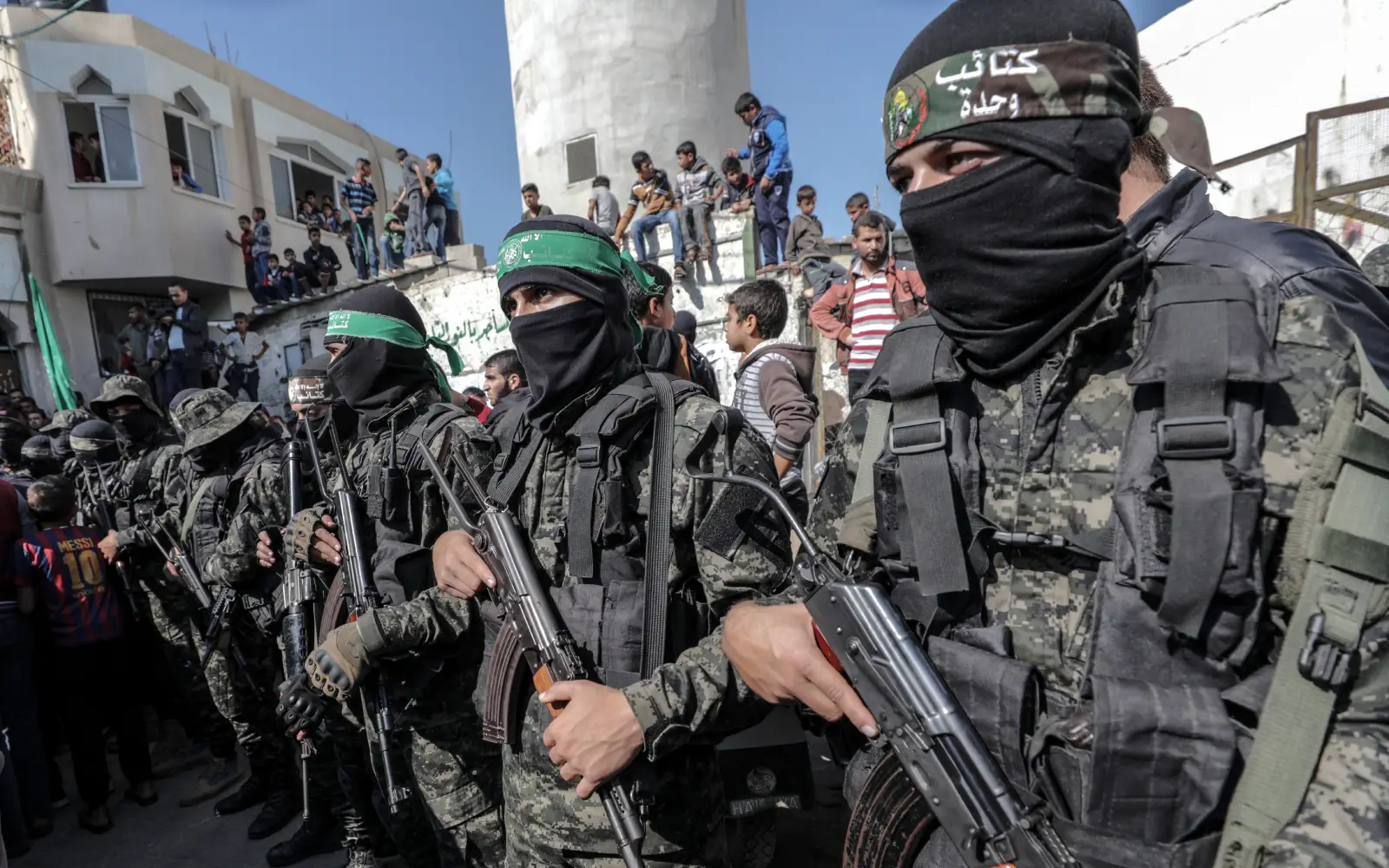
CAIRO: Talks on advancing the fragile Gaza ceasefire have begun in Cairo between mediators and Palestinian factions, a Palestinian source familiar with the meeting told AFP. The discussions, which started on Sunday and continued on Monday, come as violence continues to plague the territory despite the truce in place since October. The talks bring together mediators Egypt, Qatar and Turkiye, along with representatives of several Palestinian factions, as efforts continue to push forward negotiations on the second phase of the ceasefire agreement between Israel and Hamas. According to the source, mediators were due to meet a Hamas delegation on Monday, followed by a wider meeting including all participating factions. Efforts continue to push negotiations on second phase of ceasefire agreement Egypt’s state-linked Al-Qahera News channel said Sunday’s talks focused on “the proposed roadmap for completing the implementation of the agreement”. “It was held in a positive atmosphere,” the channel reported, adding that there was agreement on the need to continue implementing US President Donald Trump’s plan. The talks come amid rising regional tensions, after Israel and Iran traded fire on Monday, in a serious test of another fragile truce and a potential threat to hopes for a deal to end the wider Middle East war. Despite the Gaza truce technically in effect since October, daily violence has rocked the territory, over half of which is under Israeli military control in defiance of the ceasefire’s terms. Israel has killed at least 936 people since the ceasefire began, according to Gaza’s health ministry, whose figures are considered reliable by the UN. Both Hamas and Israel accuse each other of violating the truce. The first phase of the ceasefire involved the release of the last Israeli prisoners held by Hamas in exchange for Palestinians detained by Israel. A transition to the second phase, which was supposed to involve Hamas’s disarmament and a gradual withdrawal of the Israeli military, has been stalled for months. The question of Gaza’s post-war governance also remains one of the main sticking points in negotiations on implementing the provisions of phase two. Published in Dawn, June 9th, 2026
The talks bring together mediators Egypt, Qatar and Turkey, along with representatives of several Palestinian factions.
All the big hitters – on the leave side, anyway – are rolled out for Brexit: A Very British Civil War. Plus: the return of scouse comedy G’Wed. Here’s what to watch this evening 9pm, BBC Two What a decade it’s been. As the nation prepares to link hands and joyfully celebrate the 10th anniversary of the decision to leave the EU, this two-part documentary recaps the febrile weeks and months around that choice. History, it is said, is written by the winners. And so it proves here: disappointingly, this story is told overwhelmingly from the perspective of the factions making up the leave campaign, as Michael Gove, Kate Hoey, Nigel Farage, Arron Banks and Boris Johnson offer their thoughts. Meanwhile, in the remain corner, it’s basically David Cameron, George Osborne and, muttering sadly to himself, Jeremy Corbyn. Fascinating and horrifying. Phil Harrison Continue reading...
• Steps up attacks against police headquarters and personnel • Hamas says ending Israeli military operations is essential for progress in negotiations CAIRO: Israeli strikes on a Hamas-run police station and a vehicle in the Gaza Strip killed at least nine people and wounded 20 others, health officials said, as mediators began new efforts to salvage a fragile US-brokered ceasefire deal. One strike hit a police post adjacent to a large tent encampment of displaced families in Khan Yunis in the south of the enclave, killing five people and wounding 16 others, medics said. They did not say how many of the casualties were police. Israel has stepped up attacks against police headquarters and personnel in the past several months, killing dozens of them, according to Hamas security officials. Later on Sunday, another Israeli airstrike killed four people and wounded four others when it hit a vehicle driving through the middle of Gaza City, medics said. The Israeli military did not immediately comment on the incidents. Major fighting has been paused since October under a ceasefire after two years of war, but no agreement has been reached to implement a further US-backed plan for Israeli troops to withdraw, Hamas to disarm and Gaza to be rebuilt. Israeli troops still control more than half of Gaza’s territory, where they have ordered residents out and destroyed remaining buildings. Nearly the entire population of 2 million now lives in a tiny strip of land along the coast, mainly in makeshift tents or damaged buildings, under Hamas control. Hamas’ nearly 10,000 police officers have emerged as a sticking point in talks to advance Trump’s plan for Gaza. Hamas wants them included in a new police force; Israel rejects a role for any Hamas-affiliated personnel. Egypt began hosting a new round of truce talks with leaders from Hamas and other Palestinian factions, sources from Hamas and other sources close to the negotiations said. The talks are expected to last for a few days. Israel and Hamas have repeatedly accused each other of violating the truce. Israeli strikes in Gaza have killed more than 950 Palestinians since the start of the truce, while Palestinian attacks have killed four Israeli soldiers. Last year’s deal established a Board of Peace led by Trump to oversee a phased ceasefire and was ratified by the United Nations Security Council. Hamas told envoys from the Board and mediators Egypt, Qatar and Turkiye that ending Israeli attacks in Gaza was essential for any progress, sources from the group and officials close to the talks said. Hazem Qassem, a Hamas spokesperson in Gaza, said on Sunday the group was open to ideas that would lead to ending Israeli attacks in Gaza and reaching common ground over issues of the second phase of the Trump plan. But he said the Board of Peace should stop being “biased” towards Israel. Published in Dawn, June 8th, 2026
According to the Egypt-based Al-Qahira Al-Ekhbariya television channels sources, the consultations involve negotiators from Egypt, Qatar, and Turkey, as well as representatives from "all of the Palestinian movements"
A member of the House prosecution team on Saturday said the leadership struggle rocking the Senate was an “extraneous matter” that would not have an impact on their evidence to convict Vice President Sara Duterte in her imminent impeachment trial. The fight for Senate control between two factions—one of which is seen as pro-Duterte—provides the
Since the ruling became public, both factions have offered differing interpretations of the ruling. The post Wike-backed PDP asks NBA to sanction lawyers over Appeal Court ruling on leadership dispute appeared first on Premium Times Nigeria.
Donald Trump is facing widening opposition within his own party as Republican lawmakers in Congress, long reluctant to defy him, are showing a greater willingness to break ranks with the US president. Just over the past week, multiple factions of Republicans in the Senate and House of Representatives have stepped forward to rebuke his war against Iran, reject $1 billion in funding tied to his White House ballroom, force a retreat on his $1.8 billion "anti-weaponization" fund and block his legi
Multiple Republican factions have stepped forward to rebuke his war against Iran, his White House ballroom and his $1.8 billion "anti-weaponization" fund.
CAIRO, June 6 - An Israeli strike killed at least seven Palestinians including two women in Gaza on Saturday, health officials said, as mediators restarted talks in Cairo with Hamas and other factions over safeguarding a strained ceasefire agreement.
With rival factions vying for control, here's a timeline of the Senate standoff since the May 11 leadership coup
When political factions fracture, control over this single office can determine which group achieves formal legitimacy and who is relegated to political obscurity
Heavy gunfire rocked Somalia's capital overnight, with smoke rising over the city and armed forces deployed on the streets on Thursday, AFP journalists reported, after clashes erupted between rival political factions ahead of planned protests. President Hassan Sheikh Mohamud plunged Somalia into a fresh political crisis in mid-May after announcing a one-year extension of his term, which had been due to expire on May 15.
Residents flee from their homes due to fighting between two warring political factions.
The impasse in the Senate is a reflection of a great divide in Philippine politics between factions aligned with either the Marcoses or the Dutertes, clans once tied by a fragile 2022 coalition
For over two decades, Pakistan has been locked in a war, not of its choosing but one that it cannot escape. Long after the withdrawal of Western forces from Afghanistan in August 2021, Pakistan continues to absorb the strategic shockwaves of a conflict whose centre of gravity may have shifted, but not disappeared. The return of the Taliban to power in Kabul has transformed the security landscape of South and Central Asia, with Pakistan bearing the most immediate and severe consequences. This is not merely a bilateral problem between neighbours. It is a global security challenge with implications stretching from West Asia to Europe, amid growing international concern over Afghanistan becoming a renewed militant hub. Pakistan’s role in the post-9/11 international order was clear and costly. As a frontline partner of the United States and Nato, Pakistan provided intelligence cooperation, logistics, and sustained military operations against Al Qaeda and affiliated networks. It was later designated a Major Non-Nato Ally, reflecting its centrality to global counterterrorism efforts. Yet, while international forces eventually exited Afghanistan, Pakistan’s war did not end. Instead, it evolved into a long war of attrition aimed at preventing the spillover of militancy from Afghan territory into the region and beyond. The cost Pakistan has paid is extraordinary. Over the past two decades, approximately 100,000 Pakistanis have lost their lives to terrorism, including civilians, security personnel, and children, most tragically symbolised by the massacre at the Army Public School in Peshawar. The site of a truck bomb attack on the Marriott hotel in Islamabad on September 20, 2008. — Reuters/File The economic toll exceeds $150 billion, encompassing destroyed infrastructure, lost investment, and enduring reputational damage. These figures are not abstractions; they represent one of the highest sacrifices borne by any country in the global war on terror. Over the years, Pakistan has pursued a sustained counterterrorism strategy. It dismantled major terrorist sanctuaries through sequential operations, strengthened its legal framework via the Anti-Terrorism Act and National Action Plan, operationalised dedicated counterterrorism institutions, and imposed financial controls to disrupt terrorist funding. By the late 2010s, violence had dropped sharply, and Pakistan had rebuilt a measure of internal security through institutional resilience rather than episodic force. That progress has been severely undermined by the Taliban’s return to power. Despite commitments under the 2020 Doha framework to prevent Afghan soil from being used against other states, militancy accelerated after the release of thousands of prisoners and the collapse of the Afghan republic. Today, Afghanistan has once again become a permissive environment for transnational jihadist groups, as documented by the United Nations Monitoring teams, contradicting the Doha pledge that Afghan soil would not be used to threaten the security of the United States and its allies. What makes the current situation uniquely dangerous is that the Taliban are no longer an insurgent movement operating from the shadows; they control an entire state. They possess territory, resources, institutions, and an education system that is being systematically redesigned to serve ideological ends. Analysts warn that this form of state capture amounts to long-term societal engineering with consequences that do not remain confined to one country. For Pakistan, the impact is direct and violent. Afghan soil is being used as a launchpad for cross-border terrorism. Pakistani authorities have identified camps, staging areas, and logistics nodes inside Afghanistan operated by the Tehreek-i-Taliban Pakistan (TTP) and other groups. Leaders of the TTP terror outfit operate openly from Afghan cities, enjoying protection and material support. A security personnel stands guard at an imambargah following an explosion, in Islamabad on February 6, 2026. — AFP/File In 2025 alone, Pakistan conducted more than 75,000 intelligence-based operations across the country, dismantling terrorist formations and neutralising militants. A striking proportion of those involved were Afghan nationals, reflecting the depth of Afghan-side involvement in anti-Pakistan terrorism. This has repeatedly surfaced in international reporting as Pakistan confronted a sustained spike in attacks and arrests tied to cross-border militant facilitation. Pakistan’s geographic exposure magnifies the threat. It shares a 2,670-kilometre border — by far the longest of any neighbouring state. The border cuts through rugged terrain and dense kinship networks, which are routinely exploited by militant groups for infiltration, making Pakistan the primary firewall against the westward diffusion of jihadist violence. The notion that Pakistan can be destabilised without broader repercussions is therefore dangerously myopic. Policies that tolerate, enable, or instrumentalise militant proxies against Pakistan may appear tactically convenient to some regional actors, but they undermine collective security. Terrorist ecosystems, once empowered, rarely remain controllable. As global benchmarking shows, Pakistan continues to rank among the states most affected by terrorism, reinforcing the scale of the threat confronting it. Afghanistan’s transformation into a hub for transnational militancy is now acknowledged not only by Pakistan but by Russia, China, Iran, Central Asian states, as well as UN monitoring bodies. The problem is no longer one of competing narratives; it is a documented security reality, as international reporting continues to describe Afghanistan as a post-withdrawal magnet for armed networks. Despite immense pressure, Pakistan has consistently chosen engagement over abandonment. When Kabul fell in 2021, and much of the international community closed its embassies, Pakistan kept its mission open and facilitated evacuations. Defence Minister Khawaja Asif and Afghan Defence Minister Maulvi Sahib Muhammad Yaqub Mujahid shake hands after signing a ceasefire deal between Pakistan and Afghanistan in Doha, Qatar on October 19, 2025. — X/@KhawajaMAsif/File It has advocated for humanitarian support to the Afghan people, called for the unfreezing of Afghan assets to prevent economic collapse, and invested in trade, transit, and border mechanisms to stabilise livelihoods. Pakistan has also hosted millions of Afghan refugees for decades, absorbing a humanitarian burden that few states would tolerate, even though it is not a signatory to the 1951 Refugee Convention. These actions underscore a central truth: Pakistan’s objective is not confrontation with Afghanistan but containment of a threat that endangers the region and the world. Yet engagement without accountability has limits. The Taliban’s failure to take verifiable action against terrorist groups operating from Afghan soil has turned Afghanistan into a net exporter of insecurity. Major reporting has consistently linked Afghanistan’s permissive environment with the rising tempo of attacks in Pakistan. Allowing this trajectory to continue unchecked risks recreating the pre-9/11 environment — this time with more sophisticated networks, advanced weaponry left behind after the Western withdrawal, and digital tools that accelerate recruitment and radicalisation. Evidence of ideological-military institutionalisation is increasingly visible, including reports of new militant training camps in Afghanistan linked to Taliban factions and allied groups. For major powers, the strategic implications are clear. Supporting Pakistan in its efforts to eradicate cross-border terrorism is not a favour; it is a strategic necessity that requires intelligence cooperation, diplomatic backing, and coordinated international pressure on the Taliban to honour their commitments, dismantle terrorist sanctuaries, and end cross-border militancy. The alternative strategic neglect or proxy-driven destabilisation would be far costlier. Pakistan’s war on terror has never been only Pakistan’s war. It has been fought, often quietly and at enormous human cost, on behalf of a global order that depends on preventing ungoverned or ideologically weaponised spaces from becoming incubators of transnational violence. Pakistan’s 2025 operational tempo and threat environment have been extensively documented in international reporting tracking the resurgence of militant violence. If the international community fails to recognise this reality, it risks learning once again, perhaps too late, that terrorism ignored at its source rarely stays there. The warning is no longer theoretical: international reports increasingly describe Afghanistan’s post-2021 environment as a convergence space for armed networks with regional reach, reinforcing the urgency of collective action against the renewed Afghanistan-based militant threat. The views expressed in this article are those of the author and do not necessarily reflect the views of Dawn.
Four Republicans from different ideological factions crossed party lines to vote with Democrats in favor of reining in the president’s power to wage war unilaterally.
On June 2, 2014, Abbas forged a Hamas-Fatah unity government, sparking legal debates and political upheaval. The PA president dissolved the short-lived body in June 2015.