EL PAÍS (español)
중도 성향
기타
Emirates se queda en la camiseta del Real Madrid hasta 2031
La aerolínea amplía su patrocinio cinco años, incluyendo el equipo de baloncesto

"EMIRATES" · 총 73건
필터 보기현재 지수
49.5
0 = 부정 우세
50 = 중립
100 = 긍정 우세
최근 7일 기준 75,845건을 분석한 결과, 뉴스 심리지수는 49.5(균형)입니다. 긍정 9,229건(12.2%)·중립 54,857건(72.3%)·부정 11,759건(15.5%)이며, 중립 비중이 뚜렷하게 높습니다. 성향 지수는 종합 20.2(보수 경향)입니다.
La aerolínea amplía su patrocinio cinco años, incluyendo el equipo de baloncesto
Inmitten des andauernden Konflikts am Golf versucht Emirates das Comeback. Airline-Chef Tim Clark investiert Milliarden in die Kabinenmodernisierung und attackiert den deutschen Konkurrenten ungewohnt offen. Ausgerechnet Bundeskanzler Friedrich Merz soll ihm nun helfen.

Clark said the airline could not drop ticket prices for now to attract travellers back to its key hub in Dubai
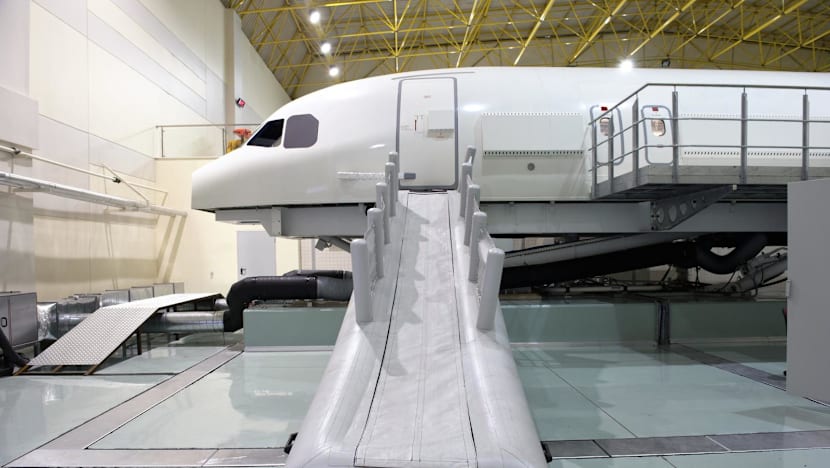
A survey commissioned by IATA of recent air travellers in Singapore, the United States, the United Kingdom and the United Arab Emirates found "critical gaps" in safety knowledge.
DUBAI, United Arab Emirates (AP) — A U.S. Army helicopter crashed near the Strait of Hormuz, and President Donald Trump said the two crew members aboard were not injured in the incident near the strategic waterway that Iran has effectively closed during the war. What caused the crash remained unclear Tuesday morning in the Middle […]
아이큐어는 아랍에미리트(UAE)의 트랜스 아라비아(Trans Arabia)와 계약한 소염진통제 플루르비프로펜 플라스타 '플렉센(FLEXEN) 40mg'이 아랍에미리트(UAE) 의약품청 (Emirates Drug Establishment)으로부터 품목허가를 획득했다고 9일 밝혔다. 아이큐어는 2024년 7월 현지 업체와 해당 공급계약을 체결한 바 있다. 당시 플루르비프로펜 플라스타 및 국소마취제 리도카인 카타플라스마 제품을 최소구매수량(MOQ) 기준으로 5년간 총 약 88만 달러(약 13억원) 공급하기로 했다. 거래 상대방인 트랜스 아라비아는 UAE 두바이에 본사를 둔 의약품 유통업체로 UAE를 비롯한 중동 7개국의 병원, 의원, 약국 등에 제품을 공급하고 있다....
Yemen’s Houthis said on Monday that they would ban ships linked to Israel from the Red Sea after Israel renewed its military attacks on Iran, adding to concerns about global shipping and energy flows. This is why it matters and what it means for the Iran war and the global energy crisis: How big is the risk to global energy markets? Iran’s closure of the Strait of Hormuz since Israel and the United States attacked it on February 28 has disrupted most oil and other energy exports from the Gulf, raising prices and causing a major energy shock. Saudi Arabia has responded by diverting more than 70 per cent of its normal daily crude exports to the Red Sea port of Yanbu. That has been a lifeline for the energy market, helping to keep down global oil prices. Any sustained Houthi disruption to Red Sea shipping, including potential attacks on shipping or ports, could be a big problem. When the Houthis launched attacks on Red Sea shipping in November 2023, Gulf oil exports were flowing freely, meaning cargoes were diverted to avoid the Red Sea, but not halted. This time, they are being loaded there. A Houthi source told Reuters that preventing Israeli ships from transiting the Red Sea was “a first step” but that if escalation continued, the group would stop any ships heading to Israel as well as other measures. When the group attacked shipping during the Gaza war, its stated target of Israel-linked vessels included any vessel belonging to any company that used Israeli ports and its attacks on those ships dissuaded most companies from using the route. Who are the Houthis? The Houthis emerged as a military, political and religious movement in north Yemen in the 1990s, fighting guerrilla wars against the government in Sanaa. After the 2011 Arab Spring, they strengthened ties with Iran and seized on instability to capture the capital in 2014, derailing a Gulf-backed political transition plan. As Yemen’s civil war ground to a stalemate, the Houthis attacked oil installations and other infrastructure in Saudi Arabia and the United Arab Emirates with missiles and drones. However, a 2022 truce between Yemen’s warring sides has largely held. Iran champions the Houthis as part of its regional “Axis of Resistance”, which includes Lebanon’s Hezbollah and Iraqi groups, though its ties with the Yemeni movement are less clear than with those other groups. The Houthis do not recognise Iran’s supreme leader as their ultimate religious authority in the same way Hezbollah and the Iraqi groups do. Its motivations are mainly domestic, though it is ideologically aligned with Iran. The US claims Iran has armed, funded and trained the Houthis with help from Hezbollah. The Houthis deny being an Iranian proxy and say they develop their own weapons. What happened when the Houthis attacked Red Sea ships before? After the Oct 7, 2023 Hamas attack on Israel, and Israel’s devastating campaign in Gaza, the Houthis began firing at Israel and on international shipping in the Red Sea, saying they were doing so in support of Palestinians. The Houthi attacks in the Red Sea severely disrupted global shipping, prompting Maersk, Hapag-Lloyd and other major companies to divert around Africa — a far longer, more expensive route. A US-led mission to restore free navigation in the Red Sea involved repeated strikes on Houthi targets and a campaign that shot down hundreds of drones and missiles. But some Houthi attacks continued until last summer, only ending completely with the Gaza ceasefire in October. What have they done during the latest Iran war? While Hezbollah and the Iraqi groups joined the war early with rocket and drone fire after the first US and Israeli strikes on Iran, the Houthis have been comparatively quiet. The group’s leader Abdul Malik al-Houthi said on March 5: “Our fingers are on the trigger at any moment should developments warrant it”. Iranian military commanders have repeatedly warned the Houthis could join the war, with Revolutionary Guards Quds Force commander Esmaeil Qaani saying on June 1 they could choke off the Red Sea. But before this week, the group’s only involvement was a few missile and drone attacks on Israel in late March and early April. Why the Houthis have been relatively quiet so far is not entirely clear. They and Iran may have wanted to use the threat of another major energy route closure to warn Israel and the United States off further escalations. The Houthis may also feel less committed to Iran’s security than do Tehran’s other regional allies. And the group may not want to antagonise its powerful, wealthy neighbour Saudi Arabia and risk reigniting the conflict at home. Header image: Protesters, mainly Houthi supporters, rally to show solidarity with Palestinians in the Gaza Strip, in Sanaa, Yemen on July 5, 2024. — Reuters/File
Former investment star was banned from holding senior manager roles after collapse of popular equity fund The UK financial regulator is taking legal action against the former investment star Neil Woodford for allegedly offering unauthorised investment advice online, months after being banned from the City. The Financial Conduct Authority said it was seeking an injunction against Woodford and W4.0, a United Arab Emirates-registered company, to stop them carrying out “potentially unlawful activities”. Continue reading...
Yemen’s Houthis said on Monday that they would ban ships linked to Israel from the Red Sea after Israel renewed its military attacks on Iran, adding to concerns about global shipping and energy flows. This is why it matters and what it means for the Iran war and the global energy crisis: How big is the risk to global energy markets? Iran’s closure of the Strait of Hormuz since Israel and the United States attacked it on February 28 has disrupted most oil and other energy exports from the Gulf, raising prices and causing a major energy shock. Saudi Arabia has responded by diverting more than 70 per cent of its normal daily crude exports to the Red Sea port of Yanbu. That has been a lifeline for the energy market, helping to keep down global oil prices. Any sustained Houthi disruption to Red Sea shipping, including potential attacks on shipping or ports, could be a big problem. A Houthi source told Reuters that preventing Israeli ships from transiting the Red Sea was “a first step” but that if escalation continued, the group would stop any ships heading to Israel as well as other measures. When the group attacked shipping during the Gaza war, its stated target of Israel-linked vessels included any vessel belonging to any company that used Israeli ports and its attacks on those ships dissuaded most companies from using the route. Who are the Houthis? The Houthis emerged as a military, political and religious movement in north Yemen in the 1990s, fighting guerrilla wars against the government in Sanaa. After the 2011 Arab Spring, they strengthened ties with Iran and seized on instability to capture the capital in 2014, derailing a Gulf-backed political transition plan. As Yemen’s civil war ground to a stalemate, the Houthis attacked oil installations and other infrastructure in Saudi Arabia and the United Arab Emirates with missiles and drones. However, a 2022 truce between Yemen’s warring sides has largely held. Iran champions the Houthis as part of its regional “Axis of Resistance”, which includes Lebanon’s Hezbollah and Iraqi groups, though its ties with the Yemeni movement are less clear than with those other groups. The Houthis do not recognise Iran’s supreme leader as their ultimate religious authority in the same way Hezbollah and the Iraqi groups do. Its motivations are mainly domestic, though it is ideologically aligned with Iran. The US claims Iran has armed, funded and trained the Houthis with help from Hezbollah. The Houthis deny being an Iranian proxy and say they develop their own weapons. What happened when the Houthis attacked Red Sea ships before? After the Oct 7, 2023 Hamas attack on Israel, and Israel’s devastating campaign in Gaza, the Houthis began firing at Israel and on international shipping in the Red Sea, saying they were doing so in support of Palestinians. The Houthi attacks in the Red Sea severely disrupted global shipping, prompting Maersk, Hapag-Lloyd and other major companies to divert around Africa - a far longer, more expensive route. A US-led mission to restore free navigation in the Red Sea involved repeated strikes on Houthi targets and a campaign that shot down hundreds of drones and missiles. But some Houthi attacks continued until last summer, only ending completely with the Gaza ceasefire in October. What have they done during the latest Iran war? While Hezbollah and the Iraqi groups joined the war early with rocket and drone fire after the first US and Israeli strikes on Iran, the Houthis have been comparatively quiet. The group’s leader Abdul Malik al-Houthi said on March 5: “Our fingers are on the trigger at any moment should developments warrant it”. Iranian military commanders have repeatedly warned the Houthis could join the war, with Revolutionary Guards Quds Force commander Esmaeil Qaani saying on June 1 they could choke off the Red Sea. But before this week, the group’s only involvement was a few missile and drone attacks on Israel in late March and early April. Why the Houthis have been relatively quiet so far is not entirely clear. They and Iran may have wanted to use the threat of another major energy route closure to warn Israel and the United States off further escalations. The Houthis may also feel less committed to Iran’s security than do Tehran’s other regional allies. And the group may not want to antagonise its powerful, wealthy neighbour Saudi Arabia and risk reigniting the conflict at home. Header image: Protesters, mainly Houthi supporters, rally to show solidarity with Palestinians in the Gaza Strip, in Sanaa, Yemen on July 5, 2024. — Reuters/File
With missiles once again flying in the Middle East this morning, Sweden's Foreign Minister Maria Malmer Stenergard is visiting Saudi Arabia, Qatar and the United Arab Emirates this week. In a written comment to the news agency TT, she says that she wants to show solidarity with the region, which has been hit hard by the ongoing conflict in the Middle East. The Foreign Minister hopes that the question of how Sweden can contribute to a long-term solution will be discussed.
As part of its decades-old “multi-vector” foreign policy, based on balancing relations between major powers such as China, Russia, the United States and the European Union, Kazakhstan – Central Asia’s largest country – is now actively diversifying its economic and financial policies. While in the past, Astana sought to strengthen cooperation with the United Arab Emirates (UAE), the leading international financial hub in the Middle East, today, Hong Kong seems to be becoming a key partner for...
LONDON (Reuters) -- OPEC+ agreed Sunday a fourth increase in its oil output targets in as many months, even though the US war with Iran is still preventing several of the group's members from pumping more. The war has cut oil flows via the Strait of Hormuz, creating the world's biggest-ever supply crisis as key OPEC+ members including Saudi Arabia have been unable to supply customers in full since the end of February. The crisis for OPEC+ deepened when the United Arab Emirates left the Organiza
DUBAI, United Arab Emirates (AP) — Saudi Arabia sounded missile alert sirens Monday morning in an area home to an air base that hosts U.S. forces. Saudi state media reported the alert around its Al Kharj governorate, home to Prince Sultan Air Base, without elaborating. The alert came after Israel launched strikes targeting Iran. THIS […]
Opec+ agreed on Sunday on a fourth increase in its oil output targets in as many months, even though the US war with Iran is still preventing several of the group’s members from pumping more. The war has cut oil flows via the Strait of Hormuz, creating the world’s biggest-ever supply crisis as key Opec+ members, including Saudi Arabia, have been unable to supply customers in full since the end of February. The crisis for Opec+ deepened when the United Arab Emirates left the Organisation of the Petroleum Exporting Countries (Opec) after almost 60 years. Seven core members of Opec+, which groups Opec and allied producers including Russia, have increased their output quotas from April to June by almost 600,000 barrels per day. Impact of production target increase In reality, the group’s production has collapsed due to export cuts by Gulf members, averaging 33.19 million barrels per day in April compared with 42.77m in February, according to Opec figures. On Sunday, the seven members decided to increase targets by 188,000 bpd from July, Opec said in a statement. This is the same as the June hike, which was adjusted down from monthly increases of 206,000 bpd in May and April to take into account the UAE exit. “An Opec+ production increase means very little while the Strait of Hormuz remains closed,” said Jorge Leon, an analyst at Rystad and a former Opec official. When the Strait of Hormuz reopens, the market could move very quickly from fear of shortage to fear of surplus.” On Friday, oil prices fell to around $93 a barrel as traders gained confidence that renewed conflict between the US and Iran was growing less likely. Prices were close to $72 before the war began. Open+ almost done with unwinding 2023 output cut The seven countries are increasing production as part of the gradual unwinding of a 1.65m bpd production cut that the group, which at the time included UAE, agreed in 2023. From July, the seven have about 567,000 bpd of the original cut to return to the market, taking into account the UAE exit from May 1, according to Reuters calculations. That would mean the rest of the cut will be unwound by the end of September should Opec+ stick to monthly hikes of about 188,000 bpd for August and September. The seven of 21 Opec+ members who met on Sunday are Saudi Arabia, Iraq, Kuwait, Algeria, Kazakhstan, Russia and Oman. In recent years, only the seven plus the UAE — when it was a member — have been involved in the group’s output policy decisions. In a separate meeting on Sunday of all Opec+ members, the ministers made no change to group-wide output policy that is in place until the end of 2026, Opec+ said in another statement. Opec+ is carrying out a review of its members’ oil production capacity to be used as a reference for 2027 production baselines, from which quotas are set. The group on Sunday affirmed the importance of completing the assessment, the statement said.
Emirates and Qatar used to be my go-to airlines for business class. I won't book them again after a smaller rival impressed me for far less.
OPEC+ ministers meet Sunday to weigh higher production quotas in a bid to cap oil prices that have surged since the Iran war effectively choked off Gulf crude shipments.But even if the cartel members vow to ramp up output by thousands of barrels per day, analysts say geopolitical realities mean they probably won't move the needle on prices.Also read: OPEC+ leaders expected to up July oil output target despite Hormuz disruption, sources sayWith the crucial Strait of Hormuz shut since US and Israeli attacks on Iran in late February, oil prices have nearly doubled, igniting inflation pressures worldwide.Ministers from the 21 member states of OPEC+, the main oil producing nations and their allies, are holding their quarterly meeting online.The group is likely to beef up its production quotas by "188,000 barrels a day", said Jorge Leon, analyst at Rystad Energy, similar to recent increases. But in reality, only seven members -- Saudi Arabia, Russia, Iraq, Kuwait, Kazakhstan, Algeria and Oman -- have the capacity to do so.Dwindling supply Tehran's threats of retaliatory attacks to US and Israeli strikes have virtually blocked the vital Strait of Hormuz, through which roughly a fifth of global oil and gas supplies normally pass.That is equivalent to about 20 million barrels a day. But with key Gulf producers shut out of the global market, pledges to raise output in a bid to ease spiralling prices are unlikely to sway traders. "Any announced production increases or changes to output targets will have limited practical value," said Ole Hansen, a commodities analyst at Saxo Bank."There is very little OPEC can do," he told AFP.OPEC+ itself says daily production has plummeted to just 33 million barrels a day as tankers remain stuck, compared to nearly 43 million before the conflict.A US blockade on Iranian ports means "it will be even less than that" in reality, said Homayoun Falakshahi, head of crude oil analysis at data firm Kpler.Also read: Oil prices fall on mounting hopes for de-escalation in US-Iran WarUAE slams the door The United Arab Emirates' recent decision to quit OPEC further saps away at the cartel's influence, given its huge excess production capacity.And Abu Dhabi has made clear it wants to boost output."They don't want to be dictated to, they want to maximise their revenues," said Lawrence Haar, a lecturer in finance at the University of Brighton in England. And the cartel risks seeing other countries follow the UAE's example."If Iraq were to leave, it could mark the end of OPEC+," Falakshahi said.Saudi Arabia, by far the cartel's most influential member, "is going to do what it takes to stop anyone else from leaving," Falakshahi predicted.That could translate into more flexible output quotas or decreased penalties for any excess production.But "for now, the compensation framework has effectively become irrelevant due to widespread production shut-ins," Hansen said.As a result, the Iran war has largely neutralised the cartel's stated mission "to secure an efficient, economic and regular supply of petroleum to consumers, and a steady income to producers". For Falakshahi, the only factor limiting further oil price spikes at the moment is China, "which is buying less oil than normal" by tapping into its vast strategic reserves.
Soaring jet fuel prices driven by conflict in the Middle East are likely to push more airlines into bankruptcy and spur more sector consolidation this year and next, the head of the global airline body said on Saturday. Global airlines are grappling with higher fuel costs driven by the U.S. and Israel's war with Iran, which has choked jet fuel supplies and disrupted key air corridors, forcing costly detours.Also read: Airbus delays XLR deliveries to IndiGo as war hits suppliers Budget carriers have been among the hardest hit, lacking higher margin revenue streams such as premium cabins, high-paying travelers and credit card loyalty programs. The strain is already showing: U.S. budget airline Spirit Airlines collapsed last month, and it will not be the last, said Willie Walsh, director general of the International Air Transport Association, the industry's main trade body. "Unfortunately I think there will be some carriers that will find this high fuel price very difficult to cope with," Walsh told Reuters at IATA's annual summit in Rio de Janeiro, adding he expects some airlines to go out of business and others to be acquired by larger carriers. Even so, the pressure does not spell the end of the low-cost airline model, which continues to thrive outside the United States, where the big three carriers, United Airlines, Delta Air Lines and American Airlines, are squeezing out budget competitors, Walsh said. "I don't see that the low-cost model is broken, in fact, quite the opposite," he said, highlighting Ryanair's strong performance in Europe as an example. There is one blockbuster deal Walsh does not see happening: United Airlines CEO Scott Kirby's audacious proposal to buy arch rival American Airlines and create a U.S. aviation behemoth. The idea, which surfaced earlier this year, failed to get done despite Kirby raising it with President Donald Trump. "I don't think that's going to happen. I think the regulatory hurdles would be very significant. I don't know whether that was a genuine effort to pursue consolidation or Scott just trying to stir up some media," Walsh said. MIDDLE EAST AIRLINE WOES The Iran conflict has upended traffic flows through Middle Eastern hubs such as Dubai, Doha and Abu Dhabi, creating acute challenges for Gulf carriers including Emirates, Qatar Airways and Etihad. Walsh said he didn't think the conflict would do permanent damage to the Gulf as an aviation hub given its strategic geographic importance and the value of the popular Gulf carriers, which account for 14% of global capacity. "That capacity cannot be replaced by airlines from other regions around the world," Walsh said. "Once things settle down, I would expect the Gulf carriers to regain their important position in the market." Adding to the strain is the slow pace of aircraft deliveries from Boeing and Airbus, along with engine delays from GE Aerospace and Pratt & Whitney, a unit of RTX, limiting airlines' ability to expand fleets and improve efficiency.Also read: Airline chiefs grapple with fuel shock, fare test at Rio summit Walsh said the industry is increasingly frustrated by the delays, particularly as engine makers post strong profits while airlines struggle. He estimates supply chain disruption cost airlines about $11 billion last year. "We're disappointed that they're not moving faster. We're disappointed that they're not sharing the pain that the airline industry is sharing," he said. Aircraft and engine makers have said that much of the delays are out of their control, stemming from post-pandemic supply chain disruptions and political trade disputes. As airlines come under financial strain and climate policies lose momentum in the U.S. under Donald Trump, industry leaders have grown more cautious about meeting a 2050 net zero emissions target. Walsh said IATA is not ready to abandon the goal. "I certainly believe it's more challenging to achieve net zero in 2050 because we've not made the progress that we had expected to see on the development of sustainable fuels," he said.
Russia and Ukraine each exchanged 185 prisoners, Russia’s Defense Ministry reported on Friday. The United Arab Emirates brokered the swap.
It’s trickier to find good deals with airline miles, but it’s still possible to get “insane value.”
Hundreds of thousands of pounds were smuggled in at least five suitcases at a time on Dubai-bound flights from Manchester, Birmingham and Brussels between December 2017 and November 2019.