Which foreigners are unwelcome in South Africa?
The lack of clarity about which foreigners must go has translated into the victimisation of some who are not targets, including South Africans who look like those who are unwelcome
"CLARITY" · 총 83건
필터 보기현재 지수
49.5
0 = 부정 우세
50 = 중립
100 = 긍정 우세
최근 7일 기준 84,518건을 분석한 결과, 뉴스 심리지수는 49.5(균형)입니다. 긍정 10,412건(12.3%)·중립 61,151건(72.4%)·부정 12,955건(15.3%)이며, 중립 비중이 뚜렷하게 높습니다. 성향 지수는 종합 19.9(중도 균형)입니다.
The lack of clarity about which foreigners must go has translated into the victimisation of some who are not targets, including South Africans who look like those who are unwelcome
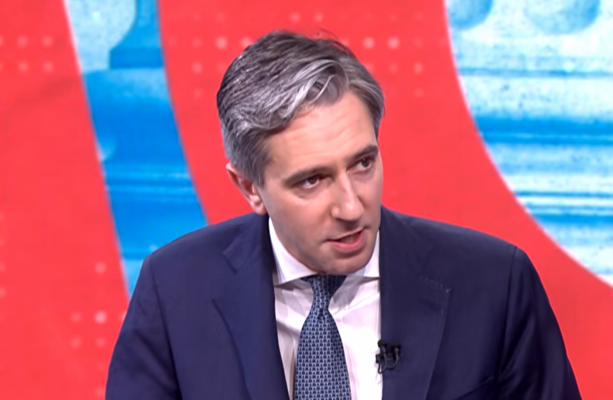
The Tánaiste has called for "clarity" and "finality" in relation to the Republic of Ireland's home UEFA Nations League fixture with Israel.

The oil major is unable to give full details of Albert Manifold’s dismissal because it has a duty of care towards the staff who complained about the former chair.

The football association is expected to announce its decision on Thursday.
A pumpjack operates at the Vermilion Energy site in Trigueres, France, June 14, 2024. — ReutersMarkets remain cautious as Iran, Israel warn attacks could resume.Trump says he warned Netanyahu against returning to war with Iran.Strait of Hormuz reopening remains key issue in US-Iran...

THE budget is upon us. A day after this piece appears in the paper, it will be presented in Parliament, we were told in a tweet by a government official. This, however, does not mean the two parties — the PPP and PML-N — have agreed on all matters financial. The meetings continue as they try and reach an agreement on what the provinces will contribute to the federation, other than the committed surpluses, which have become the norm for some years. Wagging tongues in Islamabad speak about many ideas and ‘solutions’ from changing the formula of the divisible pool and shifting the BISP to the provinces to getting the provincial governments to pay for interior ministry expenses. But most talking heads agree there is now little time to change the NFC via a constitutional amendment and the decisions have to be made through other means. So a ‘consensus’, hybrid style, is to be brought about. As a result, meetings continue between the PPP and the N. That Ishaq Dar, the firefighter who is always sent out to soothe friends, has been part of the team, reflects that this is an issue the N is taking seriously. It is unclear if the matter has already been resolved or still requires thrashing out but thrashed out it will be; and we can also be equally certain the PPP will ask for and get a pound of flesh in return. Everyone, it seems, has suddenly realised the poor state of the economy. But this is just one chapter of the consensus building. Vlogs, tweets, gossip and ‘zaraye’ (sources) insist that a 28th amendment is still needed for big-ticket reform, which might include local governments, changes to the provincial status of areas such as Karachi and Gwadar, and so on. Whether this is to simply scare the governing parties into compromising on the financial issues or there is indeed some seriousness behind some of these initiatives is unclear. Perhaps this will become clear once the budget dust settles. There is little doubt, though, that the powerful ones are now less focused on diplomacy and world peace, and are paying attention to mundane issues such as the economy and politics. The interior minister has been given the job of taking messages back and forth to neighbours and friends while the foreign minister is now sitting put and running meetings with allies. But as I said, there are rumours galore. And one of them, once again, is about a possible reshuffle in the cabinet. This is lent credence by the discussion and debate on the state of the economy and the performance of the government. All the gleeful talk about foreign policy successes has been put aside and replaced by questions on taxes, the government’s economic track record, and so on. This criticism is not just coming from those who whine all the time (such as myself) but also those who happen to have a better sense of the thinking in the power corridors. Everyone, it seems, has suddenly realised the poor state of the economy. And for many, this means it’s open season on the finance minister, whose departure is being predicted once again (along with others). To be honest, the finance minister gets more than his fair share of criticism because he seems to have been left with no constituency. The PML-N had decided a long time ago that he was not one of their own, despite having supported his initial induction into the cabinet and Senate — and he came from a family known to be close to the party. But the honeymoon period was short. Slowly and steadily, many of the key committees were handed over to Ishaq Dar. Neither were the Noonies all that supportive of him in private. By now, it is less clear if ‘other’, key stakeholders are satisfied with him. But it is worth pointing out that some of the public criticism against him is linked not to Islamabad’s twin but a former finance minister who hasn’t lost his ambitions of running Q block again. What this means is that the real challenge (if the two cities agree) may not be the removal of Muhammad Aurangzeb but about who will replace him. The IFIs may not want Ishaq Dar to return and one can’t be too sure if the prime minister wants him in the hot seat either. And unconnected souls such as myself don’t know what Pindi thinks of him in terms of Q block. And if he is not acceptable then what are the other options? The ruling party doesn’t have many choices in its senior ranks — which in itself is an indictment of the party once known as being the ‘best’ at governance. There are possible contenders among the young Turks but they will not find it easy to manage the official challenges of this position or the conspiracies that will be hatched around them. Perhaps the absence of a replacement might win the current finance minister a reprieve but this also means the criticism and the uncertainty will continue. But along with this come the chances of other changes in the cabinet. However, once again, there is little clarity on the ‘competent’ replacements. Because beyond a certain point focusing on individuals is to evade the reality that the problems are systemic and structural. And while more efficient and competent people can make a difference, they cannot address the absence of political will. For instance, the absence of taxation on real estate or agriculture cannot be pinned on individuals. Or for example, the provision of poor quality internet and phone services. However, between this budget and the possible cabinet reshuffle, the sense of urgency to deliver for this government (and its backers) will increase. The excuse of ‘stabilising’ an economy on the brink of default will no longer be enough — even among themselves. The people stopped buying into it a long time ago. Can one assume then that the countdown has begun? I wish I knew. The writer is a journalist. Published in Dawn, June 9th, 2026
KARACHI: The government is considering relaxing the remittance cap in the upcoming budget as overseas Pakistanis in several countries face difficulties in protecting their investments and liquid assets abroad, sources in the financial industry said. At present, remittances exceeding Rs5 million are subject to restrictions if the sender and recipient are not blood relatives. The limit was previously set at Rs10m before being reduced to Rs5m. According to sources, worsening conditions in parts of the Gulf region have prompted many Pakistanis to consider repatriating their funds. While the sale of overseas properties remains difficult, liquid assets can be remitted to Pakistan. However, the existing cap on transfers above Rs5m is viewed as a significant obstacle. Pakistanis have consistently ranked among the largest foreign purchasers of property in Dubai, second only to Indians on several occasions. At the same time, thousands of Pakistani technology firms have relocated to Dubai in recent years, attracted by business opportunities and a more favourable tax regime. Overseas Pakistanis struggle as remittance cap hinders repatriation of funds “The war-like situation has entered its fourth month and there is still no clarity about Dubai’s future, even though it remained a prime target during the conflict that began on Feb 28,” said a financial expert with close links to the emirate. He said most working-class Pakistanis continued to reside in Dubai, but wealthier individuals with substantial investments and property holdings were increasingly seeking to move their funds elsewhere amid concerns over the security of their assets. Although no official data is available on Pakistanis expelled from Dubai, sources said they had witnessed several such cases. They added that many affluent Pakistanis were attempting to sell their properties and transfer their liquid assets out of the emirate. Property prices in Dubai have fallen sharply, according to market observers, while finding buyers has become increasingly difficult. Sources also pointed to challenges faced by Pakistanis in other countries. Thousands, they said, were encountering difficulties in settling in destinations such as South Africa, certain US states and other countries where immigrants were increasingly under pressure, prompting some to consider returning to their countries of origin. “The removal of the remittance cap would benefit Pakistanis in several countries and could also support Pakistan’s economy by boosting remittance inflows,” a source said. Meanwhile, State Bank data showed that trade with Abu Dhabi and Dubai increased despite regional tensions. During July-April FY26, imports from Abu Dhabi rose to $1.193 billion from $862 million in the corresponding period of the previous fiscal year. Imports from Dubai increased to $5.592bn from $5.254bn over the same period. In March, when the conflict in the Gulf region was at its peak, imports from Abu Dhabi fell to $50.5m but recovered to $121m in April. Imports from Dubai similarly declined to $437m in March before rebounding to $862m in April. Exports to Dubai edged down to $1.554bn during the first 10 months of FY26 from $1.578bn a year earlier. Exports to Abu Dhabi, however, increased to $179m from $78m during the same period. Published in Dawn, June 9th, 2026
'Families deserve clarity about the qualifications and training of those caring for their children'
India is pushing for preferential tariffs and guarantees against future hikes in ongoing trade talks with the US. New Delhi seeks clarity on proposed US tariffs linked to forced labor and excess industrial capacity concerns. Both nations aim to finalize an interim trade agreement, with discussions gaining momentum after recent high-level meetings.
[Vanguard] A group of concerned stakeholders of the Nigeria Democratic Congress (NDC) has expressed concern over the delay in the release of the party's primary election results, urging the leadership to provide clarity on the outcome of the exercise conducted across the country.
With the benchmark index - BSE Sensex down by over 10,000 basis points to a level of 74,243 as of June 6, 2026, has left many investors wondering whether to continue SIPs and lump-sum investments during the current market decline, hold current positions or wait for greater clarity on market direction?Market experts believe that investors should see this 10,000 point correction as a buying opportunity rather than a reason to panic.Vishal Dhawan, Founder & CEO, Plan Ahead Wealth Advisors told ETMutualFunds that investors should view this 10,000-point Sensex correction as a long-term buying opportunity as market drawdowns are natural processes that shake out speculative premiums, resetting valuations to fundamentally healthier levels.Also Read | Multicap or flexicap mutual fund for a 20-year SIP? Expert explains what investors should choose “Long-term investors can continue their Systematic Investment Plans (SIPs) and hold current positions firmly. Pausing allocations to "wait for clarity" is a psychological trap that historically locks investors out of the sharpest days of a market rebound.”Dhawan further said that while regular SIPs are key to an investment journey, panic selling must be completely avoided; use this market decline to methodically build an equity baseline designed to reward your patience when economic sentiment inevitably swings back to optimism at some point in the future and it is critical to have a minimum 5-7 year investment horizon whilst investing.Echoing a similar opinion of considering this as a buying opportunity rather than a reason to panic, Amitabh Lara, Executive Director, Anand Rathi Wealth Limited shared with ETMutualFunds that for long-term investors, this is not the time to stop investing.Amitabh further said that continuing SIPs during a fall can actually work in your favour because the same investment amount buys more units at lower prices and one of the biggest mistakes investors make is stopping SIPs during a correction and returning only after the recovery has already happened.The benchmark index which touched a peak of 84,391 on December 10, 2025, is now down by nearly 10,148 points to a level of 74,243 as of June 6, 2026.As the market becomes volatile, investors as well as the fund managers keep cash in hand and wait for the opportunity to deploy it in the market but with a dilemma whether to deploy cash immediately or stagger investments over time.Amitabh said that if investors have idle cash available then they can go ahead and invest as a lumpsum and funds can be deployed in a staggered manner through tranches, over 6 to 8 weeks. “It also removes the stress of trying to time the exact bottom. If they have SIPs, they can continue it without worrying about the market level and take advantage of rupee cost averaging.”Dhawan said that for investors sitting on cash, a staggered deployment strategy via a 6-month to 12 month Systematic Transfer Plan (STP) is highly recommended as this approach could hedge your principal against intermediate downside volatility.He further said that investors should avoid deploying an absolute lumpsum at current levels, as picking the exact market bottom is a statistical myth and tranche-based buying ensures you average out your entry costs across multiple lower price bands smoothly.“Park your liquid capital in low-duration instruments and systematically route it into equity. This automated execution effectively replaces portfolio anxiety with disciplined benefits. In case you wish to deploy a lumpsum, and not do a STP, an investment in the Balanced Advantage category is suggested.” Dhawan said.How equity categories performedETMutualFunds checked the performance of equity mutual funds since December 10, 2025. Small cap funds have delivered an average return of 6.06% since the date BSE Sensex touched the new peak, followed by mid cap funds which gave an average return of 2.58%.Also Read | Nippon India Mutual Fund limits subscription in Gold BeES and gold savings fund In contrast, the counterparts, large cap funds gave a negative average return of 6.26% since December 10, 2025. Multi cap funds gave an average return of 0.06% whereas flexi cap funds fell 2.95% on an average in the said time period.Out of 10 equity categories, only three gave positive average returns which were small caps, mid caps and multi caps whereas the other categories such as large caps, contra funds, ELSS, flexi, focused, value and large & mid caps gave negative average returns.Which market-cap segment could lead the recovery?Dhawan said that large-cap stocks are typically best positioned to lead the initial recovery wave when domestic and foreign institutional flows return and their robust cash flows, operational scale, and institutional backing provide an essential fundamental moat.He further said that mid-caps may require stock-specific elements to perform, as many names went up significantly during the previous bull cycle; small caps should be approached with high caution and patience, as they remain prone to sharp liquidity outflows during market corrections. “Limit small-cap exposure if you can handle the volatility and have a longer time horizon of 7-10 years for mid and small caps.”Lara said that small caps appear to have the most room for upside when markets recover. Currently, Nifty Smallcap 250 is trading about 17.4% below its fair value, compared with 9.6% for the Nifty Midcap 150 and around 5-9% for large-cap indices. Hence, small caps have corrected more than large caps and mid caps relative to their earnings potential.He further said that investors can have a balanced exposure across market caps, with 55% in large caps and the rest in mid and small caps to be a part of the eventual recovery that will follow in the markets.BSE Sensex: In the last six months, the index was down 13.38% and in the nine months, it was down 8.01%. In the last one year, Sensex was down 8.83% whereas in the last three years and five years it was up 5.74% and 7.33% respectively.Sector allocation becomes particularly important during market corrections as valuation gaps emerge across industries. The question is whether investors should actively target beaten-down sectors or focus on broader diversification.In response to this, Lara said investors should avoid investing in single sectors or making sectoral bets as performance in sectors/themes is highly cyclical. For example, in 2024, the pharma & IT sectors were part of the best-performing sectors, however, they both turned into worst-performing sectors in 2025, which suggest that entry and exit at the right time play a crucial role in making investments in the sectorial/thematic funds.Also Read |HDFC Mutual Fund limits subscription in its gold ETF and FoF. What this means for investors? During such corrections, it would be more beneficial for investors to invest in diversified categories of equity mutual funds to get exposure to all sectors and benefit from their performance, rather than focusing solely on any single sector, Lara further said.Dhawan said to prioritize accumulating high-quality banking and financial services funds as these segments offer good earnings visibility, corrected price multiples, and fundamentally strong underlying balance sheets.He further said systematic accumulation of Information Technology (IT) funds could be attributed to these deep valuation resets as they are cash-rich franchises with low debt. However, they do face business model risk. Conversely, stay away from Utilities and capital goods as valuations look well above their long term averages.(Disclaimer: Recommendations, suggestions, views and opinions given by the experts are their own. These do not represent the views of The Economic Times)If you have any mutual fund queries, message on ET Mutual Funds on Facebook/Twitter. We will get it answered by our panel of experts. Do share your questions on ETMFqueries@timesinternet.in along with your age, risk profile, and Twitter handle.
The Security Bureau and the Department of Justice have announced plans to introduce subsidiary legislation to clearly define the classification mechanism for “other offences endangering national security under the law of the HKSAR,” as stipulated under the Hong Kong National Security Law (HKNSL) and the Safeguarding National Security Ordinance (SNSO). In a paper submitted to the Legislative Council, the bureau and department emphasised the necessity of codifying this mechanism through subsidiary legislation to ensure consistent and effective implementation of provisions relating to national security offences under both statutes. The move, they said, aims to strengthen legal clarity, enhance procedural efficiency, and enable timely prevention and response to national security risks. "Amid the present complicated geopolitical landscape, national security risks still exist. Stating clearly the above mechanism by way of subsidiary legislation can improve the legal system and enforcement mechanisms for the HKSAR to safeguard national security," the security bureau and the department of justice said in paper submitted to Legco. Under Article 47 of the HKNSL and Section 115 of the SNSO, the Chief Executive holds the authority to issue binding certificates determining whether a particular act or matter involves national security — a power that courts are legally bound to accept. The government noted this certification mechanism is uniquely suited to classify “other offences endangering national security” under Section 7(d) of the SNSO, as such classification hinges on whether the criminal act in question implicates national security. The proposed subsidiary legislation, to be enacted under Section 110 of the SNSO, will set out two key principles. If the Chief Executive issues a certificate under Article 47 of the HKNSL or Section 115 of the SNSO confirming that a criminal act involves national security, the case shall be treated as one concerning an offence endangering national security under Article 41 of the HKNSL. Any offence investigated, arrested, or charged in relation to that act shall be deemed an offence endangering national security under Section 7(d) of the SNSO. And, where a person is charged with — or convicted of — an alternative offence arising from the same act in a case involving a national security offence, that alternative offence shall also be classified as an offence endangering national security. "The HKSAR should complete the legislative process of the relevant subsidiary legislation as soon as possible, the earlier the better, in order to safeguard national security effectively," the paper added. Edited by Tony Sabine
The issue of public transport infrastructure and congestion will likely be on the minds of voters ahead of the upcoming Johor state elections, analysts say.
THE people of Gilgit-Baltistan joined Pakistan at the time of independence after liberating the region from Dogra rule. It was a unanimous aspiration to become part of the Muslim state. Assuming the relationship would be formalised through constitutional inclusion and political empowerment, GB’s people aligned themselves with mainstream Pakistani political parties, unlike Azad Kashmir, where indigenous political parties continued to play a significant role. Unfortunately, instead of the evolution of a locally rooted political architecture or democratic compact specific to GB, governance came to be dominated by the PML-N, PPP and PTI, who viewed GB through the lens of national power politics, strategic utility, electoral expansion, patronage and resource control, rather than genuine political empowerment. Consequently, while there are elected governments, there’s no meaningful self-governance. The first problem is the absence of a consistent ideological commitment by these parties to resolving GB’s constitutional status. Promises of autonomy, reforms and provisional provincial status are repeatedly made during elections, but not one party has delivered on their pledge when in federal power. The unresolved constitutional ambiguity serves the interests of centralised authority because it allows decisive control without assuming full constitutional obligations. A second problem is the import of a confrontational mainland political culture into a socially sensitive and geographically isolated mountain society. Politics has become polarised around loyalties to party leadership in Islamabad. Local leadership often emerges not through grassroots struggle or public legitimacy, but patronage networks, loyalty to party centres and access to federal power. This weakens local institutions and stymies independent political consensus. The PPP introduced the 2009 Gilgit-Baltistan Empowerment and Self-Governance Order, which created the current political structure. However, while the order established elected institutions, overriding authority remained concentrated within federally controlled structures. The PML-N focused on infrastructure and connectivity projects, but made little attempt at meaningful local empowerment. The party was reluctant even to take ownership of the Sartaj Aziz Committee’s report because it recommended full constitutional rights for GB. (It also provided the intellectual basis for the Supreme Court’s landmark 2019 judgement.) Instead, the PML-N’s 2018 order diluted the spirit of the report and even rolled back several powers granted under the PPP’s 2009 framework. People in Gilgit-Baltistan take part in elections and form governments, but the real levers of power are not in their hands. The PTI raised expectations by discussing provisional provincial status and constitutional reforms. However, when proposals concerning fuller constitutional status were presented, the party effectively ensured the continuation of the restrictive 2018 governance framework. All three parties converge on several core goals: maintaining political influence through patronage networks; using local elites dependent on federal authority; preserving centralised control over strategic geography and resources; avoiding a final constitutional settlement; expanding bureaucratic structures that cultivate political loyalties. The result is a political culture in which elections become contests for access to state patronage rather than serious debates on constitutional rights, fiscal autonomy, institutional reform, environmental sustainability, or long-term development. Another major impediment is the fragmentation of local political consciousness. Federal parties often exploit regional, sectarian, clan-based and constituency-level divisions for electoral advantage. The resulting divisions weaken the possibility of a unified political position capable of negotiating collective rights. Frequent shifts in political loyalty have normalised a culture in which the political process resembles an auction for legislative support. The result is a paradoxical system. People participate in elections, elect representatives and form governments, yet the real levers of power remain externalised. The assembly administers limited local matters, while strategic decisions, constitutional questions, resource frameworks and fiscal dependency are controlled from elsewhere. Roads, contracts, bureaucratic appointments and symbolic projects dominate political discourse, while deeper questions of political dignity, resource ownership, etc, remain unresolved. GB’s long-term challenge is to develop an indigenous political vision capable of transcending externally driven party competition. Such a vision must articulate demands for accountable governance, constitutional clarity, economic justice and genuine participation in decision-making. Ultimately, GB’s tragedy lies not merely in flawed governance, but also in the normalisation of a political charade. Every five years, elections are held under a constitutionally undefined framework that changes governments without altering the actual structure of power. The process is at its core a ritualistic transfer of authority among federally controlled political actors while fundamental questions of constitutional status, political rights, institutional accountability, etc, remain unresolved. This ambiguity facilitates elite capture through a flawed political system that enables control over local resources without meaningful accountability. Public resources continue to be consumed by expanding bureaucratic structures, patronage networks and non-development expenditures. More troubling is the ill-defined governance structure in which critical decisions, including appointments to senior judicial and institutional positions, are made through opaque processes. Such a system effectively guarantees immunity for unaccountable decision-makers, while ordinary citizens continue to bear the burden of weak institutions, unemployment, and political uncertainty. This has reduced Sunday’s election to an exercise in futility. Yet beneath this stagnant order, a transformation is taking place. A new generation is emerging in GB — educated, technologically connected, politically conscious and unwilling to accept symbolic representation in place of genuine rights and participation. This rising Gen Z, perhaps the most educated and politically aware generation in GB, may ultimately challenge the cycle of constitutional ambiguity and political misgovernance. No political structure built upon perpetual ambiguity, exclusion and managed dependency can endure indefinitely. If meaningful constitutional reform, institutional accountability, and genuine empowerment are delayed further, we will witness not merely political dissatisfaction, but also a far more assertive and organised demand for full meaningful constitutional integration with Pakistan, irrespective of competing political and strategic considerations. The writer, a former IGP Sindh, belongs to Gilgit-Baltistan. Published in Dawn, June 7th, 2026

The amendments mandate installation and operation of multiple digital systems, including AIS-140-based Vehicle Location Tracking Devices (VLTDs), e-SIM connectivity, geo-tagged video inspections, High Security Registration Plates (HSRP), and digital data storage infrastructure
Party seeks immediate disclosure of Sai Krishna’s whereabouts and warns of agitation if constitutional safeguards are not followed
There might be more clarity on how Aaron Judge landed himself on the injured list with a stress fracture in his first rib.
The U.S. military is waiting for clarity from the Pentagon following President Donald Trump's back-and-forth on troop levels in Europe, upending the lives of military personnel and potentially costing taxpayers millions of dollars, two U.S. defense officials told The Associated Press.