Tamil Nadu CM Vijay reviews MAWS schemes, stresses timely completion of projects
The Chief Minister also called for restoration of the Cooum river and Buckingham canal along with the ongoing Adyar River Restoration project

๐ฎ๐ณ ์ธ๋ ยท "VIEW" ยท ์ด 352๊ฑด
ํํฐ ๋ณด๊ธฐํ์ฌ ์ง์
48.1
0 = ๋ถ์ ์ฐ์ธ
50 = ์ค๋ฆฝ
100 = ๊ธ์ ์ฐ์ธ
์ต๊ทผ 7์ผ ๊ธฐ์ค 5,459๊ฑด์ ๋ถ์ํ ๊ฒฐ๊ณผ, ๋ด์ค ์ฌ๋ฆฌ์ง์๋ 48.1(๊ท ํ)์ ๋๋ค. ๊ธ์ 529๊ฑด(9.7%)ยท์ค๋ฆฝ 3,682๊ฑด(67.4%)ยท๋ถ์ 1,248๊ฑด(22.9%)์ด๋ฉฐ, ์ค๋ฆฝ ๋น์ค์ด ๋๋ ทํ๊ฒ ๋์ต๋๋ค. ์ฑํฅ ์ง์๋ ์ข ํฉ 14.1(์ค๋ ๊ท ํ)์ ๋๋ค.
The Chief Minister also called for restoration of the Cooum river and Buckingham canal along with the ongoing Adyar River Restoration project

Introduced in March this year, the legislation proposes comprehensive amendments to both the Companies Act, 2013, and the Limited Liability Partnership (LLP) Act, 2008
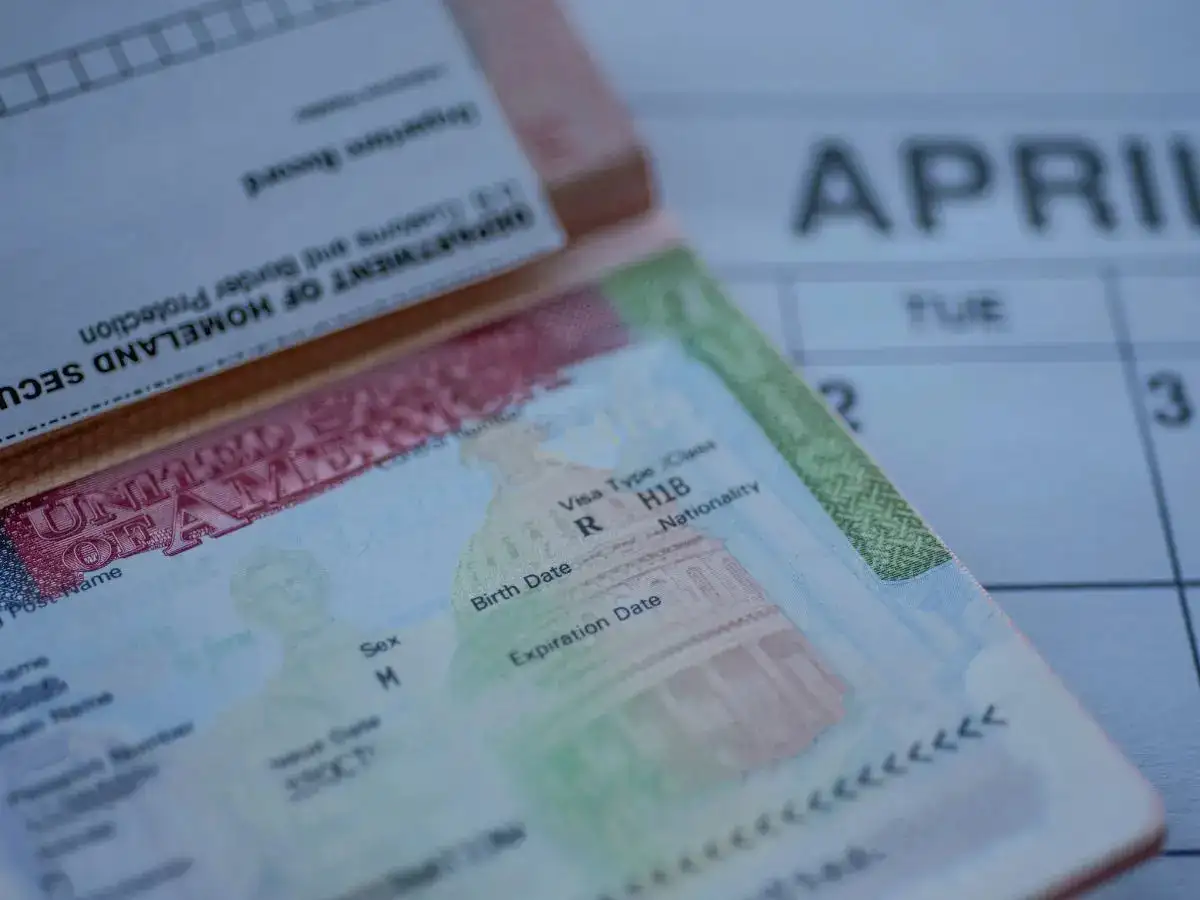
OpenAI, Anthropic and Nvidia increased their H-1B visa filings in the second quarter of fiscal 2026, even as several other major technology companies reduced their use of the programme, according to federal labour data, as cited by Business Insider.The rise comes amid an intensifying competition for artificial intelligence talent and follows a US federal court decision to block the Trump administration's proposed $100,000 fee on certain H-1B visa applicants living overseas.AI companies are continuing to expand their search for highly specialised researchers, engineers and infrastructure experts despite growing uncertainty around US immigration policies and higher costs associated with hiring foreign workers, according to Business Insider report.ALSO READ: Trump's $100,000 H-1B visa fee is unlawful, US judge rulesAI firms buck wider industry trendAccording to the report, foreign-born workers with specialised skills have become increasingly important to the talent strategies of AI companies as the pool of qualified candidates remains limited.Anthropic recorded the sharpest year-on-year increase among the companies reviewed. The AI startup filed 59 certified H-1B applications in the second quarter of fiscal 2026, up from 10 during the same period a year earlier.OpenAI's certified applications rose from 20 to 63 over the same period, while Nvidia's filings increased to 765 from 641.In contrast, several technology giants reported declines. Meta's certified applications fell 3 per cent year-on-year to 1,715. Microsoft's filings dropped 20 per cent to 1,993, while Amazon's declined 30 per cent to 4,241. Google recorded the steepest fall among the group, with applications dropping 64 per cent to 1,844.The differing hiring patterns highlight a shift within the technology sector, where companies are reducing overall headcount while investing heavily in smaller teams focused on artificial intelligence and advanced research.H-1B policy changes reshape hiring landscape The H-1B programme has undergone significant changes in recent months. New regulations now give higher-paid applicants a greater chance of selection in the annual visa lottery, shifting the system in favour of experienced and highly compensated professionals. ALSO READ: Trump calls court freeze on $100,000 H-1B fee โcrazyโ and 'hurting our country'At the same time, the Trump administration introduced a temporary $100,000 fee for certain H-1B applicants living outside the United States, arguing that it would discourage misuse of the programme and prioritise American workers.However, a federal judge blocked the fee on Monday, ruling that the administration lacked the legal authority to impose it.
Authorities have advised people living in vulnerable areas to remain vigilant in view of the continuing monsoon activity

Rs 4,000 preview tickets, donor pass scam: Mamata's ex-minister in Durga Puja row

Shares of Redington surged nearly 5% on Tuesday after Apple unveiled a completely rebuilt Siri at its Worldwide Developers Conference (WWDC) 2026, along with a host of features and OS updates.The company rolled out the next-generation Apple Intelligence features, AI-powered photo editing tools, enhanced child-safety capabilities and software updates across iPhone, iPad, Mac, Apple Watch and Vision Pro.Redington has been a key Apple distribution partner since 2007, handling the logistics, warehousing and distribution of Apple products to retailers and resellers across India, the Middle East, Turkey, Africa and South Asia.Redington shares sharply surged to an intraday high of Rs 241 apiece on NSE on Tuesday morning, snapping a two-session losing streak. Notably, Apple shares meanwhile closed around 2% lower after its annual conference.New Apple features unveiled at WWDC 2026In what was Tim Cookโs last WWDC as the Apple CEO, the company on Monday unveiled a much-awaited overhaul of Siri, introducing a more conversational, context-aware version of its digital assistant as the company seeks to catch up with AI rivals including ChatGPT, Gemini and Claude.The new model called 'Siri AI' will now come with a dedicated app, a redesigned interface and improved conversational abilities. According to Apple, it can understand a user's personal context, access broad world knowledge and even understand what is currently on a user's screen.Also read: Siri gets an AI makeover, its biggest upgrade since 2011 debutApple also unveiled the next generation of Apple Intelligence, built on updated Apple Foundation Models that power Siri, image generation, writing assistance and reasoning capabilities. It also significantly expanded its Visual Intelligence, bringing image understanding capabilities to more devices. On the iPhone, Siri can now analyse what users see through the Camera app and answer questions about objects, locations and food. The assistant can also perform actions such as splitting restaurant bills using Apple Cash.Why are Redington shares rising?Redington has a long-standing partnership with Apple, dating back to a 2007 distribution agreement for Apple products in India. Redington manages logistics, warehousing, and distribution to resellers and retailers across India, the Middle East, Turkey, Africa, and South Asia. It is one of Appleโs key official national distributors and supply-chain partners in India.Redington in May reported a consolidated net profit of Rs 391 crore for the January-March quarter of FY26. This is over 41% lower than the Rs 666 crore net profit reported in the corresponding quarter of the previous financial year. The firmโs revenue from operations, meanwhile, increased nearly 26% YoY to Rs 33,213 crore during the quarter under review.Also read: Siri AI, Apple Intelligence, child safety tools and more โ Biggest announcements from AppleRedington share priceRedington shares have gained over 6% in one month but declined around 14% in 2026 so far. The stock is down 17% in one year. In the longer term, the shares of the tech company jumped 28% in three years and more than 74% in five years.The company currently has a market capitalisation of more than Rs 18,537 crore.(Disclaimer: Recommendations, suggestions, views and opinions given by the experts are their own. These do not represent the views of The Economic Times)
Shares of Rail Vikas Nigam Limited (RVNL) surged as much as 3.18% on Tuesday, touching an intraday high of Rs 235.50 after the company announced a fresh order win worth Rs 221.33 crore from South East Central Railway.In a regulatory filing, RVNL announced that it has secured a Letter of Acceptance (LoA) for a signalling and infrastructure upgrade project in the Bilaspur Division of South East Central Railway.The project involves the replacement of conventional Panel Interlocking systems with advanced Electronic Interlocking technology across multiple stations, including BSPR, KLPG, ABKP, MZH, HRV, PRDL, KTMA, BJRI, KJZ, MDGR, CHRM, GTK, KLTR, PLAU, and KBS. The scope of work also includes installation of indoor and outdoor signalling equipment, construction of OFC huts, development and electrification of S&T service buildings, and associated cabling works in adjoining railway sections.The contract has been awarded by South East Central Railway, a domestic entity, under the Engineering, Procurement, and Construction (EPC) model. The project is scheduled to be executed within 730 days.The total contract value stands at Rs 221.33 crore. RVNL clarified that neither the promoter group nor any group companies have any interest in the awarding entity, and the contract does not fall under related-party transactions.The latest order win further strengthens RVNL's robust order book and reinforces its position as a key player in India's railway infrastructure modernization drive. Investors cheered the development, driving the stock higher during Tuesday's trading session.Share Price Trend, Valuation & Technical OutlookDespite Tuesday's rally, RVNL's stock has been under significant selling pressure in recent months. The railway PSU has corrected nearly 25% over the past month, while investors have seen the stock decline by around 47% over the last one year, highlighting the sharp erosion in market value from its peak levels.The company currently commands a market capitalization of โน47,586 crore. RVNL's shares have witnessed considerable volatility over the past year, with the stock hitting a 52-week high of โน442.80 and a 52-week low of โน227.01.From a valuation perspective, the stock trades at a Price-to-Earnings (P/E) ratio of 54.4 and a Price-to-Book (P/B) ratio of 4.85, indicating that investors continue to assign a premium valuation despite the recent correction.Also read: Wipro's Rs 15,000-crore buyback opens June 11; entitlement ratio and key details announcedOn the technical front, indicators suggest the stock may be approaching a critical zone. The 14-day Relative Strength Index (RSI) stands at 19, well below the 20-mark that is typically considered deeply oversold territory. Such readings often signal that selling may have become excessive and could pave the way for a technical rebound if buying interest returns.However, caution remains warranted. RVNL continues to exhibit a weak trend structure, with the stock currently trading below all eight of its key Simple Moving Averages (SMAs), a sign that bears still maintain control over the broader price trend.(Disclaimer: Recommendations, suggestions, views and opinions given by the experts are their own. These do not represent the views of Economic Times)
The pilot program will run through the end of the year but could be extended depending on demand.
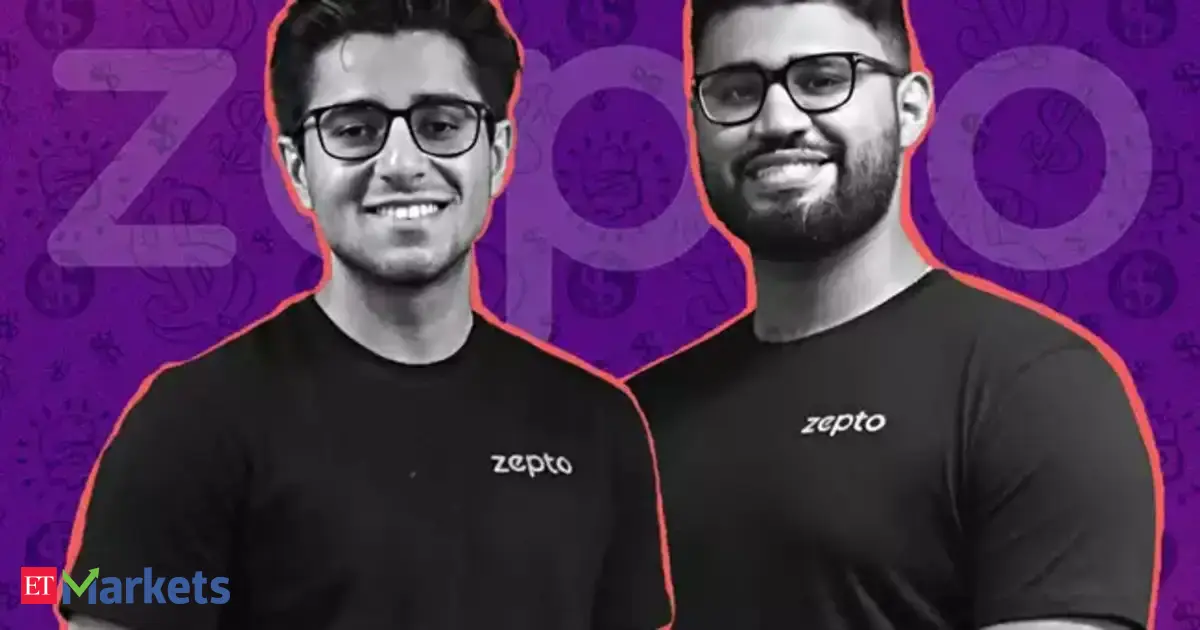
Quick commerce platform Zepto revealed in its updated draft red herring prospectus (DRHP) on Monday that the Enforcement Directorate (ED) had summoned its founders Aadit Palicha and Kaivalya Vohra in relation to the Foreign Exchange Management Act (FEMA) in April 2026.In its updated DRHP filed with SEBI for a $1 billion (Rs 9,500 crore) initial public offering, Zepto said that Palicha and Vohra were required to produce some documents with regard to foreign investments, audited balance sheets for the financial year 2020-21, shareholding patterns, details on loans and guarantees, income tax returns and bank accounts, along with other information.Complying with the summons, Vohra appeared before the ED on April 17 and April 22. Palicha appeared before the authority on April 20 and May 15 this year. "As on the date of this Updated Draft Red Herring Prospectus โ I, they have provided relevant information and documents as requested by ED pursuant to the Summons, as well as follow-on information requested by the ED further to their interactions, including certain details in relation to our holding structure, the Scheme, and additional information in relation to our business such as business agreements and invoices," Zepto said.The quick commerce company said it has not yet received any further communication from ED. It assured that there will not be future inquiries or that these could escalate to investigations, legal proceedings or any possible penalties.Zepto IPOThe much-awaited IPO of Zepto will comprise a fresh issue of shares worth Rs 8,010 crore and an offer-for-sale (OFS) of nearly 11.35 crore shares by existing shareholders, according to the updated prospectus. The five-year-old company had filed its IPO papers confidentially with market regulator SEBI back in December 2025 and received the regulator's approval in May this year.Zepto is aiming to debut on stock markets in July, people familiar with the matter told The Economic Times. This would make the firm the third quick commerce player on Dalal Street, along with Blinkit parent Eternal and Instamart parent Swiggy.Also Read | Zepto files updated papers for Rs 9,500 crore IPO; aims July listingZepto earnings snapshotZepto reported a 75% year-on-year (YoY) jump in consolidated revenue for the fourth quarter of FY26 to Rs 7,498 crore, according to its updated DRHP. The Bengaluru-based company also narrowed its net loss to Rs 1,539 crore during the January-March quarter from Rs 1,832 crore a year earlier, the filing showed.Zepto processed 210 million orders during the quarter, i.e. over 2 million orders a day. It ended March 2026 with 1,139 dark stores, up from 1,029 a year earlier. Orders per store per day rose to 2,140 from 1,425 in the year-ago period, indicating higher throughput across its network.Also Read | Zepto Q4 revenue up 75% at Rs 7,498 crore, narrows loss to Rs 1,538 crore(Disclaimer: Recommendations, suggestions, views and opinions given by the experts are their own. These do not represent the views of The Economic Times)
No wonder Donald Trump swore at his supposed friend and ally Benjamin Netanyahu last week. Within days of that June 1 phone call, Israel and Iran were back on track for the kind of military escalation that can no longer be explained away as a ceasefire breach, presenting a potentially fatal threat to the US presidentโs attempts to end the war.The cause of their dispute is, on the surface, simple. Israel says the April ceasefire between Tehran and Washington did not cover Lebanon, and that its troops would therefore go on fighting Hezbollah so long as the Shiite group posed a security threat to Israeliโs northern border communities. Iran says the deal did cover Lebanon, which is just another front in the same war โ and of course it is.Itโs precisely because it sees Hezbollah as a tool of Iranโs Islamic Revolutionary Guard Corps that Israel wanted the war in the first place. Israelis correctly blamed the IRGC for having orchestrated an entire proxy network of militias โ from the Houthis in Yemen, to Hamas in Gaza, to Hezbollah in Lebanon โ against the worldโs only Jewish state. That Iranian strategy contributed directly to the atrocities of Oct. 7, 2023.Also Read: US Army Apache helicopter crashes near Strait of Hormuz, says reportOnly such an Iran-controlled or -inspired network can explain why Hezbollah opened a second front against the Israelis on Oct. 8 of that year, long before it could be described as a response to Israeli military excesses against Palestinian civilians in Gaza. Likewise that Hezbollah would join in the fight again when the US and Israel attacked Iran, in February. And itโs why the Houthis chose this weekend to lob a missile at Israel and announce they were closing the Bab al-Mandeb Strait to Israeli shipping.These last Houthi gestures were largely symbolic. Yet the collective message Tehran seeks to deliver is clear; it is that reports of the death of its so-called Axis of Resistance have been greatly exaggerated. The latest bout of escalation has notably been directed at Israel alone, serving to drive a wedge between it and the US, as it exposed the point at which their interests divide.Tehran on Monday appeared to want to draw a line under spiraling tit-for-tat air and missile strikes, saying it would refrain from further attacks โ so long as Israel doesnโt bomb Hezbollahโs strongholds in Beirut. Netanyahu now faces a painful dilemma: Should he obey Trump by limiting his campaign against Hezbollah in the face of Iranian threats, thus granting them a level of impunity and deterrent power? Or should he ignore Trump and unleash the Israel Defense Forces on the Lebanese capital?Also Read: US carriers spent $6. 5B on fuel in April; global profit forecast is cut nearly in halfTehranโs new leaders understand this. No doubt they see it as a win-win for themselves. They know, too, that Hezbollah has recovered some of the military utility it had lost before the war after acquiring remote-controlled first-person view drones that the IDF seem ill-prepared to counter.This would present a genuine predicament to any Israeli government, because popular support for โfinishing the jobโ in Lebanon is high. Netanyahu faces anger from across the political spectrum over his apparent submission of Israeli security interests to American ones.But this isnโt any Israeli government. Not every Israeli leader would have overseen a decades-long security policy that prioritized the suppression of the Palestinian Authority over Hamas, allowing the terrorist group to succeed beyond its wildest dreams on Oct. 7. Nor would every Israeli leader have refused to draw up a political strategy to accompany the use of force that followed in Gaza, the West Bank, and Lebanon โ despite being coerced by Trump into recent talks with its central government.As the former Israeli Prime Minister Ehud Barak put it in an article for the liberal Haaretz newspaper on Monday, the story being sold to Israelis โ that the IDF could eradicate Hezbollah once and for all if only its hands werenโt tied โ is โa dangerous illusion.โ The history of previous, painful failed incursions into Lebanon says as much.Nor would every Israeli leader have misled Trump into believing (against the advice of the US military and intelligence community) that assassinating Iranโs supreme leader would swiftly precipitate a collapse of the Islamic Republic as a whole. Nor might they have allowed their country to become quite as diplomatically isolated as it has.It is these strategic failures, amid undoubted military success, that have left Israel with few good options. Netanyahu can hope for a rapid collapse of the regime in Tehran to resolve his dilemma, but thatโs unlikely. Alternatively, he can try to persuade the US to join in a long-term mow-the-lawn policy to keep Iran weak, amounting to a forever war. This, too, seems unlikely โ or at least not in the interests of the US, its Gulf allies or the global economy.Failing one of these minor miracles, the risk of Israel being forced to accept a peace deal that leaves an enraged and emboldened Islamic Republic in place is real. No doubt Netanyahu, like Trump, believed in February that a short, victorious Iranian war might salvage his dimming political prospects, ahead of the Israeli elections due by October. That was a bad bet.
A chorus of US lawmakers from across the political spectrum has come out in support of a federal court order dismantling a proposed USD 100,000 H-1B visa application fee, even as the White House prepares to challenge the judicial setback in the appeals court. Breaking ranks with the executive branch, several Republican lawmakers backed the decision by shifting the spotlight away from the information technology sector, which heavily utilises this visa category, and focusing instead on how the massive financial penalty would cripple healthcare systems and educational institutions in remote regions. These conservative representatives pointed out that employers in rural areas depend heavily on international professionals to fill severe staffing voids. Stressing the severe local impact, Republican Senator Lisa Murkowski from Alaska emphasised that the issue transcended partisan politics in her state. She pointed out that the judicial intervention arrived at a pivotal juncture as academic institutions actively finalise their faculty rosters for the upcoming school term. Senator Murkowski stated, "Many school districts in rural and remote parts of the state rely on the H-1B visa programme to bring quality teachers to their communities." Unmoved by the legislative backlash, the White House strongly dug in its heels to defend the executive measure and signalled immediate plans to get the ruling overturned. White House spokesperson Taylor Rogers argued, "The H-1B programme has been abused for decades, and President Trump finally took action to fix it." Expressing absolute confidence in a legal reversal, Rogers added, "A federal judge in Washington already upheld a nearly identical order, and the administration is confident this order will be reversed on appeal." Conversely, the political opposition welcomed the court's intervention as necessary relief for critical public infrastructure. Democratic Congressman Don Beyer praised the judgment, warning that the steep executive fee would have slammed healthcare facilities already pushed to the brink by severe personnel deficits with unsustainable operational costs. Echoing this sentiment from across the aisle, Republican Congressman Mike Lawler also threw his weight behind the judicial freeze. He highlighted his own ongoing, cross-party legislative efforts to shield medical personnel from the financial burden. Congressman Lawler noted, "I have been working to exempt healthcare workers from this fee that only exacerbates the current staffing shortages in healthcare. That's why I introduced the bipartisan H-1Bs for Physicians and the Healthcare Workforce Act. While we continue to push this legislation through Congress, this ruling is welcome news." Further criticising the administration's economic logic, Congressman Sanford D. Bishop Jr. cautioned that the premium pricing would effectively slam the door on global talent, hurting domestic growth. Congressman Bishop argued, "The USD 100,000 fee for employers' H-1B applications would have discouraged the best and the brightest from coming to America and helping our economy grow and innovate." The legal architects behind the successful lawsuit also celebrated the verdict. Leading the state-level resistance, California Attorney General Rob Bonta remarked that the executive fiscal policy directly undermined the nation's capacity to import specialised professionals for sectors struggling with systemic labour deficits. Bonta stated, "This tax was an attack on America's ability to attract and retain the high-skilled talent that strengthens our economy and helps us meet critical workforce needs." Validating the multi-state legal push, New Jersey Attorney General Jennifer Davenport expressed an identical view, noting that the judiciary clearly agreed that the executive branch had completely overreached its mandate by attempting to levy the financial requirement on H-1B petitioners. However, the Republican consensus on the matter remained fractured. Voices from the conservative wing, like Arizona Congressman Eli Crane, explicitly denounced the ruling. Crane, who has been aggressively pushing for restrictive immigration overhauls, bypassed the judicial roadblock to call for a definitive legislative remedy. Congressman Crane stated, "Although an activist judge blocked President Trump's reforms to the H-1B program, Congress can fix it without judicial obstruction. Urge your representative to cosponsor the End H-1B Visa Abuse Act of 2026, which halts and significantly reforms this broken system." This highly publicised judicial verdict represents a major blow to the Trump administration's broader strategy aimed at restricting employment-driven immigration channels and creating steep hurdles for US employers trying to onboard international professionals. The development has triggered significant interest in India, given that the H-1B framework serves as a vital pipeline for the Indian workforce to access lucrative professional opportunities in the US. The non-immigrant work permit enables US corporations to recruit overseas experts with niche expertise across highly technical fields, including technology, engineering, healthcare, and finance. Because of India's robust talent pool in these specialised industries, Indian citizens systematically secure the lion's share of the total H-1B allocations distributed on an annual basis, making any disruption to the fee structure a critical economic talking point for New Delhi. Structurally, the H-1B visa has long solidified its status as an essential foundation for the American guest-worker immigration model. Under the statutory guidelines, the US government caps the yearly allocation at 65,000 standard permits, while reserving an extra 20,000 slots specifically for candidates who have earned advanced graduate degrees from US institutions. Data provided by immigration advocacy group FWD.us reveals the massive scale of this demographic, noting that approximately 730,000 H-1B visa holders reside across the US, living alongside an estimated 550,000 dependents, which includes their spouses and children.
The meeting reviewed plans to systematically increase the number of fire stations across Delhi.
As many as three Tata Group companies, including Tata Chemicals, Tata Elxsi and Tata Investment Corporation, have set June 10 (Wednesday) as the record date for their respective dividends cumulatively worth Rs 89.4, effectively making today the last day for investors to buy their shares to be eligible for the rewards.Under market regulator SEBI's T+1 settlement cycle, investors need to purchase a company's shares at least one trading day before the record date to ensure the shares are credited to their demat accounts in time, and they become eligible for the corporate action. This effectively makes today the last opportunity for investors to buy the shares so that they are credited to their accounts by the record date (June 10), making them eligible for the dividends.Tata Chemicals dividendTata Chemicals in May had announced a dividend of Rs 11 per share (110%) with a face value of Rs 10 each, subject to shareholdersโ approval at the firmโs upcoming Annual General Meeting scheduled for June 26. The company has declared 30 dividends since June 2001, and currently has a dividend yield of more than 1.5%, according to data on Trendlyne.Tata Chemicals shares have fallen more than 3% in one week and 9% in one month. The shares have declined 24% in one year, 29% in three years and 5% in five years.Also read: Bonus issue alert! This smallcap company announced a 2:5 bonus issue. Do you own?Tata Elxsi dividendTata Elxsi announced a dividend of Rs 75 per share (750%) with a face value of Rs 10 each in April this year. This too is subject to shareholdersโ approval at the companyโs upcoming Annual General Meeting scheduled later this monthThe tech company has declared 27 dividends since June, 2001, and has a dividend yield of 1.76%, according to data on Trendlyne.Tata Elxsi shares have fallen over 1.5% in one week, 2% in one month and 19% in 2026 so far. The stock tumbled 34% in one year and 46% in three years, but it has gained over 13% in five years.Tata Investment Corporation dividendIn April, Tata Investment Corporation's board of directors recommended a dividend of Rs 3.40 per share (340%) with a face value of Rs 1 each. This dividend will be paid after the firmโs Annual General Meeting (AGM) scheduled for July 1.The company has declared 31 dividends since September, 2000 and has a dividend yield of 0.41%, adjusting for bonus and stock splits, according to data on Trendlyne.Tata Investment Corporation shares have fallen 4% in one week and 10% in one month. The stock declined more than 5% in one year, but gained 177% in three years and 462% in five years.Also read: Infosys, Adani Enterprises, Trent among 44 stocks going ex-date for dividends, stock splits, bonus issues this week. Do you own any?(Disclaimer: Recommendations, suggestions, views and opinions given by the experts are their own. These do not represent the views of The Economic Times)
Shares of Vodafone Idea and Bharti Airtel gained up to 4% on Tuesday after the Bombay High Court quashed the government's one-time spectrum charge (OTSC) demands, holding that all actions taken pursuant to the disputed demands would also stand annulled.Vodafone Idea shares jumped 4% to Rs 14.90, while Airtel share price gained over a percent to Rs 1,836 on the BSE. The ruling provides a combined relief of around Rs 20,000 crore to the two telecom operators. According to ET Now, Vodafone Idea has secured relief of Rs 11,000 crore, while Bharti Airtel has received relief of Rs 9,000 crore.A division bench comprising Justices Manish Pitale and Shreeram Shirsat set aside the demand notices issued by the Centre for recovery of OTSC. The court observed that the government had failed to demonstrate any legal authority empowering it to take such a decision or issue the resulting demand notices.The bench also directed that bank guarantees furnished by the telecom companies be returned. In addition, all demand notices and related orders concerning the one-time spectrum charge have been struck down. At the same time, the court clarified that the matter continues to remain pending before the Supreme Court.The bench noted that the government, while citing public interest, had acted beyond the scope of the contractual and licensing arrangements entered into with the telecom operators. It further observed that the Centre had not identified any source of power authorising the impugned decisions.The dispute traces its origins to a November 2012 Union Cabinet decision under which a one-time spectrum charge was to be levied on spectrum holdings exceeding 6.2 MHz from July 2008 onwards. Following that decision, demand notices were issued to Bharti Airtel and Vodafone Idea specifying the amounts payable towards OTSC.According to a PIB release, telecom operators holding spectrum up to 4.4 MHz (GSM) were exempted from any one-time charge. For spectrum holdings beyond 4.4 MHz (GSM), the government decided that a one-time charge would be imposed prospectively based on prices discovered in the 2012 spectrum auction.Airtel and Vodafone Idea challenged the decision before the Bombay High Court in January 2013, arguing that the government lacked the authority under the Telegraph Act to impose a one-time spectrum charge, particularly with retrospective effect. At the time, the court granted interim protection to the companies and directed that no coercive action be taken while the matter was being heard.In its judgment delivered on Monday, the High Court said the government could not claim that the spectrum's status as a scarce and finite natural resource entitled it to unilaterally depart from the terms of its contracts with telecom operators."The government obviously cannot claim statutory power to act as per its own whim, notwithstanding the terms of the contract/licence executed as per the power available under the Act," the High Court stated.Sensex, Nifty today: Catch all the LIVE stock market action here(Disclaimer: Recommendations, suggestions, views and opinions given by the experts are their own. These do not represent the views of The Economic Times)
South Korean technology stocks staged a strong rebound on Tuesday, mirroring gains on Wall Street, as investors returned to artificial intelligence-related counters following a steep three-day selloff that dragged the KOSPI down more than 15% during the period.Semiconductor heavyweights led the recovery. SK Hynix rose 8%, Samsung Electronics gained 4%, while Seoul Semiconductor surged more than 14%. At the dayโs high, Kospi rose 5% to 7,848 or 364 points higher. The rebound followed a positive session in the United States, where chipmakers helped lift broader markets. The S&P 500 advanced 0.3% on Monday, while the technology-focused Nasdaq Composite climbed 0.86%, recovering some of the losses suffered during last week's sharp decline in technology stocks.Investor sentiment also received support from growing excitement around a potential new wave of high-profile AI-related listings. OpenAI recently disclosed that it had confidentially filed for an initial public offering, following a similar step by Anthropic. The development comes just days before SpaceX shares are expected to start trading.The recovery follows a brutal session for South Korean equities on Monday, when the benchmark KOSPI slumped 9% as investors abruptly pulled back from the market's AI-driven rally. The decline highlighted the extent to which the index had become reliant on a small number of semiconductor companies.The benchmark index is now roughly 12.7% below the record high it reached last week. Semiconductor giants bore the brunt of the selloff, with Samsung Electronics dropping more than 6% and SK Hynix falling over 4% on Monday.As investors rushed to book profits, concerns over market concentration became increasingly evident. Much of the KOSPI's rally had been fuelled by a handful of AI-linked stocks, leaving the broader market exposed to a shift in investor sentiment.Samsung Electronics and SK Hynix together account for nearly half of the KOSPI's total weighting and have generated around two-thirds of the benchmark's gains so far this year. Even after the recent correction, the two stocks remain higher by 138% and 196%, respectively, on a year-to-date basis.Despite the sharp pullback, the KOSPI remains the world's top-performing stock indexe in 2026. Driven largely by the surge in semiconductor shares linked to the artificial intelligence boom, the index is still up an impressive 79% this year.Demand for AI infrastructure has accelerated dramatically over the past year as technology companies around the world race to develop advanced AI models and expand computing capacity. That trend has sparked strong demand for high-bandwidth memory chips, prompting investors to pour money into South Korean chipmakers that occupy a critical position in the global AI supply chain.Sensex, Nifty today: Catch all the LIVE stock market action here(Disclaimer: Recommendations, suggestions, views and opinions given by the experts are their own. These do not represent the views of The Economic Times)
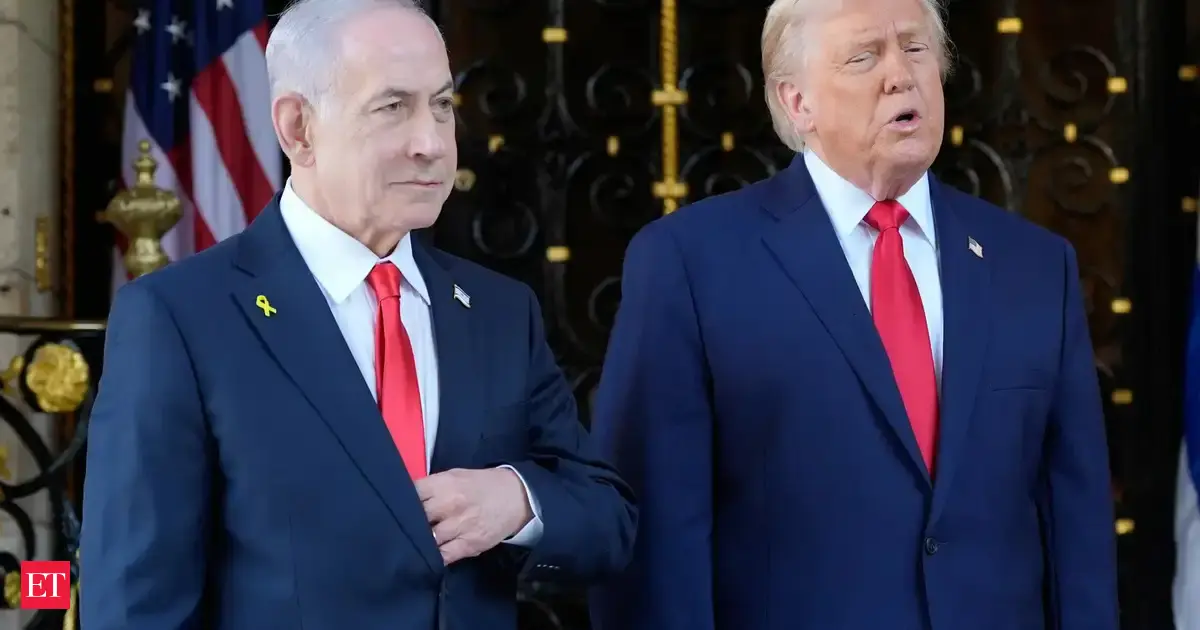
US President Donald Trump told Axios in an interview published on Monday that he warned Israeli Prime Minister Benjamin Netanyahu that he might find himself fighting alone if he went back to war with Iran.
Opposition leaders at the INDIA bloc meeting discussed the emerging youth-led Cockroach Janata Party (CJP). While some expressed concerns about its intent, others, including Omar Abdullah and Mamata Banerjee, supported engaging with the movement, viewing it as a sign of genuine youth dissent and a healthy space for civil movements.