NDTV Top Stories
보수 성향
기타
'Not Done By Us': Civic Body Distances Itself From Surat Demolition
The matter has now been escalated to the state government level.

🇮🇳 인도 · "TSEL" · 총 45건
필터 보기현재 지수
48.2
0 = 부정 우세
50 = 중립
100 = 긍정 우세
최근 7일 기준 5,937건을 분석한 결과, 뉴스 심리지수는 48.2(균형)입니다. 긍정 576건(9.7%)·중립 4,019건(67.7%)·부정 1,342건(22.6%)이며, 중립 비중이 뚜렷하게 높습니다. 성향 지수는 종합 12.3(중도 균형)입니다.
The matter has now been escalated to the state government level.
At the 64th session of the UNFCCC Subsidiary Bodies (SB64), India associated itself with the positions taken on behalf of the Group of 77 and China (G-77), the Like-Minded Developing Countries (LMDC) and the BASIC bloc (Brazil, South Africa, India, China)

NSE will earmark 10% of its annual corporate social responsibility (CSR) corpus for projects listed on the NSE Social Stock Exchange (SSE), becoming one of the first major institutions to commit a portion of its CSR spending through the platform.The exchange announced the move on Tuesday following recent regulatory changes that allow companies to undertake CSR expenditure through subscription to Zero Coupon Zero Principal (ZCZP) instruments listed on Social Stock Exchanges.NSE said its CSR Committee had agreed in principle in March 2026 to deploy 10% of the annual CSR corpus through the SSE framework, subject to regulatory approval. The decision has now been operationalised after the Ministry of Corporate Affairs issued notifications on May 27 enabling such investments.The move is aimed at strengthening India's social impact financing ecosystem and encouraging greater use of regulated capital market platforms for funding social sector projects.NSE Chairman Injeti Srinivas welcomed the government's decision to allow CSR funds to be routed through Social Stock Exchanges.He said the framework would improve transparency, visibility and accountability of CSR spending while helping channel funds towards credible social initiatives.The exchange expressed hope that other large corporate CSR contributors would adopt a similar approach, helping scale up impact financing in the country.The Social Stock Exchange framework was introduced by Sebi to create a regulated fundraising platform for non-profit organisations and social enterprises. The NSE Social Stock Exchange was launched in February 2023.Since inception, NSE-SSE has facilitated all Social Stock Exchange fundraising issuances in India. According to the exchange, 16 projects, including two joint listings, have collectively mobilised more than Rs 44.5 crore across sectors such as healthcare, education, women empowerment, climate action, poverty alleviation, skilling and sustainable livelihoods.The latest announcement comes shortly after the government expanded the scope of permissible CSR activities through the SSE route, a move seen as a significant step towards deepening social impact investing in India.The regulatory change could unlock a new source of funding for non-profit organisations by connecting them with corporate CSR budgets through a transparent and market-linked mechanism. The decision is also expected to provide greater visibility to social projects while enabling companies to track the deployment and outcomes of their CSR spending more effectively.With NSE itself committing part of its CSR corpus through the platform, the exchange is positioning itself as an early adopter of the Social Stock Exchange model while seeking to encourage broader participation from corporate India.
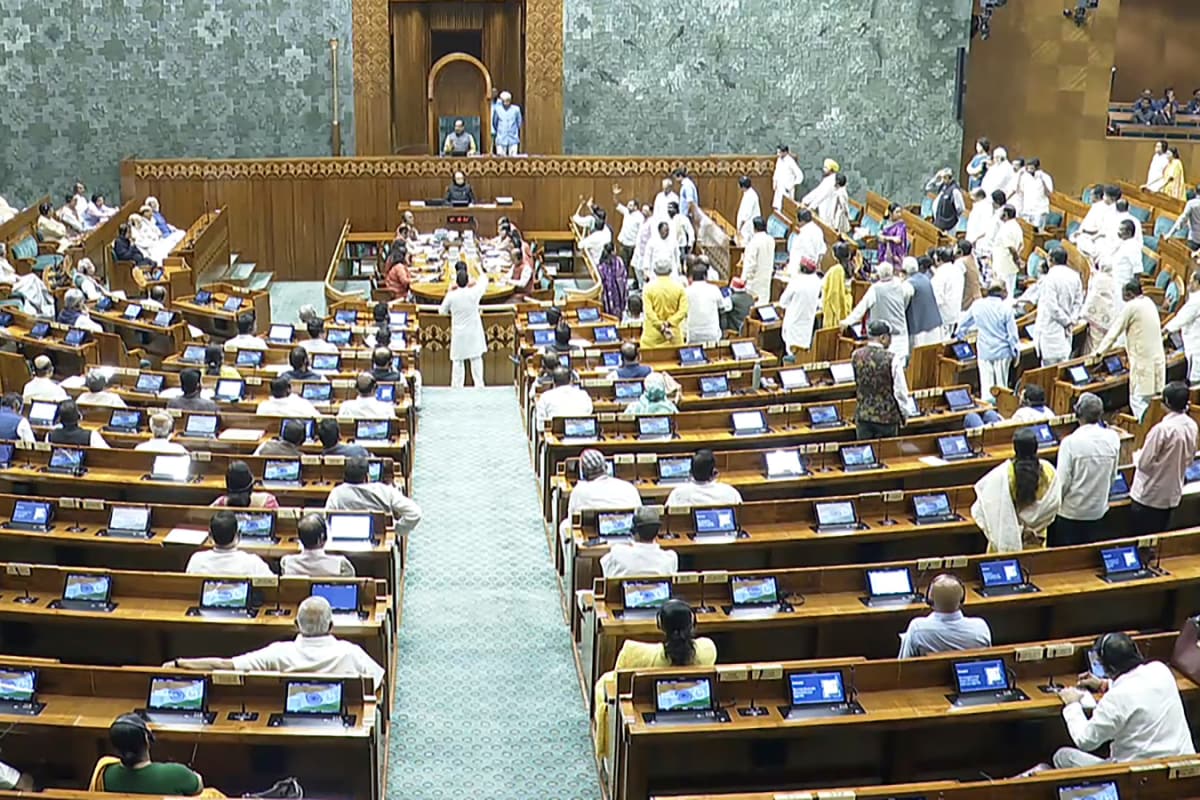
The NDA could find itself closer than ever to the parliamentary strength it enjoyed during its peak years, before the 2024 Lok Sabha polls.
Apple has officially unveiled Siri AI, its biggest overhaul of Siri since the voice assistant first launched in 2011.Announced at WWDC 2026, Siri AI is powered by Apple Intelligence and brings a more conversational interface, personal context awareness, visual intelligence and the ability to take actions across apps. Apple says the new assistant can answer questions from the web, understand what's on your screen, surface information from messages, emails and photos, and help users write, edit and complete tasks.Also Read: Apple WWDC 2026: Siri gets an AI makeover, its biggest upgrade since 2011 debutHere's everything you need to know about Siri AI, including supported devices, how to access it and when it will be available.What is Siri AI?Siri AI is a completely rebuilt version of Siri powered by the next generation of Apple Intelligence.Unlike the old Siri, which primarily handled voice commands and basic queries, Siri AI can understand personal context, maintain conversations, answer follow-up questions and take actions across apps.For example, users can ask Siri to:Find a restaurant recommendation sent by a friend in MessagesPull up a hotel booking confirmation from an old emailFind photos from a recent tripDraft emails and messagesEdit and share photosAnswer questions about content currently displayed on screenSearch the web for up-to-date information on virtually any topicApple says Siri AI combines personal information, onscreen awareness and web knowledge to provide more useful and contextual responses.How to access Siri AIApple has introduced several new ways to access Siri AI across devices.On iPhoneUsers can access Siri AI by:Saying "Hey Siri"Pressing the side buttonSwiping down from the Dynamic Island to start a conversationUsing the new dedicated Siri appThe dedicated Siri app allows users to revisit previous conversations and continue chats across devices.On MacSiri AI is integrated directly into Spotlight.Users can search for answers, ask questions and access Siri AI from anywhere in macOS. Siri is also integrated into system context menus, allowing users to control-click files, images or text and ask questions about them.On iPadSiri AI is integrated into Spotlight and Visual Intelligence features, including screenshot-based interactions.On Apple WatchUsers can start conversations directly from their wrist, while Smart Stack can suggest continuing previous Siri conversations.What is the new Siri app?One of the biggest additions is a dedicated Siri app.The app stores conversation history using iCloud syncing, allowing users to start a conversation on one device and continue it on another.For example, users can begin chatting with Siri on a Mac and pick up the same conversation later on an iPhone, iPad, Apple Watch or Apple Vision Pro.Siri AI gets Visual IntelligenceApple has significantly expanded Visual Intelligence.On iPhone, Siri AI is integrated directly into the Camera app through a new Siri mode. Users can point the camera at objects and ask questions about what they see.The feature can:Identify objects and placesProvide information about foodOffer nutritional insightsHelp split restaurant bills using Apple CashAnswer questions about visual contentVisual Intelligence is also coming to iPad, Mac and Apple Vision Pro for the first time.Which devices support Siri AI?Apple Intelligence and Siri AI will only be available on supported hardware.Supported iPhonesiPhone 16 series and neweriPhone 15 ProiPhone 15 Pro MaxSupported iPadsiPad mini with A17 ProiPads powered by M1 chips or newerSupported MacsMac models with M1 chips or newerSupported Apple Watch modelsApple Watch Series 10 and newerApple Watch Ultra 2 and newerApple Watch SE 3 (when paired with a compatible iPhone)Notably, while iOS 27 supports iPhone 11 and newer devices, Siri AI itself requires Apple Intelligence-compatible hardware.Also Read: As Apple's WWDC conference kicks off, investors want to know if AI will save SiriWhen will Siri AI be available?Apple says Siri AI is available for developer testing starting now through the Apple Developer Program.A public beta will launch later this year as part of iOS 27, iPadOS 27, macOS 27, watchOS 27 and visionOS 27.Initially, Siri AI will be available in English, with support for additional languages rolling out later.
For BJP, Nari Shakti Vandan Adhiniyam represents the moment when India moved beyond slow progress & committed itself to a structural expansion of women's political participation
You do the research, read lists of reviews, compare the filtration stages, and shell out a significant sum for the most promising, tech-savvy water purifier in the market. Then, just two months into installation, the machine starts throwing a series of confusing, flashing signals. The premium buying experience instantly evaporates, replaced by the sheer frustration of tracking down customer care and waiting at home for a technician to show up.In India’s competitive consumer durables sector, this exact friction point has transformed the landscape of water purifiers. The ultimate battle is no longer just about who can build and sell the best machine; it is increasingly about who can maintain trust after the hole has been drilled in the customer's kitchen wall.While the water purifier market is traditionally viewed through the lens of one-time appliance sales, companies like Eureka Forbes, the legacy player behind AquaGuard, are increasingly betting on a far larger opportunity hidden beneath the surface: the recurring service economy built around filters, annual maintenance contracts (AMCs) and nationwide technician networks.According to internal projections by Anurag Kumar, Chief Growth Officer at Eureka Forbes, the water purifier service market alone is on track to cross Rs 9,000 crore by FY30, nearly matching the projected Rs 10,000 crore size of the product market itself.131582773Also read: Beyond the room: Why India Inc's luxury hospitality bet is becoming an experience businessBreaking down the mathFor decades, the consumer durable playbook was simple: manufacture, distribute, sell, repeat. But water purification is far different from selling a television or a refrigerator; it is an active, evolving health product bound to the fluctuating quality of local municipal and groundwater supplies."The market for product categories for water purifiers is about Rs 3,800 crore today," Kumar says in an exclusive interview with ET Online. "I think you would add another, roughly about Rs 3,500 crore of service category as well to it."Citing independent industry reports, Kumar highlighted that by FY30, this parallel economy is set to explode. The product market will expand to over Rs 10,000 crore, while the service and aftermarket ecosystem will chase it tightly at more than Rs 9,000 crore, growing at a combined double-digit compound annual growth rate (CAGR) of 11% to 12%.This shifting weight from hardware to service fundamentally changes corporate strategies. For an industry dealing with an urban penetration rate of just 14% (and a mere 7% nationally), the recurring revenue from existing households forms a highly resilient cash-flow cushion that protects margins even during macro-economic slowdowns.131582808Service scale becomes the biggest moatThe Rs 9,000 crore service opportunity explains why tech-first aggregators and rental startups are rushing into the service category. However, scaling an on-demand service infrastructure across India’s complex geography is entirely different from coding an app.For legacy companies like Eureka Forbes, this operational network has become a major competitive advantage."After sales service can make or break a brand," says Kumar. "I think a lot of the trust that AquaGuard has today is really thanks to the fact that people have trust in our service... It's a very, very important integral part of our business and a very, very crucial moat that we continue to nurture."To defend this moat against new-age tech startups, Eureka Forbes operates at a scale that resembles a logistics company more than an appliance manufacturer. The company has deployed more than 8,000 technicians mapping out an operational footprint across 19,500 PIN codes.Also read: Apple expected to unveil new AI features at last developers conference with CEO Tim CookThe push to reduce maintenance costs"Once you sell a product, then you have it for life and there's some revenue which comes with it," Kumar says, referring to filter replacements, AMCs and servicing requirements.Interestingly, the biggest threat to this recurring service revenue is not new-age competitors, it has been consumer fatigue over high maintenance costs. Historically, the dread of paying steep annual fees to replace purifier filters has acted as a primary barrier keeping the remaining 86% of urban Indian households from adopting organised water purifiers.To beat this, Eureka Forbes pulled off a counter-intuitive strategic gear: they disrupted their own short-term revenue model to secure long-term market share.Last year, the company introduced a range of purifiers featuring "long-life" filters extending the replacement cycle from the traditional 12 months to a full two years."We did that because we fundamentally heard from consumers that there was also a barrier to the category around maintenance cost being high," Kumar reveals. "What two-year filters actually did was they actually lowered the maintenance cost because now you don't have to change filters every year. You have to change once every two years."Digitising a 1980s direct-sales DNAEureka Forbes, a company historically known for its door-to-door service, and making Aquaguard synonymous with water purifiers in India, faced a new piece of necessary upgrade with building digitisation. The multi-billion dollar service landscape required a complete digital overhaul of consumer interactions. The brand that built its empire in the 1980s on the soles of direct-sales agents knocking on suburban doors has had to pivot entirely to an on-demand, algorithmic infrastructure.An army of thousands of field technicians is only as efficient as the software directing them. For modern consumers who manage their entire lives via smartphone screens, a bland "technician will visit tomorrow" promise no longer cuts it."We've digitised that service," notes Kumar.The long-term playAs water contamination concerns spike across rapidly expanding urban clusters, the structural demand for pure drinking water will continue to climb, and so for water purifiers.However, as the hardware itself faces gradual commoditisation and intense price competition from newer market entrants, the center of gravity has largely shifted. Where the growth moves nextCapturing a dominant share of the service market is only half the blueprint. As Kumar maps out the strategic trajectory for Eureka Forbes over the next three to five years, the company's growth engine eyes two distinct tracks: aggressive geographic widening and targeted product diversification. Geographically, Kumar notes, the company is bypassing deep rural pockets for the time being to focus heavily on India’s rapidly urbanising Tier-2 and Tier-3 towns. Instead, the company is doubling down on smaller towns where they can immediately deploy their signature localised service infrastructure without stretching their logistics network too thin.Simultaneously, the brand is attempting to de-risk its reliance on the kitchen wall by expanding into adjacent consumer durables. Kumar outlined a product pipeline anchored in high-growth, premium categories, including robotic vacuum cleaners, air purifiers, and household water softeners. The underlying playbook here is pure cross-selling. By utilising the same 8,000-strong technician network to service these newer household appliances, Eureka Forbes is betting that its aftermarket footprint can drastically lower its customer acquisition costs; positioning the legacy firm to evolve from a single-product manufacturer into a broader home-health ecosystem player.
India’s fraud enforcement regime has entered a new phase, with market regulator Sebi resetting the legal bar for what counts as fraud in securities law.The shift draws on the recent Supreme Court ruling in the Reliance Industries vs Sebi case. In this case, the court ruled that demonstration of investor injury is itself sufficient ground to establish fraud.Where no injury or loss can be quantified, wrongful intention must instead be inferred from surrounding circumstances.It is this intent element that Sebi applied in its last week’s ex-parte interim order against Rajesh Exports. While no direct investor loss was established, Sebi held that investors were induced to invest on the basis of a misleading picture of the gold refiner’s financial position.“Going forward, Sebi’s investigations on fraud will be guided by the supreme court’s interpretation,” said a person familiar with the development.Shruti Rajan, partner, financial regulatory, Trilegal, said the court had “crystallised two tenets — where you cannot prove intention, you must prove injury, and where you can prove intention, injury is irrelevant.” With Sebi applying the court’s observations in Rajesh Exports, Rajan said “it is a sign that the regulator is looking to create more consistency in precedent making across its enforcement process.”Sandeep Parekh, managing partner of Finsec Law Advisors, said the court had “reaffirmed that intention and act of injury are necessary ingredients of fraud, and that a breach of position limits is by itself a reporting default and not deceit.” Drawing an analogy, he said driving above the 60 kmph speed limit on a highway does not make it an attempt to murder someone, “specially if no one was hit and even more so when the highway did not even have any pedestrians. Conversely, hitting someone deliberately, even at 30 kmph, could still be murder.”In its Rajesh Exports order, Sebi observed that financial statements of a listed company are the primary documents that investors rely upon to take informed decisions and must be free from any misstatement or misrepresentation — a principle it held Rajesh Exports had breached, with revenues aggregating to 15.15 lakh crore, or 99.80% of total revenue between FY21 and FY25, found to be falsely stated.
Apple is expected to use its Worldwide Developers Conference (WWDC) on June 8 to make a fresh push into artificial intelligence (AI), with a Siri overhaul that has been long pending, new AI-powered tools and iOS 27 likely to take centre stage.The event comes at a crucial moment for the iPhone maker. Nearly two years after unveiling Apple Intelligence, Apple is still facing criticism for delayed features and a Siri revamp that never fully materialised. Now, according to Bloomberg's Mark Gurman, the company is preparing its biggest Siri upgrade in years as it looks to catch up with rivals such as Google Gemini, ChatGPT and Samsung's Galaxy AI.Also Read: ET at Apple’s Bengaluru developer showcase: The apps headed to WWDC 2026New Siri expected to be the biggest WWDC 2026 announcementAt the heart of Apple's plans is a redesigned Siri that is expected to move beyond simple voice commands and become a more capable AI assistant.The new Siri could gain the ability to understand what's on a user's screen, pull information from emails, notes, calendars and contacts, and perform actions across apps. Users may also be able to issue multiple commands in a single prompt. For instance, asking Siri to check the weather, schedule a meeting and send a message at the same time. Many of these features were originally previewed in 2024 before being repeatedly delayed.Apple is also reportedly working on a dedicated Siri app that would function more like ChatGPT or Gemini. The app could allow users to hold ongoing conversations, upload files and photos for analysis, access chat history and sync conversations across devices through iCloud. Apple is even said to be testing support for third-party AI models including Claude and Gemini alongside ChatGPT.iOS 27 may focus on performance, battery life and reliabilityWhile AI is expected to dominate the keynote, iOS 27 itself may be less about flashy redesigns and more about fixing pain points.Unlike last year's major visual overhaul with "Liquid Glass" design, Apple is reportedly focusing on performance improvements, better battery life, fewer bugs and faster response times. The company is also believed to be laying the groundwork for a foldable iPhone expected later this year through under-the-hood changes in the operating system.Apple is also expected to introduce a new AI-focused "Search or Ask" experience, making it easier for users to search their device, launch apps and interact with Siri from a single interface.Also Read: Will your iPhone get iOS 27? These four models may miss out on Apple’s next major software updateAI writing tools and photo editing upgrades could arrive with iOS 27The update could bring a range of new AI features across the iPhone, iPad and Mac.These include a Grammarly-like grammar checker built into iOS, AI-powered writing assistance through a new "Write with Siri" feature, smarter shortcuts that can be created using natural language, AI-generated wallpapers and upgraded photo editing tools capable of expanding images, improving quality and removing unwanted objects more effectively.Apple is also expected to enhance Visual Intelligence, its answer to Google's Lens. The feature could gain the ability to recognise nutrition labels, extract contact information and provide more contextual information about objects seen through the camera.Wallet, Safari and AirPods could get useful upgradesBeyond AI, Apple is reportedly working on a handful of practical upgrades aimed at everyday users.These include a built-in bill-splitting feature in Wallet and Messages, custom digital pass creation in Wallet, a redesigned Safari start page, improved AirPods controls and updates to fitness and heart-rate tracking on the Apple Watch.The company is also said to be improving notification management, adding more customisation options to the Camera app and making several changes aimed at improving the overall experience across its devices.Also Read: Apple to let users choose rival AI models across iOS 27 features: ReportWhy WWDC 2026 could be Apple's most important AI event yetFor Apple, however, the real focus will be Siri.The assistant has largely remained unchanged while competitors have transformed their products into conversational AI platforms capable of reasoning, planning and completing complex tasks. WWDC 2026 could be Apple's attempt to show that it is finally ready to compete in that race — and deliver some of the AI features it first promised users nearly two years ago.Whether Apple can close the gap with ChatGPT, Gemini and other AI rivals remains to be seen, but June 8 could offer the clearest look yet at the company's long-term AI strategy.
OPEC+ ministers meet Sunday to weigh higher production quotas in a bid to cap oil prices that have surged since the Iran war effectively choked off Gulf crude shipments.But even if the cartel members vow to ramp up output by thousands of barrels per day, analysts say geopolitical realities mean they probably won't move the needle on prices.Also read: OPEC+ leaders expected to up July oil output target despite Hormuz disruption, sources sayWith the crucial Strait of Hormuz shut since US and Israeli attacks on Iran in late February, oil prices have nearly doubled, igniting inflation pressures worldwide.Ministers from the 21 member states of OPEC+, the main oil producing nations and their allies, are holding their quarterly meeting online.The group is likely to beef up its production quotas by "188,000 barrels a day", said Jorge Leon, analyst at Rystad Energy, similar to recent increases. But in reality, only seven members -- Saudi Arabia, Russia, Iraq, Kuwait, Kazakhstan, Algeria and Oman -- have the capacity to do so.Dwindling supply Tehran's threats of retaliatory attacks to US and Israeli strikes have virtually blocked the vital Strait of Hormuz, through which roughly a fifth of global oil and gas supplies normally pass.That is equivalent to about 20 million barrels a day. But with key Gulf producers shut out of the global market, pledges to raise output in a bid to ease spiralling prices are unlikely to sway traders. "Any announced production increases or changes to output targets will have limited practical value," said Ole Hansen, a commodities analyst at Saxo Bank."There is very little OPEC can do," he told AFP.OPEC+ itself says daily production has plummeted to just 33 million barrels a day as tankers remain stuck, compared to nearly 43 million before the conflict.A US blockade on Iranian ports means "it will be even less than that" in reality, said Homayoun Falakshahi, head of crude oil analysis at data firm Kpler.Also read: Oil prices fall on mounting hopes for de-escalation in US-Iran WarUAE slams the door The United Arab Emirates' recent decision to quit OPEC further saps away at the cartel's influence, given its huge excess production capacity.And Abu Dhabi has made clear it wants to boost output."They don't want to be dictated to, they want to maximise their revenues," said Lawrence Haar, a lecturer in finance at the University of Brighton in England. And the cartel risks seeing other countries follow the UAE's example."If Iraq were to leave, it could mark the end of OPEC+," Falakshahi said.Saudi Arabia, by far the cartel's most influential member, "is going to do what it takes to stop anyone else from leaving," Falakshahi predicted.That could translate into more flexible output quotas or decreased penalties for any excess production.But "for now, the compensation framework has effectively become irrelevant due to widespread production shut-ins," Hansen said.As a result, the Iran war has largely neutralised the cartel's stated mission "to secure an efficient, economic and regular supply of petroleum to consumers, and a steady income to producers". For Falakshahi, the only factor limiting further oil price spikes at the moment is China, "which is buying less oil than normal" by tapping into its vast strategic reserves.
Thousands of CBSE Class 12 students are demanding grace marks and fee waivers for verification and re-evaluation. They cite technical glitches in the new On-Screen Marking system, leading to low scores and delayed answer sheet access, jeopardizing admissions. Students argue they shouldn't pay for errors originating from the evaluation process itself, impacting their future prospects.
Student organisations support demand for Education Minister’s resignation but are wary of endorsing the CJP itself, worried about its links to the AAP and the wider goals of the movement
The statement came after clips circulated on social media showing a participant seeking to question the Chief Justice while he was delivering a lecture on artificial intelligence and international law. Organisers intervened and prevented the interaction from continuing, asking attendees to remain focused on the subject of the event. The Chief Justice noted that AI is already influencing a broad range of sectors, including governance, commerce, communication, defence and the justice system itself.
CJI Kant said AI is reshaping governance, commerce, warfare, communication, public administration, and the exercise of judicial and sovereign power itself
Anthropic said all AI companies need to come together to decide to "pause" frontier AI development.
For nearly three decades, the TMC's internal order rested on one unquestioned truth: Mamata Banerjee was the party, and the party was Mamata Banerjee.
Mumbai: It is India's fourth biggest company by revenue, but the managing director of precious metals trader Rajesh Exports (REL) apparently doesn't know how and from where it gets the biggest chunk of the revenue, show the findings of a regulatory investigation.In its investigation report, the Securities and Exchange Board of India observed allegedly unscrupulous activities by REL's promoters, such as accounting irregularities and siphoning off of company funds into personal accounts, and also pointed out lapses by its auditors. The regulator said the company and its auditors were non-cooperative."The acts of REL constitute a deliberate device, scheme and artifice to mislead and defraud investors dealing in the shares of REL by portraying an inflated and misleading picture of its operational scale, revenue and financial health," Sebi observed in its report.The company, eponymously named after its chairman Rajesh Mehta, is accused of committing an elaborate financial fraud that includes dressing-up of revenues of ₹15.15 lakh crore over the years, personal gold trades covered up as corporate sales and phoney gold mine investments of ₹1,035 crore, according to the interim report.REL denied the charges of misdeeds. In a press release Thursday, the company said the revenues stated in its financials were correct and that the confusion arose because of a mix-up between Ebitda and revenue numbers at Swiss refiner Valcambi SA, an indirect subsidiary.Sebi has not made any adverse observation with regard to earnings, the company said, claiming that the regulator has only observed suspicion with regard to revenues which was primarily because of confusion over the Valcambi numbers.Numbers don't add upIn fiscal 2025, REL reported consolidated revenue of ₹4.23 lakh crore against a profit after tax of just ₹95 crore, translating into a net margin of barely 0.02%. The year before, on ₹2.8 lakh crore revenue, profit was ₹336 crore.Experts who have studied the Sebi report and the company's annual reports say the numbers did not add up. The business appeared to be operating at margins that were not merely thin but structurally negligible, they said."It looks like a case of pass-through accounting. There is no value creation. It was 'flow of gold' being booked as revenue," said a leading auditor on the condition of anonymity.Sebi, which began the investigations in March 2024 following a shareholder complaint about suspected accounting malpractices, said it found that about 97-99% of REL's consolidated revenues were attributed to its overseas subsidiaries, principally Valcambi. But Valcambi's own accounts, audited by KPMG SA, recorded only processing fees that were about ₹3,027 crore across five years.Valcambi refined gold on behalf of clients and never took ownership of the precious metal or recognised the value of gold as revenue in its books. Yet, Global Gold Refineries AG (GGR), the parent of Valcambi that had no independent operating business, recorded gross revenues running into hundreds of crores by including the gross value of gold that actually belonged to others, according to the Sebi report.Rajesh Exports, which owns GGR through a Singapore subsidiary, used those unaudited figures in its financial statements, significantly bumping up the company's revenue, it said.In its press release, REL said: "The core observation in the order is with regard to the misreporting of the revenues. This has emerged primarily due to confusion because Sebi has considered the Ebitda of Valcambi instead of revenue hence it has stated that there is a difference of about 97% in the revenue.""There is no reason for any listed entity to inflate revenue and maintain the earnings, this will only reduce the margins of the company, which would be adverse to the company," it said.Senior management in the darkThe senior management of REL told regulators that most of them were in the dark about the company's overseas operations and only the promoter, Rajesh Mehta, dealt with those activities."Valcambi SA does not have any gold mine on its own," managing director Suresh Gowda was quoted in the Sebi order as saying. "It refines the raw gold purchased by it from various entities, whose names I do not recollect, as these things are exclusively handled by Rajesh Mehta, chairman of REL. I have never interacted nor involved with any subsidiary/step-down subsidiary of REL, as these were exclusively taken care of by Rajesh Mehta," he told the investigators, as per the order.According to the report, REL booked ₹11,487 crore in sales between 2021-22 and 2023-24 to Affluence Shares and Stocks, a broker that made up to 66% of the company's standalone revenue for that period. But Affluence, in formal depositions to the regulator, said it had not done any business with REL.Following the transaction trail, the investigators found out that the transactions were personal gold derivative trades executed by promoter Mehta using his own brokerage account and then recorded in the company's books as corporate sales, the order said.The investigators also found that Mehta used corporate funds. As per the Sebi observations, bank records show REL transferred ₹338.90 crore directly into Mehta's personal accounts between April 2020 and September 2025.Unlike in the case of Nirav Modi or Gitanjali Gems, who are accused of bank fraud, Rajesh Exports doesn't appear to have borrowed big from banks or through sale of bonds, according to regulatory filings.The company's market cap was just over ₹3,000 crore, as per Thursday's closing share price. LIC (10.8%) and Bridge India Fund (8.46%) are its major institutional shareholders."It is striking that, even at a peak market capitalisation of ₹25,000 crore, the company did not hold any analyst calls, a basic expectation for a listed company of that scale," said Shriram Subramanian, founder and managing director of InGovern Research Services, a corporate governance advisory firm.The regulator in 2024 hired BDO India Services to investigate. But the forensic audit faced problems at almost every stage of the investigation. It was denied access to ERP systems and was not provided a complete journal dump, preventing independent verification of transactions recorded in the books, according to the regulatory report.And the company declined to share subsidiary-level records with the investigator, citing Swiss data protection laws, limiting auditors largely to reviewing financial statements prepared by the management itself rather than underlying evidence, it said.What's also come under the scanner was the conduct of statutory auditors for the last few years: CA PV Ramana Reddy, the proprietor at PV Ramana Reddy & Co, and CA PL Venkatadri, partner at BSD & Co.The company's FY24 and FY25 annual reports, filed with the stock exchanges, carry an unqualified opinion from BSD & Co, which concluded that the financial statements presented a "true and fair view" in line with Indian Accounting Standards.The company's FY24 Directors' Report noted that the statutory and secretarial auditors had made no qualifications, reservations or adverse remarks.The Sebi report said for over five months, the auditors sat on the regulator's request for missing documents and statements.Emails sent to both audit firms did not elicit any response.REL closed 5% lower at ₹103.92 Thursday on the NSE. The shares are down from their peak of ₹1,028.40 on February 6, 2023.
Social media users recently shared posts claiming Erika Kirk would host UFC’s White House Fight Night on June 14, 2026. The rumor originated from WKM News, a page that clearly labels itself as satire and parody. No announcement from UFC, Dana White, the White House, or event organizers supports the claim. Based on available evidence, the story is not true.