The Hindu National
진보 성향
기타
🇮🇳 인도 · "READING" · 총 28건
필터 보기현재 지수
48.2
0 = 부정 우세
50 = 중립
100 = 긍정 우세
최근 7일 기준 5,919건을 분석한 결과, 뉴스 심리지수는 48.2(균형)입니다. 긍정 576건(9.7%)·중립 4,005건(67.7%)·부정 1,338건(22.6%)이며, 중립 비중이 뚜렷하게 높습니다. 성향 지수는 종합 12.4(중도 균형)입니다.
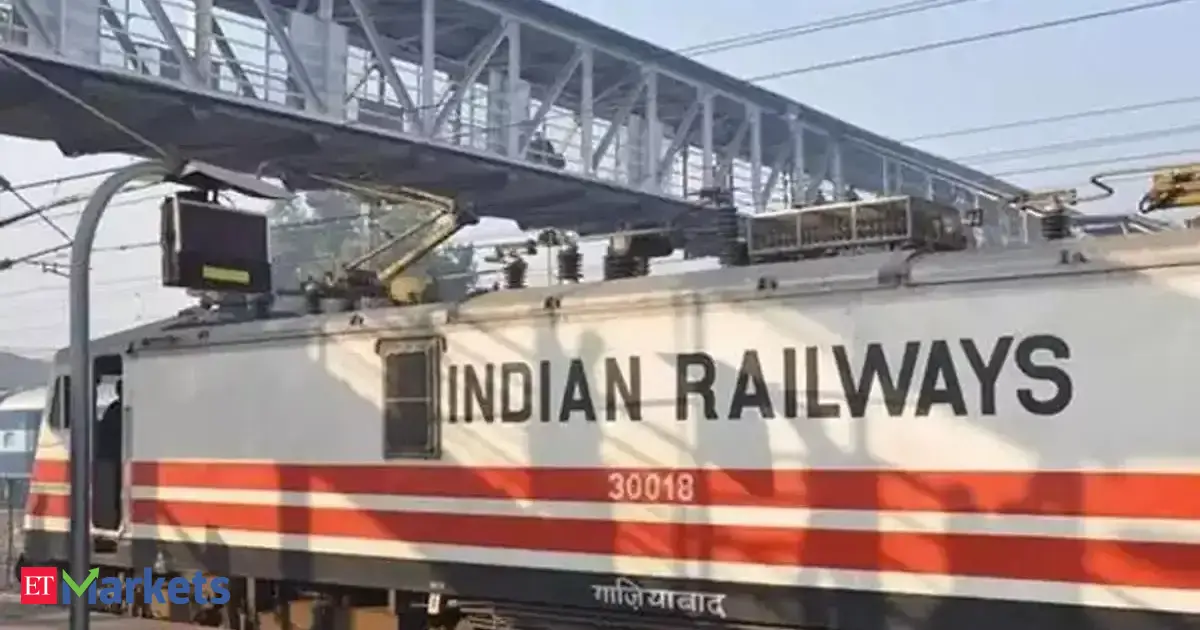
Shares of Rail Vikas Nigam Limited (RVNL) surged as much as 3.18% on Tuesday, touching an intraday high of Rs 235.50 after the company announced a fresh order win worth Rs 221.33 crore from South East Central Railway.In a regulatory filing, RVNL announced that it has secured a Letter of Acceptance (LoA) for a signalling and infrastructure upgrade project in the Bilaspur Division of South East Central Railway.The project involves the replacement of conventional Panel Interlocking systems with advanced Electronic Interlocking technology across multiple stations, including BSPR, KLPG, ABKP, MZH, HRV, PRDL, KTMA, BJRI, KJZ, MDGR, CHRM, GTK, KLTR, PLAU, and KBS. The scope of work also includes installation of indoor and outdoor signalling equipment, construction of OFC huts, development and electrification of S&T service buildings, and associated cabling works in adjoining railway sections.The contract has been awarded by South East Central Railway, a domestic entity, under the Engineering, Procurement, and Construction (EPC) model. The project is scheduled to be executed within 730 days.The total contract value stands at Rs 221.33 crore. RVNL clarified that neither the promoter group nor any group companies have any interest in the awarding entity, and the contract does not fall under related-party transactions.The latest order win further strengthens RVNL's robust order book and reinforces its position as a key player in India's railway infrastructure modernization drive. Investors cheered the development, driving the stock higher during Tuesday's trading session.Share Price Trend, Valuation & Technical OutlookDespite Tuesday's rally, RVNL's stock has been under significant selling pressure in recent months. The railway PSU has corrected nearly 25% over the past month, while investors have seen the stock decline by around 47% over the last one year, highlighting the sharp erosion in market value from its peak levels.The company currently commands a market capitalization of ₹47,586 crore. RVNL's shares have witnessed considerable volatility over the past year, with the stock hitting a 52-week high of ₹442.80 and a 52-week low of ₹227.01.From a valuation perspective, the stock trades at a Price-to-Earnings (P/E) ratio of 54.4 and a Price-to-Book (P/B) ratio of 4.85, indicating that investors continue to assign a premium valuation despite the recent correction.Also read: Wipro's Rs 15,000-crore buyback opens June 11; entitlement ratio and key details announcedOn the technical front, indicators suggest the stock may be approaching a critical zone. The 14-day Relative Strength Index (RSI) stands at 19, well below the 20-mark that is typically considered deeply oversold territory. Such readings often signal that selling may have become excessive and could pave the way for a technical rebound if buying interest returns.However, caution remains warranted. RVNL continues to exhibit a weak trend structure, with the stock currently trading below all eight of its key Simple Moving Averages (SMAs), a sign that bears still maintain control over the broader price trend.(Disclaimer: Recommendations, suggestions, views and opinions given by the experts are their own. These do not represent the views of Economic Times)
The Advance-Decline Ratio (ADR), a widely watched indicator of overall market health, was above one for May, pointing to growing investor confidence in mid and small-cap stocks despite weakness in the headline index.The monthly average ADR reading of all BSE stocks continued to remain strong as the ratio remained above one for two consecutive months. In May, the ratio was at 1.06 while the reading was at 1.5 in April, the highest since June 2020 in nearly six years. In June, the ratio has advanced to 0.86 as of Monday."The domestic investors continued to pump money into equities and midcaps typically attract retailers," said Jay Vora, technical analyst, Mirae Asset Sharekhan. "The large-caps however, bore the brunt of the foreign sell off," he said.The Nifty Midcap 100 index hit a record high in May and jumped 3.2% during the month, while the Nifty Smallcap 100 index rose 0.7%. The benchmarks Nifty and Sensex fell 2% and 2.8% respectively."Benchmark Nifty and the smallcap index remained 8-9% away from their peaks in May, while the midcap index scaled a fresh new high in the month," said Nilesh Jain, VP-head of Technical and Derivative Research, Centrum Finverse."This led to the divergence between the advance-decline ratio and benchmark Nifty," Jain said. 131599534Jain added that the smallcaps had slumped 24% from peaks but recovered almost 20% signaling that the rebound could sustain.An advancing Advance-Decline Ratio means more stocks are gaining and points to a strengthening market. While benchmark Nifty is likely to remain in a range, the broader market is expected to relatively outperform."The midcap index is holding above its breakout levels in May, and the momentum seems to be picking up in the smallcap index as well," said Vipin Kumar, AVP Equity Research & PMS (Derivatives & Technical Analyst), Globe Capital Market. For the Nifty Midcap 100, gains could extend to 63,500 levels while the Smallcap 100 index is expected to test its record high around 19,600 in June, he said."The midcaps and smallcaps are likely to outperform while the Nifty is anticipated to remain in a range with a negative bias," said Jain. "The largecaps are not looking promising currently and are likely to remain under pressure," he said.
Temple trust says “nothing noteworthy has come to light yet” in the audit; Akhilesh Yadav calls response “suspicious”; BJP says “narrative of lies will never succeed” and SP will lose 2027 polls
Mobile internet services, including social media, have been suspended for 24 hours in Jaipur North and East districts ahead of a JDA anti-encroachment drive. The drive aims to remove five religious structures to widen the Nandpuri Underpass. Authorities will monitor social media for misinformation and warned of strict action against those spreading religious frenzy or hatred.
While Mamata and Abhishek were earlier scheduled to travel to Delhi at the same time, the latter reached the Capital a day earlier.
Delhi Police on Saturday issued a clarification on X, dismissing claims circulating on social media that an FIR had been registered against protesters who participated in the Cockroach Janta Party's (CJP) demonstration at Jantar Mantar.In its post, Delhi Police stated: "Certain social media posts and news reports are claiming that Delhi Police has registered an FIR against the protesters at Jantar Mantar."The police further clarified: "It is clarified that no such FIR has been registered."Urging people not to spread misinformation, the post added: "Citizens are advised not to believe or circulate unverified information. Please rely only on official updates issued by Delhi Police."The clarification came amid widespread discussion online following the protest organised by the youth-led movement.— DelhiPolice (@DelhiPolice) Delhi Police denies reports of FIR against CJP protestersThe statement was issued after reports and social media posts suggested that legal action had been initiated against individuals who attended the protest at Jantar Mantar.However, Delhi Police made it clear that no FIR had been registered in connection with the demonstration.The department urged citizens to verify information through official channels before sharing it online, highlighting the importance of preventing the spread of false or misleading claims.Six people detained as precaution during Jantar Mantar protestEarlier in the day, Delhi Police confirmed that six individuals had been detained as a preventive measure to avoid any possible confrontation between rival groups near the protest venue.According to officials, police received inputs indicating the possibility of tensions between supporters and opponents of the online movement.The detentions were carried out to maintain law and order and ensure that the protest concluded peacefully.Officials said the individuals were taken into preventive custody after allegedly attempting to create a disturbance near the demonstration site.No major incidents were reported during the gathering.Heavy security deployed across Delhi for CJP demonstrationDelhi Police implemented extensive security arrangements ahead of the protest.More than 1,000 police personnel were deployed across New Delhi district and other sensitive locations in the national capital.Additional security measures were also put in place at Indira Gandhi International Airport and major border entry points.Senior officers closely monitored the situation, while barricades were installed around Jantar Mantar to regulate movement and maintain separation between groups.The security arrangements were aimed at ensuring public safety and preventing any disruption during the event.Hundreds gather at Jantar Mantar for Cockroach Janta Party protestThe protest was led by Cockroach Janta Party founder Abhijeet Dipke and attracted hundreds of participants, including students and young professionals.Many attendees wore cockroach masks and carried flowers as symbols associated with the movement.Several school students were also seen attending the gathering along with their parents.Participants raised slogans demanding accountability over alleged irregularities in examinations and recruitment processes.The protest focused on calls for the resignation of Union Education Minister Dharmendra Pradhan over concerns related to examination and recruitment systems.Why students joined the CJP protestThe Cockroach Janta Party emerged as a youth-driven online movement following allegations of irregularities in various examinations and recruitment tests.Supporters have raised concerns regarding examinations such as NEET, CUET, CBSE-linked tests and Staff Selection Commission (SSC) recruitment processes.Over the past several weeks, the group has expanded its reach through social media campaigns advocating greater transparency, accountability and reforms in examination systems.The Jantar Mantar gathering marked one of the movement's largest public demonstrations so far.Delhi Police urges public to rely on official informationFollowing the protest, Delhi Police reiterated the importance of relying on verified information from official sources.The department's clarification on X sought to counter rumours about an FIR and prevent misinformation from spreading online.While preventive detentions were carried out to maintain order, police confirmed that no FIR had been registered against protesters participating in the demonstration.Authorities continue to monitor the situation and have urged citizens to exercise caution before sharing unverified claims on social media.Inputs from agencies
Shares of Go Digit General Insurance surged 8.66% to Rs 329 during Friday's trading session, extending gains after a significant Rs 100-crore block deal in the previous session attracted prominent institutional investors.The block deal saw Aditya Birla Sun Life Mutual Fund and JPMorgan (Taiwan) Eastern Technology Fund collectively acquire 33.33 lakh shares at a weighted average price of Rs 300 per share.Aditya Birla Sun Life Mutual Fund purchased 21.66 lakh shares worth approximately Rs 65 crore, while JPMorgan (Taiwan) Eastern Technology Fund acquired 11.66 lakh shares valued at around Rs 35 crore.The seller in the transaction was Peak XV Partners Growth Investments III, which offloaded its entire 33.33 lakh-share stake for nearly Rs 100 crore.Stock PerformanceDespite Friday's sharp rally, Go Digit Insurance has remained under pressure over the past year, with the stock declining around 10% during the period. The company currently commands a market capitalisation of Rs 27,993 crore.The stock's 52-week high stands at Rs 381.40, while its 52-week low is Rs 295.50.On the valuation front, Go Digit Insurance trades at a Price-to-Earnings (P/E) ratio of 49.28 and a Price-to-Book (P/B) ratio of 6.51, reflecting premium market expectations for the insurer's growth prospects.The company delivered a robust financial performance in the March 2026 quarter. Revenue rose 9% year-on-year to Rs 3,181 crore, while net profit surged 49.2% YoY to Rs 173 crore, highlighting improved profitability and operational efficiency.The shareholding pattern for the March 2026 quarter reflected mixed investor activity. Promoters marginally reduced their stake in the company from 73.03% to 73.01%, while Foreign Institutional Investors (FIIs) trimmed their holdings from 8.26% to 8.01%. In contrast, mutual funds increased their ownership from 8.02% to 8.28%, signaling continued confidence from domestic institutional investors despite the reduction in foreign investor participation.From a technical perspective, the stock's Relative Strength Index (RSI-14) stands at 40.8. An RSI below 30 is generally considered oversold, while a reading above 70 signals overbought conditions.Go Digit Insurance is currently trading above 5 out of its 8 key Simple Moving Averages (SMAs), suggesting improving near-term momentum. However, the stock remains below its 100-day, 150-day, and 200-day moving averages, indicating that long-term trend confirmation is still awaited.The sharp rally following the Rs 100-crore block deal and increased mutual fund participation has put Go Digit Insurance back on investors' radar. Market participants will closely watch whether the stock can sustain momentum and reclaim key long-term resistance levels in the coming sessions.(Disclaimer: Recommendations, suggestions, views and opinions given by the experts are their own. These do not represent the views of Economic Times)
Local residents say that the toxically polluted Amayizhanjan canal, a noxious black open sewer that doubles as a convenient trash dump and a fertile breeding ground for malaria- and dengue-spreading mosquitoes, which courses through the heart of the city, overflowed, raising the spectre of diseases, including leptospirosis
The court said the objective of the Assisted Reproductive Technology (Regulation) Act is to ensure ethical and safe practices, not to create barriers
Shares of Anant Raj surged as much as 4.6% to Rs 563.25 in Tuesday's trade after the company announced a landmark partnership with the Government of Haryana to accelerate the state's digital infrastructure buildout.The real estate and infrastructure developer has signed a Memorandum of Understanding (MoU) with the Haryana Enterprises Promotion Centre (HEPC), marking a significant step in its ambitions to expand its data centre and cloud services business.The agreement was formalized on June 1, 2026, during the launch of the "Make in Haryana Policy & Other Sectoral Policies" event, presided over by Haryana Chief Minister Nayab Singh Saini.Rs 25,000 crore investment planUnder the MoU, Anant Raj intends to invest around Rs 25,000 crore in building data centres and cloud infrastructure across Haryana. The move highlights the company's increasing emphasis on digital infrastructure as demand continues to grow for artificial intelligence (AI), cloud computing, and data storage solutions.The partnership framework involves several key government departments and agencies, including:Haryana Enterprises Promotion Centre (HEPC)Department of Information Technology, Electronics & CommunicationHaryana State Electronics Development CorporationCitizen Resources Information DepartmentDepartment of Industries & CommerceThe agreement is designed to support Anant Raj's expansion of its Digital Infrastructure Business, encompassing both data centre operations and cloud services. The Haryana government, through HEPC, has committed to providing facilitation support and ease-of-doing-business assistance to help fast-track the project.The company said the arrangement aims to foster long-term cooperation between the state government and Anant Raj, positioning Haryana as a major hub for next-generation digital infrastructure investments.Anant Raj clarified that the MoU does not involve any shareholding arrangement, special rights, equity issuance, or related-party transaction. The agreement is focused solely on enabling investment and operational expansion in the state.Share price performance and technical indicatorsOver the past three years, the stock has delivered strong returns, rallying nearly 254%. The company currently commands a market capitalization of approximately Rs 19,406 crore.From a technical perspective, the 14-day Relative Strength Index (RSI) stands at 61. An RSI reading below 30 typically indicates oversold conditions, while a reading above 70 suggests the stock may be overbought.The stock also exhibits strong bullish momentum, trading above all eight of its key Simple Moving Averages (SMAs), signaling a positive technical trend.(Disclaimer: Recommendations, suggestions, views and opinions given by the experts are their own. These do not represent the views of The Economic Times)
Facilities such as meditation centre, reading room, selfie points, children’s play areas, separate play equipment for persons with disabilities, and breastfeeding rooms have been set up at the beach
Shares of NMDC Steel rallied as much as 17.92% to an intraday high of Rs 52.62 during Monday's trading session after the company reported a sharp turnaround in its fourth-quarter and FY26 earnings. The stock hit a fresh 52-week high as investors cheered its return to profitability and strong revenue growth.NMDC Steel returned to profitability in the March quarter, posting a net profit of Rs 391.91 crore compared with a net loss of Rs 473 crore in the corresponding quarter last year. The company had also reported a loss of Rs 244 crore in the December 2025 quarter, making the latest earnings performance a significant turnaround.Revenue from operations jumped 37% year-on-year to Rs 3,879 crore in Q4 FY26 from Rs 2,838 crore in the same quarter last year. On a sequential basis, revenue rose sharply from Rs 3,007 crore reported in the previous quarter.The company also reported its first profitable full-year performance, posting a net profit of Rs 59 crore in FY26 compared with a substantial net loss of Rs 2,374 crore in FY25.Annual revenue from operations surged nearly 60% to Rs 13,641.81 crore, compared with Rs 8,503 crore in the previous financial year, highlighting strong growth in production and sales volumes.Further underlining the improvement in earnings quality, earnings per share (EPS) turned positive at Rs 1.34 for FY26.Valuation and Market PositionFollowing the sharp rally, NMDC Steel commands a market capitalization of approximately Rs 13,076 crore. The stock continues to trade at a Price-to-Sales (P/S) ratio of 1.15 and a Price-to-Book (P/B) ratio of 1.0.Institutional Investors Increase ExposureForeign Institutional Investors (FIIs) marginally increased their stake from 4.81% to 4.85% during the March 2026 quarter. Meanwhile, mutual fund holdings rose from 0.71% to 0.83%, indicating growing confidence among domestic institutional investors.Technical Indicators Signal StrengthFrom a technical perspective, the stock remains firmly in bullish territory. NMDC Steel is currently trading above all 8 of its key simple moving averages (SMAs), a sign of strong upward momentum.The stock's 14-day Relative Strength Index (RSI) stands at 56.9. An RSI below 30 is generally considered oversold, while a reading above 70 indicates overbought conditions. The current RSI suggests the stock has room to move higher without entering overheated territory.(Disclaimer: Recommendations, suggestions, views and opinions given by the experts are their own. These do not represent the views of The Economic Times)
AI tools are becoming more convincing, but experts warn their tendency to confidently present false information is a growing concern. These systems, optimized for plausibility rather than truth, can mislead users in critical areas like research and healthcare. The risk of errors spreading due to unverified AI responses is significant, making detection harder.
Five patients infected with a rare Ebola strain have recovered in the Democratic Republic of Congo, with four set for discharge from a new treatment center. This marks the first documented recovery from the Bundibugyo strain, as the WHO urges early medical attention amidst community resistance and a rapidly spreading outbreak.
The WHO chief is urging greater international backing to combat a rapidly spreading Ebola outbreak in the DRC, highlighting delays and community mistrust as major hurdles. He stressed the need for local cooperation and urged countries to reconsider travel bans. The outbreak has already reached Uganda, with thousands of cases and hundreds of deaths reported.
With Indian markets trading near elevated long-term averages, relying on a single, static asset class carries higher risk. According to Ihab Dalwai, Senior Fund Manager at ICICI Prudential AMC, high return dispersion means the real opportunity over the next three years lies in a flexible asset allocation framework that actively shifts capital between equities, debt, and commodities to deliver better risk-adjusted outcomes.Edited excerpts from a chat with the fund manager:How different is Active Asset Allocator Long-Short strategy from your existing Balanced Advantage Fund or Multi-Asset Fund, which you already co-manage?Unlike the traditional mutual fund offerings such as Balanced Advantage Funds (BAF) or Multi-Asset Funds, the Active Asset Allocator Long-Short strategy is structurally different as it operates within the Specialized Investment Fund (SIF) framework, which provides decent higher portfolio flexibility.While BAFs and Multi-Asset Funds primarily manage net exposure through hedging and dynamic allocation, the SIF structure allows us to deploy a wider range of derivative-based strategies. This enables the portfolio to potentially generate returns not only from directional market participation but also from relative opportunities across asset classes and market conditions.Another key difference is the breadth of the opportunity set. The strategy dynamically allocates across equities, debt, commodities, InvITs and derivatives, with the flexibility to actively recalibrate exposures depending on valuations, macros and risk-adjusted opportunities. The objective is to create a more adaptive portfolio that seeks smoother outcomes across cycles while maintaining a disciplined buy low, sell high philosophy.At a time when Indian markets are trading near elevated long-term averages, how are you reading the current risk-reward equation across equities, debt and commodities? Which asset class currently looks most attractive from a three-year perspective?From a three-year perspective, we believe investors should avoid thinking in terms of a single winning asset class. The current environment is more suited for dynamic asset allocation because return dispersion across asset classes could remain high.Equity valuations have corrected in pockets where expectations are low and such opportunities have increased over the last 1-2 years. At the same time, fixed income has become relatively more attractive after the sharp repricing in global rates. Commodities, especially precious metals, performed well over the last year due to dollar devaluation, however that trend has currently paused because of rising rates in the US.In our view, the opportunity today lies in actively shifting between these asset classes rather than remaining concentrated in one asset class. Over the next three years, a flexible allocation approach may potentially deliver better risk-adjusted outcomes than static exposure.Your framework talks about “being invested the right way at the right time.” What are the biggest macro variables driving your current asset allocation stance?Our framework for equities combines a valuation plus earnings overlays. In case of debt and commodities, our allocation is based on various macro indicators. The key macro variables we monitor include growth trends, inflation trajectory, liquidity conditions, real interest rates, currency movements and earnings cycles. At a broader level, we try to identify the prevailing growth-inflation regime because different asset classes tend to perform differently across economic phases. For example, equities and cyclical commodities generally perform better during growth-led expansions, while gold and duration assets tend to outperform during slowdown or uncertainty-driven phases.Commodities are emerging as a bigger allocation theme globally. Do you believe Indian investors remain structurally underallocated to commodities if we exclude household gold?Commodities has to be seen from a tactical allocation perspective rather than a structural allocation as they don’t pay either dividend or interest as other asset classes do. Hence, give the sharp run up in commodity prices, we don’t see an issue with relatively lesser allocation to commodities today.How do you see gold behaving if global growth weakens but inflation remains sticky?It is a tricky situation because the outlook on real rates is not clear. Historically gold as an asset class tends to do well when US real rates come off.What role do InvITs play in the portfolio construction process, especially in a rising interest rate environment?InvITs can play an important diversification role within the portfolio because they provide exposure to infrastructure-linked cash flow assets that are relatively distinct from traditional equity and debt instruments.In a rising rate environment, there can be near-term valuation pressure on yield-oriented assets, including InvITs. However, the impact also depends on the strength and growth visibility of the underlying assets and cash flows. Therefore, selective allocation becomes important rather than taking a broad-based view.Do you think that midcaps are now in a sweet spot and, barring a few pockets, unimpacted by the geopolitical conflict? In your Large and Midcap Fund, how overweight are you on midcaps?Midcaps continue to offer selective opportunities, particularly in businesses benefiting from domestic economic formalisation, manufacturing expansion, financialisation and government-led capex. However, after the strong rally seen over the last few years, valuations in certain parts of the midcap universe continue to remain elevated. Therefore, midcaps are not a homogeneous segment. Stock selection and valuation discipline become increasingly important in the current environment.Within the midcap universe, which sectors do you like from a 3-5 year perspective and why?The approach to midcaps has to be bottom up. Having said that, there are opportunities in certain platform companies and consumer facing businesses which have meaningfully underperformed over the last three years and have muted expectations from the market which makes them a good investment case today.
With Indian markets trading near elevated long-term averages, relying on a single, static asset class carries higher risk. According to Ihab Dalwai, Senior Fund Manager at ICICI Prudential AMC, high return dispersion means the real opportunity over the next three years lies in a flexible asset allocation framework that actively shifts capital between equities, debt, and commodities to deliver better risk-adjusted outcomes.Edited excerpts from a chat with the fund manager:How different is Active Asset Allocator Long-Short strategy from your existing Balanced Advantage Fund or Multi-Asset Fund, which you already co-manage?Unlike the traditional mutual fund offerings such as Balanced Advantage Funds (BAF) or Multi-Asset Funds, the Active Asset Allocator Long-Short strategy is structurally different as it operates within the Specialized Investment Fund (SIF) framework, which provides decent higher portfolio flexibility.While BAFs and Multi-Asset Funds primarily manage net exposure through hedging and dynamic allocation, the SIF structure allows us to deploy a wider range of derivative-based strategies. This enables the portfolio to potentially generate returns not only from directional market participation but also from relative opportunities across asset classes and market conditions.Another key difference is the breadth of the opportunity set. The strategy dynamically allocates across equities, debt, commodities, InvITs and derivatives, with the flexibility to actively recalibrate exposures depending on valuations, macros and risk-adjusted opportunities. The objective is to create a more adaptive portfolio that seeks smoother outcomes across cycles while maintaining a disciplined buy low, sell high philosophy.At a time when Indian markets are trading near elevated long-term averages, how are you reading the current risk-reward equation across equities, debt and commodities? Which asset class currently looks most attractive from a three-year perspective?From a three-year perspective, we believe investors should avoid thinking in terms of a single winning asset class. The current environment is more suited for dynamic asset allocation because return dispersion across asset classes could remain high.Equity valuations have corrected in pockets where expectations are low and such opportunities have increased over the last 1-2 years. At the same time, fixed income has become relatively more attractive after the sharp repricing in global rates. Commodities, especially precious metals, performed well over the last year due to dollar devaluation, however that trend has currently paused because of rising rates in the US.In our view, the opportunity today lies in actively shifting between these asset classes rather than remaining concentrated in one asset class. Over the next three years, a flexible allocation approach may potentially deliver better risk-adjusted outcomes than static exposure.Your framework talks about “being invested the right way at the right time.” What are the biggest macro variables driving your current asset allocation stance?Our framework for equities combines a valuation plus earnings overlays. In case of debt and commodities, our allocation is based on various macro indicators. The key macro variables we monitor include growth trends, inflation trajectory, liquidity conditions, real interest rates, currency movements and earnings cycles. At a broader level, we try to identify the prevailing growth-inflation regime because different asset classes tend to perform differently across economic phases. For example, equities and cyclical commodities generally perform better during growth-led expansions, while gold and duration assets tend to outperform during slowdown or uncertainty-driven phases.Commodities are emerging as a bigger allocation theme globally. Do you believe Indian investors remain structurally underallocated to commodities if we exclude household gold?Commodities has to be seen from a tactical allocation perspective rather than a structural allocation as they don’t pay either dividend or interest as other asset classes do. Hence, give the sharp run up in commodity prices, we don’t see an issue with relatively lesser allocation to commodities today.How do you see gold behaving if global growth weakens but inflation remains sticky?It is a tricky situation because the outlook on real rates is not clear. Historically gold as an asset class tends to do well when US real rates come off.What role do InvITs play in the portfolio construction process, especially in a rising interest rate environment?InvITs can play an important diversification role within the portfolio because they provide exposure to infrastructure-linked cash flow assets that are relatively distinct from traditional equity and debt instruments.In a rising rate environment, there can be near-term valuation pressure on yield-oriented assets, including InvITs. However, the impact also depends on the strength and growth visibility of the underlying assets and cash flows. Therefore, selective allocation becomes important rather than taking a broad-based view.Do you think that midcaps are now in a sweet spot and, barring a few pockets, unimpacted by the geopolitical conflict? In your Large and Midcap Fund, how overweight are you on midcaps?Midcaps continue to offer selective opportunities, particularly in businesses benefiting from domestic economic formalisation, manufacturing expansion, financialisation and government-led capex. However, after the strong rally seen over the last few years, valuations in certain parts of the midcap universe continue to remain elevated. Therefore, midcaps are not a homogeneous segment. Stock selection and valuation discipline become increasingly important in the current environment.Within the midcap universe, which sectors do you like from a 3-5 year perspective and why?The approach to midcaps has to be bottom up. Having said that, there are opportunities in certain platform companies and consumer facing businesses which have meaningfully underperformed over the last three years and have muted expectations from the market which makes them a good investment case today.
Matt Walsh criticized an X user for spreading claims that Erika Kirk was dating Blake Wynn. The rumor originated from Project Constitution, which alleged the two were seen together at a Beverly Hills hotel. Erika Kirk strongly denied the accusation, saying she was in Arizona with her family. Blake Wynn also rejected the rumor and said they are not dating.
New Delhi: The Commission for Air Quality Management (CAQM) on Friday revoked stage one curbs under the Graded Response Action Plan in Delhi-NCR, following significant improvement in air quality.Owing to favourable meteorological conditions, the air quality index (AQI) of Delhi was recorded at 123, in the 'moderate' category on Friday, according to CAQM.Further, the forecast by the India Meteorological Department (IMD) and Indian Institute of Tropical Meteorology (IITM) indicates that AQI is likely to remain in 'moderate' category in the coming days, an official said.Also read | Major change in NEET-UG exam from 2027GRAP-1 restrictions have been in force under an order issued May 19.With the revocation of GRAP-1, restrictions such as ban on use of coal and firewood as fuel in tandoors in hotels, restaurants, and open eateries, and use of diesel generators only in emergency or essential situations, are removed.There are four stages under GRAP, each linked to AQI readings. The first stage, GRAP-1, kicks in when AQI is between 201 and 300; the second stage, GRAP-2, is invoked when the AQI is between 301 and 400; GRAP-3 kicks in between 401 and 500; and GRAP-4 is invoked when the AQI is more than 450.Also read | The Indian club that outlasted the British may not survive ModiAccording to the Central Pollution Control Board, an AQI between zero and 50 is considered 'good', 51-100 'satisfactory', 101-200 'moderate', 201-300 'poor', 301-400 'very poor', and 401-500 'severe'.