The Hindu National
진보 성향
정치
Telangana achieves record paddy procurement of 1.47 crore tonnes in 2025-26
Minister for Civil Supplies Uttam Kumar Reddy flays Oppn. parties for playing spoilsport
🇮🇳 인도 · "PROCUREMENT" · 총 45건
필터 보기현재 지수
48.2
0 = 부정 우세
50 = 중립
100 = 긍정 우세
최근 7일 기준 5,847건을 분석한 결과, 뉴스 심리지수는 48.2(균형)입니다. 긍정 567건(9.7%)·중립 3,954건(67.6%)·부정 1,326건(22.7%)이며, 중립 비중이 뚜렷하게 높습니다. 성향 지수는 종합 12.5(중도 균형)입니다.
Minister for Civil Supplies Uttam Kumar Reddy flays Oppn. parties for playing spoilsport
HC seeks entire records relating to the conduct of Ashtabhishekam, Mahanivedyam, Ganapathy Homam and other Vazhipadu (offerings) for the past 10 years
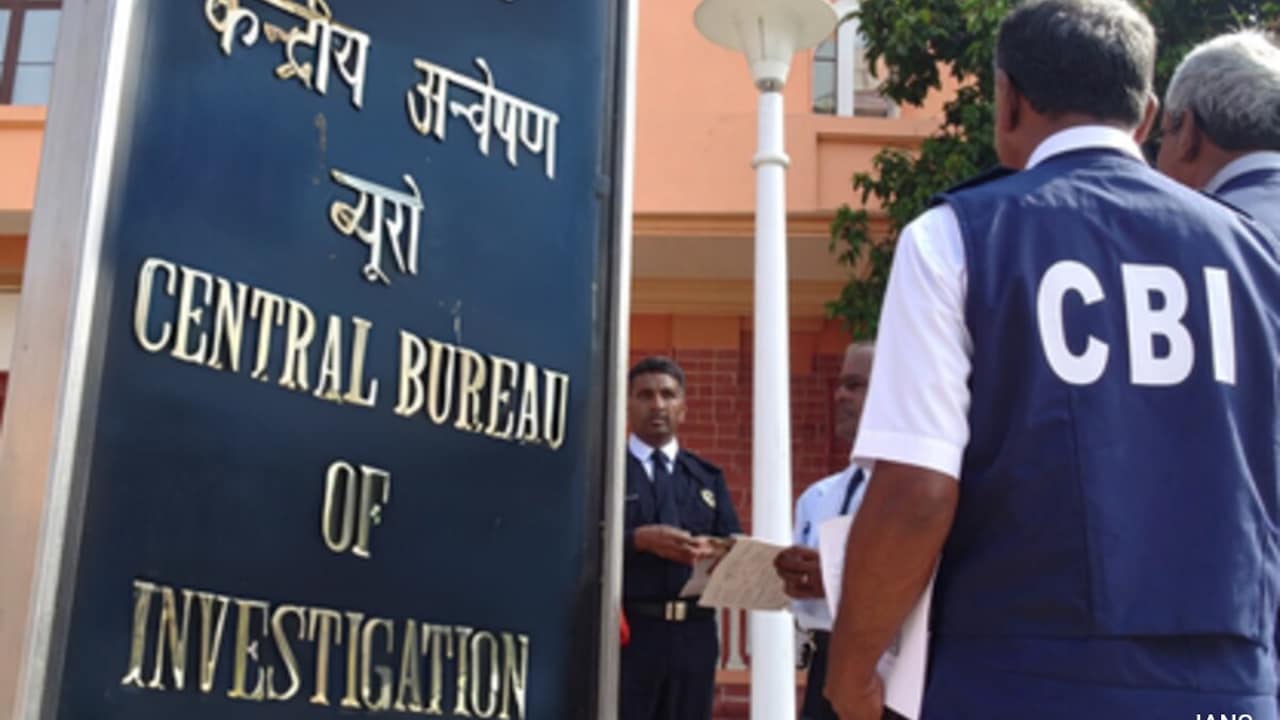
CBI investigates alleged Rs 397 crore loss in Tamil Nadu transformer procurement tenders.
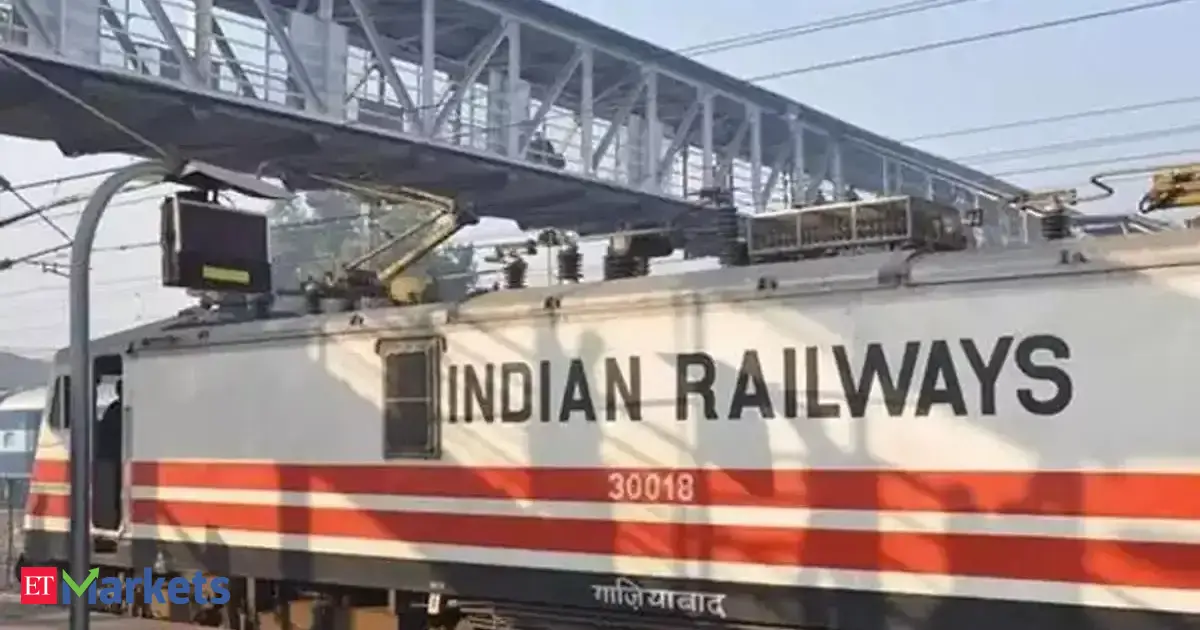
Shares of Rail Vikas Nigam Limited (RVNL) surged as much as 3.18% on Tuesday, touching an intraday high of Rs 235.50 after the company announced a fresh order win worth Rs 221.33 crore from South East Central Railway.In a regulatory filing, RVNL announced that it has secured a Letter of Acceptance (LoA) for a signalling and infrastructure upgrade project in the Bilaspur Division of South East Central Railway.The project involves the replacement of conventional Panel Interlocking systems with advanced Electronic Interlocking technology across multiple stations, including BSPR, KLPG, ABKP, MZH, HRV, PRDL, KTMA, BJRI, KJZ, MDGR, CHRM, GTK, KLTR, PLAU, and KBS. The scope of work also includes installation of indoor and outdoor signalling equipment, construction of OFC huts, development and electrification of S&T service buildings, and associated cabling works in adjoining railway sections.The contract has been awarded by South East Central Railway, a domestic entity, under the Engineering, Procurement, and Construction (EPC) model. The project is scheduled to be executed within 730 days.The total contract value stands at Rs 221.33 crore. RVNL clarified that neither the promoter group nor any group companies have any interest in the awarding entity, and the contract does not fall under related-party transactions.The latest order win further strengthens RVNL's robust order book and reinforces its position as a key player in India's railway infrastructure modernization drive. Investors cheered the development, driving the stock higher during Tuesday's trading session.Share Price Trend, Valuation & Technical OutlookDespite Tuesday's rally, RVNL's stock has been under significant selling pressure in recent months. The railway PSU has corrected nearly 25% over the past month, while investors have seen the stock decline by around 47% over the last one year, highlighting the sharp erosion in market value from its peak levels.The company currently commands a market capitalization of ₹47,586 crore. RVNL's shares have witnessed considerable volatility over the past year, with the stock hitting a 52-week high of ₹442.80 and a 52-week low of ₹227.01.From a valuation perspective, the stock trades at a Price-to-Earnings (P/E) ratio of 54.4 and a Price-to-Book (P/B) ratio of 4.85, indicating that investors continue to assign a premium valuation despite the recent correction.Also read: Wipro's Rs 15,000-crore buyback opens June 11; entitlement ratio and key details announcedOn the technical front, indicators suggest the stock may be approaching a critical zone. The 14-day Relative Strength Index (RSI) stands at 19, well below the 20-mark that is typically considered deeply oversold territory. Such readings often signal that selling may have become excessive and could pave the way for a technical rebound if buying interest returns.However, caution remains warranted. RVNL continues to exhibit a weak trend structure, with the stock currently trading below all eight of its key Simple Moving Averages (SMAs), a sign that bears still maintain control over the broader price trend.(Disclaimer: Recommendations, suggestions, views and opinions given by the experts are their own. These do not represent the views of Economic Times)
13.5 million kg of produce has been procured at auction platforms so far as compared to over 50 million kg during the corresponding period last year
Minister cites transparent paddy procurement, timely payments, WhatsApp-based sales and QR code-enabled smart ration cards as key reforms implemented over the past two years
Maharashtra farmers welcomed relaxed onion procurement rules but demand a minimum support price of Rs 3,000 per quintal, stating current rates of Rs 1,580 are below production costs. They seek transparent procurement and compensation for past losses, arguing that rule changes alone won't resolve their financial distress.
The previous LDF government had, during its final months in office, announced a pilot project to route paddy procurement through cooperative societies in Palakkad district
India's onion farmers, particularly in Maharashtra's Nashik district, are facing a deepening crisis as falling auction rates and oversupply continue to push prices downward. In what many are calling the "Onion Paradox," bumper production has failed to translate into profits, leaving growers burdened with mounting debt and financial losses. As returns shrink, several farmers are reportedly shifting to less risky crops in search of stable incomes.The situation has triggered growing demands for government intervention, with farmer groups seeking measures such as better price support, improved procurement systems, export incentives, and market reforms. The crisis highlights the challenges faced by agricultural producers when supply outpaces demand, leaving farmers vulnerable despite strong harvests. n18oc_breaking-newsn18oc_IndiaNews18 Mobile App - https://onelink.to/desc-youtube
Minister says in previous LDF govt’s tenure, paddy was procured through cooperative societies in Palakkad on an experimental basis, and that UDF govt has decided to continue erstwhile practice of procuring it entirely via Supplyco
The State government is planning a major administrative overhaul of Tasmac operations, from the procurement stage to the retail sale of liquor
The two sides are looking at expanding energy cooperation, as New Delhi seeks to diversify its crude oil procurement amid supply disruptions from the West Asia crisis.
Sarthak Sidhant’s detailed blog on CBSE’s On-Screen Marking (OSM) system, based on an analysis of official tender documents linked to the digital evaluation of Class 12 answer sheets, has triggered wider questions on transparency and procurement processes. The issue has now reached political circles, with opposition leaders, including Congress leader Rahul Gandhi, sharing the blog and demanding accountability
India eyes Rs 20,000-crore military drone procurement in largest such purchase
The Indian rupee is trading around Rs. 95-96 to the dollar in late May 2026, setting fresh record lows. Markets are openly discussing the Rs. 100 threshold. The rupee has weakened in almost every year since 2014 and has lost approximately half its value against the dollar over that period. The end of this currency depreciation is not in sight. The factors that would stop it are not yet visible.The government is acting. State run oil companies have implemented four fuel price hikes in ten days as of May 25, taking petrol in Delhi past Rs. 102 per litre. This is the right and necessary response to the energy cost reality created by the Iran war. Crucially, the Modi government has also done its part on the macroeconomic front, consistently and aggressively reducing the fiscal deficit as a percentage of GDP to maintain structural stability.Yet, the currency pressure persists. The energy price impact has not yet fully reached Indian consumers and supply chains. It is coming.Uday Kotak said it plainly at the CII Annual Business Summit on May 12: "Be ready for tough times rather than waiting for the shock to hit us." He was right.Also read | Manufactured monopoly: How industrial policy is structuring monopolies in IndiaThis is not a time to panic. But it is a time to act. The leaders who move now will have options. Those who wait will not.The Overriding Factor: The Psychology of the PlayersWhy is the currency declining despite strong domestic fiscal discipline? Because exchange rates are not driven by mathematical models alone. The currency decline is highly affected—and accelerated—by the psychology of all players engaged in this endeavor.Currency movements are deeply behavioral. When a currency visualizes a downward trend, psychology shifts from calculation to self-protection and speculation. Every player in the ecosystem operates under this psychological weight:Corporate CFOs and Treasurers: Instead of hedging normally, they rush to cover future dollar liabilities early, hoarding hard currency and inadvertently worsening the scarcity.Foreign Investors: They begin to judge their returns not by the quality of Indian business operations, but by the eroding value of the conversion rate.Importers and Exporters: Importers advance their payments to avoid paying more tomorrow; exporters delay converting their dollar earnings back into rupees, waiting for a "better" rate. This collective psychology creates a self-fulfilling prophecy.Investors, CFOs, and FDI decision makers extrapolate what is happening now into the future. When they see a currency that has lost approximately half its value since 2014 with no clear floor in sight, their psychological pivot alters market realities.Also read | India tightens checks on overseas flows as currency pressure mounts, sources sayThe cascading timeline of Foreign Portfolio Investor (FPI) equity behavior perfectly mirrors this psychological shift from rational evaluation to systemic risk aversion:2024 (The Calculation Phase): Rupee averages Rs. 83-84. FPI flows remain positive (+$12 billion) as investors trade on strong domestic corporate earnings.2025 (The Self-Protection Phase): Rupee slides past Rs. 89. Collective psychology shifts to risk mitigation. FPIs withdraw a record $18.4 billion from Indian equities—the largest annual equity outflow on record.Early 2026 (The Capitulation Phase): Rupee breaks past Rs. 95. Sentiment turns into an outright exit strategy. In the first four months of 2026 alone, outflows have already reached $19.1 billion, completely bypassing the entire previous year's record loss in a fraction of the time.FDI agreements are being signed, but capital is delayed because players are psychologically hesitant to deploy funds into a depreciating asset.The Trap of Hard Currency Debt: A Broken Business Model There is a highly significant and dangerous phenomenon unfolding in India today that requires immediate exposure. For years, a specific class of Indian corporates adopted a regular strategy of borrowing heavily in hard currency (External Commercial Borrowings, or ECBs). Lured by low nominal global interest rates, several of these companies over borrowed, treating cheap dollar debt as a permanent structural advantage.Today, that strategy has become a trap. The compounding effect of a depreciating rupee, skyrocketing hedging costs, and brutal refinancing realities is fundamentally breaking their business models.Consider the mechanics of this crisis:The Hedging Penalty: Leaving dollar debt unhedged is now corporate roulette. However, buying hedges at current rupee levels has become structurally prohibitive. The cost of protection completely wipes out any interest rate advantage.The Refinancing Wall: Billions in foreign debt are coming due. These over-borrowed companies must now refinance their liabilities at a time when the rupee value has materially deteriorated. They are effectively forced to borrow far more rupees just to pay back the same amount of original dollars.The Crushing Cost of Rupee Capital: As these companies try to pivot back to domestic lenders, they face a severe escalation in their rupee cost of capital.The Growth Verdict: When your cost of capital spikes and your cash flows are consumed by servicing legacy dollar debt, future growth stops. Capital expenditure (CapEx) plans are being frozen. These companies can no longer invest in innovation, capacity, or market expansion. Their business model shifts overnight from aggressive value creation to basic survival. Boards must realize that this is not a temporary treasury headache; it is a structural threat to the company’s future viability.India's forex reserves stand at approximately 10 to 11 months of import cover. Substantial, but being actively deployed to defend the currency. Some imports are non-negotiable: oil, critical inputs, components. These will now cost more. That cost passes through every supply chain.Six Actions for Business Leaders1. Protect your cash and liquidity first. This is the most immediate priority. Map your cash position today. Identify every source of liquidity across the next twelve months. Stress-test it at Rs. 100 and beyond. Which receivables are at risk? Which credit lines are rupee-denominated and which are not? Companies that run into a cash crisis during a currency depreciation cycle lose their options entirely. The CFO must own this analysis and present it to the board within days, not weeks.2. Act now on your foreign currency borrowings, hedging, and refinancing. Do not assume the rupee will recover to Rs. 80. Analyse your full foreign currency exposure across the next three years: every loan, every refinancing date, every hedging contract, every procurement price denominated in foreign currency. Hard currency loans now face refinancing at rupee values that have materially deteriorated. Model every scenario at Rs. 100 and beyond. Your CFO, treasury, and procurement team must be aligned on one instruction: do not run into a liquidity crisis. This analysis must happen now, not at the next quarterly review.3. Build a war room. Most companies have begun thinking about war rooms for supply chain disruptions. Expand the mandate. Currency exposure belongs in the same room. Which of your costs are dollar or euro denominated? Which of your revenues are rupee denominated? Where is the mismatch? What is your break-even exchange rate? If you do not have clear answers today, you are exposed. The war room is not a committee. It is a real-time decision environment with live data, a clear owner, and the authority to act.4. Use the currency depreciation advantage: double your export salesforce. A weaker rupee makes Indian exports more competitive. This window will not stay open indefinitely. Double the salesforce in your export markets now. Use this period to upgrade quality, improve service delivery, and build customer relationships that will last beyond the currency advantage. Indian exporters who invest in capability during this period will emerge stronger regardless of what the rupee does next. Those who simply ride the price advantage without building the underlying business will lose when conditions change.5. Watch your stock and your sector. Banks and financial institutions should already be on high alert. Companies with large foreign currency exposure will see pressure on their financials. Some stock prices are already reflecting this. Go through your sector company by company. Identify who is most exposed. If you are an investor or a lender, this analysis is not optional. The combination of currency depreciation, rising oil prices, and FPI outflows creates a compounding pressure that will surface in earnings before it surfaces in headlines.6. Cut costs aggressively. AI will help. There has never been more urgency to reduce costs than now. And there has never been a better tool to do it. AI can cut most operational costs by as much as 30% across functions: procurement, finance, customer service, logistics, and compliance. McKinsey data confirms companies adopting AI and automation reduce operational costs by 20 to 30 percent. This is not a future opportunity. It is a present imperative. Every rupee of cost removed through AI is a rupee that does not need to be recovered through revenue in a deteriorating currency environment. Start now with your highest-cost functions.The CFO as CaptainCurrency risk is a cash flow risk. Every function that touches foreign currency—procurement, treasury, sales, capex planning— must now report into a single coordinating authority. That authority is the CFO. This is not about hierarchy. It is about clarity. In a currency crisis, fragmented decision-making is as dangerous as wrong decision making. One captain. One consolidated view. Weekly reviews minimum.The Bigger PictureThis currency depreciation is a structural signal, not a cyclical one. India's economy must move from a cheap labour advantage to genuine global value creation.The companies that will survive and thrive are those building products and services that command premium prices in global markets. The rupee's weakness is a reminder that competing on cost alone has limits.The recently concluded trade agreements are a genuine opportunity. Execute them with full force. Build the export pipelines. Add the sales capacity.The businesses that move now, with discipline and clarity, will manage market psychology, navigate the debt trap, and define the next chapter of Indian industry.The shock is coming. Prepare before it arrives.Ram Charan is the author of China’s 90% model. It is restricting India’s industrial progress. Former Director of Hindalco and Muyuan (China).
Highlighting the need for quality-based procurement, Sumit Kumar urges farmers to harvest fruits only after they reach proper maturity, as well-ripened mangoes are likely to fetch better prices
Retired IAS officer S Radha Chauhan has been tasked to investigate issues related to the procurement of services for the CBSE's OSM system.
The Centre has removed CBSE chairperson Rahul Singh and secretary Himanshu Gupta following criticism over the digital evaluation system's rollout. An inquiry has been ordered into the procurement of the on-screen marking system, with Lokhande Prashant Sitaram appointed as the new CBSE chairperson.