NDTV Top Stories
보수 성향
기타
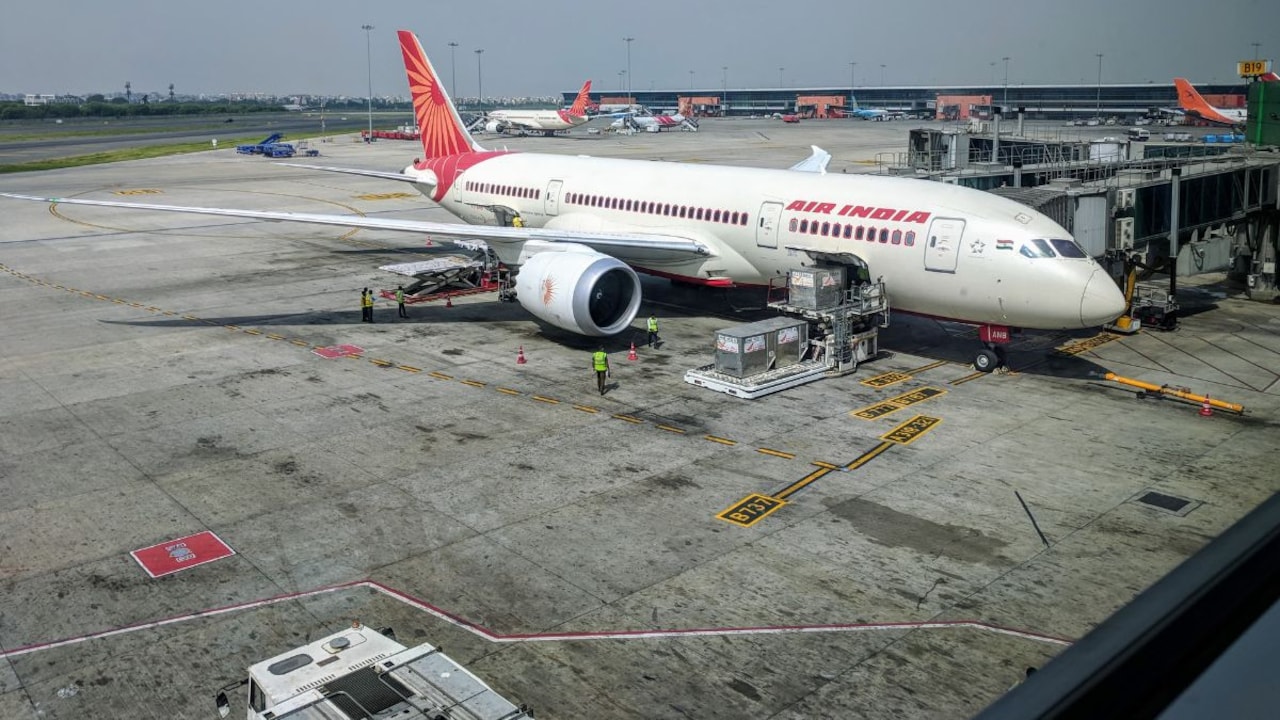
Air India Passenger Breaks Window Pane Mid-Flight, No-Fly Action Looms
The cockpit crew followed standard operating procedure and alerted security agencies.
🇮🇳 인도 · "PANE" · 총 125건
필터 보기현재 지수
48.3
0 = 부정 우세
50 = 중립
100 = 긍정 우세
최근 7일 기준 5,191건을 분석한 결과, 뉴스 심리지수는 48.3(균형)입니다. 긍정 510건(9.8%)·중립 3,529건(68.0%)·부정 1,152건(22.2%)이며, 중립 비중이 뚜렷하게 높습니다. 성향 지수는 종합 12.2(중도 균형)입니다.
The cockpit crew followed standard operating procedure and alerted security agencies.
The committee headed by the District Collector will prepare a preliminary report shortly

The incident took place on flight AI1879 on the evening of June 7 as the aircraft was preparing to land at Delhi’s Indira Gandhi International Airport.

The incident occurred on Air India flight AI1879 from Chandigarh to Delhi on June 7 as the aircraft was preparing to land

This is the third parliamentary panel before whom the top officials of the Ministries and NTA (National Testing Agency) and NMC (National Medical Commission) are appearing

Both SAIL and NMDC are exploring sourcing of raw materials and are in talks with Russia, and SAIL has also set up an internal panel to study the issue

Introduced in March this year, the legislation proposes comprehensive amendments to both the Companies Act, 2013, and the Limited Liability Partnership (LLP) Act, 2008
Shares of Rail Vikas Nigam Limited (RVNL) surged as much as 3.18% on Tuesday, touching an intraday high of Rs 235.50 after the company announced a fresh order win worth Rs 221.33 crore from South East Central Railway.In a regulatory filing, RVNL announced that it has secured a Letter of Acceptance (LoA) for a signalling and infrastructure upgrade project in the Bilaspur Division of South East Central Railway.The project involves the replacement of conventional Panel Interlocking systems with advanced Electronic Interlocking technology across multiple stations, including BSPR, KLPG, ABKP, MZH, HRV, PRDL, KTMA, BJRI, KJZ, MDGR, CHRM, GTK, KLTR, PLAU, and KBS. The scope of work also includes installation of indoor and outdoor signalling equipment, construction of OFC huts, development and electrification of S&T service buildings, and associated cabling works in adjoining railway sections.The contract has been awarded by South East Central Railway, a domestic entity, under the Engineering, Procurement, and Construction (EPC) model. The project is scheduled to be executed within 730 days.The total contract value stands at Rs 221.33 crore. RVNL clarified that neither the promoter group nor any group companies have any interest in the awarding entity, and the contract does not fall under related-party transactions.The latest order win further strengthens RVNL's robust order book and reinforces its position as a key player in India's railway infrastructure modernization drive. Investors cheered the development, driving the stock higher during Tuesday's trading session.Share Price Trend, Valuation & Technical OutlookDespite Tuesday's rally, RVNL's stock has been under significant selling pressure in recent months. The railway PSU has corrected nearly 25% over the past month, while investors have seen the stock decline by around 47% over the last one year, highlighting the sharp erosion in market value from its peak levels.The company currently commands a market capitalization of ₹47,586 crore. RVNL's shares have witnessed considerable volatility over the past year, with the stock hitting a 52-week high of ₹442.80 and a 52-week low of ₹227.01.From a valuation perspective, the stock trades at a Price-to-Earnings (P/E) ratio of 54.4 and a Price-to-Book (P/B) ratio of 4.85, indicating that investors continue to assign a premium valuation despite the recent correction.Also read: Wipro's Rs 15,000-crore buyback opens June 11; entitlement ratio and key details announcedOn the technical front, indicators suggest the stock may be approaching a critical zone. The 14-day Relative Strength Index (RSI) stands at 19, well below the 20-mark that is typically considered deeply oversold territory. Such readings often signal that selling may have become excessive and could pave the way for a technical rebound if buying interest returns.However, caution remains warranted. RVNL continues to exhibit a weak trend structure, with the stock currently trading below all eight of its key Simple Moving Averages (SMAs), a sign that bears still maintain control over the broader price trend.(Disclaimer: Recommendations, suggestions, views and opinions given by the experts are their own. These do not represent the views of Economic Times)
“The portability feature of PM-JAY would be particularly beneficial for migrant workers from West Bengal and their families. Beneficiaries working or residing in other States would be able to access cashless treatment at nearby empanelled hospitals across the countr,’’ said Union Health Minister J.P. Nadda
The incident took place on the night of May 4-5 near the Mujgahan-Potiadih bypass
CBSE gets IIT panel security clearance for its new examiner portal, replacing vulnerable Coempt Onnmark, enabling secure, transparent re evaluation of thousands of answer sheets.
The commission bench found the outlet guilty of unfair trade practices
The continued rise in leverage among retail and high-net-worth investors through derivatives and margin trading facilities (MTFs) remains a key concern for the market, S Naren, Executive Director and CIO of ICICI Prudential AMC said at ICICI Securities India Investor Conference 2026.While there has been significant discussion around the sustainability of mutual fund inflows and SIP contributions, Naren believes leverage in the derivatives market poses a much bigger risk than any moderation in mutual fund investments.Also Read | Sensex down over 10K points from Dec peak. Should investors buy the dip, hold positions, or wait on sidelines? "The level of leverage in the derivatives market and the amount of margin trading funding taken from brokers have continued to increase. That is a concern because leverage among retail and HNI investors is rising," he said.According to Naren, even if SIP inflows witness a marginal slowdown, it is unlikely to pose a significant challenge as mutual fund investors are typically long-term participants who invest without leverage. In contrast, derivative traders often operate with borrowed money, increasing risks during periods of market volatility.He noted that margin trading facility exposure is currently at its highest-ever level, highlighting the growing appetite for leveraged market participation.Against this backdrop, Naren sees an interesting contrarian opportunity emerging in segments that have witnessed relentless foreign institutional investor (FII) selling over the last 20 months."If you look for something contrarian today, it would be stocks where FIIs have been persistent sellers over the last 20 months," he said.Among these, private sector banks stand out as one of the most attractive investment opportunities for long-term investors, according to Naren.He believes private banks could emerge as the best-performing sector over the next three years. One key reason is the significant reduction in foreign ownership resulting from sustained FII selling.Also Read | Four mutual funds restrict large inflows into gold ETFs and FoFs; Rs 25 crore cap imposed "FIIs used to have nearly 40% of their India portfolios allocated to private banks. Whenever they wanted to reduce exposure to India, private banks became the natural source of liquidity," Naren explained.As a result, FIIs have consistently sold private banking stocks over the last 20 months, creating a valuation opportunity for long-term investors willing to take a contrarian view.Beyond equities, Naren remains optimistic about India's debt markets following recent policy measures aimed at improving foreign investor participation.According to him, two critical factors that influence foreign investment in debt markets—currency stability and taxation—have both moved decisively in India's favour."In debt, there are two factors: currency and taxation. Both have turned very positive, which significantly improves India's attractiveness," he said.Naren believes these developments improve India's chances of gaining inclusion in global bond indices such as the Bloomberg Global Aggregate Bond Index and have contributed to a highly optimistic mood in the domestic debt market.He pointed out that bond yields have moved well below policy rates in several segments, particularly in three-year corporate bonds, creating attractive investment opportunities.However, Naren cautioned that the global fixed-income environment today is very different from what prevailed during the 2013 taper tantrum period.At that time, interest rates across much of the developed world were close to zero, making India's bond yields highly attractive to international investors. Today, investors can earn meaningful returns even in developed-market government bonds."US 30-year government bonds are yielding around 5%, and even Japanese government bond yields are at levels not seen for decades," he said.As a result, the yield differential between India and developed markets has narrowed significantly compared with 2013.Also Read | Gold and silver ETFs slip up to 8% amid Israel attack and crude oil spike. What should investors do? While India has strengthened its macroeconomic position considerably over the past decade, global investors now have a wider range of attractive fixed-income options available to them.Naren also highlighted the relatively small size of foreign portfolio investor exposure to Indian debt compared with equities.According to him, FPI debt investments remain only a fraction of FPI equity allocations. In contrast, foreign investors had built substantial equity positions in India during a period when domestic valuations traded at significant premiums to other emerging markets.He noted that Indian equities became exceptionally expensive after 2023 as domestic investors increasingly channelled savings into equities rather than debt."Valuations in India reached levels that were several times higher than markets like China. In such an environment, FIIs logically chose to reduce equity exposure," he said.At the same time, India has historically adopted a cautious approach towards opening its debt markets to foreign investors.Naren believes this measured approach has helped preserve financial stability while gradually increasing foreign participation in government securities.With improving debt market fundamentals, supportive policy measures, and attractive opportunities emerging in sectors overlooked by foreign investors, Naren sees both fixed income and select equity segments offering compelling opportunities for long-term investors.Commenting on the recent correction in Kospi, Naren said that it is a healthy correction but even now I don't think on market cap terms it is cheap.(Disclaimer: Recommendations, suggestions, views and opinions given by the experts are their own. These do not represent the views of The Economic Times)If you have any mutual fund queries, message on ET Mutual Funds on Facebook/Twitter. We will get it answered by our panel of experts. Do share your questions on ETMFqueries@timesinternet.in alongwith your age, risk profile, and Twitter handle.
Education expenses to be borne till adulthood; Health department directed to cover treatment costs
The Delhi High Court on Monday sought the stand of the Centre and the CBSE on a petition by Congress party's student wing seeking an independent inquiry into the alleged large-scale irregularities in the on-screen marking (OSM) system for Class 12 exams.Issuing notice on a PIL petition by the National Students' Union of India (NSUI), a vacation bench of Justices Neena Bansal Krishna and Madhu Jain asked the central government and CBSE to file their responses and listed the matter for hearing on June 12.Also read: IIT panel approves new CBSE portal for re-evaluation after security reviewThe petitioner submitted that the CBSE closed the portal for verifying and revaluing answer sheets last night and requested a direction to keep it open for affected students for one month.Counsel for CBSE, advocate M A Niyaz, submitted that the authorities extended the deadline for closing the portal from time to time, and the education board was duly addressing the grievances of aggrieved students. He also objected to the maintainability of NSUI to file the PIL, emphasising that it was a student wing of a political party. "We don't want education to be politicised like this," the counsel submitted.The NSUI counsel said that it filed the PIL on behalf of minors and that association with a political party was not a disqualification.What is OSM and what went wrongCBSE introduced on-screen marking for the evaluation of Class 12 answer books beginning with the 2026 examination cycle, describing it as part of its continuous effort to enhance efficiency and transparency. Under the system, physical exam papers are scanned, digitally masked to hide students' identities, and evaluated by teachers on a computer screen.However, the rollout has run into significant controversy. Thousands of students across the country reported issues including blurred scans, missing pages, mismatched answer sheets, incomplete uploads and unexpectedly low marks following the declaration of Class 12 results.CBSE declared the Class 12 results on May 13, with the overall pass percentage dropping to 85.20%, down from 88.39% last year. Reports also indicated a decline in the number of students scoring 90% and above.What NSUI is seekingThe PIL, filed through NSUI president Vinod Jhakhar and advocate Rishav Ranjan, seeks a direction to reopen the verification portal for one month, permit manual rechecking and physical verification of answer sheets in disputed cases, and order an independent inquiry into the alleged irregularities. It also seeks direct oversight by the Union Government and calls for proper safeguards and guidelines to be framed for future digital evaluation systems.Also read: Who is Dharmendra Pradhan? All about Education minister facing heat in CJP protest amid NEET, CBSE controversyNSUI has argued that the lack of a robust corrective mechanism heightens the prejudice to students because the academic calendar continues to move forward while the disputes remain unresolved.The Delhi Government School Teachers' Association (GSTA) had urged CBSE to hold implementation of the OSM system for the 2026 evaluation cycle, citing concerns that the majority of teachers had not been provided with structured and certified training for the digital system. The association had suggested the system be run only as a pilot on a limited scale during the 2026 session.With inputs from PTI
With the benchmark index - BSE Sensex down by over 10,000 basis points to a level of 74,243 as of June 6, 2026, has left many investors wondering whether to continue SIPs and lump-sum investments during the current market decline, hold current positions or wait for greater clarity on market direction?Market experts believe that investors should see this 10,000 point correction as a buying opportunity rather than a reason to panic.Vishal Dhawan, Founder & CEO, Plan Ahead Wealth Advisors told ETMutualFunds that investors should view this 10,000-point Sensex correction as a long-term buying opportunity as market drawdowns are natural processes that shake out speculative premiums, resetting valuations to fundamentally healthier levels.Also Read | Multicap or flexicap mutual fund for a 20-year SIP? Expert explains what investors should choose “Long-term investors can continue their Systematic Investment Plans (SIPs) and hold current positions firmly. Pausing allocations to "wait for clarity" is a psychological trap that historically locks investors out of the sharpest days of a market rebound.”Dhawan further said that while regular SIPs are key to an investment journey, panic selling must be completely avoided; use this market decline to methodically build an equity baseline designed to reward your patience when economic sentiment inevitably swings back to optimism at some point in the future and it is critical to have a minimum 5-7 year investment horizon whilst investing.Echoing a similar opinion of considering this as a buying opportunity rather than a reason to panic, Amitabh Lara, Executive Director, Anand Rathi Wealth Limited shared with ETMutualFunds that for long-term investors, this is not the time to stop investing.Amitabh further said that continuing SIPs during a fall can actually work in your favour because the same investment amount buys more units at lower prices and one of the biggest mistakes investors make is stopping SIPs during a correction and returning only after the recovery has already happened.The benchmark index which touched a peak of 84,391 on December 10, 2025, is now down by nearly 10,148 points to a level of 74,243 as of June 6, 2026.As the market becomes volatile, investors as well as the fund managers keep cash in hand and wait for the opportunity to deploy it in the market but with a dilemma whether to deploy cash immediately or stagger investments over time.Amitabh said that if investors have idle cash available then they can go ahead and invest as a lumpsum and funds can be deployed in a staggered manner through tranches, over 6 to 8 weeks. “It also removes the stress of trying to time the exact bottom. If they have SIPs, they can continue it without worrying about the market level and take advantage of rupee cost averaging.”Dhawan said that for investors sitting on cash, a staggered deployment strategy via a 6-month to 12 month Systematic Transfer Plan (STP) is highly recommended as this approach could hedge your principal against intermediate downside volatility.He further said that investors should avoid deploying an absolute lumpsum at current levels, as picking the exact market bottom is a statistical myth and tranche-based buying ensures you average out your entry costs across multiple lower price bands smoothly.“Park your liquid capital in low-duration instruments and systematically route it into equity. This automated execution effectively replaces portfolio anxiety with disciplined benefits. In case you wish to deploy a lumpsum, and not do a STP, an investment in the Balanced Advantage category is suggested.” Dhawan said.How equity categories performedETMutualFunds checked the performance of equity mutual funds since December 10, 2025. Small cap funds have delivered an average return of 6.06% since the date BSE Sensex touched the new peak, followed by mid cap funds which gave an average return of 2.58%.Also Read | Nippon India Mutual Fund limits subscription in Gold BeES and gold savings fund In contrast, the counterparts, large cap funds gave a negative average return of 6.26% since December 10, 2025. Multi cap funds gave an average return of 0.06% whereas flexi cap funds fell 2.95% on an average in the said time period.Out of 10 equity categories, only three gave positive average returns which were small caps, mid caps and multi caps whereas the other categories such as large caps, contra funds, ELSS, flexi, focused, value and large & mid caps gave negative average returns.Which market-cap segment could lead the recovery?Dhawan said that large-cap stocks are typically best positioned to lead the initial recovery wave when domestic and foreign institutional flows return and their robust cash flows, operational scale, and institutional backing provide an essential fundamental moat.He further said that mid-caps may require stock-specific elements to perform, as many names went up significantly during the previous bull cycle; small caps should be approached with high caution and patience, as they remain prone to sharp liquidity outflows during market corrections. “Limit small-cap exposure if you can handle the volatility and have a longer time horizon of 7-10 years for mid and small caps.”Lara said that small caps appear to have the most room for upside when markets recover. Currently, Nifty Smallcap 250 is trading about 17.4% below its fair value, compared with 9.6% for the Nifty Midcap 150 and around 5-9% for large-cap indices. Hence, small caps have corrected more than large caps and mid caps relative to their earnings potential.He further said that investors can have a balanced exposure across market caps, with 55% in large caps and the rest in mid and small caps to be a part of the eventual recovery that will follow in the markets.BSE Sensex: In the last six months, the index was down 13.38% and in the nine months, it was down 8.01%. In the last one year, Sensex was down 8.83% whereas in the last three years and five years it was up 5.74% and 7.33% respectively.Sector allocation becomes particularly important during market corrections as valuation gaps emerge across industries. The question is whether investors should actively target beaten-down sectors or focus on broader diversification.In response to this, Lara said investors should avoid investing in single sectors or making sectoral bets as performance in sectors/themes is highly cyclical. For example, in 2024, the pharma & IT sectors were part of the best-performing sectors, however, they both turned into worst-performing sectors in 2025, which suggest that entry and exit at the right time play a crucial role in making investments in the sectorial/thematic funds.Also Read |HDFC Mutual Fund limits subscription in its gold ETF and FoF. What this means for investors? During such corrections, it would be more beneficial for investors to invest in diversified categories of equity mutual funds to get exposure to all sectors and benefit from their performance, rather than focusing solely on any single sector, Lara further said.Dhawan said to prioritize accumulating high-quality banking and financial services funds as these segments offer good earnings visibility, corrected price multiples, and fundamentally strong underlying balance sheets.He further said systematic accumulation of Information Technology (IT) funds could be attributed to these deep valuation resets as they are cash-rich franchises with low debt. However, they do face business model risk. Conversely, stay away from Utilities and capital goods as valuations look well above their long term averages.(Disclaimer: Recommendations, suggestions, views and opinions given by the experts are their own. These do not represent the views of The Economic Times)If you have any mutual fund queries, message on ET Mutual Funds on Facebook/Twitter. We will get it answered by our panel of experts. Do share your questions on ETMFqueries@timesinternet.in along with your age, risk profile, and Twitter handle.
The panel has asked the NTA if it investigated the NEET-UG 2024 irregularities and sought a report on action taken on Radhakrishnan Committee’s 101 recommendations. It has posed questions to the CBSE on the ‘weakening’ of RFP provisos for OSM contract.
Parliamentary panel asks NTA to define paper leak, disclose incidents since 2018, detail NEET UG 2024 probes, staffing, and status of 101 K. Radhakrishnan panel reforms.
An initial search by Japanese authorities lasted three days but found no traces of him.