The Hindu National
진보 성향
기타
Study unveils new fish species in Western Ghats, solves evolutionary riddle
Eechathalakenda incognita, the newly discovered species, had been confused with Eechathalakenda ophicephala for the last 70 years

🇮🇳 인도 · "KEN" · 총 280건
필터 보기현재 지수
48.1
0 = 부정 우세
50 = 중립
100 = 긍정 우세
최근 7일 기준 5,685건을 분석한 결과, 뉴스 심리지수는 48.1(균형)입니다. 긍정 548건(9.6%)·중립 3,835건(67.5%)·부정 1,302건(22.9%)이며, 중립 비중이 뚜렷하게 높습니다. 성향 지수는 종합 13.8(중도 균형)입니다.
Eechathalakenda incognita, the newly discovered species, had been confused with Eechathalakenda ophicephala for the last 70 years
The decisions were taken at a Cabinet meeting chaired by Maharashtra Chief Minister Devendra Fadnavis and were announced by the CM's secretariat

As the rupee came under pressure from rising crude oil prices, geopolitical tensions in the Middle East and sustained foreign portfolio investor (FPI) outflows, the government and the Reserve Bank of India rolled out a set of measures over Friday and Monday aimed at attracting foreign capital and strengthening India's external position.The RBI, while keeping the repo rate unchanged at 5.25% in its June monetary policy review, unveiled a package to boost dollar inflows. Simultaneously, the government followed up with a tax ordinance exempting foreign investors from taxes on investments in government securities. Together, the measures are designed to improve India's balance of payments, ease pressure on the rupee and make Indian debt markets more attractive to overseas investors.Also Read: India scrapping tax for foreign investors in govt bonds aimed at inclusion in Bloomberg index, govt official saysSo, why were policymakers worried?The West Asia conflict and its impact globally is no secret. The ripple effects are real. The rupee had come under pressure in recent weeks trading in the range of ₹95.20 to ₹95.80 against the US Dollar as crude oil prices surged following the escalation of the Iran-Israel conflict, raising concerns over India's import bill and current account deficit. However, a surprise sprang on Monday when India reported a current account surplus of $7.1 billion in the fourth quarter of FY26. The RBI's package1. Concessional forex swap facility for overseas borrowingsThe RBI introduced a special dollar-rupee swap facility at a concessional rate for public sector entities and banks raising funds overseas. The facility will remain available until September 30.Companies often borrow abroad but must hedge currency risk. Hedging can be expensive. By lowering that cost, the RBI is encouraging more overseas borrowing and, consequently, more dollar inflows into India.2. RBI to bear hedging costs on FCNR(B) depositsOn Monday, the RBI issued detailed guidelines for the FCNR(B) deposit scheme announced during the monetary policy.Also Read: Deposits under RBI's latest foreign currency non-resident bank scheme will carry one-year lock-inUnder the framework, banks can mobilise fresh FCNR(B) deposits with maturities of three to five years between June 8 and September 30 and swap the dollar inflows with the RBI. The swap window will remain available until October 16. The central bank will bear the entire hedging cost, effectively allowing banks to hedge these deposits at par. Banks can also offer leverage against such deposits.The RBI also exempted these deposits from Cash Reserve Ratio (CRR) and Statutory Liquidity Ratio (SLR) requirements, improving the economics of mobilising foreign currency deposits.To ensure stability of inflows, deposits raised under the scheme will carry a mandatory one-year lock-in period. Banks will not be allowed to cancel swaps undertaken with the RBI before maturity. The RBI further exempted swap positions arising from FCNR(B) deposits from net unhedged foreign exchange exposure calculations.This is the closest India has come since the 2013 FCNR(B) mobilisation scheme launched during the rupee crisis. By eliminating hedging costs, providing CRR and SLR relief, relaxing regulatory treatment and offering a dedicated swap window, the RBI is giving banks a strong incentive to attract dollar deposits from overseas Indians. Why analysts think this scheme could be bigger than 2013Brokerage Jefferies believes the latest package could attract $50-70 billion of foreign currency inflows, substantially higher than the inflows generated under the 2013 FCNR(B) scheme.The brokerage argues that the current framework is more attractive than the one introduced during the rupee crisis more than a decade ago. While banks had to bear hedging costs of around 3.5% under the 2013 scheme, the RBI is now absorbing the entire cost. The deposits are also exempt from CRR and SLR requirements, similar to the earlier programme.A key difference this time is the ability to use leverage. Jefferies noted that the RBI has permitted banks to provide standby letters of credit (SBLCs), potentially allowing depositors to amplify returns through leverage. According to the brokerage, this could significantly improve the attractiveness of FCNR(B) deposits for overseas investors.3. Expansion of the Fully Accessible Route (FAR)The RBI expanded the FAR framework to include all new 15-year, 30-year and 40-year government securities and removed concentration limits for foreign investors.Large global investors, including pension and sovereign funds, prefer long-dated bonds. The move widens the universe of Indian government securities available for unrestricted foreign investment.4. Easier access for non-resident investorsThe RBI broadened investment access for individuals residing outside India and eased certain norms governing non-resident participation in Indian markets.The measure aims to tap a larger pool of overseas capital, particularly from the Indian diaspora.The Government's follow-up Tax reliefAfter the RBI's measures, the government issued the Income-tax (Amendment) Ordinance, 2026.5. Capital gains tax exemption on government bondsThe ordinance exempted foreign institutional investors and the Bank for International Settlements from capital gains tax on investments in specified government securities. Earlier, long-term gains attracted a 12.5% tax.1316102436. Interest income tax exemptionThe government also removed taxes on interest income earned by eligible foreign investors from these government securities. Previously, interest income faced a 20% withholding tax.131610254
David Dhawan's 'Hai Jawani Toh Ishq Hona Hai' is carrying its opening weekend momentum steadily into the weekdays. After a rock-solid Rs. 24 crore net opening weekend and a healthy Monday hold of Rs. 3.50 crore on Day 4, the Varun Dhawan, Mrunal Thakur and Pooja Hegde starrer's domestic net stands at Rs. 27.80 crore with Day 5 to hold on to the momentum. With a worldwide gross already at Rs. 42.43 crore and evening shows yet to be tallied, a first-week domestic net in the Rs 35–40 crore range remains firmly within reach for the season's dominant family entertainer.

A broken 14th-century Telugu inscription at Kondaveedu Fort points to Reddy-era grants for worship at a hilltop Siva temple

Singh's remarks came as the Congress is reportedly considering moving its Madhya Pradesh MLAs to Karnataka to prevent cross-voting in the Rajya Sabha elections.
Sources said, the Ujjwala gas cylinder cap decision has been taken to prevent misuse of the scheme and stop the diversion of subsidised cylinders meant for beneficiaries.
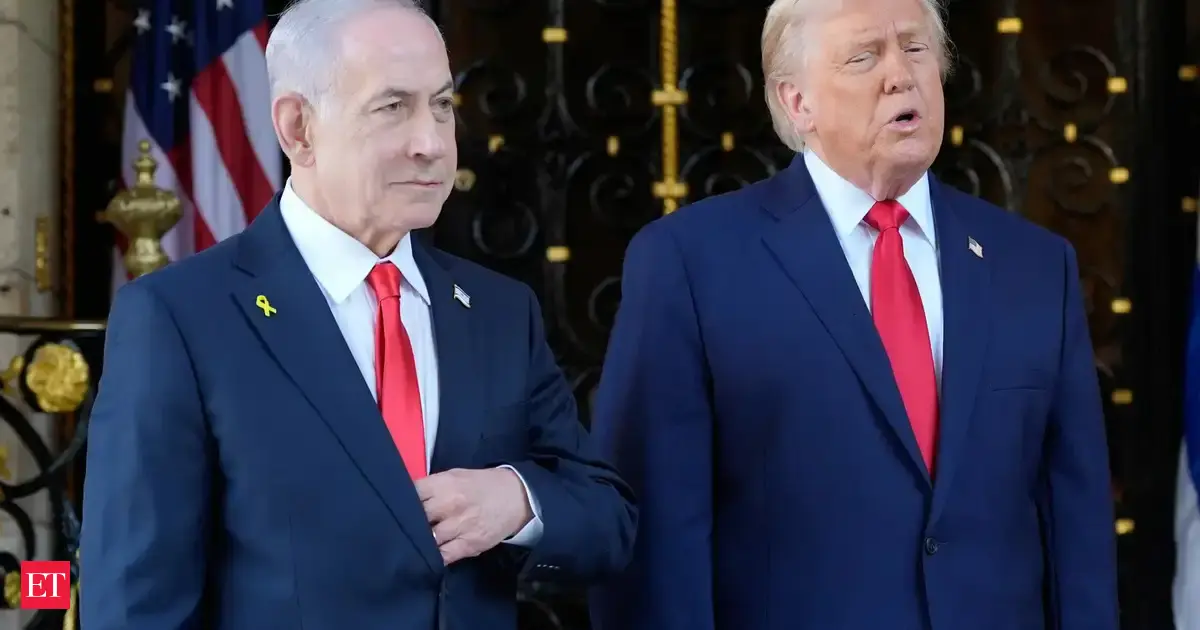
Despite reports of intensified tensions between President Trump and Prime Minister Netanyahu, Israel's ambassador downplayed a rift, likening it to a "lover's spat." Trump reportedly warned Netanyahu against expanding military operations against Iran, urging restraint to avoid isolation. While the US and Israel collaborated on earlier strikes, differences emerged over diplomatic versus military approaches to the conflict.
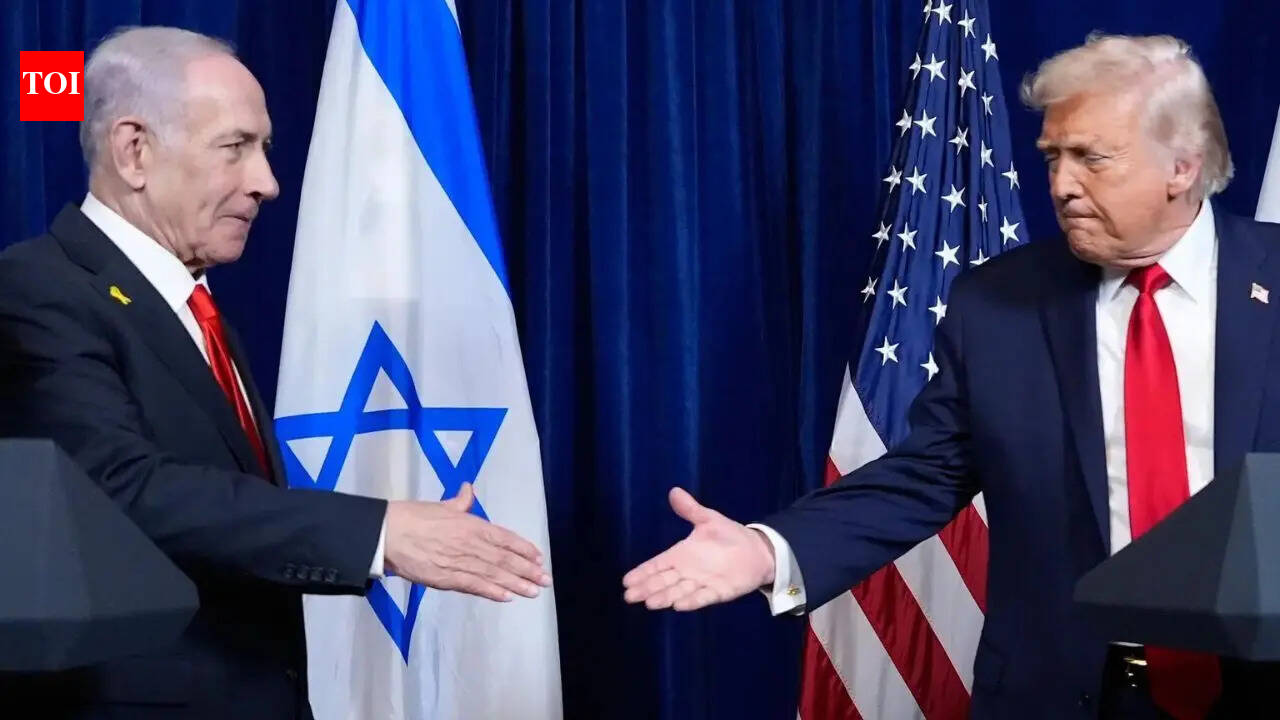
No wonder Donald Trump swore at his supposed friend and ally Benjamin Netanyahu last week. Within days of that June 1 phone call, Israel and Iran were back on track for the kind of military escalation that can no longer be explained away as a ceasefire breach, presenting a potentially fatal threat to the US president’s attempts to end the war.The cause of their dispute is, on the surface, simple. Israel says the April ceasefire between Tehran and Washington did not cover Lebanon, and that its troops would therefore go on fighting Hezbollah so long as the Shiite group posed a security threat to Israeli’s northern border communities. Iran says the deal did cover Lebanon, which is just another front in the same war — and of course it is.It’s precisely because it sees Hezbollah as a tool of Iran’s Islamic Revolutionary Guard Corps that Israel wanted the war in the first place. Israelis correctly blamed the IRGC for having orchestrated an entire proxy network of militias — from the Houthis in Yemen, to Hamas in Gaza, to Hezbollah in Lebanon — against the world’s only Jewish state. That Iranian strategy contributed directly to the atrocities of Oct. 7, 2023.Also Read: US Army Apache helicopter crashes near Strait of Hormuz, says reportOnly such an Iran-controlled or -inspired network can explain why Hezbollah opened a second front against the Israelis on Oct. 8 of that year, long before it could be described as a response to Israeli military excesses against Palestinian civilians in Gaza. Likewise that Hezbollah would join in the fight again when the US and Israel attacked Iran, in February. And it’s why the Houthis chose this weekend to lob a missile at Israel and announce they were closing the Bab al-Mandeb Strait to Israeli shipping.These last Houthi gestures were largely symbolic. Yet the collective message Tehran seeks to deliver is clear; it is that reports of the death of its so-called Axis of Resistance have been greatly exaggerated. The latest bout of escalation has notably been directed at Israel alone, serving to drive a wedge between it and the US, as it exposed the point at which their interests divide.Tehran on Monday appeared to want to draw a line under spiraling tit-for-tat air and missile strikes, saying it would refrain from further attacks — so long as Israel doesn’t bomb Hezbollah’s strongholds in Beirut. Netanyahu now faces a painful dilemma: Should he obey Trump by limiting his campaign against Hezbollah in the face of Iranian threats, thus granting them a level of impunity and deterrent power? Or should he ignore Trump and unleash the Israel Defense Forces on the Lebanese capital?Also Read: US carriers spent $6. 5B on fuel in April; global profit forecast is cut nearly in halfTehran’s new leaders understand this. No doubt they see it as a win-win for themselves. They know, too, that Hezbollah has recovered some of the military utility it had lost before the war after acquiring remote-controlled first-person view drones that the IDF seem ill-prepared to counter.This would present a genuine predicament to any Israeli government, because popular support for “finishing the job” in Lebanon is high. Netanyahu faces anger from across the political spectrum over his apparent submission of Israeli security interests to American ones.But this isn’t any Israeli government. Not every Israeli leader would have overseen a decades-long security policy that prioritized the suppression of the Palestinian Authority over Hamas, allowing the terrorist group to succeed beyond its wildest dreams on Oct. 7. Nor would every Israeli leader have refused to draw up a political strategy to accompany the use of force that followed in Gaza, the West Bank, and Lebanon — despite being coerced by Trump into recent talks with its central government.As the former Israeli Prime Minister Ehud Barak put it in an article for the liberal Haaretz newspaper on Monday, the story being sold to Israelis — that the IDF could eradicate Hezbollah once and for all if only its hands weren’t tied — is “a dangerous illusion.” The history of previous, painful failed incursions into Lebanon says as much.Nor would every Israeli leader have misled Trump into believing (against the advice of the US military and intelligence community) that assassinating Iran’s supreme leader would swiftly precipitate a collapse of the Islamic Republic as a whole. Nor might they have allowed their country to become quite as diplomatically isolated as it has.It is these strategic failures, amid undoubted military success, that have left Israel with few good options. Netanyahu can hope for a rapid collapse of the regime in Tehran to resolve his dilemma, but that’s unlikely. Alternatively, he can try to persuade the US to join in a long-term mow-the-lawn policy to keep Iran weak, amounting to a forever war. This, too, seems unlikely — or at least not in the interests of the US, its Gulf allies or the global economy.Failing one of these minor miracles, the risk of Israel being forced to accept a peace deal that leaves an enraged and emboldened Islamic Republic in place is real. No doubt Netanyahu, like Trump, believed in February that a short, victorious Iranian war might salvage his dimming political prospects, ahead of the Israeli elections due by October. That was a bad bet.
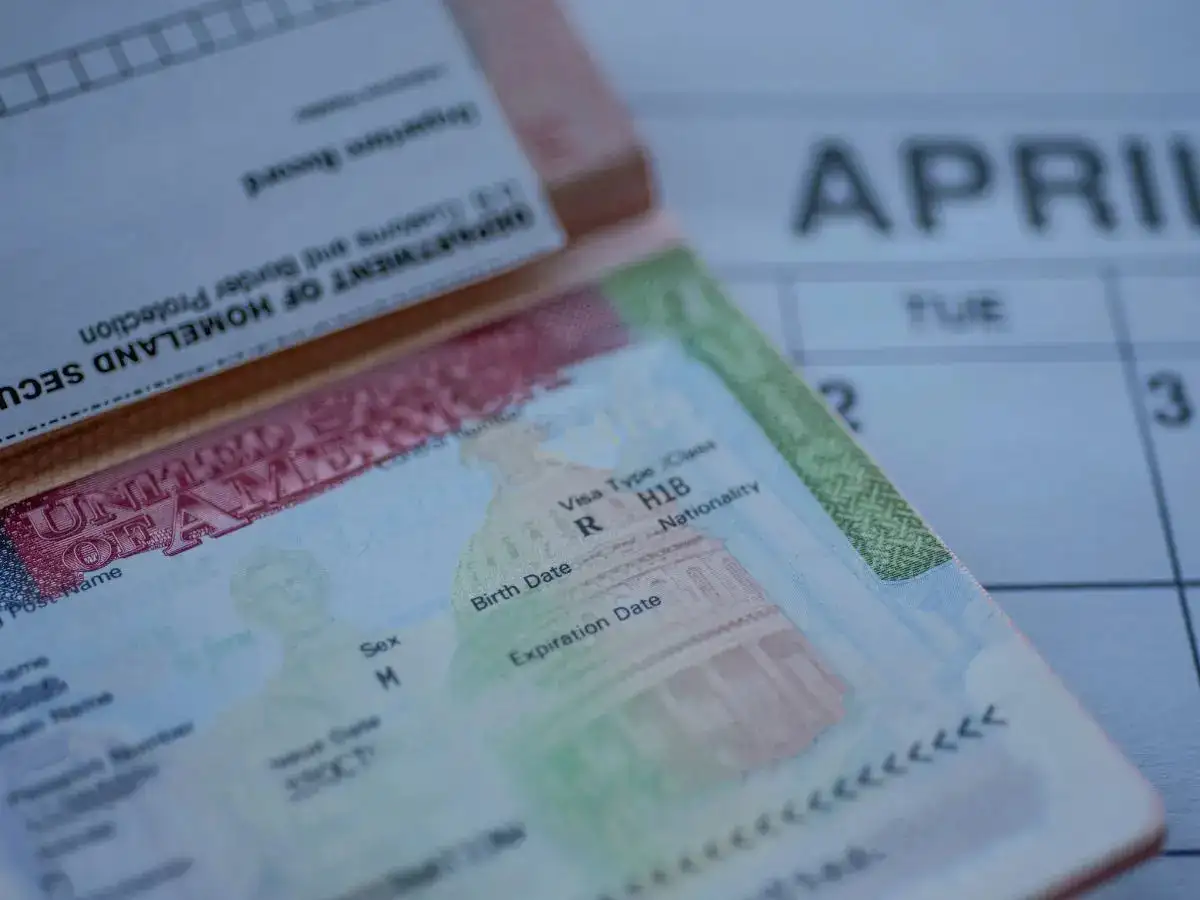
A chorus of US lawmakers from across the political spectrum has come out in support of a federal court order dismantling a proposed USD 100,000 H-1B visa application fee, even as the White House prepares to challenge the judicial setback in the appeals court. Breaking ranks with the executive branch, several Republican lawmakers backed the decision by shifting the spotlight away from the information technology sector, which heavily utilises this visa category, and focusing instead on how the massive financial penalty would cripple healthcare systems and educational institutions in remote regions. These conservative representatives pointed out that employers in rural areas depend heavily on international professionals to fill severe staffing voids. Stressing the severe local impact, Republican Senator Lisa Murkowski from Alaska emphasised that the issue transcended partisan politics in her state. She pointed out that the judicial intervention arrived at a pivotal juncture as academic institutions actively finalise their faculty rosters for the upcoming school term. Senator Murkowski stated, "Many school districts in rural and remote parts of the state rely on the H-1B visa programme to bring quality teachers to their communities." Unmoved by the legislative backlash, the White House strongly dug in its heels to defend the executive measure and signalled immediate plans to get the ruling overturned. White House spokesperson Taylor Rogers argued, "The H-1B programme has been abused for decades, and President Trump finally took action to fix it." Expressing absolute confidence in a legal reversal, Rogers added, "A federal judge in Washington already upheld a nearly identical order, and the administration is confident this order will be reversed on appeal." Conversely, the political opposition welcomed the court's intervention as necessary relief for critical public infrastructure. Democratic Congressman Don Beyer praised the judgment, warning that the steep executive fee would have slammed healthcare facilities already pushed to the brink by severe personnel deficits with unsustainable operational costs. Echoing this sentiment from across the aisle, Republican Congressman Mike Lawler also threw his weight behind the judicial freeze. He highlighted his own ongoing, cross-party legislative efforts to shield medical personnel from the financial burden. Congressman Lawler noted, "I have been working to exempt healthcare workers from this fee that only exacerbates the current staffing shortages in healthcare. That's why I introduced the bipartisan H-1Bs for Physicians and the Healthcare Workforce Act. While we continue to push this legislation through Congress, this ruling is welcome news." Further criticising the administration's economic logic, Congressman Sanford D. Bishop Jr. cautioned that the premium pricing would effectively slam the door on global talent, hurting domestic growth. Congressman Bishop argued, "The USD 100,000 fee for employers' H-1B applications would have discouraged the best and the brightest from coming to America and helping our economy grow and innovate." The legal architects behind the successful lawsuit also celebrated the verdict. Leading the state-level resistance, California Attorney General Rob Bonta remarked that the executive fiscal policy directly undermined the nation's capacity to import specialised professionals for sectors struggling with systemic labour deficits. Bonta stated, "This tax was an attack on America's ability to attract and retain the high-skilled talent that strengthens our economy and helps us meet critical workforce needs." Validating the multi-state legal push, New Jersey Attorney General Jennifer Davenport expressed an identical view, noting that the judiciary clearly agreed that the executive branch had completely overreached its mandate by attempting to levy the financial requirement on H-1B petitioners. However, the Republican consensus on the matter remained fractured. Voices from the conservative wing, like Arizona Congressman Eli Crane, explicitly denounced the ruling. Crane, who has been aggressively pushing for restrictive immigration overhauls, bypassed the judicial roadblock to call for a definitive legislative remedy. Congressman Crane stated, "Although an activist judge blocked President Trump's reforms to the H-1B program, Congress can fix it without judicial obstruction. Urge your representative to cosponsor the End H-1B Visa Abuse Act of 2026, which halts and significantly reforms this broken system." This highly publicised judicial verdict represents a major blow to the Trump administration's broader strategy aimed at restricting employment-driven immigration channels and creating steep hurdles for US employers trying to onboard international professionals. The development has triggered significant interest in India, given that the H-1B framework serves as a vital pipeline for the Indian workforce to access lucrative professional opportunities in the US. The non-immigrant work permit enables US corporations to recruit overseas experts with niche expertise across highly technical fields, including technology, engineering, healthcare, and finance. Because of India's robust talent pool in these specialised industries, Indian citizens systematically secure the lion's share of the total H-1B allocations distributed on an annual basis, making any disruption to the fee structure a critical economic talking point for New Delhi. Structurally, the H-1B visa has long solidified its status as an essential foundation for the American guest-worker immigration model. Under the statutory guidelines, the US government caps the yearly allocation at 65,000 standard permits, while reserving an extra 20,000 slots specifically for candidates who have earned advanced graduate degrees from US institutions. Data provided by immigration advocacy group FWD.us reveals the massive scale of this demographic, noting that approximately 730,000 H-1B visa holders reside across the US, living alongside an estimated 550,000 dependents, which includes their spouses and children.
Punjabi cuisine, a cornerstone of Indian comfort food, has endured global culinary shifts by embodying emotion, hospitality, and home. From ancient roots to post-Partition dhabas and modern restaurants, its rich flavors and hearty simplicity continue to resonate, offering a taste of tradition and belonging that nourishes the soul.

Kavitha said the land owned by Kalyan should be taken back if any violations are found
Shares of Vodafone Idea and Bharti Airtel gained up to 4% on Tuesday after the Bombay High Court quashed the government's one-time spectrum charge (OTSC) demands, holding that all actions taken pursuant to the disputed demands would also stand annulled.Vodafone Idea shares jumped 4% to Rs 14.90, while Airtel share price gained over a percent to Rs 1,836 on the BSE. The ruling provides a combined relief of around Rs 20,000 crore to the two telecom operators. According to ET Now, Vodafone Idea has secured relief of Rs 11,000 crore, while Bharti Airtel has received relief of Rs 9,000 crore.A division bench comprising Justices Manish Pitale and Shreeram Shirsat set aside the demand notices issued by the Centre for recovery of OTSC. The court observed that the government had failed to demonstrate any legal authority empowering it to take such a decision or issue the resulting demand notices.The bench also directed that bank guarantees furnished by the telecom companies be returned. In addition, all demand notices and related orders concerning the one-time spectrum charge have been struck down. At the same time, the court clarified that the matter continues to remain pending before the Supreme Court.The bench noted that the government, while citing public interest, had acted beyond the scope of the contractual and licensing arrangements entered into with the telecom operators. It further observed that the Centre had not identified any source of power authorising the impugned decisions.The dispute traces its origins to a November 2012 Union Cabinet decision under which a one-time spectrum charge was to be levied on spectrum holdings exceeding 6.2 MHz from July 2008 onwards. Following that decision, demand notices were issued to Bharti Airtel and Vodafone Idea specifying the amounts payable towards OTSC.According to a PIB release, telecom operators holding spectrum up to 4.4 MHz (GSM) were exempted from any one-time charge. For spectrum holdings beyond 4.4 MHz (GSM), the government decided that a one-time charge would be imposed prospectively based on prices discovered in the 2012 spectrum auction.Airtel and Vodafone Idea challenged the decision before the Bombay High Court in January 2013, arguing that the government lacked the authority under the Telegraph Act to impose a one-time spectrum charge, particularly with retrospective effect. At the time, the court granted interim protection to the companies and directed that no coercive action be taken while the matter was being heard.In its judgment delivered on Monday, the High Court said the government could not claim that the spectrum's status as a scarce and finite natural resource entitled it to unilaterally depart from the terms of its contracts with telecom operators."The government obviously cannot claim statutory power to act as per its own whim, notwithstanding the terms of the contract/licence executed as per the power available under the Act," the High Court stated.Sensex, Nifty today: Catch all the LIVE stock market action here(Disclaimer: Recommendations, suggestions, views and opinions given by the experts are their own. These do not represent the views of The Economic Times)
Asian stocks rebounded from their biggest drop since March as tensions in the Middle East eased and a selloff in artificial intelligence shares abated.The Kospi Index, the world’s best-performing gauge this year on the back of AI trade, gained 4.4% and the Nikkei rose 0.9%. That sent the broader MSCI Asia Pacific Index higher by 0.9%, following three days of losses spurred by factors including bets for an interest-rate hike by the Federal Reserve.Advances in Asia came after Wall Street gauges recovered, with chipmakers such as Nvidia Corp. and Micron Technology Inc. climbing. Intel Corp. shares rose the most in a month after the Information reported that Alphabet Inc.’s Google will use it to make chips.Brent crude traded steady at around $94.40 per barrel. The commodity pared much of its advance in the previous session as Iran and Israel pledged to ease strikes that threatened the peace talks in the Middle East.131599215After a brief interruption to the rally that propelled stocks to record highs, investors returned to risk assets during the New York session, signaling confidence that the bull market remains intact. The recovery was aided by easing geopolitical concerns and renewed demand for AI shares after last week’s steep decline.“Markets rarely move in a straight line at the pace seen since the March lows,” according to Morgan Stanley’s Mike Wilson, who maintained his constructive outlook, supported by earnings and strong economic data. “A correction was inevitable and ultimately healthy if this bull market is going to extend into year-end.” Meanwhile, Iran and Israel agreed to ease strikes against each other after a flare-up in violence threatened to derail peace negotiations and led President Donald Trump to appeal for de-escalation.Attention remains focused on whether energy flows will resume meaningfully via the Strait of Hormuz. A trickle of commercial shipping returned to the waterway over the weekend, even as the risks prompted some vessels to travel with their digital transponders switched off.Oil prices and their impact on inflation are key factors traders are watching after Friday’s blowout payrolls report reinforced bets on a rate hike. The May consumer price index due Wednesday is expected to jump by 4.2% from a year earlier — the highest rate in more than three years. But the core CPI is seen cooling slightly on a monthly basis — potentially providing a welcome signal to Fed officials. Meantime, Citigroup Inc. strategists led by Scott Chronert raised their year-end target for the S&P 500 after a “big step up” in earnings expectations.“We do not expect investors to lose confidence in the AI outlook,” said Mark Haefele at UBS Global Wealth Management. “Although tech stocks have come under pressure in recent days amid concerns about whether expectations can be met, business fundamentals remain strong.”Not everyone was as bullish. Investors should exercise caution regarding US stocks as an increasing number of “bear market signposts” point to an approaching top, according to Bank of America Securities.There are “too many red flags,” strategists led by Savita Subramanian wrote in a note dated June 5. “Take profits,” they said.
The meeting will take stock of the implementation of policies and programmes initiated by the government, the roadmap for the Viksit Bharat campaign and the measures being taken to mitigate the impact of the ongoing West Asia crisis
Speaking at a meeting of the INDIA bloc in New Delhi, he says the party’s approach has caused dissatisfaction among several constituents and calls upon it to explore ways to further strengthen and consolidate the alliance
The government has deployed blockchain technology to ensure data accuracy in pattadar passbooks, says Naidu, adding that all care have been taken to protect land records data from tampering
During her visit to New Delhi this week, Venezuela's Delcy Rodrguez, met US Ambassador Sergio Gor. Had the meeting taken place in Washington or Caracas, it would have attracted little attention. In Delhi, however, it carried a different significance.
The continued rise in leverage among retail and high-net-worth investors through derivatives and margin trading facilities (MTFs) remains a key concern for the market, S Naren, Executive Director and CIO of ICICI Prudential AMC said at ICICI Securities India Investor Conference 2026.While there has been significant discussion around the sustainability of mutual fund inflows and SIP contributions, Naren believes leverage in the derivatives market poses a much bigger risk than any moderation in mutual fund investments.Also Read | Sensex down over 10K points from Dec peak. Should investors buy the dip, hold positions, or wait on sidelines? "The level of leverage in the derivatives market and the amount of margin trading funding taken from brokers have continued to increase. That is a concern because leverage among retail and HNI investors is rising," he said.According to Naren, even if SIP inflows witness a marginal slowdown, it is unlikely to pose a significant challenge as mutual fund investors are typically long-term participants who invest without leverage. In contrast, derivative traders often operate with borrowed money, increasing risks during periods of market volatility.He noted that margin trading facility exposure is currently at its highest-ever level, highlighting the growing appetite for leveraged market participation.Against this backdrop, Naren sees an interesting contrarian opportunity emerging in segments that have witnessed relentless foreign institutional investor (FII) selling over the last 20 months."If you look for something contrarian today, it would be stocks where FIIs have been persistent sellers over the last 20 months," he said.Among these, private sector banks stand out as one of the most attractive investment opportunities for long-term investors, according to Naren.He believes private banks could emerge as the best-performing sector over the next three years. One key reason is the significant reduction in foreign ownership resulting from sustained FII selling.Also Read | Four mutual funds restrict large inflows into gold ETFs and FoFs; Rs 25 crore cap imposed "FIIs used to have nearly 40% of their India portfolios allocated to private banks. Whenever they wanted to reduce exposure to India, private banks became the natural source of liquidity," Naren explained.As a result, FIIs have consistently sold private banking stocks over the last 20 months, creating a valuation opportunity for long-term investors willing to take a contrarian view.Beyond equities, Naren remains optimistic about India's debt markets following recent policy measures aimed at improving foreign investor participation.According to him, two critical factors that influence foreign investment in debt markets—currency stability and taxation—have both moved decisively in India's favour."In debt, there are two factors: currency and taxation. Both have turned very positive, which significantly improves India's attractiveness," he said.Naren believes these developments improve India's chances of gaining inclusion in global bond indices such as the Bloomberg Global Aggregate Bond Index and have contributed to a highly optimistic mood in the domestic debt market.He pointed out that bond yields have moved well below policy rates in several segments, particularly in three-year corporate bonds, creating attractive investment opportunities.However, Naren cautioned that the global fixed-income environment today is very different from what prevailed during the 2013 taper tantrum period.At that time, interest rates across much of the developed world were close to zero, making India's bond yields highly attractive to international investors. Today, investors can earn meaningful returns even in developed-market government bonds."US 30-year government bonds are yielding around 5%, and even Japanese government bond yields are at levels not seen for decades," he said.As a result, the yield differential between India and developed markets has narrowed significantly compared with 2013.Also Read | Gold and silver ETFs slip up to 8% amid Israel attack and crude oil spike. What should investors do? While India has strengthened its macroeconomic position considerably over the past decade, global investors now have a wider range of attractive fixed-income options available to them.Naren also highlighted the relatively small size of foreign portfolio investor exposure to Indian debt compared with equities.According to him, FPI debt investments remain only a fraction of FPI equity allocations. In contrast, foreign investors had built substantial equity positions in India during a period when domestic valuations traded at significant premiums to other emerging markets.He noted that Indian equities became exceptionally expensive after 2023 as domestic investors increasingly channelled savings into equities rather than debt."Valuations in India reached levels that were several times higher than markets like China. In such an environment, FIIs logically chose to reduce equity exposure," he said.At the same time, India has historically adopted a cautious approach towards opening its debt markets to foreign investors.Naren believes this measured approach has helped preserve financial stability while gradually increasing foreign participation in government securities.With improving debt market fundamentals, supportive policy measures, and attractive opportunities emerging in sectors overlooked by foreign investors, Naren sees both fixed income and select equity segments offering compelling opportunities for long-term investors.Commenting on the recent correction in Kospi, Naren said that it is a healthy correction but even now I don't think on market cap terms it is cheap.(Disclaimer: Recommendations, suggestions, views and opinions given by the experts are their own. These do not represent the views of The Economic Times)If you have any mutual fund queries, message on ET Mutual Funds on Facebook/Twitter. We will get it answered by our panel of experts. Do share your questions on ETMFqueries@timesinternet.in alongwith your age, risk profile, and Twitter handle.