The Economic Times (India)
보수 성향
IT/기술
🇮🇳 인도 · IT/기술 · "ESS" · 총 103건
필터 보기현재 지수
48.1
0 = 부정 우세
50 = 중립
100 = 긍정 우세
최근 7일 기준 5,534건을 분석한 결과, 뉴스 심리지수는 48.1(균형)입니다. 긍정 536건(9.7%)·중립 3,734건(67.5%)·부정 1,264건(22.8%)이며, 중립 비중이 뚜렷하게 높습니다. 성향 지수는 종합 13.9(중도 균형)입니다.
OpenAI, Anthropic and Nvidia increased their H-1B visa filings in the second quarter of fiscal 2026, even as several other major technology companies reduced their use of the programme, according to federal labour data, as cited by Business Insider.The rise comes amid an intensifying competition for artificial intelligence talent and follows a US federal court decision to block the Trump administration's proposed $100,000 fee on certain H-1B visa applicants living overseas.AI companies are continuing to expand their search for highly specialised researchers, engineers and infrastructure experts despite growing uncertainty around US immigration policies and higher costs associated with hiring foreign workers, according to Business Insider report.ALSO READ: Trump's $100,000 H-1B visa fee is unlawful, US judge rulesAI firms buck wider industry trendAccording to the report, foreign-born workers with specialised skills have become increasingly important to the talent strategies of AI companies as the pool of qualified candidates remains limited.Anthropic recorded the sharpest year-on-year increase among the companies reviewed. The AI startup filed 59 certified H-1B applications in the second quarter of fiscal 2026, up from 10 during the same period a year earlier.OpenAI's certified applications rose from 20 to 63 over the same period, while Nvidia's filings increased to 765 from 641.In contrast, several technology giants reported declines. Meta's certified applications fell 3 per cent year-on-year to 1,715. Microsoft's filings dropped 20 per cent to 1,993, while Amazon's declined 30 per cent to 4,241. Google recorded the steepest fall among the group, with applications dropping 64 per cent to 1,844.The differing hiring patterns highlight a shift within the technology sector, where companies are reducing overall headcount while investing heavily in smaller teams focused on artificial intelligence and advanced research.H-1B policy changes reshape hiring landscape The H-1B programme has undergone significant changes in recent months. New regulations now give higher-paid applicants a greater chance of selection in the annual visa lottery, shifting the system in favour of experienced and highly compensated professionals. ALSO READ: Trump calls court freeze on $100,000 H-1B fee ‘crazy’ and 'hurting our country'At the same time, the Trump administration introduced a temporary $100,000 fee for certain H-1B applicants living outside the United States, arguing that it would discourage misuse of the programme and prioritise American workers.However, a federal judge blocked the fee on Monday, ruling that the administration lacked the legal authority to impose it.
New Delhi, Corporate India is expected to scale back hiring plans in the July-September quarter of this year, signaling a slowdown in hiring momentum, as employers are likely to opt for a more measured approach to hiring amid rising geopolitical challenges, a survey said on Tuesday.According to ManpowerGroup's latest Employment Outlook Survey, the Net Employment Outlook (NEO) for Q3 2026 stood at 48 per cent, down 20 points from the previous quarter but stronger by 6 points since Q3 2025.The Net Employment Outlook (NEO) is derived by taking the percentage of employers anticipating an increase in hiring activity and subtracting from this the percentage of employers expecting a decrease in hiring activity.In the survey of more than 3,100 employers across India conducted from April 1 to 30, 2026, employers cited economic uncertainty, above AI, as the key driver of hiring uncertainty."India's Q3 2026 hiring outlook remains the strongest globally, with a Net Employment Outlook of 48 per cent, reflecting continued employer confidence in the country's growth trajectory despite an increasingly complex business environment," said Sandeep Gulati, Managing Director, ManpowerGroup India and Middle East.As per the report, 15 per cent of those considering workforce expansion remain optimistic about identifying growth opportunities despite ongoing geopolitical challenges.Among organisations planning to reduce staff, 31 per cent cited economic challenges, while 27 per cent pointed to geopolitical challenges as the primary factor impacting staff decisions. Around 26 per cent of those uncertain about changing staffing cite Geopolitical challenges, and 20 per cent want to keep things stable as a result."While the outlook has moderated from 68 per cent in the previous quarter, the shift reflects a more measured approach to hiring rather than a slowdown in business confidence," Gulati said.According to Gulati, strong activity across manufacturing and services, along with the continued expansion of Global Capability Centres, continues to support hiring demand. At the same time, employers are navigating a broader mix of challenges, including AI-led workforce optimization, softer entry-level hiring demand, global trade uncertainty, and geopolitical developments that are impacting supply chains and business costs.A sector-wise analysis showed that employers across the Utilities & Natural Resources sector reported the highest NEO for Q3 at 61 per cent, followed by finance and insurance at 56 per cent, construction and real estate (55 per cent) and professional, scientific and technical services at 52 per cent."The survey also points to a clear evolution in workforce priorities. Employers are increasingly seeking talent with strong communication, collaboration, and teamwork skills, reflecting the growing need for adaptable and resilient workforces," Gulati said.As businesses continue to navigate changing market conditions, workforce strategies are becoming more focused on capability building, continuous learning, and long-term talent development. Organisations are looking beyond immediate hiring needs and investing in skills that can support productivity, innovation, and sustainable growth, said Gulati.The survey further noted that AI continues to reshape how organizations think about productivity and the workforce, and the Q3 data shows employers aren't ready to hand over the keys to AI entirely.As employers navigate AI integration, people skills command the highest premiums, revealing where human value is increasingly concentrating: communication and collaboration (87 per cent), problem solving (84 per cent), time management (82 per cent)/strong work ethic (82 per cent), the survey said.
For many families and eyewitnesses, the tragedy did not end with the crash and they still live with a deep fear of air travel

Mark Zuckerberg announced Meta's America's Workforce Academy (AWA), a new initiative offering free training and job pathways in skilled trades. This program aims to address the projected need for hundreds of thousands of trade workers to build the infrastructure for the United States' AI ambitions. Meta is partnering with various organizations to deliver this crucial training.

Shares of Redington surged nearly 5% on Tuesday after Apple unveiled a completely rebuilt Siri at its Worldwide Developers Conference (WWDC) 2026, along with a host of features and OS updates.The company rolled out the next-generation Apple Intelligence features, AI-powered photo editing tools, enhanced child-safety capabilities and software updates across iPhone, iPad, Mac, Apple Watch and Vision Pro.Redington has been a key Apple distribution partner since 2007, handling the logistics, warehousing and distribution of Apple products to retailers and resellers across India, the Middle East, Turkey, Africa and South Asia.Redington shares sharply surged to an intraday high of Rs 241 apiece on NSE on Tuesday morning, snapping a two-session losing streak. Notably, Apple shares meanwhile closed around 2% lower after its annual conference.New Apple features unveiled at WWDC 2026In what was Tim Cook’s last WWDC as the Apple CEO, the company on Monday unveiled a much-awaited overhaul of Siri, introducing a more conversational, context-aware version of its digital assistant as the company seeks to catch up with AI rivals including ChatGPT, Gemini and Claude.The new model called 'Siri AI' will now come with a dedicated app, a redesigned interface and improved conversational abilities. According to Apple, it can understand a user's personal context, access broad world knowledge and even understand what is currently on a user's screen.Also read: Siri gets an AI makeover, its biggest upgrade since 2011 debutApple also unveiled the next generation of Apple Intelligence, built on updated Apple Foundation Models that power Siri, image generation, writing assistance and reasoning capabilities. It also significantly expanded its Visual Intelligence, bringing image understanding capabilities to more devices. On the iPhone, Siri can now analyse what users see through the Camera app and answer questions about objects, locations and food. The assistant can also perform actions such as splitting restaurant bills using Apple Cash.Why are Redington shares rising?Redington has a long-standing partnership with Apple, dating back to a 2007 distribution agreement for Apple products in India. Redington manages logistics, warehousing, and distribution to resellers and retailers across India, the Middle East, Turkey, Africa, and South Asia. It is one of Apple’s key official national distributors and supply-chain partners in India.Redington in May reported a consolidated net profit of Rs 391 crore for the January-March quarter of FY26. This is over 41% lower than the Rs 666 crore net profit reported in the corresponding quarter of the previous financial year. The firm’s revenue from operations, meanwhile, increased nearly 26% YoY to Rs 33,213 crore during the quarter under review.Also read: Siri AI, Apple Intelligence, child safety tools and more — Biggest announcements from AppleRedington share priceRedington shares have gained over 6% in one month but declined around 14% in 2026 so far. The stock is down 17% in one year. In the longer term, the shares of the tech company jumped 28% in three years and more than 74% in five years.The company currently has a market capitalisation of more than Rs 18,537 crore.(Disclaimer: Recommendations, suggestions, views and opinions given by the experts are their own. These do not represent the views of The Economic Times)
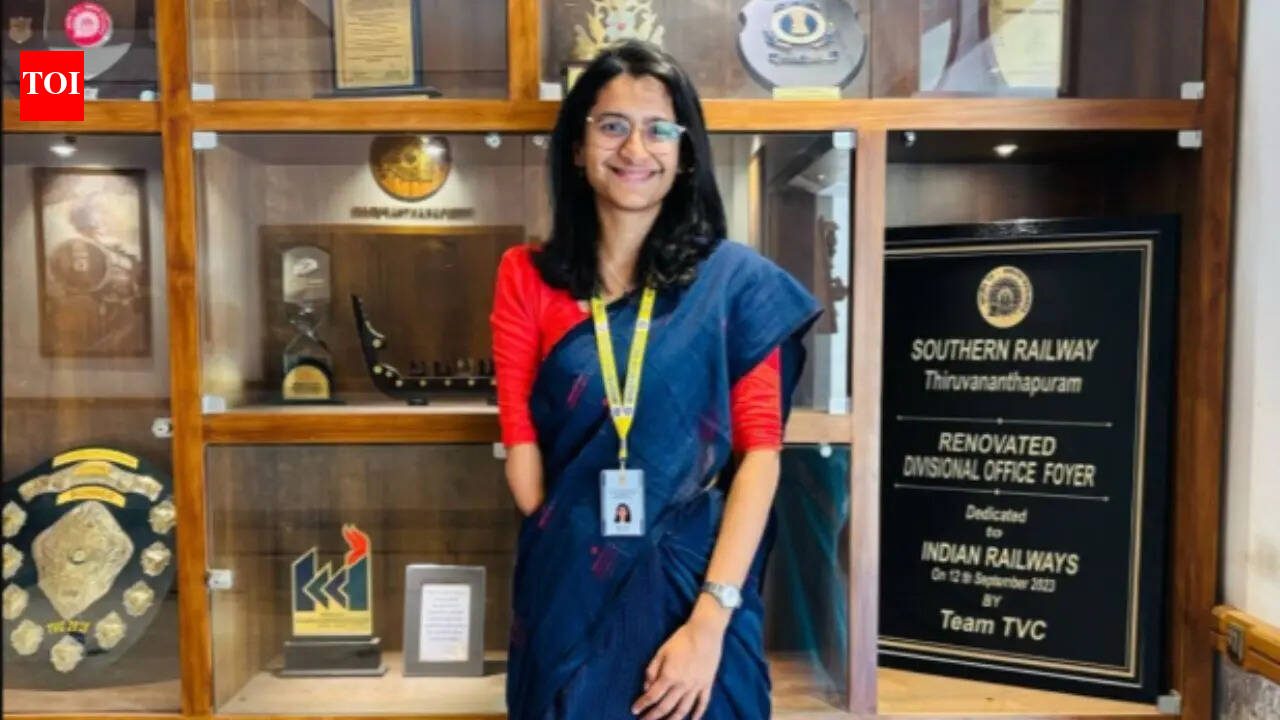
Kajal Raju, an IIT Madras graduate born with phocomelia syndrome, achieved her dream of becoming an IAS officer on her fourth attempt, securing AIR 167. Despite initial success with AIR 910 in IRMS, she persevered through setbacks and professional commitments, demonstrating remarkable resilience and dedication to reach her ultimate goal.
Apple's WWDC 2026 unveiled iOS 27 and more, powered by Apple Intelligence and a re-engineered Siri AI. This privacy-focused system, built with Google's Gemini, offers on-device processing and "Private Cloud Compute." Key features include advanced photo editing, automated web browsing, and smarter home notifications, promising a more intuitive user experience.
South Korean technology stocks staged a strong rebound on Tuesday, mirroring gains on Wall Street, as investors returned to artificial intelligence-related counters following a steep three-day selloff that dragged the KOSPI down more than 15% during the period.Semiconductor heavyweights led the recovery. SK Hynix rose 8%, Samsung Electronics gained 4%, while Seoul Semiconductor surged more than 14%. At the day’s high, Kospi rose 5% to 7,848 or 364 points higher. The rebound followed a positive session in the United States, where chipmakers helped lift broader markets. The S&P 500 advanced 0.3% on Monday, while the technology-focused Nasdaq Composite climbed 0.86%, recovering some of the losses suffered during last week's sharp decline in technology stocks.Investor sentiment also received support from growing excitement around a potential new wave of high-profile AI-related listings. OpenAI recently disclosed that it had confidentially filed for an initial public offering, following a similar step by Anthropic. The development comes just days before SpaceX shares are expected to start trading.The recovery follows a brutal session for South Korean equities on Monday, when the benchmark KOSPI slumped 9% as investors abruptly pulled back from the market's AI-driven rally. The decline highlighted the extent to which the index had become reliant on a small number of semiconductor companies.The benchmark index is now roughly 12.7% below the record high it reached last week. Semiconductor giants bore the brunt of the selloff, with Samsung Electronics dropping more than 6% and SK Hynix falling over 4% on Monday.As investors rushed to book profits, concerns over market concentration became increasingly evident. Much of the KOSPI's rally had been fuelled by a handful of AI-linked stocks, leaving the broader market exposed to a shift in investor sentiment.Samsung Electronics and SK Hynix together account for nearly half of the KOSPI's total weighting and have generated around two-thirds of the benchmark's gains so far this year. Even after the recent correction, the two stocks remain higher by 138% and 196%, respectively, on a year-to-date basis.Despite the sharp pullback, the KOSPI remains the world's top-performing stock indexe in 2026. Driven largely by the surge in semiconductor shares linked to the artificial intelligence boom, the index is still up an impressive 79% this year.Demand for AI infrastructure has accelerated dramatically over the past year as technology companies around the world race to develop advanced AI models and expand computing capacity. That trend has sparked strong demand for high-bandwidth memory chips, prompting investors to pour money into South Korean chipmakers that occupy a critical position in the global AI supply chain.Sensex, Nifty today: Catch all the LIVE stock market action here(Disclaimer: Recommendations, suggestions, views and opinions given by the experts are their own. These do not represent the views of The Economic Times)
Apple has officially unveiled Siri AI, its biggest overhaul of Siri since the voice assistant first launched in 2011.Announced at WWDC 2026, Siri AI is powered by Apple Intelligence and brings a more conversational interface, personal context awareness, visual intelligence and the ability to take actions across apps. Apple says the new assistant can answer questions from the web, understand what's on your screen, surface information from messages, emails and photos, and help users write, edit and complete tasks.Also Read: Apple WWDC 2026: Siri gets an AI makeover, its biggest upgrade since 2011 debutHere's everything you need to know about Siri AI, including supported devices, how to access it and when it will be available.What is Siri AI?Siri AI is a completely rebuilt version of Siri powered by the next generation of Apple Intelligence.Unlike the old Siri, which primarily handled voice commands and basic queries, Siri AI can understand personal context, maintain conversations, answer follow-up questions and take actions across apps.For example, users can ask Siri to:Find a restaurant recommendation sent by a friend in MessagesPull up a hotel booking confirmation from an old emailFind photos from a recent tripDraft emails and messagesEdit and share photosAnswer questions about content currently displayed on screenSearch the web for up-to-date information on virtually any topicApple says Siri AI combines personal information, onscreen awareness and web knowledge to provide more useful and contextual responses.How to access Siri AIApple has introduced several new ways to access Siri AI across devices.On iPhoneUsers can access Siri AI by:Saying "Hey Siri"Pressing the side buttonSwiping down from the Dynamic Island to start a conversationUsing the new dedicated Siri appThe dedicated Siri app allows users to revisit previous conversations and continue chats across devices.On MacSiri AI is integrated directly into Spotlight.Users can search for answers, ask questions and access Siri AI from anywhere in macOS. Siri is also integrated into system context menus, allowing users to control-click files, images or text and ask questions about them.On iPadSiri AI is integrated into Spotlight and Visual Intelligence features, including screenshot-based interactions.On Apple WatchUsers can start conversations directly from their wrist, while Smart Stack can suggest continuing previous Siri conversations.What is the new Siri app?One of the biggest additions is a dedicated Siri app.The app stores conversation history using iCloud syncing, allowing users to start a conversation on one device and continue it on another.For example, users can begin chatting with Siri on a Mac and pick up the same conversation later on an iPhone, iPad, Apple Watch or Apple Vision Pro.Siri AI gets Visual IntelligenceApple has significantly expanded Visual Intelligence.On iPhone, Siri AI is integrated directly into the Camera app through a new Siri mode. Users can point the camera at objects and ask questions about what they see.The feature can:Identify objects and placesProvide information about foodOffer nutritional insightsHelp split restaurant bills using Apple CashAnswer questions about visual contentVisual Intelligence is also coming to iPad, Mac and Apple Vision Pro for the first time.Which devices support Siri AI?Apple Intelligence and Siri AI will only be available on supported hardware.Supported iPhonesiPhone 16 series and neweriPhone 15 ProiPhone 15 Pro MaxSupported iPadsiPad mini with A17 ProiPads powered by M1 chips or newerSupported MacsMac models with M1 chips or newerSupported Apple Watch modelsApple Watch Series 10 and newerApple Watch Ultra 2 and newerApple Watch SE 3 (when paired with a compatible iPhone)Notably, while iOS 27 supports iPhone 11 and newer devices, Siri AI itself requires Apple Intelligence-compatible hardware.Also Read: As Apple's WWDC conference kicks off, investors want to know if AI will save SiriWhen will Siri AI be available?Apple says Siri AI is available for developer testing starting now through the Apple Developer Program.A public beta will launch later this year as part of iOS 27, iPadOS 27, macOS 27, watchOS 27 and visionOS 27.Initially, Siri AI will be available in English, with support for additional languages rolling out later.
MUMBAI: Tata Consultancy Services (TCS) has renewed its lease for nearly 15 lakh sq ft of office space in Chennai in a transaction with rental outgo of around Rs 1,420 crore over its total tenure of 10 years, underscoring the country’s largest IT services company’s long-term commitment to one of its key delivery hubs.This ranks among the largest office lease renewals and occupier commitments reported anywhere in India. The transaction assumes significance against the backdrop of growing concerns over the impact of artificial intelligence on employment in the technology sector.Several global and Indian IT companies have highlighted productivity gains from AI-led automation in recent quarters, fuelling debates around potential workforce rationalisation and slower hiring.The lease has been signed for space at Chennai One IT SEZ in Thoraipakkam. The agreement commenced on November 1, and covers a chargeable area of 14.66 lakh sq ft, showed documents accessed through Propstack, a realty data analytics platform.TCS will occupy the first to eighth floors across four towers in Block A (Alpha), along with the first, sixth, seventh, eighth and eleventh floors in Block B (Magnum). The leased premises have a carpet area of 11.29 lakh sq ft.The lease has been signed at a starting rental of Rs 70 per sq ft a month, translating into a monthly rental payment of about Rs 10.26 crore. The agreement carries a tenure of 10 years and is backed by a security deposit of Rs 94.64 crore.The lease agreement provides for a 12% escalation in rentals every three years. Based on the contracted rentals and the escalation structure, the total rental commitment over the 10-year tenure is estimated at approximately Rs 1,420 crore.ET’s email query to TCS remained unanswered until the time of going to press.TCS’ decision to retain and renew this nearly 1.5 million sq ft of office space for a decade signals continued confidence in its long-term operational footprint and workforce presence.Chennai continues to remain one of India’s most important technology markets, housing large campuses of domestic and multinational IT companies. The city’s established talent pool, relatively lower operating costs and robust office infrastructure have helped it maintain its position as a preferred destination for technology occupiers. The renewal comes at a time when India's office market continues to witness strong demand from technology firms, global capability centres (GCCs), financial services companies and engineering firms, driving sustained leasing activity across key markets.While artificial intelligence is reshaping workforce strategies and operational models, large occupiers continue to retain and expand their real estate footprints in major business hubs. Long-term lease renewals and large-format transactions have remained a key feature of the market, reflecting occupiers' preference for securing high-quality office assets in established micro-markets with access to talent, infrastructure and business ecosystems.
While compensation from the airline and government has helped address immediate financial concerns, several relatives of the victims say no amount of money can replace the lives lost in one of India’s worst aviation tragedies
The Joint Seat Allocation Authority (JoSAA) has released the first mock seat allocation for the 2026 counselling process, giving engineering aspirants an early indication of the institutes and courses they may secure based on their current choices and rank positions.Candidates who have registered for JoSAA Counselling 2026 and filled in their programme and institute preferences can now check their provisional allotment through the official JoSAA portal.The mock allocation is designed to help students understand their likely admission prospects and make informed changes to their choices before the actual seat allocation rounds begin.What Is the JoSAA Mock Seat Allocation?The first mock seat allocation is a provisional exercise conducted by JoSAA before the commencement of the official counselling rounds.The allocation has been prepared using the choices submitted by candidates up to 8 PM on 7 June 2026. It reflects the seat a candidate could potentially receive if the counselling process were to conclude based on the current preference order and rank position.Importantly, the mock allocation is not the final seat allotment. Candidates can still modify, reorder, add or remove choices before the counselling deadline.How to Check JoSAA First Mock Seat Allocation 2026Candidates can follow these steps to view their provisional allotment:Step 1Visit the official JoSAA website.Step 2Click on the link for the First Mock Seat Allocation 2026.Step 3Log in using your application credentials.Step 4Submit the required details.Step 5View your provisional seat allocation status.Step 6Download and save the allotment details for future reference.Step 7Take a printout if required.Why the Mock Allocation Is ImportantThe mock seat allocation serves as a valuable planning tool for candidates.By reviewing the provisional allotment, students can assess whether their preferred colleges and branches are within reach. If they are dissatisfied with the outcome, they can revise their choices strategically before the final seat allocation rounds.This process often helps candidates improve their chances of securing a more desirable institute or academic programme.JoSAA 2026 First Round Seat Allotment DateJoSAA is scheduled to announce the first round of seat allocation on 13 June 2026.Candidates who are allotted seats in the first round will be required to complete several admission-related formalities, including:Online reportingDocument uploadVerification processSeat acceptance proceduresAdmission fee paymentThe deadline for fee payment in the first round is 26 June 2026.JoSAA Counselling 2026: Participating InstitutesThe JoSAA counselling process will facilitate admissions to 138 premier technical institutions across India for the 2026-27 academic session.These include:23 Indian Institutes of Technology (IITs)Indian Institute of Science (IISc), Bengaluru31 National Institutes of Technology (NITs)Indian Institute of Engineering Science and Technology (IIEST), Shibpur26 Indian Institutes of Information Technology (IIITs)56 Other Government-Funded Technical Institutes (GFTIs)The counselling process remains one of the largest and most important admission exercises for engineering aspirants in the country.Reservation Categories in JoSAA CounsellingSeats across participating institutions are allocated under various reservation categories, including:Open CategoryGEN-EWS (Economically Weaker Sections)OBC-NCL (Other Backward Classes – Non-Creamy Layer)Scheduled Castes (SC)Scheduled Tribes (ST)Persons with Disabilities (PwD) categoriesCandidates are advised to carefully review category-specific eligibility and seat availability during the counselling process.JEE Main and JEE Advanced Ranks Used for AdmissionsJoSAA uses different entrance examination ranks depending on the participating institution.Admissions to IITs and IISc BengaluruAdmissions are based on ranks secured in JEE Advanced 2026.Admissions to NITs, IIITs and GFTIsAdmissions are based on ranks obtained in JEE Main 2026.Candidates must ensure that their rank details and category information are correctly reflected in the counselling portal.What Should Candidates Do Next?Students should carefully review their first mock allocation and compare it with their desired institute and branch preferences.If necessary, they can modify their choices before the final counselling rounds begin. With the first round of seat allocation scheduled for 13 June, aspirants now have a valuable opportunity to fine-tune their choices and maximise their chances of securing admission to their preferred engineering institute.
Walmart assures its 2.1 million employees that AI will enhance their roles, not replace them. Company leaders emphasized that while technology will be integral to future operations, human employees will remain central. AI is already being implemented to improve efficiency, such as a tool helping truck drivers optimize loads and reduce empty miles.
Google DeepMind CEO Demis Hassabis warns humanity is on the cusp of Artificial General Intelligence, potentially within four years, urging immediate preparation. He views current AI agents as a societal stress test and highlights the risks of recursive self-improvement. Hassabis also criticized tech companies for laying off engineers, advocating for increased productivity instead.
Griffin is widely considered one of the most powerful and influential leaders in modern finance
OpenAI's CFO, Sarah Friar, stressed that AI tool proficiency is now as crucial for finance professionals as spreadsheets were decades ago. She highlighted that companies are actively seeking employees skilled in AI, with demand for compute power outstripping supply. Friar also underscored the need for inclusive access to AI technologies as adoption grows.
In PM Modi's era, the challenge has been different: how to extend access to those premier institutions in a country that is larger, younger and far more aspirational.
Google's cybersecurity teams warn of targeted data theft campaigns by the UNC3753 threat cluster against US companies. The group uses vishing and social engineering to gain access, exfiltrate sensitive data, and then extort victims with a three-day deadline to negotiate. They threaten to leak stolen client and proprietary information, causing severe reputational and financial damage.
Cognizant CEO Ravi Kumar S. believes fears of widespread job losses due to AI are overstated, predicting more jobs will emerge. He highlighted Cognizant's new AI Builder strategy, creating roles like Frontier Certified Engineer and Frontier Business Operator that don't require technical backgrounds.