Unsanitary meat factory shut down, products sold nationwide
PATHUM THANI – A meat processing factory that sells about 30 tonnes of branded products nationwide each month was shut down after failing to meet sanitary standards on Tuesday.
산업 · "ESS" · 총 153건
필터 보기현재 지수
49.5
0 = 부정 우세
50 = 중립
100 = 긍정 우세
최근 7일 기준 84,084건을 분석한 결과, 뉴스 심리지수는 49.5(균형)입니다. 긍정 10,380건(12.3%)·중립 60,816건(72.3%)·부정 12,888건(15.3%)이며, 중립 비중이 뚜렷하게 높습니다. 성향 지수는 종합 20.0(중도 균형)입니다.
PATHUM THANI – A meat processing factory that sells about 30 tonnes of branded products nationwide each month was shut down after failing to meet sanitary standards on Tuesday.
PM Modi’s challenge was no longer creating an industrial base from scratch but accelerating growth, creating jobs, and making India globally competitive

Another LNG carrier loaded with Qatari gas has passed through the Strait of Hormuz this week, bringing the total number of Qatari LNG cargoes that have cleared the chokepoint since the start of the war to five, Reuters reported today, citing data from Kpler and LSEG. The report noted that all in all, nine LNG vessels have exited the strait since February 28, including Qatari and Emirati cargoes. Meanwhile, a ballast LNG carrier has entered the Strait of Hormuz without issues, set to load at the UAE’s Das Island, according to Vortexa data,…

South Korea and Mongolia have launched a vice ministerial-level strategic dialogue this week aimed at expanding cooperation in critical minerals, supply chains and other strategic sectors, Seoul's foreign ministry said Tuesday. First Vice Foreign Minister Park Yoon-joo held the inaugural session of the bilateral strategic dialogue with his Mongolian counterpart, Gombosuren Amartuvsuin, in Ulaanbaatar on Monday, where the two sides discussed ways to advance cooperation in key sectors. Park called
The COVID-19 pandemic and the geopolitical conflicts to follow exposed severe weaknesses in global supply networks, prompting governments, caught off guard and complacent, to pour money into critical sectors like semiconductors, critical minerals, and pharmaceuticals to prevent future shortages and reduce dependence on geopolitical rivals. Consequently, governments across the globe have increasingly been doling out state subsidies to local firms in a bid to secure supply chains, accelerate the transition to green energy, and protect domestic manufacturing…
If you follow energy markets closely, you could be forgiven for thinking that oil remains as indispensable as ever. Every geopolitical crisis seems to reinforce the narrative. Tankers moving through the Strait of Hormuz dominate headlines, analysts obsess over crude price forecasts, and politicians continue to speak about energy security largely through the lens of oil supply. Yet beneath the daily noise of energy markets, something remarkable has already happened. According to International Energy Agency data, global sales of internal combustion…
Over the past decade, GoI has expanded investments in solar power, wind energy, transmission infrastructure and pumped hydro storage. Electric mobility initiatives and domestic battery manufacturing programmes are also being promoted as part of a broader strategy to reduce oil dependence.Recent geopolitical developments in the Gulf, which largely supply India's crude and LPG needs, have brought renewed focus to nuclear energy as a stable domestic source for baseload electricity. A milestone in India's nuclear programme was achieved in April, when a prototype fast-breeder reactor (PFBR) at Kalpakkam in Tamil Nadu attained first criticality. Developed indigenously by Bharatiya Nabhikiya Vidyut Nigam Limited (BHAVINI), the 500 MWe reactor marks India's formal entry into the second stage of its 3-stage nuclear programme envisioned by Homi Bhabha.Also a welcome development is the latest news of GoI reportedly considering measures that include assured power purchase agreements (PPAs), to attract private sector investments in the nuclear energy sector. It is also reportedly preparing to notify rules under SHANTI (Sustainable Harnessing and Advancement of Nuclear Energy for Transforming India) Act 2025.India's nuclear strategy has been designed around the country's resource profile. While it has limited uranium reserves, it possesses some of the world's largest thorium deposits. The 3-stage programme was conceived to enable large-scale utilisation of thorium for power generation.Thorium is not a fertile or fissile material, and has to be converted to fissile Uranium-233 in a FBR. The third stage aims to use U-233-based reactors for sustained energy generation. PFBR is important for the eventual thorium utilisation. India's thorium reserves, largely located in coastal monazite sands in Kerala, Tamil Nadu, Andhra Pradesh and Odisha, are seen as a potential long-term strategic energy resource.Another significant development came with the passage of the aforementioned SHANTI Act last December. It modernises India's nuclear legal and regulatory framework, and allows limited private sector participation in nuclear projects.Traditionally, India's nuclear sector has been dominated by state-controlled entities. The Act is intended to streamline approvals, encourage investment, and support domestic manufacturing and technological partnerships. Reforms reflect recognition that achieving large-scale nuclear expansion will require both public and private participation.Bhabha Atomic Research Centre (Barc) is developing several advanced reactor designs, including 200 MWe Bharat Small Modular Reactor (BSMR-200), 55 MWe SMR-55, and a high-temperature gas-cooled reactor (HTGR) intended for hydrogen production. SMRs are expected to be modular, with modules produced under controlled conditions in a factory and assembled at the site in a short time. They are also expected to be safer, making them acceptable to the public.GoI has indicated that at least 5 indigenously designed SMRs will become operational by 2033. India has set a long-term target of achieving 100 GW of nuclear power capacity by 2047. At present, the country's installed nuclear capacity stands at about 8.7 GW, contributing around 3% of total electricity generation. Coal continues to account for nearly 70% of electricity production. Achieving the 100 GW target would require substantial expansion in infra, manufacturing, financing and human resources.The Strait of Hormuz disruption has reinforced the importance of diversifying India's energy mix and reducing exposure to external supply shocks. The current policy direction reflects a combination of RE expansion, electrification, domestic manufacturing and renewed emphasis on nuclear power.The broad objective of improving energy security through a diversified and domestically supported energy system must remain a central policy priority. RE, along with energy storage required to balance it, remains the major first step. Electricity can substitute fossil fuels in many sectors. Coal can be replaced by nuclear as a baseload supplier.Nuclear projects involve high upfront capital costs and long construction timelines. Land acquisition and public acceptance remain sensitive issues. Waste management, safety regulation and development of skilled technical manpower will require sustained institutional support.Thorium-based technologies, although strategically important for India, have not yet been deployed commercially at scale in the world. Policymakers will need to balance investments across nuclear, solar, wind, storage and grid modernisation to ensure affordability and energy security.SHANTI Act, PFBR, investment in SMRs and increased private participation suggest that nuclear energy may play a larger role in India's long-term energy strategy than anticipated. We need an integrated policy framework to achieve energy aatmanirbharta.Saini is senior research analyst, and Parikh is chairman, Integrated Research and Action for Development (IRADe), New Delhi

Russia is preparing to sharply reduce crude oil exports this month as mounting refinery disruptions, fuel shortages, and Ukraine’s bombing campaign force Moscow to divert more barrels into the domestic market. Exports from Russia’s western ports of Primorsk, Ust-Luga and Novorossiysk are expected to fall to roughly 1.7 million barrels per day in June from 2.5 million bpd in May, according to Reuters calculations based on preliminary industry and trading data. The decline comes as Russia seeks to increase refinery throughput to address…
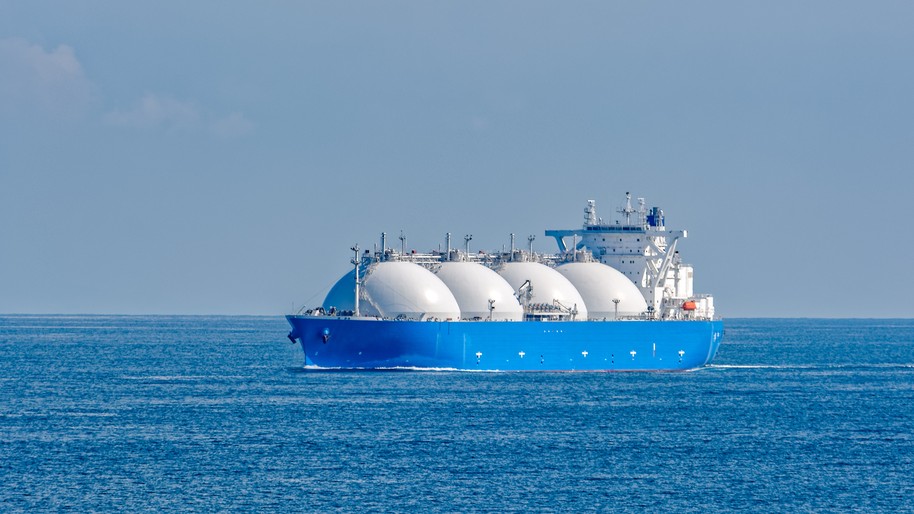
On World Oceans Day, China announced it has mastered construction of the shipbuilding industry's three "crown jewels" — aircraft carriers, large liquefied natural gas carriers and large cruise ships — vessels widely regarded as pinnacles of marine engineering for their technical complexity.
Aker BP will receive an additional 2.2 million barrels of oil equivalent after the partners in the Johan Sverdrup field completed a redetermination process that slightly increased the company’s ownership stake. The adjustment raises Aker BP’s interest in Johan Sverdrup to 31.7163% from 31.5733%, a change of just 0.143 percentage points. The numbers may appear insignificant. The volumes are not. Under the revised ownership structure, Aker BP will receive an additional 2.2 million barrels of oil equivalent over the next two years through…
President says Kenya’s clean energy, trade deals and EU access make it ideal for manufacturing and value addition investment
In the coming weeks, readers will increasingly see two rarely used phrases in stories covering our dwindling worldwide oil inventories: "operational minimum" and "tank bottoms." The phrases more or less signify the same thing, though the former is more abstract and precise, while the latter is more visual. They signify rapid depletion of existing oil inventories and presage price spikes to come due to the loss of oil supplies from the Persian Gulf because of Iran's closure of the Strait of Hormuz, the maritime artery through which 20 percent of…
Global supply chain pressures have risen again in recent months, returning to levels last seen during the height of pandemic-related disruptions, Statista reports.
The Middle East's largest remaining oil export corridor came under renewed pressure on Monday after Yemen's Houthis announced a complete ban on Israeli shipping in the Red Sea, risking a further widening of the shipping crisis beyond the Strait of Hormuz. The announcement comes as the Red Sea has assumed a far larger role in global oil trade following months of disruption around the Strait of Hormuz. Saudi Arabia has increasingly relied on its East-West Pipeline system and the Red Sea export terminal at Yanbu to move crude to international markets,…
Shares of Tata Steel fell 2% to Rs 202 on the BSE on Monday amid reports that it may have to push back the commissioning timeline of its 1.25-billion-pound low-carbon steel project in the UK by six to eight months due to delays in obtaining access to the required electricity infrastructure.The company is building a 3.2 million-tonne electric arc furnace (EAF) at Port Talbot as part of its decarbonisation strategy. The project, which involves an investment of 1.25 billion pounds, is intended to replace the site's blast furnace operations of similar capacity that have now been shut down.Before the latest setback, Tata Steel had been targeting the start of operations by late 2027 or early 2028. However, delays linked to the power connection process have created uncertainty around that timeline, a news report by PTI stated. Koushik Chatterjee, Executive Director and Chief Financial Officer of Tata Steel, said the company has been working with the Electricity System Operator (ESO) and National Grid on the new electrical infrastructure. However, National Grid has formally informed Tata Steel that its connectivity project is running behind schedule.According to Chatterjee, National Grid has flagged potential delays compared with the originally planned date for the high-voltage power connection. He said Tata Steel is engaging with all stakeholders, including the UK government, to minimise the impact and establish revised timelines, the report added. The company said major demolition work at the Port Talbot site has already been completed, while fabrication and delivery of equipment continue to progress. Access to higher-capacity electricity remains a critical requirement for the transition to electric arc furnace-based steelmaking.The project has secured 500 million pounds of support from the UK government and is expected to cut site-level carbon dioxide emissions by 90%, equivalent to around 5 million tonnes annually. Separately, the Port Talbot project site witnessed a fire incident on June 3. Tata Steel UK said on Thursday that all personnel were safely evacuated and accounted for, with no injuries reported. Chatterjee said Tata Steel is continuing discussions with National Grid and the UK government to address the issue and explore ways to reduce the delay."We are working with the UK government, the National Grid and ESO, which is the electricity supplier, to see if we can mitigate it, but somewhere between six months to eight months will certainly be there, maybe higher, after we have built the plant," he said while responding to a question on potential delays in commissioning the facility.He added that the company is evaluating options to shorten the delay but acknowledged that some slippage in timelines now appears unavoidable. "We are actively working to see if we can reduce it further, but there will be some imminent delays," Chatterjee said, without providing additional details.In May 2024, Tata Steel signed a connection offer agreement with the Electricity System Operator. Under the arrangement, National Grid is responsible for building the electrical infrastructure required to power the 3.2 million-tonne electric arc furnace by the end of 2027.According to information shared by Tata Steel, the National Energy System Operator (NESO) is a public body that oversees the connection process, including the connection contract with Tata Steel UK, and manages electricity grid operations across the UK.National Grid Electricity Transmission (NGET), meanwhile, is the private company responsible for constructing, owning and maintaining the connection infrastructure.Tata Steel Group is among the world's leading steelmakers, with an annual crude steel production capacity of 35 million tonnes. The company also ranks among the most geographically diversified steel producers globally.(Disclaimer: Recommendations, suggestions, views and opinions given by the experts are their own. These do not represent the views of The Economic Times)
'How China is Devouring Europe' (3/4). Kunshan specializes in electronics, Heshan in children's books… Along the Yangtze and the Pearl River, the multitude of industrial cities bear witness to how the country has transformed itself into a manufacturing juggernaut.
Dutch shipbuilder IHC is competing for contracts to build vessels for the Royal Netherlands Navy, according to the
Tanker traffic through the Strait of Hormuz has collapsed by 90% to 95% compared to pre-war levels, analysts concur. Some oil cargoes continue to trickle through the critical chokepoint, but under increasingly opaque operating conditions, complicating the tracking of oil and gas flows and obscuring the visibility of how much energy supply actually reaches buyers these days. Traffic appears to have ramped up in recent weeks, according to an analysis of shipping data by Reuters energy columnist Ron Bousso. More vessels are leaving the region after…
The Trump administration is set to channel nearly $700 million in federal funds into the U.S. coal industry Thursday, invoking a Korean War-era statute to prop up existing power plants, finance new construction, and push open a California export terminal that has been blocked for nearly two decades. The centerpiece is $425 million distributed under the Defense Production Act to 13 existing coal plants across West Virginia, Kentucky, North Carolina, Indiana, Tennessee, Arkansas, Arizona, Oklahoma, North Dakota, and Wisconsin. Another $75 million…
State-run Oil India Limited (OIL) has announced the discovery of natural gas in its third exploratory well, Vijayapuram-3, located off the Andaman Islands. This finding further strengthens the hydrocarbon potential of the region, with gas confirmed through continuous flaring and pressure build-up. OIL has now established hydrocarbon presence in two of its three wells in the Andaman offshore block.